
Kirjojen hintavertailu – 12 859 829 kirjaa ja 27 kauppaa

Kirjailija

Claudia Claridge

Kirjat ja teokset yhdessä paikassa: 2 kirjaa, julkaisuja vuosilta 2014–2024, suosituimpiin kuuluu Hyperbole in English. Vertaile teosten hintoja ja tarkista saatavuus suomalaisista kirjakaupoista.

2 kirjaa

Kirjojen julkaisuvuodet: 2014–2024.

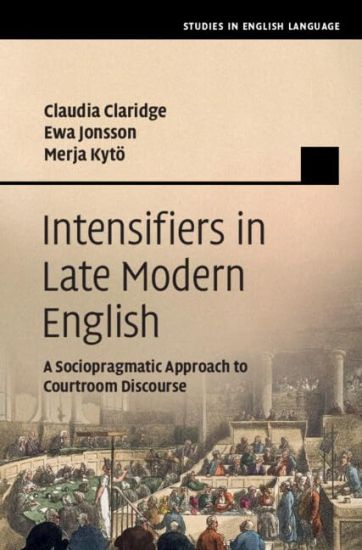
Intensifiers in Late Modern English

Intensifiers in Late Modern English

Claudia Claridge; Ewa Jonsson; Merja Kytö

Cambridge University Press
2024
sidottu
The development of intensifiers has long been identified as an area of vibrant change in Late Modern English. This groundbreaking book provides the first comprehensive study of intensifiers in this period, and shows how they have changed over time. It uses speech-based and interactive data from the Old Bailey courthouse in London, enriched by extralinguistic information in the Old Bailey Corpus, to investigate an unprecedented range of intensifiers, including downtoners, boosters, and maximizers. The courtroom acts as a social microcosm of the period, providing unique insights on gender, class, and courtroom roles, and their effects on language use. The usage of intensifiers is illuminated from a lexico-grammatical angle, focusing on their formal and semantic features, as well as those of the items they modify. These perspectives are linked to temporal developments from 1720 to 1913, to offer a complete picture of variation and change in the intensifier area.
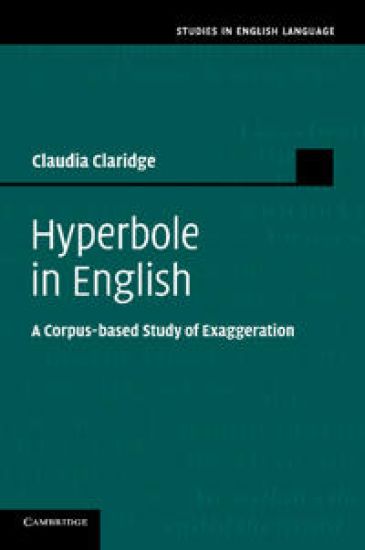
Hyperbole in English

Hyperbole in English

Claudia Claridge

Cambridge University Press
2014
pokkari
Non-literal language is ubiquitous in everyday life, and while hyperbole is a major part of this, it has so far remained relatively unexplored. This volume provides the first investigation of hyperbole in English, drawing on data from genres such as spoken conversation, TV, newspapers, and literary works from Chaucer to Monty Python. Combining quantitative and qualitative analyses, it uses approaches from semantics, pragmatics, discourse analysis and classical rhetoric to investigate in detail both speaker-centered and emotive aspects of hyperbole, and also addressee-related aspects, such as interpretation and interactional uptake. Illustrated with a range of diachronic case studies, hyperbole is also shown to be a main means of linguistic creativity, and an important contributor to language change. The book concludes with an exploration of the role of hyperbole in political speaking, humour, and literature. Original and in-depth, it will be invaluable to all those working on meaning, discourse, and historical linguistics.