Kirjojen hintavertailu – 12 859 819 kirjaa ja 27 kauppaa

Kirjailija

Claudia Rapp

Kirjat ja teokset yhdessä paikassa: 9 kirjaa, julkaisuja vuosilta 2005–2026, suosituimpiin kuuluu Mark the Deacon: The Life of Porphyry of Gaza. Vertaile teosten hintoja ja tarkista saatavuus suomalaisista kirjakaupoista.

9 kirjaa

Kirjojen julkaisuvuodet: 2005–2026.

Mark the Deacon: The Life of Porphyry of Gaza

Mark the Deacon: The Life of Porphyry of Gaza

Jeff Childers; Claudia Rapp; Michael Whitby

LIVERPOOL UNIVERSITY PRESS
2025
sidottu
In Late Antiquity Gaza was an exceptionally prosperous city, with wealth derived from a flourishing wine trade across the Mediterranean, as well as an intellectual centre whose leading lights combined traditional classical and Christian learning. Bishop Porphyry is famous for effecting the transformation in the early fourth century AD of this thriving community from a bastion of pagan beliefs into a Christian city, primarily through the destruction of the main temple to the god Marnas and other pagan sanctuaries and the working of miracles for the benefit of the local population. Conversion was neither easy nor guaranteed, since the leaders of local society at the time were solidly pagan and prepared to mobilize violence to defend their traditional ways. His success required missions to the empire’s capital, Constantinople, where he interacted with the Patriarch John Chrysostom and imperial authorities. On one occasion he managed with the help of Empress Eudoxia to outmanoeuvre Emperor Arcadius into acceding to his request for imperial authority and physical backing to secure the closure and demolition of temples. The two key versions of Porphyry’s biography are here presented together in new translations for the first time.

Mark the Deacon: The Life of Porphyry of Gaza

Mark the Deacon: The Life of Porphyry of Gaza

Jeff Childers; Claudia Rapp; Michael Whitby

LIVERPOOL UNIVERSITY PRESS
2026
nidottu
In Late Antiquity Gaza was an exceptionally prosperous city, with wealth derived from a flourishing wine trade across the Mediterranean, as well as an intellectual centre whose leading lights combined traditional classical and Christian learning. Bishop Porphyry is famous for effecting the transformation in the early fourth century AD of this thriving community from a bastion of pagan beliefs into a Christian city, primarily through the destruction of the main temple to the god Marnas and other pagan sanctuaries and the working of miracles for the benefit of the local population. Conversion was neither easy nor guaranteed, since the leaders of local society at the time were solidly pagan and prepared to mobilize violence to defend their traditional ways. His success required missions to the empire’s capital, Constantinople, where he interacted with the Patriarch John Chrysostom and imperial authorities. On one occasion he managed with the help of Empress Eudoxia to outmanoeuvre Emperor Arcadius into acceding to his request for imperial authority and physical backing to secure the closure and demolition of temples. The two key versions of Porphyry’s biography are here presented together in new translations for the first time.
Elitekultur Und Christliche Religiositat in Spatantike Und Byzanz
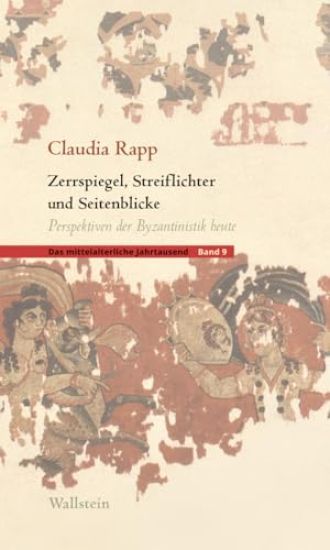
Der Karl-Christ-Preis ist dem Andenken an den Marburger Althistoriker Karl Christ gewidmet (1923-2008). Mit dem Preis werden seit 2013 herausragende wissenschaftliche Leistungen auf dem Gebiet der Alten Geschichte und ihrer Nachbardisziplinen sowie der Wissenschafts- und Rezeptionsgeschichte des Altertums ausgezeichnet. Die sechste Preistragerin ist Claudia Rapp. Sie gehort zur ersten Reihe der Forscherinnen und Forscher zur Spatantike und Byzanz. Claudia Rapps Werk zeichnet eine bemerkenswerte Spannbreite aus: Es reicht von der Rolle heiliger spatantiker Bischofe, uber Untersuchungen zum Phanomen der Wahlverschwisterung bis zur Erforschung von Mobilitat von Menschen, Ideen und Texten im byzantinischen Reich. Den Vortrag, den sie zur Verleihung am 1. April 2023 hielt, widmete sich dem Thema: "Elitekultur und christliche Religiositat in Spatantike und Byzanz" und ist hier zusammen mit Hartmut Leppins Laudatio auf die Preistragerin veroffentlicht.
Brother-Making in Late Antiquity and Byzantium

Brother-Making in Late Antiquity and Byzantium

Claudia Rapp

Oxford University Press Inc
2016
sidottu
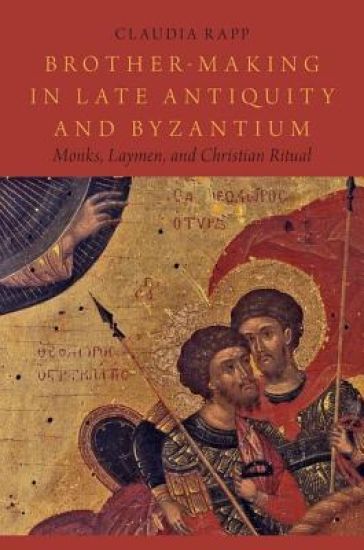
Among medieval Christian societies, Byzantium is unique in preserving an ecclesiastical ritual of adelphopoiesis that pronounces two men as brothers. It has its origin as a spiritual blessing in the monastic world of late antiquity, and it becomes a popular social networking strategy among lay people from the ninth century onwards, even finding application in recent times. Located at the intersection of religious and social history, brother-making exemplifies how social practice can become ritualized and subsequently subjected to attempts of ecclesiastical and legal control. Wide-ranging in its use of sources, from a complete census of the manuscripts containing the ritual of adelphopoiesis to the literature and archaeology of early monasticism, and from the works of hagiographers, historiographers, and legal experts in Byzantium to comparative material in the Latin West and the Slavic world, this book is the first exhaustive treatment of the phenomenon.
Holy Bishops in Late Antiquity

Holy Bishops in Late Antiquity

Claudia Rapp

University of California Press
2013
pokkari
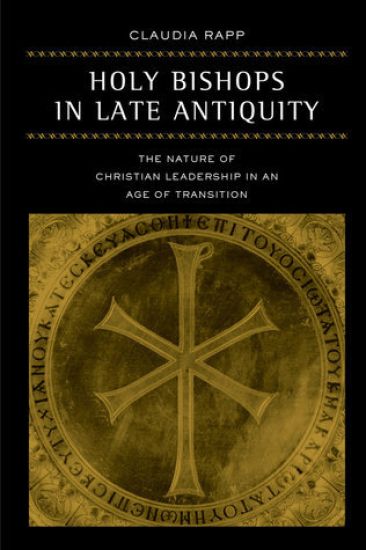
Between 300 and 600, Christianity experienced a momentous change from persecuted cult to state religion. One of the consequences of this shift was the evolution of the role of the bishop--as the highest Church official in his city--from model Christian to model citizen. Claudia Rapp's exceptionally learned, innovative, and groundbreaking work traces this transition with a twofold aim: to deemphasize the reign of the emperor Constantine, which has traditionally been regarded as a watershed in the development of the Church as an institution, and to bring to the fore the continued importance of the religious underpinnings of the bishop's role as civic leader. Rapp rejects Max Weber's categories of "charismatic" versus "institutional" authority that have traditionally been used to distinguish the nature of episcopal authority from that of the ascetic and holy man. Instead she proposes a model of spiritual authority, ascetic authority and pragmatic authority, in which a bishop's visible asceticism is taken as evidence of his spiritual powers and at the same time provides the justification for his public role. In clear and graceful prose, Rapp provides a wholly fresh analysis of the changing dynamics of social mobility as played out in episcopal appointments.
Holy Bishops in Late Antiquity

Holy Bishops in Late Antiquity

Claudia Rapp

University of California Press
2005
sidottu
Between 300 and 600, Christianity experienced a momentous change from persecuted cult to state religion. One of the consequences of this shift was the evolution of the role of the bishop - as the highest Church official in his city - from model Christian to model citizen. Claudia Rapp's exceptionally learned, innovative, and groundbreaking work traces this transition with a twofold aim: to deemphasize the reign of the emperor Constantine, which has traditionally been regarded as a watershed in the development of the Church as an institution, and to bring to the fore the continued importance of the religious underpinnings of the bishop's role as civic leader. Rapp rejects Max Weber's categories of 'charismatic' versus 'institutional' authority that have traditionally been used to distinguish the nature of episcopal authority from that of the ascetic and holy man. Instead she proposes a model of spiritual authority, ascetic authority and pragmatic authority, in which a bishop's visible asceticism is taken as evidence of his spiritual powers and at the same time provides the justification for his public role. In clear and graceful prose, Rapp provides a wholly fresh analysis of the changing dynamics of social mobility as played out in episcopal appointments.