
Kirjojen hintavertailu – 12 903 733 kirjaa ja 27 kauppaa

Kirjailija

Claudio Bozzi

Kirjat ja teokset yhdessä paikassa: 2 kirjaa, julkaisuja vuosilta 2012–2020, suosituimpiin kuuluu Australian Commercial Law. Vertaile teosten hintoja ja tarkista saatavuus suomalaisista kirjakaupoista.

2 kirjaa

Kirjojen julkaisuvuodet: 2012–2020.

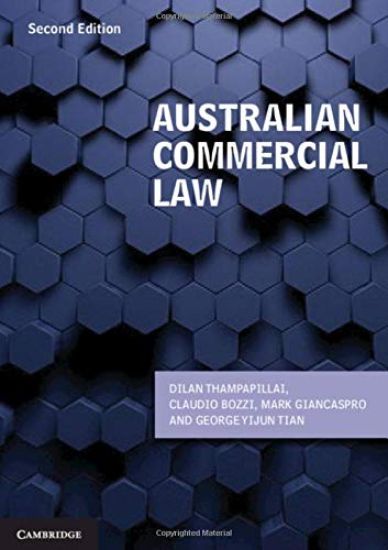
Australian Commercial Law

Australian Commercial Law

Dilan Thampapillai; Claudio Bozzi; Mark Giancaspro; George Yijun Tian

Cambridge University Press
2020
pokkari
Fully revised and updated, Australian Commercial Law offers a comprehensive, accessible introduction to key aspects of Australian commercial law. Part 1 introduces the fundamentals of contract law and business structures before examining the sale of goods, agency, bailment and personal property. Part 2 covers the Australian Consumer Law, focusing on areas important to commercial entities that interact with consumers. Part 3 examines international commercial law, providing a detailed introduction to the World Trade Organization and to agreements central to trade between countries. The second edition includes: detailed discussion of key concepts in commercial law; four new chapters on contract law basics, business structures, bankruptcy and international commercial law; thorough integration of digital and e-commerce transactions; and end-of-chapter discussion questions designed to test reader knowledge of key points and themes. Written in a clear and concise style by an expert author team, Australian Commercial Law is an indispensable resource for students seeking a comprehensive understanding of commercial law.
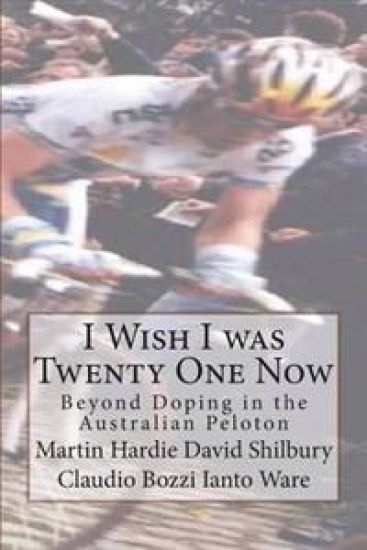
I Wish I was Twenty One Now: Beyond Doping in the Australian Peloton

I Wish I was Twenty One Now: Beyond Doping in the Australian Peloton

David Shilbury; Claudio Bozzi; Ianto Ware

Createspace Independent Publishing Platform
2012
nidottu
I Wish I was Twenty One Now - Beyond Doping in the Australian Peloton A Report by Martin Hardie, David Shilbury, Ianto Ware, Claudio Bozzi. This report draws from interviews with current and recently retired professional cyclists and a review of existing anti-doping measures to consider the possibilities for a cleaner, sustainable sport. One of our interview participants captured the complexity of those issues, telling us, "My body is not a temple, but I have to live in it". It was a remark that embodies the tensions at play within and between the various themes we encountered in researching this project. The idea of an athlete, and more so a professional cyclist, as being a privileged free spirit in many ways is at odds with the regimes of location and physical surveillance embodied in such anti-doping measures as the Whereabouts system and the Biological Passport. At the same time, the cyclist is both a mythical hero, famously likened by the philosopher Roland Barthes as well as early sporting journalists like Henri Desgrange, to Greek Gods - and an overworked and exploited worker - the 'giant' and the 'convict' of the road at one and the same time. The cyclist is a sportsperson, a player of a game, at the same time as being an entrepreneur in a global business that produces lifestyles as commodities. They are competitors as well as co-operators, and they find themselves subject to a hybrid global legal regime at the same time as they are subject to the peloton's own internal codes, norms and ethics. Somehow within all of this, professional cyclists must engage in work both on their physical selves, and with their colleagues to fashion a space in which to conduct their lives - a place in which they can learn to live within their bodies and contribute to building a sustainable collective body for all involved in their sport. Thus, mutual respect and sustainability loom large in the logic of the cyclists as an inherent, if contradictory, system to ensure the welfare of their sport, their profession and their industry. On the one hand, their lives are devoted to the higher concepts and values of athleticism, fair play and competition and, on the other, they are in the business of selling a sporting spectacle and their jobs are as embroiled in the less glamorous practicalities common to any industry.