Kirjojen hintavertailu – 12 903 725 kirjaa ja 27 kauppaa

Kirjailija

Claus Jacobs

Kirjat ja teokset yhdessä paikassa: 3 kirjaa, julkaisuja vuosilta 2003–2013, suosituimpiin kuuluu Training für Kinder mit Aufmerksamkeitsstörungen. Vertaile teosten hintoja ja tarkista saatavuus suomalaisista kirjakaupoista.

3 kirjaa

Kirjojen julkaisuvuodet: 2003–2013.

Rechenstörungen

Rechenstörungen

Claus Jacobs; Franz Petermann

Hogrefe Verlag GmbH + Co.
2007
nidottu
Der Diagnostik- und Therapieleitfaden bietet aktuelle Informationen zum Umgang mit Rechenstörungen. Im Gegensatz zur Lese-Rechtschreibstörung (Legasthenie) ist vielen Eltern und Lehrern aber auch Therapeuten eine weitere umschriebene Störung der Schulfertigkeiten, die Dyskalkulie (Rechenstörung), weniger geläufig. Dies schlägt sich z. B. auch in der Berücksichtigung der Störung bei der Notengebung nieder: So finden sich in vielen Bundesländern Erlasse, die beim Vorliegen einer Legasthenie eine Umgewichtung der Deutschnote bis hin zur Nichtbewertung der Rechtschreibung erlauben. Entsprechende Erlasse oder Vorgaben für die Berücksichtung der Dyskalkulie sind dagegen kaum zu finden. Auch ist häufig unbekannt, wie eine Dyskalkulie zu diagnostizieren ist und welche Ausschlusskriterien gegeben sein können. Der Leitfaden bietet praxisorientierte Informationen zur Diagnostik und Therapie von Rechenstörungen. Dabei werden die Leitlinien nationaler kinderund jugendpsychiatrischer Fachverbände sowie aktuelle Forschungsergebnisse referiert. Berücksichtigung finden auch mögliche komorbid auftretende neuropsychologische Beeinträchtigungen sowie emotionale bzw. Verhaltensstörungen. Das therapeutische Vorgehen ist durch pädagogische, neuropsychologische und verhaltenstherapeutische Techniken gekennzeichnet.
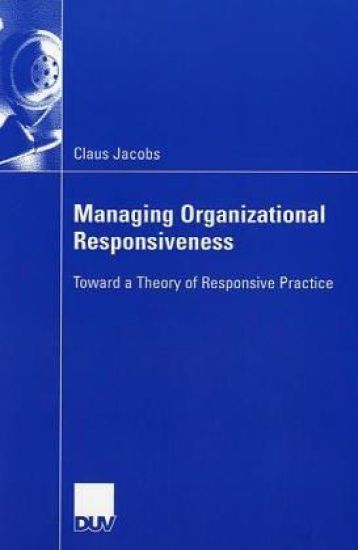
Managing Organizational Responsiveness

Managing Organizational Responsiveness

Claus Jacobs

Deutscher Universitats-Verlag
2003
nidottu
From the very beginning in the field of organization development and action research there has been a central role afforded to the role conversation plays in enabling change to take place in social systems. Kurt Lewin himself actively pursued and developed settings in which conversation was the foundation for attitudinal and behavioral change. After his death, his colleagues and subsequently the scholars and practitioners who took his seminal research and insights into the world of organizations continued to explore ways in which conversation in groups could facilitate individual, group and organizational change. From T-group to team development, from the confrontation meeting to large group interventions, from intergroup conflict management to dialogue conferences, the heritage of Kurt Lewin has stamped itself on the applied behavioural science approach to change management that we know as organization development. In more recent years the work of Bohm, Isaacs, Schein and others has contributed significantly to the development of how conversation can be structured. The flourishing of large group interventions - open space technology, search conferences, future search, whole scale change - have created structures whereby whole systems can engage in simultaneous conversation about the future of their organizations and communities. Another distinctive characteristic of organization development is the role played by the external consultant. In organization development, consultants work in a facilitative, process consultation mode whereby they work at enabling members of the client system to perceive their own issues, understand them and develop and take their own actions in their regard.