Kirjojen hintavertailu – 12 903 725 kirjaa ja 27 kauppaa

Kirjailija

Clayton Eshleman

Kirjat ja teokset yhdessä paikassa: 10 kirjaa, julkaisuja vuosilta 2002–2024, suosituimpiin kuuluu "Here Lies" preceded by "The Indian Culture". Vertaile teosten hintoja ja tarkista saatavuus suomalaisista kirjakaupoista.

10 kirjaa

Kirjojen julkaisuvuodet: 2002–2024.

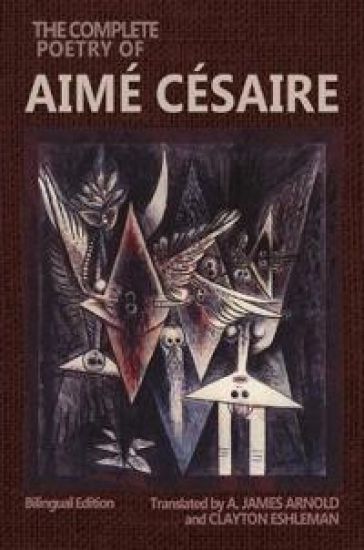
The Complete Poetry of Aimé Césaire

The Complete Poetry of Aimé Césaire

Aimé Césaire; Clayton Eshleman; A James Arnold

WESLEYAN UNIVERSITY PRESS
2024
nidottu
The definitive edition of the complete work of a master Caribbean poet The Complete Poetry of Aimé Césaire gathers all of Cesaire's celebrated verse into one bilingual edition. The French portion is comprised of newly established first editions of Césaire's poetic ouvre made available in French in 2014 under the title Poésie, Théâtre, Essais et Discours, edited by A. J. Arnold and an international team of specialists. To prepare the English translations, the translators started afresh from this French edition. Included here are translations of first editions of the poet's early work, prior to political interventions in the texts after 1955, revealing a new understanding of Cesaire's aesthetic and political trajectory. A truly comprehensive picture of Cesaire's poetry and poetics is made possible thanks to a thorough set of notes covering variants, historical and cultural references, and recurring figures and structures, a scholarly introduction and a glossary. This book provides a new cornerstone for readers and scholars in 20th century poetry, African diasporic literature, and postcolonial studies.
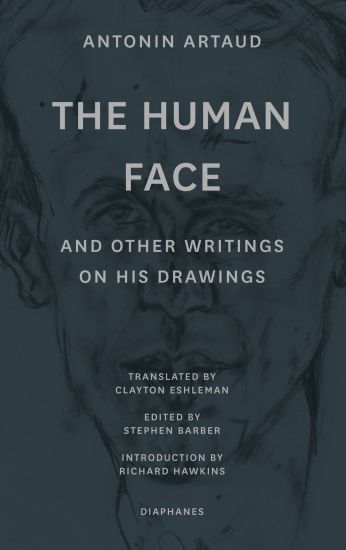
"The Human Face" and Other Writings on His Drawings

"The Human Face" and Other Writings on His Drawings

Antonin Artaud; Stephen Barber; Clayton Eshleman; Richard Hawkins

Diaphanes
2023
nidottu
The first comprehensive collection in English of Antonin Artaud’s writings on his artworks. The many major exhibitions of Antonin Artaud’s drawings and drawn notebook pages in recent years—at New York’s Museum of Modern Art, Vienna’s Museum Moderner Kunst, and Paris’s Centre Georges Pompidou—have entirely transformed our perception of his work, reorienting it toward the artworks of his final years. This volume collects all three of Artaud’s major writings on his artworks. “The Human Face” (1947) was written as the catalog text for Artaud’s only gallery exhibition of his drawings during his lifetime, focusing on his approach to making portraits of his friends at the decrepit pavilion in the Paris suburbs where he spent the final year of his life. “Ten years that language is gone” (1947) examines the drawings Artaud made in his notebooks—his main creative medium at the end of his life—and their capacity to electrify his creativity when language failed him. “50 Drawings to assassinate magic” (1948), the residue of an abandoned book of Artaud’s drawings, approaches the act of drawing as part of the weaponry deployed by Artaud at the very end of his life to combat malevolent assaults and attempted acts of assassination. Together, these three extraordinary texts—pitched between writing and image—project Artaud’s ferocious engagement with the act of drawing.
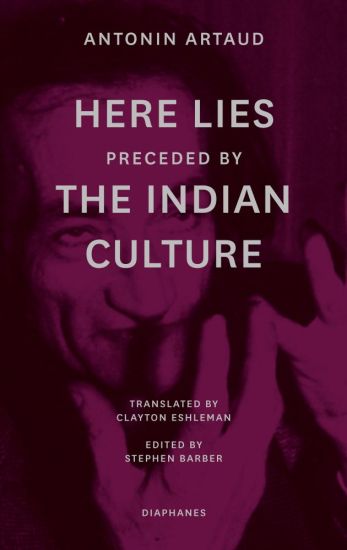
"Here Lies" preceded by "The Indian Culture"

"Here Lies" preceded by "The Indian Culture"

Antonin Artaud; Stephen Barber; Clayton Eshleman

Diaphanes AG
2022
nidottu
“Here Lies” preceded by “The Indian Culture” collects two of Antonin Artaud’s foremost poetic works from the last period of his life. He wrote both works soon after his release from the psychiatric hospital of Rodez and his return to Paris, and they were published during the flurry of intensive activity and protests against his work’s censorship. The Indian Culture is the first and most ambitious work of Artaud’s last period. It deals with his travels in Mexico in 1936 where Artaud sets aside his usual preoccupations with peyote and the Tarahumara people’s sorcerers to directly anatomize his obsessions with gods, corporeality, and sexuality. Here Lies is Artaud’s final declaration of autonomy for his own body from its birth to its imminent death, won at the cost of multiple battles against the infiltrating powers amassed to steal that birth and death away from him. Both works demonstrate Artaud’s final poetry as a unique amalgam of delicate linguistic invention and ferociously obscene invective. “Here Lies” preceded by “The Indian Culture” was translated by the award-winning translator Clayton Eshleman, widely seen as the preeminent translator into English of Artaud’s work, with its profound intensity and multiply nuanced language. For the first time since its first publication, this bilingual edition presents the two works in one volume, as Artaud originally intended. This edition also features a contextual afterword by Stephen Barber as well as new material, previously untranslated into English.
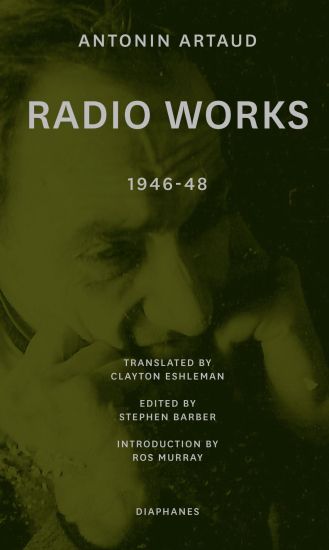
Radio Works: 1946–48

Radio Works: 1946–48

Antonin Artaud; Stephen Barber; Clayton Eshleman; Ros Murray

Diaphanes AG
2022
nidottu
Following his release from the Rodez asylum, Antonin Artaud decided he wanted his new work to connect with a vast public audience, and he chose to record radio broadcasts in order to carry through that aim. That determination led him to his most experimental and incendiary project, To Have Done with the Judgement of God, 1947-48, in which he attempted to create a new language of texts, screams, and cacophonies: a language designed to be heard by millions, aimed, as Artaud said, for “road-menders.” In the broadcast, he interrogated corporeality and introduced the idea of the “body without organs,” crucial to the later work of Deleuze and Guattari. The broadcast, commissioned by the French national radio station, was banned shortly before its planned transmission, much to Artaud’s fury. This volume collects all of the texts for To Have Done with the Judgement of God, together with several of the letters Artaud wrote to friends and enemies in the short period between his work’s censorship and his death. Also included is the text of an earlier broadcast from 1946, Madness and Black Magic, written as a manifesto prefiguring his subsequent broadcast. Clayton Eshleman’s extraordinary translations of the broadcasts activate these works in their extreme provocation.
Pollen Aria

Pollen Aria

Clayton Eshleman

Black Widow Press
2019
nidottu
That Clayton Eshleman has not ceased from exploration over a career spanning more than 60 years is witnessed by the bulk, range, and diversity of his prior work. Now in his 80's Eshleman presents us with a last collection of his poems-mostly recent, a few older. That he has sought to open up his life and work, to entwine and entangle it with others, through observation and vision, research and scholarship, translation and editing, and collaboration and conversation, all of this reflects Eshleman's life commitment, indeed a commitment to life in writing poetry.
The Price of Experience

The Price of Experience

Clayton Eshleman

Black Widow Press
2013
pokkari
A large compendium of National Book Award winning author Clayton Eshleman's poetry, lectures on ancient cave paintings, a journal, essays, reviews, and interviews. A journey through Eshleman's musings and writings both new and old.
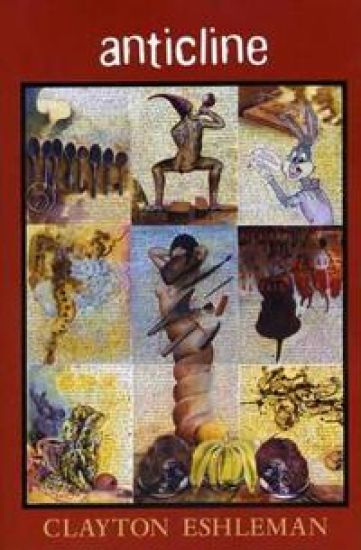
Anticline

Anticline

Clayton Eshleman

Black Widow Press
2010
pokkari
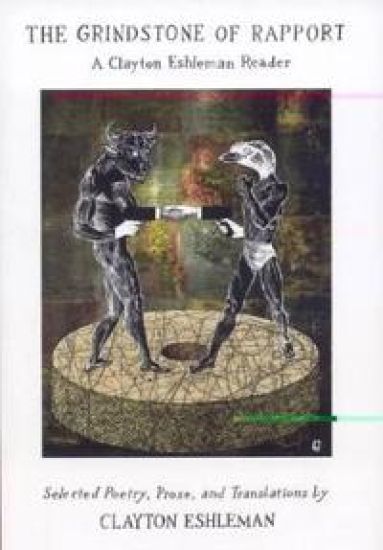
Eshleman's newest volume of poetry, following last year's critically acclaimed Grindstone of Rapport: A Clayton Eshleman Reader continues his 40 plus years of exploration of the human psyche and commentating through poetry on human history, politics, superstitions, and culture. A poet who Publishers Weekly said Eshleman is a visionary, divining the world at hand the operation of the primordial energies that have animated human culture from its beginning. (Starred review of Grindstone, Jan. 19, 2009 issue).
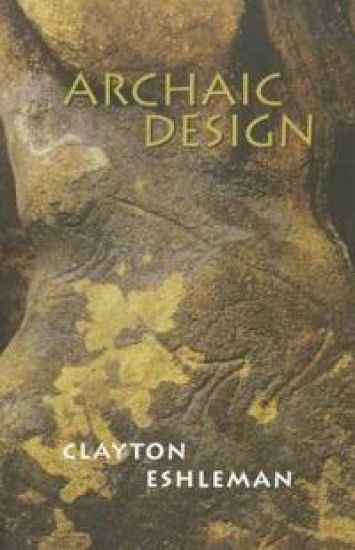
Archaic Design

Archaic Design

Clayton Eshleman

Black Widow Press
2008
pokkari
From National Book Award winning poet/author Clayton Eshleman a wide ranging new book of poetry, prose poems, and essays. Spanning subjects from the writer's craft to poetic musings on art, this collection follows his recent, widely acclaimed 'Complete poems of Cesar Vallejo' and his books of original poems, 'Alchemist with One Eye on Fire'.
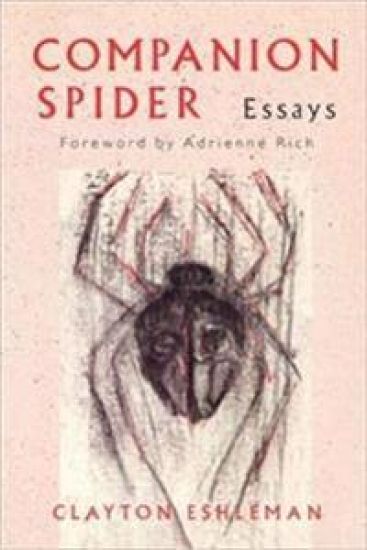
Companion Spider

Companion Spider

Clayton Eshleman

Wesleyan University Press
2002
nidottu
Companion Spider is the accumulated work of a poet and translator who goes more deeply into the art and its process and demands than anyone since Robert Duncan. Clayton Eshleman is one of our most admired and controversial poets, the translator of such great international poets as César Vallejo, Aimé Césaire and Antonin Artaud, and founder and editor of two important literary magazines, Sulfur and Caterpillar. As such, Eshleman writes about the vocation of poet and of the poet as translator as no one else in America today; he believes adamantly that art must concern itself with vision, and that poets learn best by an apprenticeship that is a kind of immersion in the work of other poets. Companion Spider opens with a unique eighty page essay called "Novices: A Study of Poetic Apprenticeship" addressed to the poet who is just starting out. Subsequent sections take up the art of translation, poets and their work, and literary magazine editing. The title is drawn from an extraordinary visionary experience which the author had, which becomes a potent metaphor for the creative process. Through the variety of poets and artists to whom he pays homage, Eshleman suggests a community which is not of a single place or time; rather, there is mutual recognition and responsiveness, so that the reader becomes aware of a range of artistic practices s/he might explore