Kirjojen hintavertailu – 12 859 819 kirjaa ja 27 kauppaa

Kirjailija

Clem Tisdell

Kirjat ja teokset yhdessä paikassa: 13 kirjaa, julkaisuja vuosilta 1996–2012, suosituimpiin kuuluu Technology Transfer and China's Industrial Development. Vertaile teosten hintoja ja tarkista saatavuus suomalaisista kirjakaupoista.

13 kirjaa

Kirjojen julkaisuvuodet: 1996–2012.

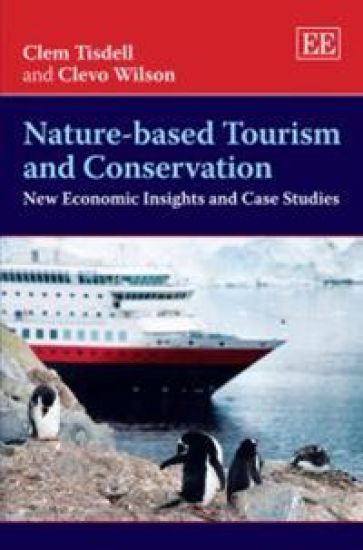
Nature-based Tourism and Conservation

Nature-based Tourism and Conservation

Clem Tisdell; Clevo Wilson

Edward Elgar Publishing Ltd
2012
sidottu
Nature-based Tourism and Conservation unearths new or neglected principles relevant to tourism and recreational economics, environmental valuation and economic theory. Its three parts have chapters on nature-based tourism and its relationships to conservation including case studies dealing with the consequences of World Heritage listing of natural sites, Antarctic, subtropical and tropical national park-based tourism and an NGO's conservation efforts modeled on ecotourism. The final part focuses on tourism utilizing particular wildlife, including sea turtles, whales, penguins, royal albatross, glow-worms and tree kangaroos.
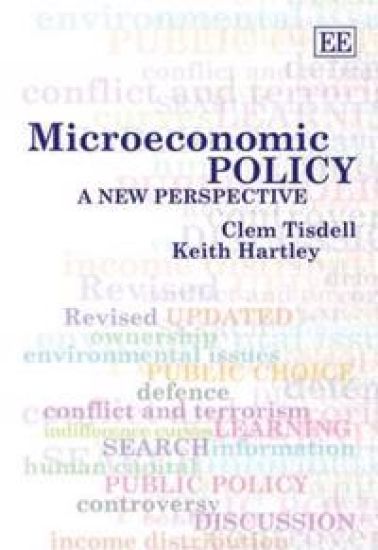
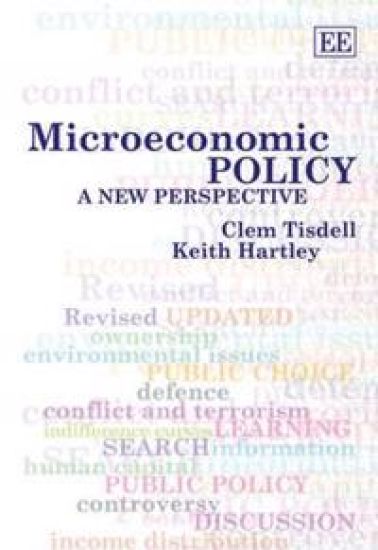
Microeconomic Policy

Microeconomic Policy

Clem Tisdell; Keith Hartley

Edward Elgar Publishing Ltd
2008
nidottu
This thoroughly accessible textbook shows students how microeconomic theory can be used and applied to major issues of public policy. In this way, it will improve their understanding of both microeconomic theory and policy and also develop their ability to critically assess them.>Clem Tisdell and Keith Hartley have expanded upon their previous successful work on microeconomics. As a result, this new book is considerably updated with substantial chapter revisions, as well as new chapters dealing with business management, ownership, environmental issues, public choice, defence, conflict and terrorism. Promoting a thorough understanding of this complex yet fundamental topic, Microeconomic Policy: A New Perspective will undoubtedly prove an invaluable textbook for all students, academics and researchers of economics and public policy.
Microeconomic Policy

Microeconomic Policy

Clem Tisdell; Keith Hartley

Edward Elgar Publishing Ltd
2008
sidottu
This thoroughly accessible textbook shows students how microeconomic theory can be used and applied to major issues of public policy. In this way, it will improve their understanding of both microeconomic theory and policy and also develop their ability to critically assess them.>Clem Tisdell and Keith Hartley have expanded upon their previous successful work on microeconomics. As a result, this new book is considerably updated with substantial chapter revisions, as well as new chapters dealing with business management, ownership, environmental issues, public choice, defence, conflict and terrorism. Promoting a thorough understanding of this complex yet fundamental topic, Microeconomic Policy: A New Perspective will undoubtedly prove an invaluable textbook for all students, academics and researchers of economics and public policy.
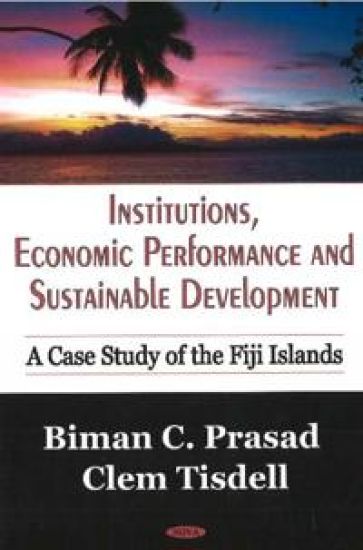
Institutions, Economic Performance & Sustainable Development

Institutions, Economic Performance & Sustainable Development

Biman C Prasad; Clem Tisdell

Nova Science Publishers Inc
2006
sidottu
Fiji has distinct institutional features that make it an ideal case for examining and discussing the consequences of institutional arrangements (particularly the nature of property rights) for national economic performance, development prospects, and the state of the environment which in turn, reflects a nation's ability to achieve sustainable development. Furthermore, the nature of institutional arrangements in Fiji can be used to illustrate aspects of both the new and the old' institutional economics. Apart from the fact that Fiji provides considerable scope for the exploration of institutional economics and its applications, Fiji is a comparatively important island nation in the south-west Pacific, that is, an important member of the Pacific Island Forum grouping of 14 island nations. The recent development of Fiji has been much influenced by its social history, particularly by its institutional structures established or codified during British colonial rule. Its present racial composition is largely a product of British colonisation. The significant Indian population of Fiji consists mostly of the descendants of Indians brought to Fiji by the British to produce sugar cane as a contribution to the economic development of the former British Empire. In many respects, the type of global imperialism that was well established during the nineteenth century was a forerunner to modern economic globalisation which involves a mixture of free trading blocs and multilateralism. The current population mixture of Fiji consisting of about equal numbers of Indian Fijians and Indigenous Fijians has its roots in Fiji's colonial history. Furthermore, the codified systems of property rights (which largely excludes Indian Fijians from the ownership of land) was established by the British. It has been a major source of ethnic tension, and of social and political conflict in Fiji. We show that this system of property rights has had important negative consequences for economic growth in Fiji, for the economic performance of its industries, and for the conservation of its natural resources. It is also associated with a system of distribution of rents from land and natural resources which may not be equitable, and which also does not appear to be efficient administratively. This adds to social and political tension in Fiji.
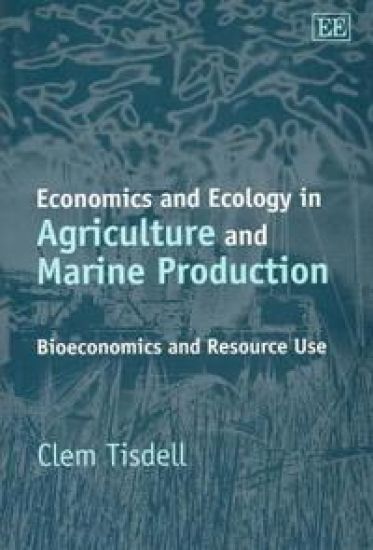
Economics and Ecology in Agriculture and Marine Production

Economics and Ecology in Agriculture and Marine Production

Clem Tisdell

Edward Elgar Publishing Ltd
2003
sidottu
In this new book, Clem Tisdell considers combined economic and ecological influences on levels of agricultural and marine production, their variations and sustainability. The book consists mainly of previously published articles gathered together for the first time, while also including new chapters written especially for this collection. The book begins with an overview of the field, followed by an examination of the choice of variety of species for variable environments, new crops and diversification, production and impacts of economic and ecological factors on agricultural production generally. It goes on to consider specific aspects of pest and disease control in agriculture. The final part is devoted to bio-economic aspects of marine production. Interesting and often controversial topics include consequences and economic causes of genetic selection in agriculture, transgenic crops (GMOs), and effects of aquaculture on levels of wild fish stocks. Interdisciplinary in nature, Economics and Ecology in Agriculture and Marine Production covers a broad range of subjects and will attract a wide readership. It will therefore appeal to ecological, agricultural, environmental and natural resource economists, while also being of interest to those involved in land and food science, fisheries and marine studies.
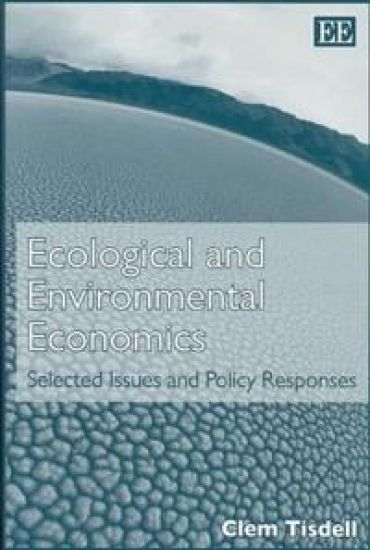
Ecological and Environmental Economics

Ecological and Environmental Economics

Clem Tisdell

Edward Elgar Publishing Ltd
2003
sidottu
This unique collection of Clem Tisdell's articles is an eminently readable and comprehensive economic analysis of important contemporary issues involving ecological and environmental economics. Coverage includes the role of ecological economics in the modern world, welfare and ethical considerations in environmental economics, sustainability concerns, the potential role of local communities in conservation, environmental aspects of population growth, and the relevance of carrying capacity concepts. The value for environmental management of different types of governance and of alternative economic policy instruments (such as environmental taxation compared to tradable permits) is also assessed. Ecological, environmental, natural resource, geographical and development economists will all find this book of great interest and value, as will policymakers in this area.
The Economics of Conserving Wildlife and Natural Areas

The Economics of Conserving Wildlife and Natural Areas

Clem Tisdell

Edward Elgar Publishing Ltd
2002
sidottu
This coherent collection of both previously published and specially written papers applies general economic principles to the conservation of wildlife and natural areas, and outlines consequential policy issues. Particular consideration is given to open-access situations, property rights in wildlife and to the total valuation of species, allowing for their possible positive and negative values. Possible conflict between economic growth and biodiversity conservation is discussed, as are the arguments for state provision of parks and protected areas. Asian elephants, kangaroos and whales are selected examples of species used to illustrate applications of the underlying principles. Forestry management is also reviewed, drawing upon the experiences of China and India. Clem Tisdell aims to demonstrate how economics can help to clarify and resolve social conflicts about nature conservation, while also highlighting the limits of economics in providing answers such as those of an intrinsic value. Doubts are thrown upon some widely accepted concepts, such as the Environmental Kuznets curve, when applied to the relationship between nature conservation and economic growth. The Economics of Conserving Wildlife and Natural Areas will be warmly welcomed by academics and policymakers in the areas of ecological and environmental economics as well as natural resource economists and managers and those with a linked interest to development studies.
Tourism Economics, the Environment and Development

Tourism Economics, the Environment and Development

Clem Tisdell

Edward Elgar Publishing Ltd
2001
sidottu
Tourism is the world's largest industry and its fastest growing one. It has the potential to contribute significantly to the economic development of most economies, including those of less developed countries and peripheral economic regions. However, it depends heavily on environmental conditions, natural and man-made, for its market and its sustainability. This book analyzes market and political failures in relation to tourism development and the environment, and the implications of those for national gains from international tourism, for public finance and policy, and for the sustainability of tourism. Particular emphasis is placed on ecotourism and the sustainable use of natural sites, methods of evaluating the sustainability of tourism and the impacts of pollution on tourism. Case studies cover both large and small developing countries e.g. Bangladesh, Brazil, China, India and the Maldives, as well as more developed economies. While some attention is given to the evaluation of protected areas, most attention is given to policies in terms of the sustainable recreational use of such areas - examples include scuba diving and encounters of tourists with whale sharks and sea turtles. This is a fascinating book that will be of great use to a wide readership including economists, environmentalists, geographers, tourism scholars and professionals, as well as academics in development studies.

Biodiversity, Conservation and Sustainable Development

Biodiversity, Conservation and Sustainable Development

Clem Tisdell

Edward Elgar Publishing Ltd
1999
sidottu
This important book highlights the conflicts between economic growth and the conservation of nature in the context of sustainable development. It places particular emphasis on biological diversity and examines possible policies for resolving conflicts which arise from the contrasting goals of conserving the natural environment and economic growth. The book opens with an overview of the challenges of economics, nature conservation and sustainable development and goes on to discuss general principles and broad policies. Case studies from China and north-east India help illustrate important economic and social principles involved in nature conservation. General issues examined include:the value of environmental and resource economics in planning sustainable developmentthe importance of biodiversity conservation for sustainable development and for the stability and sustainability of ecological systemsthe impact of economic globalization and market systems on the conservation of naturepriorities for the financial support of protected areasthe extent to which ecotourism can be harnessed to reconcile economic utilisation of an area with nature conservationthe costs and benefits of conservationfinancing the management of nature reserves This book will be essential reading for economists interested in the environment, ecology and development.
Bounded Rationality and Economic Evolution

Bounded Rationality and Economic Evolution

Clem Tisdell

Edward Elgar Publishing Ltd
1996
sidottu
This seminal work advances beyond neoclassical economics to provide an integrated overview of economic decision making, and the management of bounded rationality and its evolutionary consequences. Clem Tisdell successfully combines recent developments in learning and game theory, transaction costs and evolutionary economics to provide new insights into economic and managerial phenomena. The results are applied to different levels of decision-making, including decisions by individuals, taking into account learning possibilities, decisions by groups and economic organizations including optimal communication within organizations. Bounded Rationality and Economic Evolution will be of particular use to economists, academics in management, business administration and public administration, and social scientists interested in group behaviour.