Kirjojen hintavertailu – 12 903 729 kirjaa ja 27 kauppaa

Kirjailija

Cliff Roberson

Kirjat ja teokset yhdessä paikassa: 26 kirjaa, julkaisuja vuosilta 2000–2025, suosituimpiin kuuluu Introduction to Private Security. Vertaile teosten hintoja ja tarkista saatavuus suomalaisista kirjakaupoista.

26 kirjaa

Kirjojen julkaisuvuodet: 2000–2025.

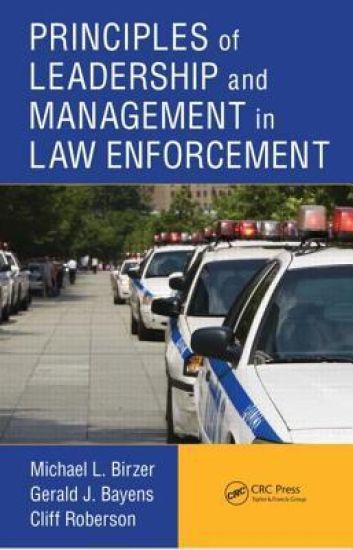
Principles of Leadership and Management in Law Enforcement

Principles of Leadership and Management in Law Enforcement

Michael L. Birzer; Gerald J. Bayens; Cliff Roberson

Routledge Member of the Taylor and Francis Group
2012
sidottu
Effective police organizations are run with sound leadership and management strategies that take into account the myriad of challenges that confront today’s law enforcement professionals. Principles of Leadership and Management in Law Enforcement is a comprehensive and accessible textbook exploring critical issues of leadership within police agencies. Every chapter includes key concepts, definitions, chapter objectives, and review questions. Organized in logical fashion, each new chapter builds on previous material for quick assimilation. Topics include: The evolution of the modern police departmentLeadership approaches and management theoriesOrganizational structure of a police departmentStrategic short- and long-term planningBusiness approaches, including Six Sigma and COMPSTATNew technology such as computer-aided dispatch, vehicle monitoring, and crime mappingManaging police stress and the work environmentRecruitment and trainingLegislative issues impacting police, including Title VIIPolicing in an era of advanced homeland securityEthical issuesSuitable for a one-semester course, the book’s easy reading style minimizes the need for memorization and reinforces salient points through boxed highlighted areas. Written by three renowned criminal justice experts, this volume encourages readers to think expansively and develop new insights into the future direction of police leadership and management.
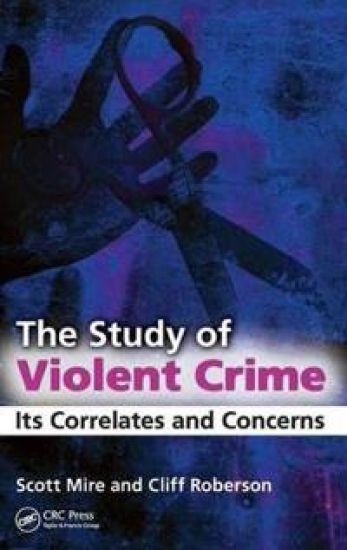
The Study of Violent Crime

The Study of Violent Crime

Scott Mire; Cliff Roberson

Routledge Member of the Taylor and Francis Group
2010
sidottu
Violence is a complex subject that is rooted in a multitude of disciplines, including not only criminology but also psychology, sociology, biology, and other social science disciplines. It is only through understanding violence as a concept that we can hope to respond to it appropriately and to prevent it. The Study of Violent Crime: Its Correlates and Concerns is a comprehensive text that provides a current analysis of violence and violent crime in the United States. Topics discussed include: The history of violence in Europe and America Whether violent behavior can be predictedPossible correlates of violence, including values, poverty, low education, abuse and neglect, alcohol abuse, and shameSociological theories surrounding crime causation, including social control, conflict and strain, and anomiePsychological approaches to understanding violence from Freud, Bentham, Skinner, and othersBiological theories and the influence of positivism and determinismThe role of early exposure to violence on future behavior and programs to counteract these effectsGang activity and hate crimesThe history of punishment and its effectivenessVictimology and victimizationOrganized in logical fashion, each chapter builds on previous ones and makes use of concrete examples to clarify concepts. Action boxes help readers focus on salient points and review questions appear at the end of each chapter, enabling readers to test their assimilation of the material.
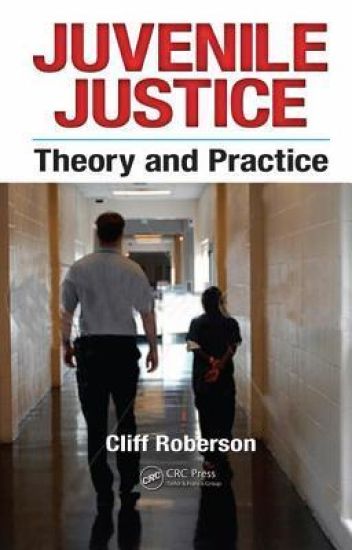
Juvenile Justice

Juvenile Justice

Cliff Roberson

Routledge Member of the Taylor and Francis Group
2010
sidottu
Over several hundred years, the juvenile justice system has evolved from one in which a child offender was prosecuted under the same guidelines used for adults to the current system in which society has recognized the unique status of juveniles within the criminal justice framework. Written by world-renowned legal scholar Cliff Roberson, Juvenile Justice: Theory and Practice provides a comprehensive overview of the system that administers the prosecution of young offenders. It examines how the juvenile justice system began, its current state, and the direction it appears to be heading. Topics discussed include: Types of juvenile delinquency cases, arrest statistics, juvenile justice organizations, and the concept of judicial waiverThe history of juvenile courts, including the parens patriae doctrine, early laws, In re Gault, and concepts of reform versus punishmentDelinquency causation philosophies, including social, cultural deviance, symbolic interactionist, and psychological theoriesTypes of abuse and neglect, child protective services, and child abuse prevention programsLaw enforcement agencies, the structure of juvenile courts, juvenile court procedures, transfers to criminal court, and the concept of individual rightsJuvenile probation and parole, juvenile institutions, group homes, boot camps, and shock programsSelected issues in juvenile justice, including drug abuse, juvenile sex offenders, and youth gangsThe book cites actual court cases to demonstrate concepts, provides review questions at the end of each chapter, and includes a glossary of relevant terms. A concise and practical text on juvenile justice, this volume facilitates understanding of this complex and critical subject.
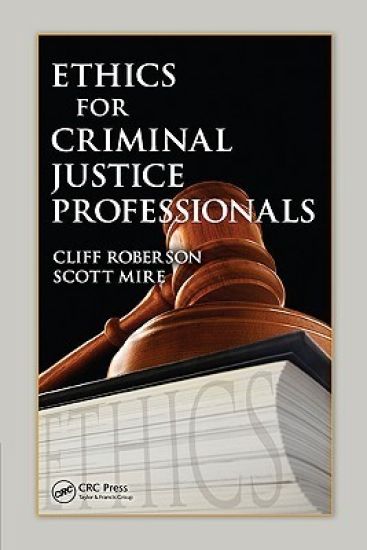
Ethics for Criminal Justice Professionals

Ethics for Criminal Justice Professionals

Cliff Roberson; Scott Mire

CRC Press Inc
2009
sidottu
Increasing concerns about the accountability of criminal justice professionals at all levels has placed a heightened focus on the behavior of those who work in the system. Judges, attorneys, police, and prison employees are all under increased scrutiny from the public and the media. Ethics for Criminal Justice Professionals examines the myriad of ethical issues that confront law enforcement, judicial system, and correctional personnel. Easy to read, practical, and filled with real-life scenarios, this comprehensive volume sheds light on an often complicated and controversial topic. The book begins by defining the subject matter, explaining what ethics is, and what it is not. It explores the concept of false moral identity, examines difficult decisions that arise from attorney-client privilege, and discusses problematic issues such as officer gratuities. Next, the book provides a historical review of the concept of ethical reasoning, examining different religious and cultural influences and exploring ethics from various schools of philosophy. Ethics and police officers The authors discuss management and corruption, the causes and effects of abuse of authority, police perjury, and the practice of lying to obtain a confession. They explore the role of prejudice and discrimination in unethical behavior and review legislation designed to curb such practices. Ethics in the courtroom Shifting to issues that arise in the courtroom, the book addresses prosecutorial and judicial misconduct, discovery violations, the presentation of inadmissible evidence, discretion to prosecute, and defense counsel ethics. Ethics in the prison system Finally, the book explores issues that arise with respect to correction. The authors examine the four purposes of punishment: retribution, deterrence, incapacitation, and rehabilitation, as well as the death penalty and methods of execution. Each chapter ends with a set of review questions to test comprehension and a series of exercises further clarifies the material. Interspersed with the content are real-life vignettes that help to ground the theoretical concepts in practice and actual court cases that illustrate the principles. Ample references are provided to inspire further study of issues for which often there are no easy answers.
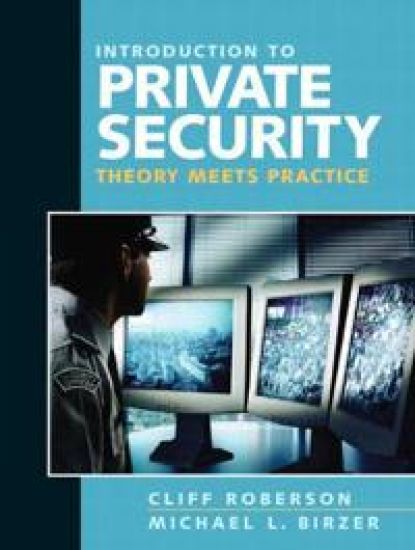
Introduction to Private Security

Introduction to Private Security

Cliff Roberson; Michael Birzer

Pearson
2009
nidottu
For courses in Introduction to Private Security. This one-semester text discusses all aspects of private security-from recruiting, selecting and training security personnel to testifying in court. Designed to help address the need for more in-depth education and increased licensing demands, the book presents topics using independent chapters that deliver a complete picture of the field. Action boxes appear throughout the text and feature down to earth examples. Margin definitions, class exercises and review questions are included to improve student learning and encourage class participation.
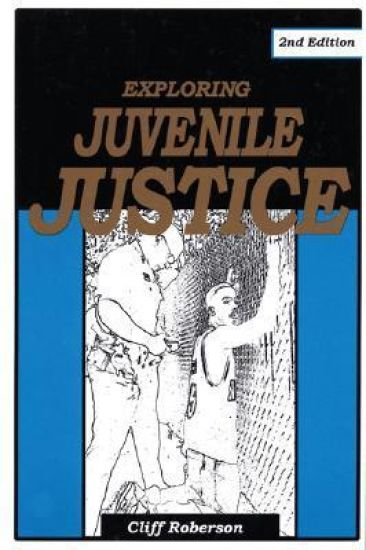
Exploring Juvenile Justice

Exploring Juvenile Justice

Cliff Roberson

Wadsworth Publishing Co Inc
2000
nidottu
This text examines how the juvenile justice system began and also addresses the system's current status and the direction it appears to be heading. Included are discussions on the history of juvenile justice, the controversial philosophy of the system, police involvement, detention and diversion, and the processing requirements involved throughout disposition. EXPLORING JUVENILE JUSTICE presents in-depth material in a fashion that enables the reader to enjoy and readily comprehend this complex issue. Lively chapters on causation, drugs, and gangs provide a well-rounded understanding of this subject.