Kirjojen hintavertailu – 12 903 735 kirjaa ja 27 kauppaa
Kirjailija
Clifford E. Trafzer
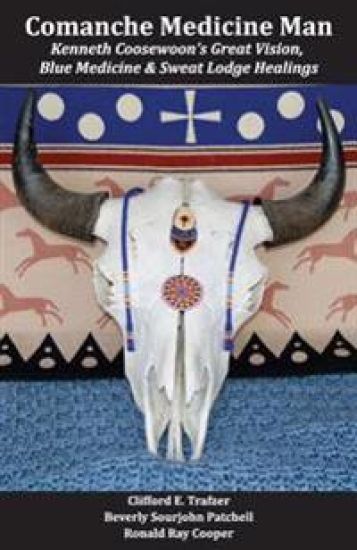
Kirjat ja teokset yhdessä paikassa: 13 kirjaa, julkaisuja vuosilta 1996–2025, suosituimpiin kuuluu Comanche Medicine Man: Kenneth Coosewoon's Great Vision, Blue Medicine, and Sweat Lodge Healings. Vertaile teosten hintoja ja tarkista saatavuus suomalaisista kirjakaupoista.
John Fahey; Henry Matthews; Donald W. Meinig; Ruth Barnes Moynihan; Wayne D. Rasmussen; Harvey S. Rice; Carlos A. Schwantes; Clifford E. Trafzer; J. William T. Youngs
Essential aspects about the prehistory, history, geography, and architecture of the Inland Pacific Northwest are presented here in one succinct volume. This landmark collection features essays by noted national and regional scholars, such as Donald W. Meinig, Carlos A. Schwantes, Henry Matthews, Clifford E. Trafzer, and Harvey S. Rice. Spokane and the Inland Empire outlines the region's historical geographic systems, Palouse tribal history, characteristics of prehistoric Plateau Indian dwellings, a century of Columbia Plateau agriculture, Spokane's bitter labor disputes that occurred prior to America's entry into World War I, the exceptional architecture of Spokane's Kirtland Cutter, and more. This updated edition includes some new material and has been revised from the original volume published in 1991. Extensive illustrations supplement the text.
Native Americans long resisted Western medicine - but had less power to resist the threat posed by Western diseases. And so, as the Office of Indian Affairs reluctantly entered the business of health and medicine, Native peoples reluctantly began to allow Western medicine into their communities. Fighting Invisible Enemies traces this transition among inhabitants of the Mission Indian Agency of Southern California from the late nineteenth through the mid-twentieth century. What historian Clifford E. Trafzer describes is not so much a transition from one practice to another as a gradual incorporation of Western medicine into Indian medical practices. Melding indigenous and medical history specific to Southern California, his book combines statistical information and documents from the federal government with the oral narratives of several tribes. Many of these oral histories - detailing traditional beliefs about disease causation, medical practices, and treatment - are unique to this work, the product of the author's close and trusted relationships with tribal elders. Trafzer examines the years of interaction that transpired before Native people allowed elements of Western medicine and health care into their lives, homes, and communities. Among the factors he cites as impelling the change were settler-borne diseases, the negative effects of federal Indian policies, and the sincere desire of both Indians and agency doctors and nurses to combat the spread of disease. Here we see how, unlike many encounters between Indians and non-Indians in Southern California, this cooperative effort proved positive and constructive, resulting in fewer deaths from infectious diseases, especially tuberculosis. The first study of its kind, Trafzer's work fills gaps in Native American, medical, and Southern California history. It informs our understanding of the working relationship between indigenous and Western medical traditions and practices as it continues to develop today.
In 1924, the United States began a bold program in public health. The Indian Service of the United States hired its first nurses to work among Indians living on reservations. This corps of white women were dedicated to improving Indian health. In 1928, the first field nurses arrived in the Mission Indian Agency of Southern California. These nurses visited homes and schools, providing public health and sanitation information regarding disease causation and prevention. Over time, field nurses and Native people formed a positive working relationship, which resulted in the decline of mortality from infectious diseases. Many Native Americans accepted and used Western medicine to fight pathogens, while also continuing Indigenous medicine ways. Nurses helped control tuberculosis, measles, influenza, pneumonia, and a host of gastrointestinal sicknesses. In partnership with the community, nurses quarantined people with contagious diseases, tested for infections, and tracked patients and contacts. Indians turned to nurses and learned about disease prevention. With strong hearts, Indians eagerly participated in the tuberculosis campaign of 1939-40 to X-ray tribal members living on twenty-nine reservations. Through their cooperative efforts, Indians and health-care providers decreased deaths, cases, and misery among the tribes of Southern California.
Native Americans long resisted Western medicine - but had less power to resist the threat posed by Western diseases. And so, as the Office of Indian Affairs reluctantly entered the business of health and medicine, Native peoples reluctantly began to allow Western medicine into their communities. Fighting Invisible Enemies traces this transition among inhabitants of the Mission Indian Agency of Southern California from the late nineteenth through the mid-twentieth century. What historian Clifford E. Trafzer describes is not so much a transition from one practice to another as a gradual incorporation of Western medicine into Indian medical practices. Melding indigenous and medical history specific to Southern California, his book combines statistical information and documents from the federal government with the oral narratives of several tribes. Many of these oral histories - detailing traditional beliefs about disease causation, medical practices, and treatment - are unique to this work, the product of the author's close and trusted relationships with tribal elders. Trafzer examines the years of interaction that transpired before Native people allowed elements of Western medicine and health care into their lives, homes, and communities. Among the factors he cites as impelling the change were settler-borne diseases, the negative effects of federal Indian policies, and the sincere desire of both Indians and agency doctors and nurses to combat the spread of disease. Here we see how, unlike many encounters between Indians and non-Indians in Southern California, this cooperative effort proved positive and constructive, resulting in fewer deaths from infectious diseases, especially tuberculosis. The first study of its kind, Trafzer's work fills gaps in Native American, medical, and Southern California history. It informs our understanding of the working relationship between indigenous and Western medical traditions and practices as it continues to develop today.
Hardship to Homeland recounts Volga Germans' unique story in a saga that stretches from Germany to Russia and across the Atlantic. Burdened by war and debt, life was extremely difficult for impoverished European peasants until a former German princess came to power. Seeking to increase borderland population, provide a buffer against Ottoman Empire incursions, and bring agricultural ingenuity to her country, Russian empress Catherine II issued a remarkable 1763 manifesto inviting Europeans to immigrate. Their passage paid, colonists would become Russian citizens, yet retain their language and culture. For the next four years, some 27,000 settlers came--mostly from Hesse and the Palatinate--founding 104 communities along both banks of the Volga River near Saratov and introducing numerous agricultural innovations. But the Russian Senate revoked the original settlement terms in 1871. Facing poor economic conditions and a forced Russian army draft, 100,000 Volga Germans joined other immigrant waves to the New World. After a decade of hardship in the Midwest, some began moving to the Pacific Northwest, and their westward movement was one of the region's largest single ethnic group migrations. From outposts in Washington State they spread throughout the Columbia Basin, along the coast, and into northern Idaho, Oregon, British Columbia, and Alberta, transforming their new homelands into centers of western productivity and significantly influencing North American religion, politics, and social development. Hardship to Homeland is a revised and expanded reprint of The Volga Germans: Pioneers of the Northwest, published in 1985 and long out of print. This edition offers a new introduction as well as Volga German folk stories from the Pacific Northwest, collected and retold by Richard D. Scheuerman, with illustrations by Jim Gerlitz.
The Chemehuevi of the Twenty-Nine Palms tribe of Southern California stands as a testament to the power of perseverance. This small, nomadic band of Southern Paiute Indians has been repeatedly marginalized by European settlers, other Native groups, and, until now, historical narratives that have all too often overlooked them. Having survived much of the past two centuries without rights to their homeland or any self-governing abilities, the Chemehuevi were a mostly "forgotten" people until the creation of the Twenty-Nine Palms Reservation in 1974. Since then, they have formed a tribal government that addresses many of the same challenges faced by other tribes, including preserving cultural identity and managing a thriving gaming industry. A dedicated historian who worked closely with the Chemehuevi for more than a decade, Clifford Trafzer shows how this once-splintered tribe persevered using sacred songs and other cultural practices to maintain tribal identity during the long period when it lacked both a homeland and autonomy. The Chemehuevi believe that their history and their ancestors are always present, and Trafzer honors that belief through his emphasis on individual and family stories. In doing so, he not only sheds light on an overlooked tribe but also presents an important new model for tribal history scholarship. A Chemehuevi Song strikes the difficult balance of placing a community-driven research agenda within the latest currents of indigenous studies scholarship. Chemehuevi voices, both past and present, are used to narrate the story of the tribe's tireless efforts to gain recognition and autonomy. The end result is a song of resilience.
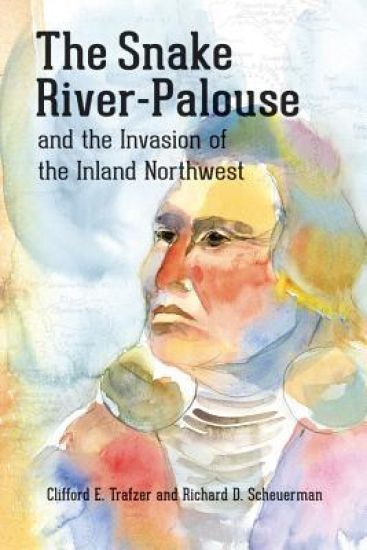
Originally released in 1986 as Renegade Tribe, this award-winning title sensitively retells the compelling saga of western expansion and Indian-white conflict from a Native American perspective. The Snake River-Palouse resisted immigrant encroachment and fought a losing battle to retain their way of life. The Whitman Massacre, as well as a refusal to enter into U. S. government treaties, left them with a hostile reputation among the newcomers. With settlers increasingly demanding their removal and no reservation of their own, these Inland Northwest Indians faced extermination by the end of the nineteenth century. Examining written and oral evidence left by both indigenous and white cultures, this book presents the Snake River-Palouse as important actors in events and demonstrates how their initiative and decisions influenced the course of history. This revised edition offers a new introduction by the authors and a new foreword by Chief Tilcoax's descendent Wilson Wewah.
The Chemehuevi of the Twenty-Nine Palms tribe of Southern California stands as a testament to the power of perseverance. This small, nomadic band of Southern Paiute Indians has been repeatedly marginalized by European settlers, other Native groups, and, until now, historical narratives that have all too often overlooked them. Having survived much of the past two centuries without rights to their homeland or any self-governing abilities, the Chemehuevi were a mostly "forgotten" people until the creation of the Twenty-Nine Palms Reservation in 1974. Since then, they have formed a tribal government that addresses many of the same challenges faced by other tribes, including preserving cultural identity and managing a thriving gaming industry. A dedicated historian who worked closely with the Chemehuevi for more than a decade, Clifford Trafzer shows how this once-splintered tribe persevered using sacred songs and other cultural practices to maintain tribal identity during the long period when it lacked both a homeland and autonomy. The Chemehuevi believe that their history and their ancestors are always present, and Trafzer honors that belief through his emphasis on individual and family stories. In doing so, he not only sheds light on an overlooked tribe but also presents an important new model for tribal history scholarship. A Chemehuevi Song strikes the difficult balance of placing a community-driven research agenda within the latest currents of indigenous studies scholarship. Chemehuevi voices, both past and present, are used to narrate the story of the tribe's tireless efforts to gain recognition and autonomy. The end result is a song of resilience.
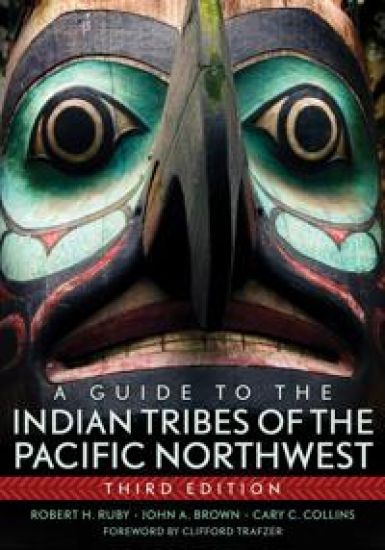
The Native peoples of the Pacific Northwest inhabit a vast region extending from the Rocky Mountains to the Pacific Ocean, and from California to British Columbia. For more than two decades, A Guide to the Indian Tribes of the Pacific Northwest has served as a standard reference on these diverse peoples. Now, in the wake of renewed tribal self-determination, this revised edition reflects the many recent political, economic, and cultural developments shaping these Native communities. From such well-known tribes as the Nez Perces and Cayuses to lesser-known bands previously presumed ""extinct,"" this guide offers detailed descriptions, in alphabetical order, of 150 Pacific Northwest tribes. Each entry provides information on the history, location, demographics, and cultural traditions of the particular tribe. Among the new features offered here are an expanded selection of photographs, updated reading lists, and a revised pronunciation guide. While continuing to provide succinct histories of each tribe, the volume now also covers such contemporary - and sometimes controversial - issues as Indian gaming and NAGPRA. With its emphasis on Native voices and tribal revitalization, this new edition of the Guide to the Indian Tribes of the Pacific Northwest is certain to be a definitive reference for many years to come.
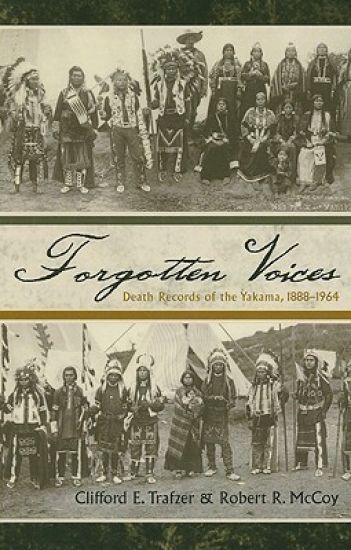
Despite a recent resurgence in studies of death and disease in native peoples of the Western Hemisphere, little work has been done on death and disease in Native Americans during the reservation period of the late 19th and early 20th centuries. Forgotten Voices: Death Records of the Yakama, 1888-1964 begins a discussion of the health of the people on the Yakama Reservation in Washington using statistical data. This is the first detailed work that focuses on the causes of death on American Indian reservations. It contains an extensive introduction to Yakama history and lifestyle, and tables that present statistical information on the major causes of death. Each chapter highlights a different cause of death on the Yakama Reservation, including • Tuberculosis • Pneumonia • Heart Disease • Gastrointestinal Problems • Influenza • Cancer • Birth Complications • Old Age • Stroke Forgotten Voices is an invaluable resource for students and scholars that encourages further research in the field of Native American history.
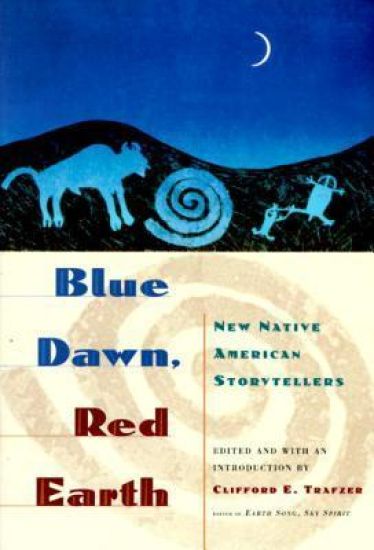
Integrating traditional oral tales into modern narratives, this collection of Native American literature encompasses some thirty varied short stories by Craig Womack, Gerald Vizenor, and other notable writers representing a range of tribal and cultural backgrounds. Original.