Kirjojen hintavertailu – 12 859 828 kirjaa ja 27 kauppaa

Kirjailija

Clifford Winston

Kirjat ja teokset yhdessä paikassa: 14 kirjaa, julkaisuja vuosilta 1986–2025, suosituimpiin kuuluu The Economic Effects of Surface Freight Deregulation. Vertaile teosten hintoja ja tarkista saatavuus suomalaisista kirjakaupoista.

14 kirjaa

Kirjojen julkaisuvuodet: 1986–2025.

Market Corrections Not Government Interventions

Market Corrections Not Government Interventions

Clifford Winston

Springer International Publishing AG
2025
sidottu
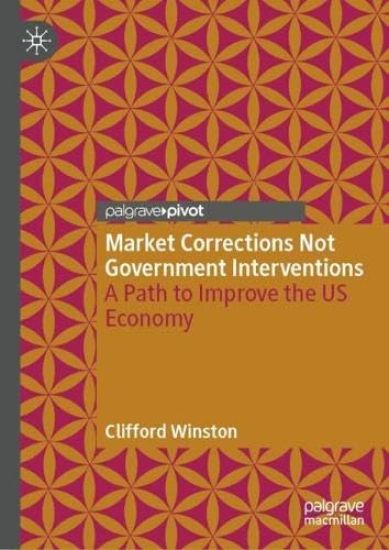
The choice of whether to recommend a market solution or a government intervention to address an economic or social problem is the eternal issue of public policy analysis. Throughout the decades, academics, policymakers, and the public have alternated between market-friendly and market-skeptical perspectives. But do these shifting views accurately reflect our knowledge about market and government performance? In this book, Clifford Winston examines the extensiveness as well as the persistence of government failures in the US economy and the potential for market corrections to address those failures. He provides contemporary empirical evidence that strongly questions the effectiveness of government interventions, and he explores whether markets can self-correct to solve economic and social problems more efficiently. Offering a comprehensive overview of government failures, the book includes key definitions and classifications. Winston synthesizes the available empirical evidence and analyzes the findings, which reveal persistent losses in economic welfare, despite the positive theoretical expectations of government interventions. Theoretical explanations of government failures are then evaluated and found to lack the ability to guide efficient policy reforms. Finally, the robustness of markets to overcome their inefficiencies or failures is characterized in terms of market corrections. Empirical evidence is presented to show that, in contrast to government failures, markets have often corrected their failures. The implications of the book for academics and policymakers are twofold. First, when they are considering the efficacy of a market solution or a government intervention to address an economic or social problem, they should be much more cognizant of the potential for government failure and for this failure to persist. Second, they should also take a long-run view of markets and account for their ability to self-correct. Thus, the book calls for a more stable perspective toward markets and government—one where market corrections, not government interventions, are envisioned as offering a path for improving the US economy.
Revitalizing a Nation

Revitalizing a Nation

Clifford Winston; Jia Yan

BLOOMSBURY PUBLISHING PLC
2023
nidottu
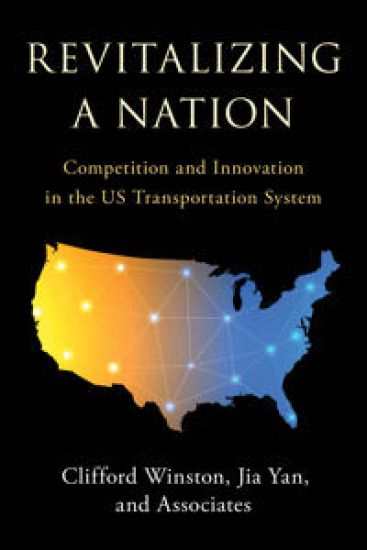
The US transportation system is composed of interconnected sub-systems that provide urban and intercity passenger and freight service and that operate by using infrastructure that facilitates surface, water, and air transportation. Transportation reduces the cost of distance, which includes the monetary cost, travel or shipping time, and safety consequences of moving people and goods from their origins to their destinations. An efficient transportation system provides the foundation for the development and growth of selected industries as well as an entire economy by enabling individuals and firms to be more productive at their destinations. As the US emerged from World War II, the evolution of the transportation system was spurred by large taxpayer-funded investments to build the Interstate Highway System, construct new airports to accommodate the longer takeoff distances of jets, and design new suburban rail transit systems. At first blush, it appeared that the US was on its way to building the best transportation system money could buy. However, by the 1960s, economists began to take issue with the so-called engineering approach to improving a transportation system, which involved increasing government spending and investment without considering efficient policies to optimize the system’s performance that could reduce public spending and investment. Yet, as evidenced by the $1 trillion Infrastructure Investment and Jobs Act signed by President Biden in November 2021, large government expenditures continue to be prioritized as the primary way to improve transportation. In our book, Revitalizing A Nation: Competition and Innovation in the US Transportation System, we argue that it would be far more efficient and equitable if US policymakers prioritized greater competition and innovation instead of relying on taxpayer-funded spending to significantly improve the transportation system. Beginning in the mid-1970s, deregulation demonstrated that efficient policies could significantly improve the intercity passenger and freight transportation system by increasing competition among airlines, railroads, and trucks and by stimulating technological and operating innovations that reduced the modes’ costs and prices and improved service quality. We provide evidence that ridesharing has stimulated competition in urban transportation and greatly benefited travelers and we call on policymakers to withdraw any obstacles that prevent ridesharing companies from competing in urban areas. We also present evidence that policymakers could generate greater competition in all forms of transportation that would benefit travelers and shippers by:—Negotiating open skies airline pricing and service agreements on US international routes with all countries.—Granting foreign airlines cabotage rights to serve US domestic routes, which could spur global deregulation that would facilitate seamless international air travel.—Privatizing airports and air traffic control so both airports and airlines could operate more effectively and compete more intensely.—Privatizing ports so they could operate more efficiently and compete more intensely.—Fully deregulating freight railroads and ocean shipping by eliminating the Surface Transportation Board and by repealing the Jones Act and Foreign Dredge Act and eliminating ocean rate conferences. —Conducting highway privatization experiments to explore the potential benefits and feasibility of private highway competition in the United States. Government also has a critical role to play in the transportation system’s future adoption of innovations by preparing and upgrading infrastructure to facilitate its use by autonomous electric cars, trucks, buses, railroads, ships, as well as air taxis and airborne drones. We provide preliminary evidence that autonomous modes have the potential to provide enormous benefits to travelers, shippers, and the overall economy by improving service times and service time reliability and safety. The most disadvantaged members of society will especially benefit from automation because their accessibility to transportation will be greatly improved. In the final analysis, by creating a stronger culture of competition and innovation in the US transportation system, policymakers can revitalize the nation without spending enormous sums of public funds to do so.
Revitalizing a Nation

Revitalizing a Nation

Clifford Winston; Jia Yan

BLOOMSBURY PUBLISHING PLC
2023
sidottu
The US transportation system is composed of interconnected sub-systems that provide urban and intercity passenger and freight service and that operate by using infrastructure that facilitates surface, water, and air transportation. Transportation reduces the cost of distance, which includes the monetary cost, travel or shipping time, and safety consequences of moving people and goods from their origins to their destinations. An efficient transportation system provides the foundation for the development and growth of selected industries as well as an entire economy by enabling individuals and firms to be more productive at their destinations. As the US emerged from World War II, the evolution of the transportation system was spurred by large taxpayer-funded investments to build the Interstate Highway System, construct new airports to accommodate the longer takeoff distances of jets, and design new suburban rail transit systems. At first blush, it appeared that the US was on its way to building the best transportation system money could buy. However, by the 1960s, economists began to take issue with the so-called engineering approach to improving a transportation system, which involved increasing government spending and investment without considering efficient policies to optimize the system’s performance that could reduce public spending and investment. Yet, as evidenced by the $1 trillion Infrastructure Investment and Jobs Act signed by President Biden in November 2021, large government expenditures continue to be prioritized as the primary way to improve transportation. In our book, Revitalizing A Nation: Competition and Innovation in the US Transportation System, we argue that it would be far more efficient and equitable if US policymakers prioritized greater competition and innovation instead of relying on taxpayer-funded spending to significantly improve the transportation system. Beginning in the mid-1970s, deregulation demonstrated that efficient policies could significantly improve the intercity passenger and freight transportation system by increasing competition among airlines, railroads, and trucks and by stimulating technological and operating innovations that reduced the modes’ costs and prices and improved service quality. We provide evidence that ridesharing has stimulated competition in urban transportation and greatly benefited travelers and we call on policymakers to withdraw any obstacles that prevent ridesharing companies from competing in urban areas. We also present evidence that policymakers could generate greater competition in all forms of transportation that would benefit travelers and shippers by:—Negotiating open skies airline pricing and service agreements on US international routes with all countries.—Granting foreign airlines cabotage rights to serve US domestic routes, which could spur global deregulation that would facilitate seamless international air travel.—Privatizing airports and air traffic control so both airports and airlines could operate more effectively and compete more intensely.—Privatizing ports so they could operate more efficiently and compete more intensely.—Fully deregulating freight railroads and ocean shipping by eliminating the Surface Transportation Board and by repealing the Jones Act and Foreign Dredge Act and eliminating ocean rate conferences. —Conducting highway privatization experiments to explore the potential benefits and feasibility of private highway competition in the United States. Government also has a critical role to play in the transportation system’s future adoption of innovations by preparing and upgrading infrastructure to facilitate its use by autonomous electric cars, trucks, buses, railroads, ships, as well as air taxis and airborne drones. We provide preliminary evidence that autonomous modes have the potential to provide enormous benefits to travelers, shippers, and the overall economy by improving service times and service time reliability and safety. The most disadvantaged members of society will especially benefit from automation because their accessibility to transportation will be greatly improved. In the final analysis, by creating a stronger culture of competition and innovation in the US transportation system, policymakers can revitalize the nation without spending enormous sums of public funds to do so.
Gaining Ground

Gaining Ground

Clifford Winston

Brookings Institution
2021
nidottu
Focusing on ways that markets work with, rather than against, governments to enhance public welfare. The optimal mix of market forces and government intervention to allocate resources is one of the longest-standing problems facing human civilization. At the theoretical extremes, resources in centrally planned economies are allocated by the government, while resources in capitalist economies are allocated by private markets. In practice, market forces and government interventions co-exist to allocate goods and services in a political environment with shifting pressures to give one approach more responsibility than the other. Current public attitudes toward markets are at a low point in the wake of the Great Recession and the growth in income inequality that began in the 1970s. However, in this book, noted Brookings economist Clifford Winston argues that it is a serious mistake to overlook that markets will be a critical part of the solution to any public objective—whether it be to reduce inequality, stimulate long-term growth, slow climate change, or eliminate COVID 19. In Winston's view, policymakers should be much more aware of the many ways that markets help government to achieve economic and social goals and the potential that markets have to provide greater assistance in achieving those goals. Winston synthesizes the empirical evidence on the efficacy of markets in helping to protect consumers against anti-competitive behavior and when technology appears to prevent price competition; to enable individuals to make more informed decisions; and to reduce negative externalities, improve public production, and encourage innovations. Importantly, Winston presents evidence indicating how markets can also help to reduce poverty, promote fairness in labor markets, and provide merit goods. Winston subjects his assessment to a robustness test by explaining how market forces have helped to address the COVID-19 pandemic by, for example, finding new ways for people to work safely and providing incentives for pharmaceutical companies to develop safe and effective vaccines. Winston takes a proactive approach in his conclusion by suggesting the formation of a major “Commission” composed of academics, policymakers, and businesspeople. Such a panel could explore how market forces could provide greater help to government to address economic and social problems and could provide specific recommendations to facilitate market solutions where appropriate.
Trouble at the Bar

Trouble at the Bar

Clifford Winston; David Burk; Jia Yan

Brookings Institution
2021
nidottu
Deregulating the legal profession will benefit society by improving access to legal services and the efficacy of public policies. Lawyers dominate a judicial system that has come under fire for limiting access to its services to primarily the most affluent members of society. Lawyers also have a pervasive influence throughout other parts of government. This is the first book offering a critical comprehensive overview of the legal profession's role in failing to serve the majority of the public and in contributing to the formation of inefficient public policies that reduce public welfare. In Trouble at the Bar, the authors use an economic approach to provide empirical support for legal reformers who are concerned about their own profession. The authors highlight the adverse effects of the legal profession's self-regulation, which raises the cost of legal education, decreases the supply of lawyers, and limits the public's access to justice to the point where, in general, only certified lawyers can execute even simple contracts. At the same time, barriers to entry that limit competition create a closed environment that inhibits valid approaches to analyzing and solving legal problems that are at the heart of effective public policy. Deregulating the legal profession, the authors argue, would allow more people to provide a variety of legal services without jeopardizing their quality, reduce the cost of those services, spur competition and innovation in the private sector, and increase the quality of lawyers who pursue careers in the public sector. Legal practitioners would enjoy more fulfilling careers, and society in general and its most vulnerable members in particular would benefit greatly.
Autonomous Vehicles

Autonomous Vehicles

Clifford Winston; Quentin Karpilow

Brookings Institution
2020
nidottu
Better public policies can make the road smoother for self-driving vehicles and the society that soon will depend on them. Whether you find the idea of autonomous vehicles to be exciting or frightening, the truth is that they will soon become a significant everyday presence on streets and highways—not just a novel experiment attracting attention or giggles and sparking fears of runaway self-driving cars. The emergence of these vehicles represents a watershed moment in the history of transportation. If properly encouraged, this innovation promises not only to vastly improve road travel and generate huge benefits to travelers and businesses, but to also benefit the entire economy by reducing congestion and virtually eliminating vehicle accidents. The impacts of autonomous vehicles on land use, employment, and public finance are likely to be mixed. But widely assumed negative effects are generally overstated because they ignore plausible adjustments by the public and policymakers that could ameliorate them. This book by two transportation experts argues that policy analysts can play an important and constructive role in identifying and analyzing important policy issues and necessary steps to ease the advent of autonomous vehicles. Among the actions that governments must take are creating a framework for vehicle testing, making appropriate investments in the technology of highway networks to facilitate communication involving autonomous vehicles, and reforming pricing and investment policies to enable operation of autonomous vehicles to be safe and efficient. The authors argue that policymakers at all levels of government must address these and other issues sooner rather than later. Prompt and effective actions outlined in this book are necessary to ensure that autonomous vehicles will be safe and efficient when the public begins to adopt them as replacements for current vehicles.
First Thing We Do, Let's Deregulate All The Lawyers

First Thing We Do, Let's Deregulate All The Lawyers

Clifford Winston; Robert W Crandall; Vikram Maheshri

Brookings Institution
2011
nidottu
Not many Americans think of the legal profession as a monopoly, but it is. Abraham Lincoln, who practiced law for nearly twenty-five years, would likely not have been allowed to practice today. Without a law degree from an American Bar Association–sanctioned institution, a would-be lawyer is allowed to practice law in only a few states. ABA regulations also prevent even licensed lawyers who work for firms that are not owned and managed by lawyers from providing legal services. At the same time, a slate of government policies has increased the demand for lawyers' services. Basic economics suggests that those entry barriers and restrictions combined with government-induced demand for lawyers will continue to drive the price of legal services even higher. Clifford Winston, Robert Crandall, and Vikram Maheshri argue that these increased costs cannot be economically justified. They create significant social costs, hamper innovation, misallocate the nation's labor resources, and create socially perverse incentives. In the end, attorneys support inefficient policies that preserve and enhance their own wealth, to the detriment of the general population. To fix this situation, the authors propose a novel solution: deregulation of the legal profession. Lowering the barriers to entry will force lawyers to compete more intensely with each other and to face competition from nonlawyers and firms that are not owned and managed by lawyers. The book provides a much-needed analysis of why legal costs are so high and how they can be reduced without sacrificing the quality of legal services.
Last Exit

Last Exit

Clifford Winston

Brookings Institution
2010
nidottu
In Last Exit Clifford Winston reminds us that transportation services and infrastructure in the United States were originally introduced by private firms. The case for subsequent public ownership and management of the system was weak, in his view, and here he assesses the case for privatization and deregulation to greatly improve Americans' satisfaction with their transportation systems.
Government Failure versus Market Failure

Government Failure versus Market Failure

Clifford Winston

Brookings Institution
2006
nidottu
"When should government intervene in market activity and when is it best to let market forces take their natural course? How does the existing empirical evidence about government performance guide our answers to these questions? In this clear, concise book, Clifford Winston offers his innovative analysis—shaped by thirty years of evidence—to assess the efficacy of government interventions. Markets fail when it is possible to make one person better off without making someone else worse off, thus indicating inefficiency. Governments fail when an intervention is unwarranted because markets are performing well or when the intervention fails to correct a market problem efficiently. Winston concludes from existing research that the cost of government failure may actually be considerably greater than the cost of market failure: ""My search of the evidence is not limited to policy failures. I will report success stories, but few of them emerged from my search."" The prevalence of market failure is due to a lack of conviction in favor of markets, the inflexibility of intervening government agencies, and political forces that enable certain interest groups to benefit at the expense of society as a whole. Winston suggests that government policy can be improved by making greater use of market-oriented solutions that have already produced benefits in certain situations. "
Alternate Route

Alternate Route

Clifford Winston; Chad Shirley

Brookings Institution
1998
nidottu
"Urban transportation problems abound across America, including jammed highways during rush-hours, deteriorating bus service, and strong pressures to build new rail systems. Most solutions attempt either to increase transportation capacity (by building more roads and expanding mass transit) or to manage existing capacity (through HOV restrictions, exclusive bus lanes, and employer-based policies such as flexible work hours). This book develops an alternative solution to urban transportation problems based on economic analysis, but well aware of the political constraints on policymakers. The authors estimate that efficient pricing and service policies could save more than $10 billion in annual net benefits over current practices, but argue that powerful, entrenched political and institutional forces will continue to thwart efficient economic solutions to improve urban transportation. They believe, however, that some form of privatization would likely improve social welfare more than an efficient public sector system. Facing fewer operating restrictions, greater economic incentives, and stronger competitive pressures, private suppliers could substantially improve the efficiency of urban operations and offer services that are more responsive to the needs of all types of travelers. The authors conclude that policymakers have bestowed huge benefits on the public by allowing the private sector to play a leading and unencumbered role in the provision of intercity transportation. Public officials should take the next step and allow the private sector to play a leading role in the provision of urban transportation. "
The Evolution of the Airline Industry

The Evolution of the Airline Industry

Steven Morrison; Clifford Winston

Brookings Institution
1995
nidottu
"Since the enactment of the Airline Deregulation Act in 1978, questions that had been at the heart of the ongoing debate about the industry for eighty years gained a new intensity: Is there enough competition among airlines to ensure that passengers do not pay excessive fares? Can an unregulated airline industry be profitable? Is air travel safe? While economic regulation provided a certain stability for both passengers and the industry, deregulation changed everything. A new fare structure emerged; travelers faced a variety of fares and travel restrictions; and the offerings changed frequently. In the last fifteen years, the airline industry's earnings have fluctuated wildly. New carriers entered the industry, but several declared bankruptcy, and Eastern, Pan Am, and Midway were liquidated. As financial pressures mounted, fears have arisen that air safety is being compromised by carriers who cut costs by skimping on maintenance and hiring inexperienced pilots. Deregulation itself became an issue with many critics calling for a return to some form of regulation. In this book, Steven A. Morrison and Clifford Winston assert that all too often public discussion of the issues of airline competition, profitability, and safety take place without a firm understanding of the facts. The policy recommendations that emerge frequently ignore the long-run evolution of the industry and its capacity to solve its own problems. This book provides a comprehensive profile of the industry as it has evolved, both before and since deregulation. The authors identify the problems the industry faces, assess their severity and their underlying causes, and indicate whether government policy can play an effective role in improving performance. They also develop a basis for understanding the industry's evolution and how the industry will eventually adapt to the unregulated economic environment. Morrison and Winston maintain that although the airline industry has not reached long-run equilibrium, its evolution is proceeding in a positive direction—one that will preserve and possibly enhance the benefits of deregulation to travelers and carriers. They conclude that the federal government's primary policy objective should be to expand the benefits from unregulated market forces to international travel. Brookings Review article also available"
Road Work

Road Work

Kenneth A. Small; Clifford Winston; Carol A. Evans

Brookings Institution
1991
nidottu
"America's interstate highway system is deteriorating, and traffic congestion in most urban centers is worsening. Because of the many strong and conflicting interests, policy discussions about the road system are also in gridlock. The only consensus that seems to have emerged is that public spending must be increased. Improving our highway system and its financing will not be easy. Road Work proposes a comprehensive highway pricing and investment policy to meet the goals of efficiency, equity, and financial stability. In this study, Kenneth A. Small, Clifford Winston, and Carol A. Evans base their policy on two economic principles: efficient pricing to regulate demand for highway services and efficient investment to minimize the total public and private costs of providing them. Policy recommendations include a set of pavement-wear taxes for heavy trucks, a set of congestion taxes for all vehicles, and a program of optimal investments in road durability. Their proposals should be especially attractive to policymakers because they can be implemented with current technology, offer little threat to the major interest group, and in the long run will reduce the strain on state and local governments' highway budgets."
The Economic Effects of Surface Freight Deregulation

The Economic Effects of Surface Freight Deregulation

Clifford Winston; Thomas M. Corsi; Curtis M. Grimm; Carol A. Evans

Brookings Institution
1990
nidottu
For close to 100 years, America's surface freight industries, primarily rail and trucking, operated under the protective wing of the U. S. government. In 1980 Congress, finding vast inefficiencies in the two industries, substantially deregulated both, opening them at last to market competition. Deregulation has brought with it many changes?for firms within the industries, for their labor force, and for shippers and their customers. Clifford Winston, Thomas M. Corsi, Curtis M. Grimm, and Carol A Evans provide a comprehensive evaluation of the effect of the deregulation legislation on the rail and trucking industries. According to the authors, deregulation has made substantial progress in solving the two most vexing problems of the surface freight transportation industry?excessive rates in the trucking industry and insufficient returns on investment in the rail industry. Competition and efficiency have returned to both industries, and although the labor force in each has suffered wage and job losses, shippers and their customers have gained roughly $20 billion a year in benefits. The authors recommend policies that would continue to promote competition and the efficient use of highway and railway infrastructure.
The Economic Effects of Airline Deregulation

The Economic Effects of Airline Deregulation

Steven Morrison; Clifford Winston

Brookings Institution
1986
nidottu
In 1938 the U. S. Government took under its wing an infant airline industry. Government agencies assumed responsibility not only for airline safety but for setting fares and determining how individual markets would be served. Forty years later, the Airline Deregulation Act of 1978 set in motion the economic deregulation of the industry and opened it to market competition. This study by Steven Morrison and Clifford Winston analyzes the effects of deregulation on both travelers and the airline industry. The authors find that lower fares and better service have netted travelers some $6 billion in annual benefits, while airline earnings have increased by $2.5 billion a year. Morrison and Winston expect still greater benefits once the industry has had time to adjust its capital structure to the unregulated marketplace, and they recommend specific public polices to ensure healthy competition.