Kirjojen hintavertailu – 12 859 828 kirjaa ja 27 kauppaa

Kirjailija

Clinton Ohis Aigbavboa

Kirjat ja teokset yhdessä paikassa: 33 kirjaa, julkaisuja vuosilta 2012–2026, suosituimpiin kuuluu A Building Information Modelling Maturity Model for Developing Countries. Vertaile teosten hintoja ja tarkista saatavuus suomalaisista kirjakaupoista.

33 kirjaa

Kirjojen julkaisuvuodet: 2012–2026.

Developing the Competitive Advantage of Indigenous Construction Firms

Developing the Competitive Advantage of Indigenous Construction Firms

Matthew Kwaw Somiah; Clinton Ohis Aigbavboa; Wellington Thwala

TAYLOR FRANCIS LTD
2024
nidottu
This book takes a pragmatic approach to develop the competitive advantage of indigenous construction firms in the Global South, using Ghana as a case study. It provides readers with two major practical insights. The first focuses on the theoretical underpinning of firms’ competitive advantage and develops a competitive advantage model for indigenous construction firms. This competitive advantage conceptual framework aids in explaining the main and sub-attributes underpinning the competitive advantage of indigenous construction firms as well as providing the basis for assessing a firm’s competitiveness. Secondly, it highlights and addresses theoretical gaps in existing competitive advantage studies deemed essential for indigenous construction firms. Finally, a detailed two-stage Delphi study in the Ghanaian construction industry is presented as a case study. The book is therefore of interest to researchers in construction management, strategic management, civil engineering, business administration, marketing, entrepreneurial and economic studies. It is an essential manual for owners and managers of construction businesses. It is also useful for government departments and non-governmental agencies seeking innovative ways to develop the capacity of indigenous firms and/or contractors to make them more responsive to competitive bidding scenarios, delivery of projects, and satisfying the needs of the industry’s stakeholders.
A Neoliberal Framework for Urban Housing Development in the Global South

A Neoliberal Framework for Urban Housing Development in the Global South

Sampa Chisumbe; Clinton Ohis Aigbavboa; Erastus Mwanaumo; Wellington Didibhuku Thwala

Emerald Publishing Limited
2024
sidottu
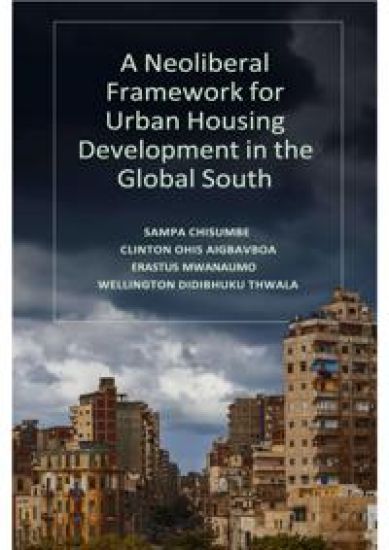
Cities in developing countries are faced with housing challenges that differ from country to country. The reasons for and the nature of these challenges differ. For cities in sub-Saharan African countries, many residents live in unplanned settlements. As a result, most residents lack decent housing as well as access to basic services. This is due to, among other factors, ineffective urban planning, weak urban governance, low private sector involvement, and lack of access to affordable housing finance – yet few empirical studies have investigated and developed frameworks aimed at improving urban housing. A Neoliberal Framework for Urban Housing Development in the Global South highlights the factors which predict urban housing development from developing countries’ perspective, providing a guide for countries in the sub-Sahara, where governments have limited financial resources competing among several needs. Anchored on neoliberalism, it argues that urban housing development is an eight-factor construct consisting of legal framework, tenure, stakeholder coordination, stakeholder participation, stakeholder capacity, adaptive housing regulations, housing finance, and governance. The authors outline the role of the state in creating an enabling environment for other stakeholders to participate in the provision of affordable housing for all.
Construction Workforce Management in the Fourth Industrial Revolution Era

Construction Workforce Management in the Fourth Industrial Revolution Era

Lerato Aghimien; Clinton Ohis Aigbavboa; Douglas Aghimien

Emerald Publishing Limited
2024
sidottu
The construction industry is a huge employer all over the world, but due to the project-based nature of construction, opportunities to improve pay, conditions and use of technology are often overlooked. The lack of attention to workforce management issues in the construction industry contributes to its overall poor performance in most countries worldwide. To address this problem, it is necessary to understand the practices that need to be in place for construction organisations to be able to manage their workforce effectively. Construction Workforce Management in the Fourth Industrial Revolution Era explores the concept of workforce management in construction and the impact of the pervasive technologies offered by the fourth industrial revolution on the effective management of the construction workforce. Through a critical review of existing related theories and models, gaps in existing workforce management studies are unearthed, and a conceptual model designed to improve the management of workers in the construction industry is proposed. The content here benefits researchers seeking to expand the frontiers of knowledge on workforce management in construction.
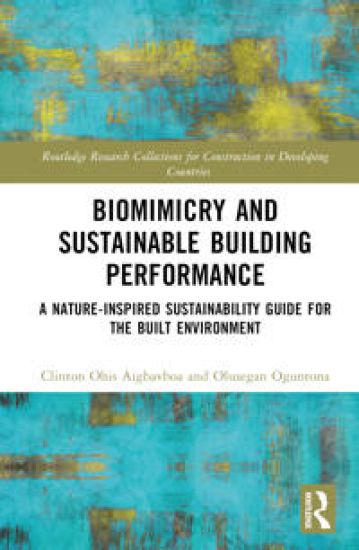
Biomimicry and Sustainable Building Performance

Biomimicry and Sustainable Building Performance

Olusegun Aanuoluwapo Oguntona; Clinton Ohis Aigbavboa

TAYLOR FRANCIS LTD
2024
sidottu
This book on biomimicry assessment tools studies the concepts of sustainability, sustainable construction practices, and the evaluation categories that constitute a sustainability assessment tool. By exploring and drawing lessons from biomimicry principles, the book provides a nature-inspired assessment tool to aid and guide the sustainable transformation of the built environment. The book encapsulates the attributes of the conceptualised biomimicry assessment tool, which is aimed at helping practitioners, regulatory bodies, and governmental and non-governmental agencies in greening the built environment. Owing to the dire need for country-specific and tailor-made tools that address developing countries' needs, this book serves as a practical reference and theoretical springboard for the development of sustainability assessment tools for the built environment. Furthermore, the book serves as a guide in navigating the path towards achieving the greening agendas of the built environment and other sectors and seeks to align the new biomimicry assessment tool with the UN Sustainable Development Goals (SDGs). It is important reading for academics, professionals and advanced students in the built environment, engineering, and sustainable development.
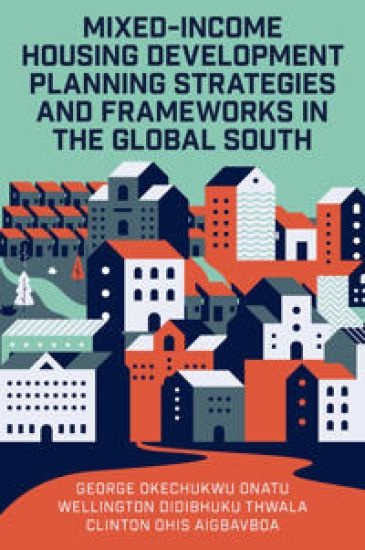
Mixed-Income Housing Development Planning Strategies and Frameworks in the Global South

Mixed-Income Housing Development Planning Strategies and Frameworks in the Global South

George Okechukwu Onatu; Wellington Didibhuku Thwala; Clinton Ohis Aigbavboa

Emerald Publishing Limited
2023
sidottu
Nearly 1.6 billion people worldwide are living in inadequate conditions, according to a recent United Nations report. Local authorities are running out of ways to tackle the increasing challenges of affordable housing. In South Africa, this issue is compounded by historical apartheid and spatial segregation. However, mixed-income housing has proven an effective strategy for alleviating the concentrated poverty that marginalizes certain communities. Functioning as a toolkit for inclusive urban planning, Mixed-Income Housing Development Planning Strategies and Frameworks in the Global South evaluates how this framework meets specific socio-economic goals as opposed taking a broad overview of development. Exploring the relevant policies, planning, and legislation that have guided human settlements in South Africa, the authors consider how best to combat residential segregation, informal settlements, and the exclusive allocation of public housing units to the poorest of the poor. Additional case studies from the USA, Australia, Netherlands, Brazil, Nigeria, Botswana, and Ghana compare emerging building strategies and their benefits, including spatial integration, improved access to social services and other infrastructure, and the promotion of local economic development (LED). Mixed-income housing development has been described as the only way to confront increasing urban poverty and segregation in our built environment. Analysing past projects and focusing on future trends and trajectories, this book acts as both a model for understanding the planning and management of this framework, and a foundation for future research.
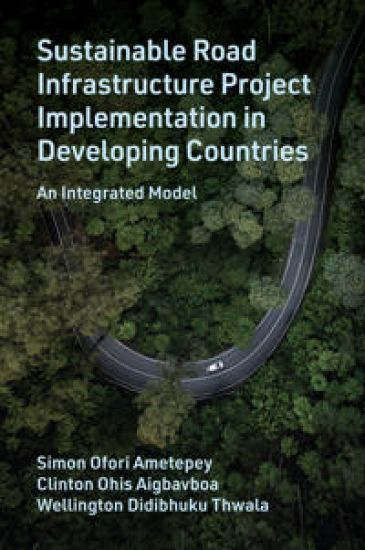
Sustainable Road Infrastructure Project Implementation in Developing Countries

Sustainable Road Infrastructure Project Implementation in Developing Countries

Simon Ofori Ametepey; Clinton Ohis Aigbavboa; Wellington Didibhuku Thwala

Emerald Publishing Limited
2023
sidottu
Seven of the seventeen United Nations Sustainable Development Goals (UNSDGs) are directly related to sustainable infrastructure development. The majority of sectors, including the road infrastructure sector, are under intense pressure to find financially feasible, socially acceptable, and environmentally conscientious project outcomes or techniques that will result in sustainable road infrastructure development (SRID). Sustainable Road Infrastructure Project Implementation in Developing Countries presents a model for implementing sustainable road infrastructure projects in developing countries. Providing readers with comprehensive theoretical and practical directions on implementing sustainable road infrastructure projects in developing countries successfully, the authors discuss the factors which influence the implementation of sustainable road infrastructure projects, including the drivers, barriers, benefits, and determinants of sustainable road project implementation. The model offers road infrastructure stakeholders with a precise and functional tool that promotes collaboration, common language and comprehension, engagement and interaction among all individuals and institutions involved in SRIP implementation. It is beneficial to both professionals and scholars, in the area of architecture; building technology; civil engineering; sustainable/green construction and other disciplines in the built industry.
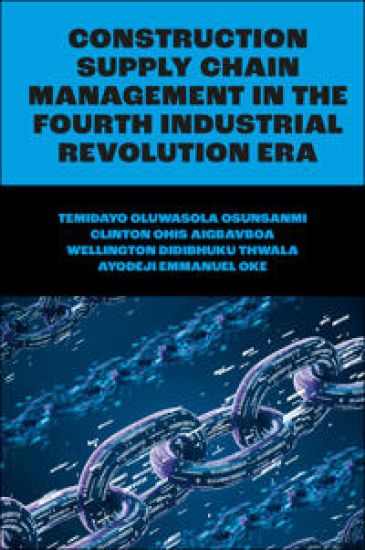
Construction Supply Chain Management in the Fourth Industrial Revolution Era

Construction Supply Chain Management in the Fourth Industrial Revolution Era

Temidayo Osunsanmi; Clinton Ohis Aigbavboa; Wellington Didibhuku Thwala; Ayodeji E. Oke

Emerald Publishing Limited
2022
sidottu
Supply chain management in the construction industry has passed through different eras – yet throughout, the construction industry has experienced fragmentation, late project delivery and other Gordian Knots due to its slow adoption of innovative modern technologies and principles in the supply chain processes. Addressing the need to harmonise the construction supply chain and establish the industry as the lynchpin of the economy, Construction Supply Chain Management in the Fourth Industrial Revolution Era acts as a roadmap, re-aligning the activities of the construction supply chain stakeholders with the principles and tenets of Industry 4.0. Gathering evidence on both the benefits and disruptive potentials within the current construction supply chain management domain, this collection determines the acceptable practice and standard for regulatory bodies and managers, appealing also to researchers as it expands the frontiers of knowledge in the fourth industrial era.
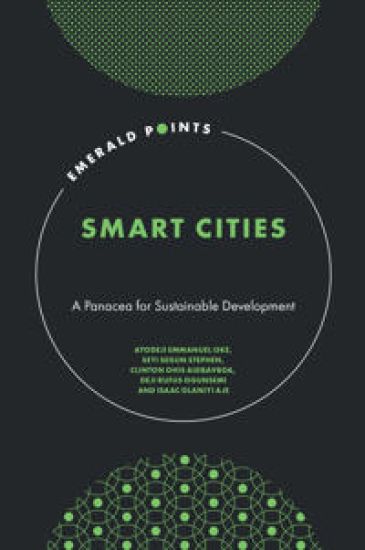
Smart Cities

Smart Cities

Ayodeji E. Oke; Seyi S. Stephen; Clinton Ohis Aigbavboa; Deji Ogunsemi; Isaac Aje

Emerald Publishing Limited
2022
sidottu
Professionals in the construction industry must respond quickly to meet the increasing pressures of heightened urban migration, and provide sustainable alternatives to resource scarcity in established cities – Smart Cities offers solutions to the demands of rising urban populations. The smartness of a city stems from the relationship between construction stakeholders and the citizens, with the shared goal to improve all standards and support social, physical, and economic growth. Surplus and reusable are key terminologies when striving towards sustainable development. Smart Cities aims to provide necessary information on the adoption of smart cities concepts towards achieving sustainable development, with a view to ensuring socially cohesive and resilient urban districts for both the current and future generations.
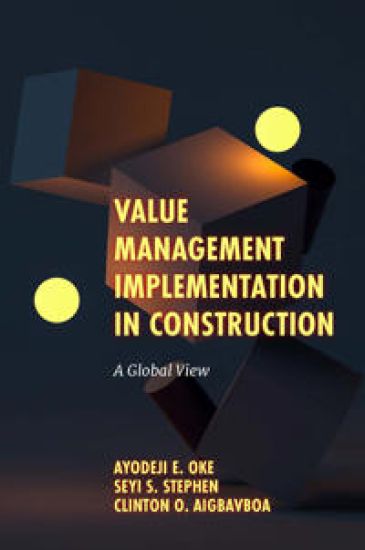
Value Management Implementation in Construction

Value Management Implementation in Construction

Ayodeji E. Oke; Seyi S. Stephen; Clinton Ohis Aigbavboa

Emerald Publishing Limited
2022
sidottu
Value management has been applied to construction projects throughout the world, but in some regions, it is just gaining popularity. Therefore, it is necessary to create awareness of value management among stakeholders and understand various obstacles to its implementation. Value Management Implementation in Construction addresses various factors that can enhance the application of the discipline as well as its adoption among concerned stakeholders. This book discusses the practice of value management in various developed and developing countries by exposing the techniques and models that can be employed in value management exercises, with a view to achieving sustainable development while delivering projects to the satisfaction of clients. This book provides guidance on value management as a tool for improving the delivery of infrastructural projects for construction professionals, employers of labour, researchers and students alike with evidence from various countries around the world.
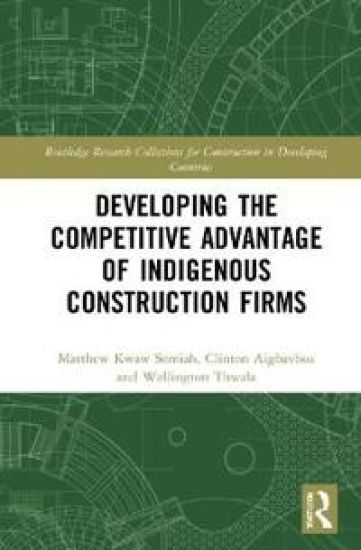
Developing the Competitive Advantage of Indigenous Construction Firms

Developing the Competitive Advantage of Indigenous Construction Firms

Matthew Kwaw Somiah; Clinton Ohis Aigbavboa; Wellington Thwala

Routledge
2021
sidottu
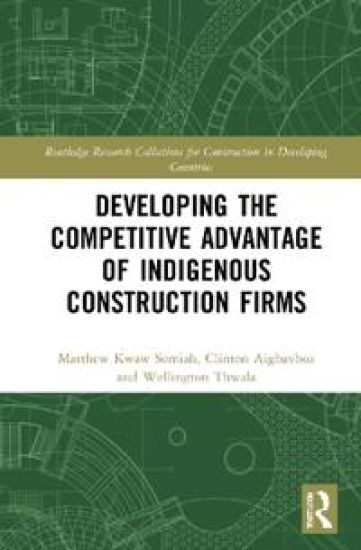
This book takes a pragmatic approach to develop the competitive advantage of indigenous construction firms in the Global South, using Ghana as a case study. It provides readers with two major practical insights. The first focuses on the theoretical underpinning of firms’ competitive advantage and develops a competitive advantage model for indigenous construction firms. This competitive advantage conceptual framework aids in explaining the main and sub-attributes underpinning the competitive advantage of indigenous construction firms as well as providing the basis for assessing a firm’s competitiveness. Secondly, it highlights and addresses theoretical gaps in existing competitive advantage studies deemed essential for indigenous construction firms. Finally, a detailed two-stage Delphi study in the Ghanaian construction industry is presented as a case study. The book is therefore of interest to researchers in construction management, strategic management, civil engineering, business administration, marketing, entrepreneurial and economic studies. It is an essential manual for owners and managers of construction businesses. It is also useful for government departments and non-governmental agencies seeking innovative ways to develop the capacity of indigenous firms and/or contractors to make them more responsive to competitive bidding scenarios, delivery of projects, and satisfying the needs of the industry’s stakeholders.
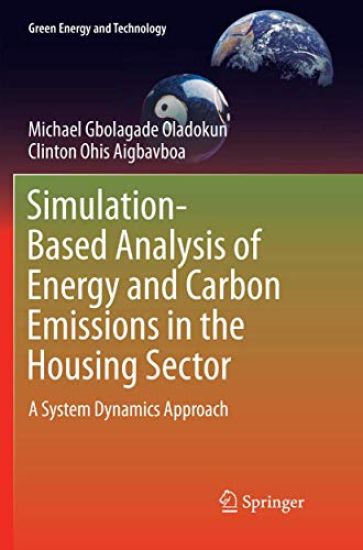
Simulation-Based Analysis of Energy and Carbon Emissions in the Housing Sector

Simulation-Based Analysis of Energy and Carbon Emissions in the Housing Sector

Michael Gbolagade Oladokun; Clinton Ohis Aigbavboa

Springer Nature Switzerland AG
2019
nidottu
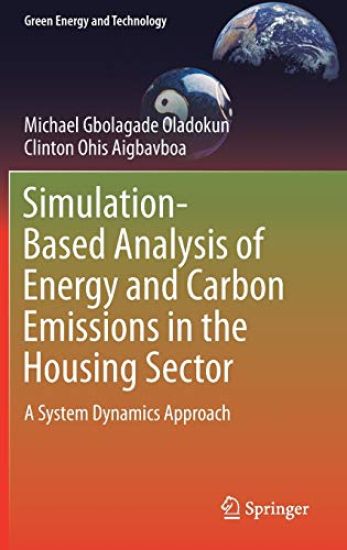
This book describes the development of a system dynamics-based model that can capture the future trajectories of housing energy and carbon emissions. It approaches energy and carbon emissions in the housing sector as a complex socio-technical problem involving the analysis of intrinsic interrelationships among dwellings, occupants and the environment. Based on an examination of the UK housing sector but with relevance worldwide, the book demonstrates how the systems dynamics simulation can be used as a learning laboratory regarding future trends in housing energy and carbon emissions. The authors employ a pragmatic research strategy, involving the collection of both qualitative and quantitative data to develop a model. The book enriches readers’ understanding of the complexity involved in housing energy and carbon emissions from a systems-thinking perspective. As such, it will be of interest to researchers in the fields of architectural engineering, housing studies and climate change, while also appealing to industry practitioners and policymakers specializing in housing energy.
Simulation-Based Analysis of Energy and Carbon Emissions in the Housing Sector

Simulation-Based Analysis of Energy and Carbon Emissions in the Housing Sector

Michael Gbolagade Oladokun; Clinton Ohis Aigbavboa

Springer International Publishing AG
2018
sidottu
This book describes the development of a system dynamics-based model that can capture the future trajectories of housing energy and carbon emissions. It approaches energy and carbon emissions in the housing sector as a complex socio-technical problem involving the analysis of intrinsic interrelationships among dwellings, occupants and the environment. Based on an examination of the UK housing sector but with relevance worldwide, the book demonstrates how the systems dynamics simulation can be used as a learning laboratory regarding future trends in housing energy and carbon emissions. The authors employ a pragmatic research strategy, involving the collection of both qualitative and quantitative data to develop a model. The book enriches readers’ understanding of the complexity involved in housing energy and carbon emissions from a systems-thinking perspective. As such, it will be of interest to researchers in the fields of architectural engineering, housing studies and climate change, while also appealing to industry practitioners and policymakers specializing in housing energy.