Kirjojen hintavertailu – 12 903 742 kirjaa ja 27 kauppaa

Kirjailija

Clive Jones

Kirjat ja teokset yhdessä paikassa: 8 kirjaa, julkaisuja vuosilta 2001–2021, suosituimpiin kuuluu The Clandestine Lives of Colonel David Smiley. Vertaile teosten hintoja ja tarkista saatavuus suomalaisista kirjakaupoista.

8 kirjaa

Kirjojen julkaisuvuodet: 2001–2021.

Britain and the Yemen Civil War, 1962-1965

Britain and the Yemen Civil War, 1962-1965

Clive Jones

Sussex Academic Press
2021
nidottu
Between 1962 and 1965 Britain engaged in covert operations in support of Royalist forces fighting the Egyptian backed Republican regime that had seized power in the Yemeni capital Sana'a in September 1962. Covert action was regarded as a legitimate tool of foreign policy as Britain attempted to secure the future of the newly formed South Arabian Federation against the animus of Nasser. The use of covert action, as well as the quasi approval given to the use of mercenaries to support the Royalist cause, was the inevitable result of policy differences within Whitehall (most notably between the mandarins' of the Colonial Office and the Foreign Office) as well as international constraints imposed upon the UK in the aftermath of the Suez crisis. The book examines the extent to which British policy, while successful in imposing a war of attrition upon Nasser in the Yemen, contributed to the political demise of the very objective covert action was designed to secure: the future stability of the Federation of South Arabia. The study makes extensive use of primary sources in producing the first detailed account of British involvement in the Yemen Civil War, and how the experience shaped British foreign policy. It breaks new ground by analyzing the extent to which Britain came to support the Royalist cause despite public declarations of non-involvement in the Yemen conflict, and details for the first time how London's tacit support for mercenary operations' in the Yemen came to enlist the help of Saudi Arabia and Israel.
The Clandestine Lives of Colonel David Smiley

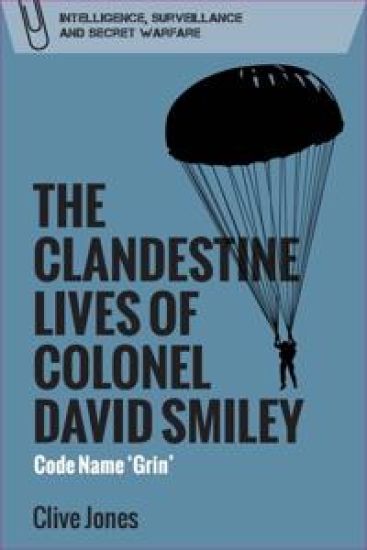
The Clandestine Lives of Colonel David Smiley

Clive Jones

Edinburgh University Press
2020
nidottu
Drawing on extensive interviews and archival research, this biography uncovers the motivations and ideals that informed Smiley's commitment to covert action and intelligence during the Second World War and early part of the Cold War, often among tribally based societies. With particular reference to operations in Albania, Oman and Yemen, it addresses the wider issues of accountability and control of clandestine operations.
Fraternal Enemies: Israel and the Gulf Monarchies

Fraternal Enemies: Israel and the Gulf Monarchies

Clive Jones; Yoel Guzansky

Oxford University Press, USA
2020
sidottu
Relations between Israel and the Gulf states are not anything new. In the immediate aftermath of the 1993 Oslo Accords, both Qatar and Oman established low-level yet open diplomatic ties with Israel. In 2010, Ha'aretz reported that the former Israeli foreign minister, Tzipi Livni, was on friendly terms with Shaykh Abdullah Ibn Zayed, her counterpart from the UAE, despite the absence of formal diplomatic ties between the two states. The shared suspicion towards the regional designs of Iran that undoubtedly underpinned these ties even extended, it was alleged, to a secret dialogue between Israel and Saudi Arabia, led by the late Meir Dagan, the former head of Mossad. Cooperation between Israel and Saudi Arabia in thwarting Iran's regional ambitions also casts light on Washington's lack of strategic leadership, which had previously been the totem around which Israel and the Gulf states had based regional security strategies. Jones and Guzansky contend that, at the very least, ties between Israel and many of its Gulf counterparts are now more vibrant than hitherto realized. They constitute a tacit security regime which, while based on hard power interests, does not preclude competition in other areas. Ultimately, these relations are helping shape a new regional order in the Middle East.
Fraternal Enemies

Fraternal Enemies

Clive Jones; Yoel Guzansky

C Hurst Co Publishers Ltd
2020
sidottu
Relations between Israel and the Gulf states are not anything new. In the immediate aftermath of the 1993 Oslo Accords, both Qatar and Oman established low-level yet open diplomatic ties with Israel. In 2010, Ha'aretz reported that the former Israeli foreign minister, Tzipi Livni, was on friendly terms with Shaykh Abdullah Ibn Zayed, her counterpart from the UAE, despite the absence of formal diplomatic ties between the two states. The shared suspicion towards the regional designs of Iran that undoubtedly underpinned these ties even extended, it was alleged, to a secret dialogue between Israel and Saudi Arabia, led by the late Meir Dagan, the former head of Mossad. Cooperation between Israel and Saudi Arabia in thwarting Iran's regional ambitions also casts light on Washington's lack of strategic leadership, which had previously been the totem around which Israel and the Gulf states had based regional security strategies. Jones and Guzansky contend that, at the very least, ties between Israel and many of its Gulf counterparts are now more vibrant than hitherto realised. They constitute a tacit security regime which, while based on hard power interests, does not preclude competition in other areas. Ultimately, these relations are helping shape a new regional order in the Middle East.
The Clandestine Lives of Colonel David Smiley

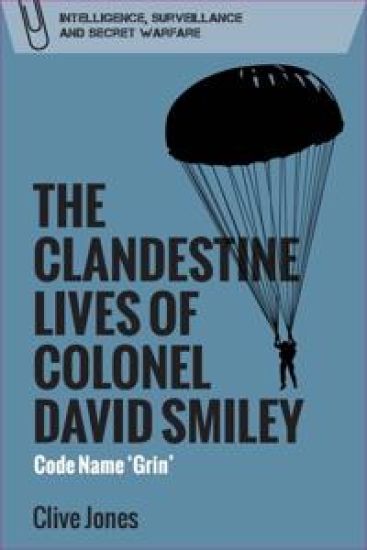
The Clandestine Lives of Colonel David Smiley

Clive Jones

Edinburgh University Press
2019
sidottu
Drawing on extensive interviews and archival research, this biography uncovers the motivations and ideals that informed Smiley's commitment to covert action and intelligence during the Second World War and early part of the Cold War, often among tribally based societies. With particular reference to operations in Albania, Oman and Yemen, it addresses the wider issues of accountability and control of clandestine operations.
Britain and the Yemen Civil War, 1962-1965

Britain and the Yemen Civil War, 1962-1965

Clive Jones

Sussex Academic Press
2004
sidottu
Between 1962 and 1965 Britain engaged in covert operations in support of Royalist forces fighting the Egyptian backed Republican regime that had seized power in the Yemeni capital Sana'a in September 1962. Covert action was regarded as a legitimate tool of foreign policy as Britain attempted to secure the future of the newly formed South Arabian Federation against the animus of Nasser. The use of covert action, as well as the quasi approval given to the use of mercenaries to support the Royalist cause, was the inevitable result of policy differences within Whitehall (most notably between the mandarins' of the Colonial Office and the Foreign Office) as well as international constraints imposed upon the UK in the aftermath of the Suez crisis. The book examines the extent to which British policy, while successful in imposing a war of attrition upon Nasser in the Yemen, contributed to the political demise of the very objective covert action was designed to secure: the future stability of the Federation of South Arabia. The study makes extensive use of primary sources in producing the first detailed account of British involvement in the Yemen Civil War, and how the experience shaped British foreign policy. It breaks new ground by analyzing the extent to which Britain came to support the Royalist cause despite public declarations of non-involvement in the Yemen conflict, and details for the first time how London's tacit support for mercenary operations' in the Yemen came to enlist the help of Saudi Arabia and Israel.

Israel

Israel

Clive Jones; Emma C. Murphy

Routledge
2001
sidottu
Often regarded as the only true manifestation of political pluralism in the contemporary Middle East, the state of Israel has dominated the history and politics of the region for over fifty years. Yet despite its position as a regional superpower, Israel continues to struggle with the whole issue of its own identity, the complexities of which have exposed deep clefts throughout Israeli society that threaten to undermine the collective ideal of a viable Jewish polity in the Middle East. The authors explore the complex challenges facing Israel, and the extent to which its present state structures and institutions can adapt and accommodate themselves to the diversity of security threats that it now faces. This book will be of interest to those who wish to understand the dynamics that have shaped and continue to shape the state of Israel, and the extent to which these have influenced its search for security in the modern Middle East.
Israel

Israel

Clive Jones; Emma C. Murphy

Routledge
2001
nidottu
Often regarded as the only true manifestation of political pluralism in the contemporary Middle East, the state of Israel has dominated the history and politics of the region for over fifty years. Yet despite its position as a regional superpower, Israel continues to struggle with the whole issue of its own identity, the complexities of which have exposed deep clefts throughout Israeli society that threaten to undermine the collective ideal of a viable Jewish polity in the Middle East. The authors explore the complex challenges facing Israel, and the extent to which its present state structures and institutions can adapt and accommodate themselves to the diversity of security threats that it now faces. This book will be of interest to those who wish to understand the dynamics that have shaped and continue to shape the state of Israel, and the extent to which these have influenced its search for security in the modern Middle East.