Kirjojen hintavertailu – 12 903 725 kirjaa ja 27 kauppaa

Kirjailija

Clive Ruggles

Kirjat ja teokset yhdessä paikassa: 3 kirjaa, julkaisuja vuosilta 2019–2026, suosituimpiin kuuluu Na Inoa Hoku. Vertaile teosten hintoja ja tarkista saatavuus suomalaisista kirjakaupoista.

3 kirjaa

Kirjojen julkaisuvuodet: 2019–2026.

Na Inoa Hoku

Na Inoa Hoku

Rubellite Kawena Johnson; John Kaipo Mahelona; Clive Ruggles

UNIVERSITY OF HAWAI'I PRESS
2026
nidottu
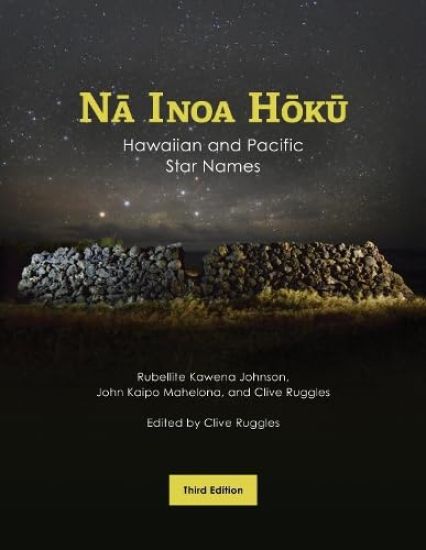
The first edition of Na Inoa Hoku, published in 1975, reignited global interest in Hawaiian and Pacific star knowledge and navigation at a critical time, coinciding with the epic first journey of the Hawaiian voyaging canoe Hokule?a. This third edition is a hugely expanded version of Rubellite Kawena Johnson and John Kaipo Mahelona’s seminal book, representing a quartercentury of collaboration between the original authors and cultural astronomer Clive Ruggles. It remains true to Johnson’s initial objective not only to document Hawaiian star names used in navigation, mythology, and genealogy, but also to foster a much broader cultural and linguistic comprehension of Oceanic sky knowledge. Na Inoa Hoku: Hawaiian and Pacific Star Names, Third Edition is a compendium of the available information on traditional astronomical knowledge in the Pacific region. It comprises a major synthesis of what we know about Hawaiians’ understanding of the skies, celestial navigation, and calendrical practices, as well as insights into cosmology and religious ideology. Additionally, the three comparative star catalogues—Hawaiian, Polynesian, and Austronesian—represent an unparalleled reference compilation derived from a wide range of Indigenous, historical, and ethnographic accounts. These are accompanied by a "Western identifications" table with cross-references from Western to Oceanic star names and appendices listing modern star terminology and the various islands and ethnolinguistic groups. The section on Hawaiian knowledge and sources is enhanced by detailed interpretations and explanations that clarify many earlier transcription errors and misunderstandings. Key texts from Hawaiian-language newspapers are shown alongside new translations by Mahelona, ranging from short articles by Samuel Kamakau in the 1850s and 1860s to Benjamin K. Namakaokeahi’s thirty-part history of the priesthood of Kanalu published in 1900, 1901, and beyond. Also included are documents recently uncovered in the Bishop Museum Archives in Honolulu and the Cambridge University Library in the UK, along with an unpublished archive that includes firsthand testimony collected in the early twentieth century by historian Theodore Kelsey. A definitive resource for Hawaiian cultural practitioners, this book is of particular value to astronomers and linguists worldwide and an essential reference for anyone interested in Pacific history and culture.
Stonehenge

Stonehenge

Clive Ruggles; Amanda Chadburn

LIVERPOOL UNIVERSITY PRESS
2024
sidottu
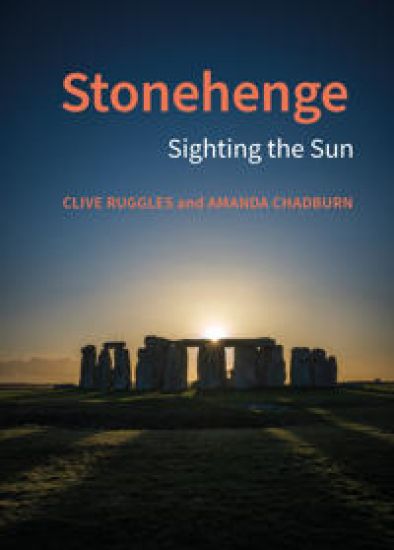
Stonehenge is one of the most famous ancient monuments in the world and its solar alignment is one of its most important features. Yet although archaeologists have learned a huge amount about this iconic monument and its development, a sense of mystery continues about its purpose. This helps fuel numerous theories and common misconceptions, particularly concerning its relationship to the sky and the heavenly bodies. A desire to cut through this confusion was the inspiration for this book, and it fills a gaping hole in the existing literature. The book provides both an introduction to Stonehenge and its landscape and an introduction to archaeoastronomy—the study of how ancient peoples understood phenomena in the sky, and what role the sky played in their cultures. Archaeoastronomy is a specialism critical to explaining the relationship of Stonehenge and nearby monuments to the heavens, but interpreting archaeoastronomical evidence has often proved highly controversial in the past. Stonehenge: Sighting the Sun explains why. It makes clear which ideas about Stonehenge are generally accepted and which are not, with clear graphics to explain complicated concepts. This beautifully illustrated book shines new light on this most famous of ancient monuments, and is the first in-depth study of this fascinating topic suitable both for specialists and for anyone with a general interest. The volume includes a Foreword by British archaeologist and academic Professor Sir Barry Cunliffe.
Heiau, ‘Aina, Lani

Heiau, ‘Aina, Lani

Patrick Vinton Kirch; Clive Ruggles

University of Hawai'i Press
2019
sidottu
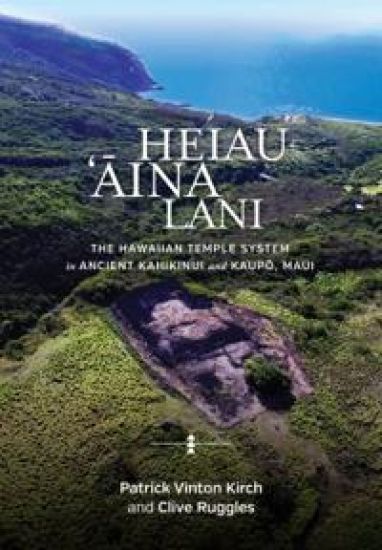
Heiau, ‘Aina, Lani is a collaborative study of 78 temple sites in the ancient moku of Kahikinui and Kaupo in southeastern Maui, undertaken using a novel approach that combines archaeology and archaeoastronomy. Although temple sites (heiau) were the primary focus of Hawaiian archaeologists in the earlier part of the twentieth century, they were later neglected as attention turned to the excavation of artifact-rich habitation sites and theoretical and methodological approaches focused more upon entire cultural landscapes. This book restores heiau to center stage. Its title, meaning “Temples, Land, and Sky,” reflects the integrated approach taken by Patrick Vinton Kirch and Clive Ruggles, based upon detailed mapping of the structures, precise determination of their orientations, and accurate dating. Heiau, ‘Aina, Lani is the outcome of a joint fieldwork project by the two authors, spanning more than fifteen years, in a remarkably well-preserved archaeological landscape containing precontact house sites, walls, and terraces for dryland cultivation, and including scores of heiau ranging from simple upright stones dedicated to Kane, to massive platforms where the priests performed rites of human sacrifice to the war god Ku. Many of these heiau are newly discovered and reported for the first time in the book. The authors offer a fresh narrative based upon some provocative interpretations of the complex relationships between the Hawaiian temple system, the landscape, and the heavens (the “skyscape”). They demonstrate that renewed attention to heiau in the context of contemporary methodological and theoretical perspectives offers important new insights into ancient Hawaiian cosmology, ritual practices, ethnogeography, political organization, and the habitus of everyday life. Clearly, Heiau, ‘Aina, Lani repositions the study of heiau at the forefront of Hawaiian archaeology.