Kirjojen hintavertailu – 12 903 725 kirjaa ja 27 kauppaa

Kirjailija

Clive Scott

Kirjat ja teokset yhdessä paikassa: 28 kirjaa, julkaisuja vuosilta 1980–2025, suosituimpiin kuuluu Translating Apollinaire. Vertaile teosten hintoja ja tarkista saatavuus suomalaisista kirjakaupoista.

28 kirjaa

Kirjojen julkaisuvuodet: 1980–2025.

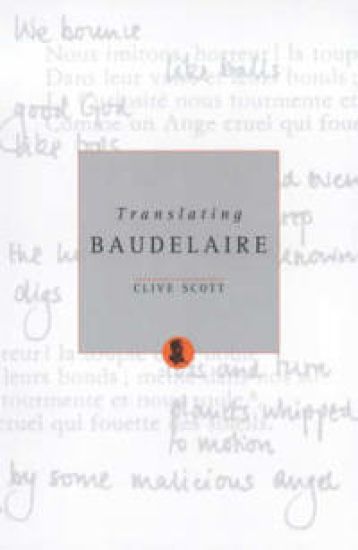
Translating Baudelaire

Translating Baudelaire

Clive Scott

University of Exeter Press
2000
nidottu
This work is the record of an apprenticeship in translating Baudelaire, and in translating poetry more generally. Re-assessing the translator's task and art, Clive Scott explores various theoretical approaches as he goes in search of his own style of translation.
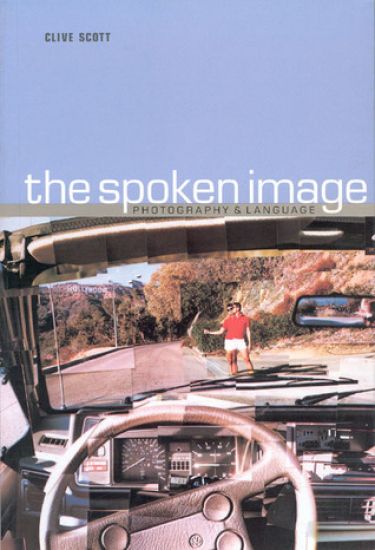
The Spoken Image

The Spoken Image

Clive Scott

Reaktion Books
1999
nidottu

Halvin toimitettuna 34,60 €

Considering the nature of photography, this book examines the language used in titles, captions and commentaries, particularly as they relate to documentary photography, photojournalism and fashion photography. It addresses the question of how the photograph communicates its message.
The Poetics of French Verse

The Poetics of French Verse

Clive Scott

Clarendon Press
1998
sidottu
This book explores the expressive resources peculiar to French verse, first through formal discussion of its poetics and then through detailed readings of texts from the seventeenth century to the present. At the same time, it offers a reassessment of the nature of the reading process itself, and makes a case for rescuing a sense of the complex modalities of language from the pressure to interpret. Reading is, above all, the experience of language, and of the self through language, and we should seek ways of preserving these kinds of experience, even though the conventions of critical discourse militate against them. Part Two presents a sequence of thirteen readings (including texts by La Fontaine, Chénier, Vigny, Baudelaire, Mallarmé, Apollinaire, Éluard, Césaire). These readings are grouped according to a set of underlying preoccupations --- formal, acoustic, rhythmic, narratological, etc. --- and each group is prefaced by an introductory discussion of the particular aspect highlighted.

Reading the Rhythm

Reading the Rhythm

Clive Scott

Clarendon Press
1993
sidottu
We are still a long way from knowing how to read the rhythms of free verse, a poetry which has been largely neglected by metrical theory. Clive Scott's readable and scholarly study indicates the strategies of reading needed if justice is to be done to free verse's rhythmic versatility. The core of Reading the Rhythm is an analysis of key French twentieth-century poets and poems, including Perse's Éloges, Cendrars's Prose du Transsibérien, Dix-neuf poèmes élastiques, and Documentaires; Apollinaire's Calligrammes; Supervielle's Gravitations; and Reverdy's Sources de vent. Contemporary trends in the visual arts - Cubism, Futurism, Orphism, photography - are called upon as perceptual models to illuminate free verse and a further perspective is added by the theme of travel and movement. This is an accomplished examination of the rhythms of free verse, and of its implications for our reading of regular verse. It is also a significant study of modernist poetics.
Vers Libre

Vers Libre

Clive Scott

Clarendon Press
1990
sidottu
The prosodic description of free verse, in France as elsewhere, has long been fraught with difficulty: free verse is a web of shifting rhythmic effects, as relative as they are elusive. This book attempts to construct methods of analysis, on the basis of a study of the history and theory of free verse in France. After an initial exploration of the scansional problems posed by a free-verse poem (by Alain Fournier) and of the assumptions which might be made about its nature, Clive Scott looks for answers and verifications in the history of free verse's early years and in contemporary theoretical documents. How far was free verse in France an inevitable outcome of the 'liberalization' of regular verse? How far was free verse the result of fundamental changes in the way French rhythms were perceived? What did free verse owe to the popular song, to the prose poem, to translations? How far does the practice of free verse coincide with its history? Clive Scott's principle concern is to establish, on these foundations, working methods of scansion, and to show how they can be applied in the interpretation of specific poems. Accordingly, the second part of the book is devoted to extended commentaries on poems by Rimbaud, Laforgue, Claudel, and Apollinaire.
The Riches of Rhyme

The Riches of Rhyme

Clive Scott

Clarendon Press
1988
sidottu
This book is about the ways in which rhyme in French verse produces shapes or interferes with meaning - a topic which, despite its centrality, has hitherto received little critical attention. Part 1 examines those features which are peculiar to French rhyme - the different degrees of rhyme, rhyme gender, the frequency of rhymes on suffixes and endings - and explores the contributions they make to a poem's structure and semantic productivity. Its concern is twofold: to test the adequacy of the current methods of classifying rhymes and to demonstrate how comprehensive interpretations of a poem can be constructed from its rhyme-data. But wider issues are also confronted, including the relationships between rhyme and textuality, between rhyme and truth, between rhyme and rhythm. Part 2 analyses specific plays, poems and collections of poems: Racine's Mithridate, Moliere's Les Femmes Savantes, Voltaire's Poeme sur le Désastre de Lisbonne, Verlaine's Fêtes galantes and Aragon's Les Yeux d'Elsa.
A Question of Syllables

A Question of Syllables

Clive Scott

Cambridge University Press
1986
sidottu
Dr Scott argues that only by attending to the precise locations of words in line or stanza, and to the specific value of syllables, or by understanding the often conflicting demands of rhythm and metre, can the reader of poetry acquire a real grasp of the intimate life of words in verse with all their fluctuations of meaning, mood, and tone. The analyses through which the book pursues its argument address two principal concerns: the way in which syllabic position projects words and colours their complicated and challenged by the relationship of rhythm to metre.
French Verse-Art

French Verse-Art

Clive Scott

Cambridge University Press
1980
sidottu
This 1980 book is designed to help university students to master the technicalities and techniques of French verse. The author assumes that part of the difficulty encountered by readers derives from the need to approach French verse through English verse; this book undertakes, therefore, a differentiation of the two verse traditions. Dr Scott's concern is to provide the groundwork of a terminology, to discuss the origins and implications of that terminology, and to show how terminological knowledge can be translated into critical speculation about poetry. After three chapters which establish the essential features of the French line of verse and outline the difficulties the student is likely to encounter in trying to describe it and deal with it, the book moves on to consider rhyme, stanzas, verse forms and free verse.