Kirjojen hintavertailu – 12 859 818 kirjaa ja 27 kauppaa

Kirjailija

Colby Dickinson

Kirjat ja teokset yhdessä paikassa: 22 kirjaa, julkaisuja vuosilta 2011–2025, suosituimpiin kuuluu Continental Philosophy and Theology. Vertaile teosten hintoja ja tarkista saatavuus suomalaisista kirjakaupoista.

22 kirjaa

Kirjojen julkaisuvuodet: 2011–2025.

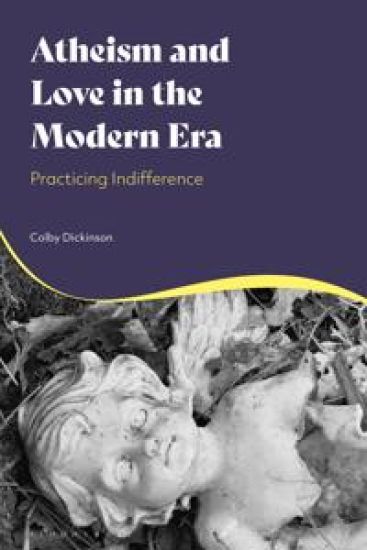
Atheism and Love in the Modern Era

Atheism and Love in the Modern Era

Colby Dickinson

BLOOMSBURY PUBLISHING PLC
2025
sidottu
Discussing the decline of faith and the rise of love in the modern era, Colby Dickinson proposes a critique of religious belief which addresses how a secular world can continue to mine religious traditions for their conceptual and emotional riches. Atheism and Love in the Modern Era argues that theism and atheism taken together can peel back the layers of abstraction, alienation, and disillusionment that always accompany our humanity in order to help us really see how it is to exist in this world. To illuminate this vision, Dickinson takes up the notion of love as a cultivation and practice of indifference as a letting go of one’s identity—a crucial concept that unites both religion and atheism through a concerted effort to detach from them both. The book is organized into four sections, each situating the concept of love in relation to a distinct theme: the first outlines modern secularized versions of various religious concepts, such as technology in the place of miracles or art in the place of religious revelation. The second argues that in a pluralistic world, the actual, lived realities of various religious communities and persons defy the static categories and classifications grouped under the umbrella of ‘religion’. The third section discusses and defines non-absolute love. The fourth section discusses how atheism, in its critiques of religion, misses the significance of de-centring the act of love. Dickinson elaborates his reflections through lucid engagement with a variety of thinkers including Žižek, Agamben, Irigaray, Derrida, Erich Fromm, Charles Taylor and Philip Kitcher. This is essential reading for those interested in popular debates around theism and atheism, as well as those concerned with the ways in which continental and analytic philosophy have addressed the continued significance of religious traditions.
Haunted Words, Haunted Selves

Haunted Words, Haunted Selves

Colby Dickinson

Cascade Books
2024
sidottu
We are all haunted by things we fear, repress, and those things of which we have no conscious knowledge. We are thus haunted by a variety of "ghosts" in our lives so that, at times, we might notice those things we have ignored, and so too allow the repressed elements of our world a chance to speak more directly to us. Being honest with ourselves means listening better to what haunts us, and to wrestle with our own ghosts, as humans have often claimed throughout history to wrestle with God. Recognizing how we are ceaselessly haunted by that which threatens to undo our representations of ourselves is what draws together a series of reflections in this book on how we will never be able to rid ourselves of such hauntings. By examining a series of "hauntings," this study looks at what continues to haunt the field of continental philosophy, the various things that haunt our sovereign construction of ourselves, the church, our words and language in general, and even how our texts are endlessly haunted by the autobiographical "I" we are often taught to exclude from our writings.
Haunted Words, Haunted Selves

Haunted Words, Haunted Selves

Colby Dickinson

Cascade Books
2024
pokkari
We are all haunted by things we fear, repress, and those things of which we have no conscious knowledge. We are thus haunted by a variety of "ghosts" in our lives so that, at times, we might notice those things we have ignored, and so too allow the repressed elements of our world a chance to speak more directly to us. Being honest with ourselves means listening better to what haunts us, and to wrestle with our own ghosts, as humans have often claimed throughout history to wrestle with God. Recognizing how we are ceaselessly haunted by that which threatens to undo our representations of ourselves is what draws together a series of reflections in this book on how we will never be able to rid ourselves of such hauntings. By examining a series of "hauntings," this study looks at what continues to haunt the field of continental philosophy, the various things that haunt our sovereign construction of ourselves, the church, our words and language in general, and even how our texts are endlessly haunted by the autobiographical "I" we are often taught to exclude from our writings.
Theological Poverty in Continental Philosophy

Theological Poverty in Continental Philosophy

Colby Dickinson

BLOOMSBURY PUBLISHING PLC
2022
nidottu
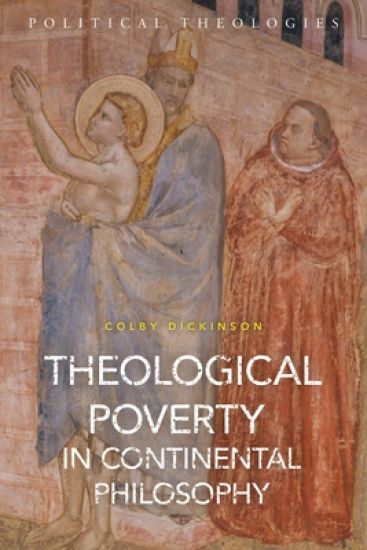
Colby Dickinson proposes a new political theology rooted in the intersections between continental philosophy, heterodox theology, and orthodox theology. Moving beyond the idea that there is an irresolvable tension at the heart of theological discourse, the conflict between the two poles of theology is made intelligible. Dickinson discusses the opposing poles simply as manifestations of reform and revolution, characteristics intrinsic to the nature of theological discourse itself. Outlining the illuminating space of theology, Theological Poverty in Continental Philosophy breaks new ground for critical theology and continental philosophy. Within the theology of poverty, the believer renounces the worldly for the divine. Through this focus on the poverty intrinsic to religious calling, the potential for cross-pollination between the theological and the secular is highlighted. Ultimately situating the virtue of theological poverty within a poststructuralist, postmodern world, Dickinson is not content to position Christian philosophy as the superior theological position, moving away from the absolute values of one tradition over another. This universalising of theological poverty through core and uniting concepts like grace, negation, violence and paradox reveal the theory’s transmutable strength. By joining up critical theology and the philosophy of religion in this way, the book broadens the possibility of a critical dialogue both between and within disciplines.
Giorgio Agamben's Homo Sacer Series

Giorgio Agamben's Homo Sacer Series

Colby Dickinson

EDINBURGH UNIVERSITY PRESS
2022
sidottu
In this celebrated work, Agamben provides a delicate and complex interweaving of his views on a wide range of themes including sovereignty, and the state of exception, the Aristotelean distinction between potentiality and actuality, through to the impossibility of stating the existence of language in words and the form-of-life lived beyond all forms of law. Requiring no prior knowledge of the text Colby Dickinson provides a guide to understanding why this series is one of the most significant philosophical texts of the past century.
Giorgio Agamben's Homo Sacer Series

Giorgio Agamben's Homo Sacer Series

Colby Dickinson

EDINBURGH UNIVERSITY PRESS
2022
nidottu
In this celebrated work, Agamben provides a delicate and complex interweaving of his views on a wide range of themes including sovereignty, and the state of exception, the Aristotelean distinction between potentiality and actuality, through to the impossibility of stating the existence of language in words and the form-of-life lived beyond all forms of law. Requiring no prior knowledge of the text Colby Dickinson provides a guide to understanding why this series is one of the most significant philosophical texts of the past century.
Theological Poverty in Continental Philosophy

Theological Poverty in Continental Philosophy

Colby Dickinson

Bloomsbury Academic
2021
sidottu
Colby Dickinson proposes a new political theology rooted in the intersections between continental philosophy, heterodox theology, and orthodox theology. Moving beyond the idea that there is an irresolvable tension at the heart of theological discourse, the conflict between the two poles of theology is made intelligible. Dickinson discusses the opposing poles simply as manifestations of reform and revolution, characteristics intrinsic to the nature of theological discourse itself. Outlining the illuminating space of theology, Theological Poverty in Continental Philosophy breaks new ground for critical theology and continental philosophy. Within the theology of poverty, the believer renounces the worldly for the divine. Through this focus on the poverty intrinsic to religious calling, the potential for cross-pollination between the theological and the secular is highlighted. Ultimately situating the virtue of theological poverty within a poststructuralist, postmodern world, Dickinson is not content to position Christian philosophy as the superior theological position, moving away from the absolute values of one tradition over another. This universalising of theological poverty through core and uniting concepts like grace, negation, violence and paradox reveal the theory’s transmutable strength. By joining up critical theology and the philosophy of religion in this way, the book broadens the possibility of a critical dialogue both between and within disciplines.
The Fetish of Theology

The Fetish of Theology

Colby Dickinson

Springer Nature Switzerland AG
2021
nidottu
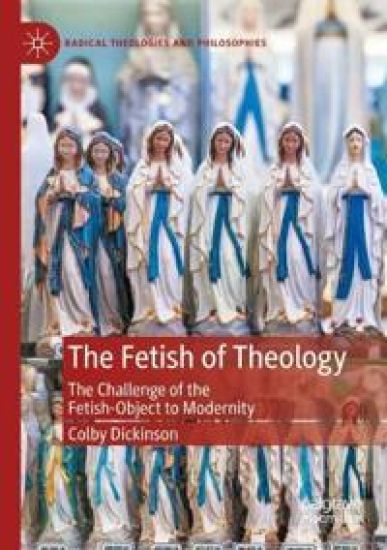
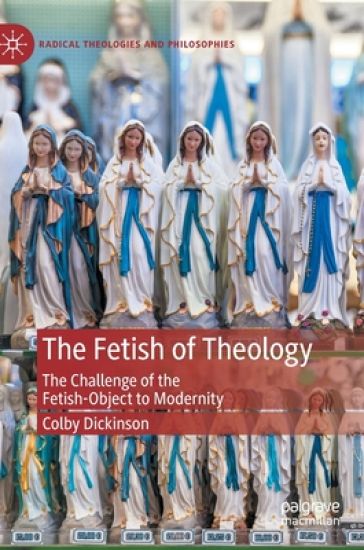
By delving into the history of the fetish-object among both modern and contemporary commentators, this book highlights the fetish-object’s role as a philosophical and religious concept of the highest significance. Historically, fetishes are implicated in specific struggles for sovereign (political) and/or religious (hierarchical) power, with their interwoven symbols defined as the primary location for transcendence in our world. This book defines the political consequences of fetish-objects within a western cultural, and primarily theological context through a comparative approach of various literatures on fetish-objects—anthropological to the psychological, Marxist to the theological. It reconceives of fetishes as a form of resistance to oppressive structures, something which motivated Christians themselves historically, and shaped our western understanding of the sacraments far more than has been acknowledged. Taking up this conversation likewise holds forth the possibility of reconceptualizing how fetish-objects and sacramental presences both speak profoundly to our late-modern selves.
The Fetish of Theology

The Fetish of Theology

Colby Dickinson

Springer Nature Switzerland AG
2020
sidottu
By delving into the history of the fetish-object among both modern and contemporary commentators, this book highlights the fetish-object’s role as a philosophical and religious concept of the highest significance. Historically, fetishes are implicated in specific struggles for sovereign (political) and/or religious (hierarchical) power, with their interwoven symbols defined as the primary location for transcendence in our world. This book defines the political consequences of fetish-objects within a western cultural, and primarily theological context through a comparative approach of various literatures on fetish-objects—anthropological to the psychological, Marxist to the theological. It reconceives of fetishes as a form of resistance to oppressive structures, something which motivated Christians themselves historically, and shaped our western understanding of the sacraments far more than has been acknowledged. Taking up this conversation likewise holds forth the possibility of reconceptualizing how fetish-objects and sacramental presences both speak profoundly to our late-modern selves.
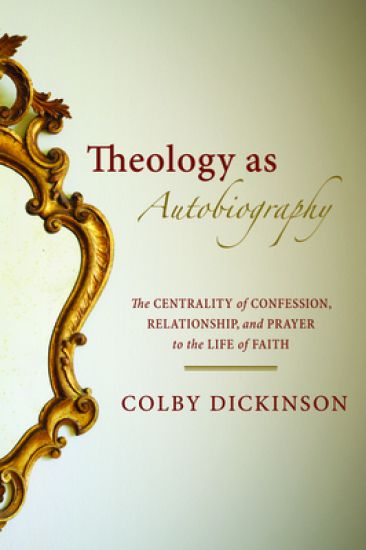
Theology as Autobiography

Theology as Autobiography

Colby Dickinson

Cascade Books
2020
sidottu
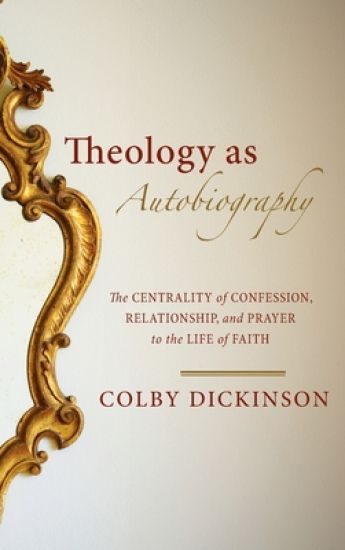
Autobiographical writings on faith frequently come from the lives of ordinary persons whose struggles with faith are often lived at the margins of the church, academy, and society. Yet these voices have the potential to reshape the ways in which each of these fields function. To find out what it means to stand before God with all of one's humanity on display is to engage in not only the act of confession, but to demonstrate a bold theological reflection that needs to be more explicitly understood. By turning to spiritual autobiographies as theological source texts, we learn to place our emphasis where it matters most, on the people whose lives of faith move us deeply and cause us to re-examine our own lives in light of their witness. Moving through a range of ancient, early modern, and contemporary spiritual writers in order to demonstrate a profound connection that unites them all, this book portrays how a critical self-examination of one's most personal, internal fractures (our "poverty" as it were) is the only way to develop a life of faith--the dual meaning of the word "confession," which expresses both a revealing of one's sins, or brokenness, and the articulation of what one believes.
Theology as Autobiography

Theology as Autobiography

Colby Dickinson

Cascade Books
2020
pokkari
Autobiographical writings on faith frequently come from the lives of ordinary persons whose struggles with faith are often lived at the margins of the church, academy, and society. Yet these voices have the potential to reshape the ways in which each of these fields function. To find out what it means to stand before God with all of one's humanity on display is to engage in not only the act of confession, but to demonstrate a bold theological reflection that needs to be more explicitly understood. By turning to spiritual autobiographies as theological source texts, we learn to place our emphasis where it matters most, on the people whose lives of faith move us deeply and cause us to re-examine our own lives in light of their witness. Moving through a range of ancient, early modern, and contemporary spiritual writers in order to demonstrate a profound connection that unites them all, this book portrays how a critical self-examination of one's most personal, internal fractures (our "poverty" as it were) is the only way to develop a life of faith--the dual meaning of the word "confession," which expresses both a revealing of one's sins, or brokenness, and the articulation of what one believes.
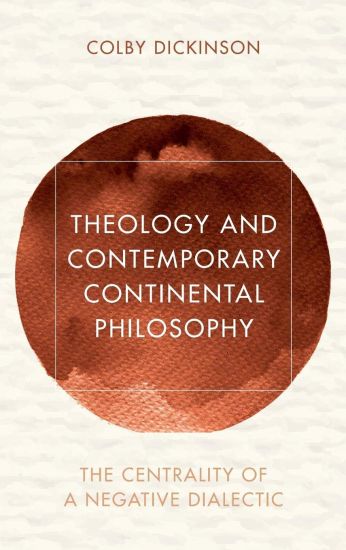
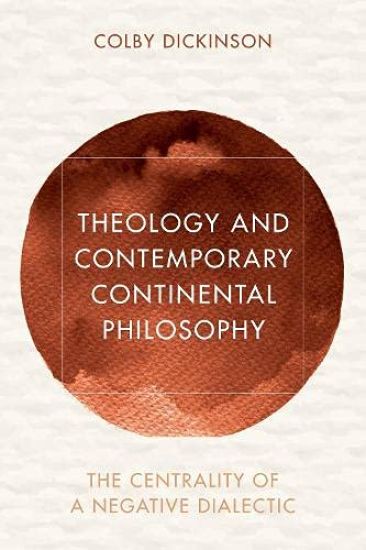
Theology and Contemporary Continental Philosophy

Theology and Contemporary Continental Philosophy

Colby Dickinson

Rowman Littlefield International
2018
sidottu
This book aims to put modern continental philosophy, specifically the sub-fields of phenomenology, existentialism, hermeneutics, deconstruction, critical theory and genealogy, into conversation with the field of contemporary theology. Colby Dickinson demonstrates the way in which negative dialectics, or the negation of negation, may help us to grasp the thin (or non-existent) borders between continental philosophy and theology as the leading thinkers of both fields wrestle with their entrance into a new era. With the declining place of "the sacred" in the public sphere, we need to pay more attention than ever to how continental philosophy seems to be returning to distinctly theological roots. Through a genealogical mapping of 20th-century continental philosophers, Dickinson highlights the ever-present Judeo-Christian roots of modern Western philosophical thought. Opposing categories such as immanence/transcendence, finitude/infinitude, universal/particular, subject/object, are at the center of works by thinkers such as Agamben, Marion, Vattimo, Levinas, Latour, Caputo and Adorno. This book argues that utilizing a negative dialectic allows us to move beyond the apparent fixation with dichotomies present within those fields and begin to perform both philosophy and theology anew.
Theology and Contemporary Continental Philosophy

Theology and Contemporary Continental Philosophy

Colby Dickinson

Rowman Littlefield International
2018
nidottu
This book aims to put modern continental philosophy, specifically the sub-fields of phenomenology, existentialism, hermeneutics, deconstruction, critical theory and genealogy, into conversation with the field of contemporary theology. Colby Dickinson demonstrates the way in which negative dialectics, or the negation of negation, may help us to grasp the thin (or non-existent) borders between continental philosophy and theology as the leading thinkers of both fields wrestle with their entrance into a new era. With the declining place of "the sacred" in the public sphere, we need to pay more attention than ever to how continental philosophy seems to be returning to distinctly theological roots. Through a genealogical mapping of 20th-century continental philosophers, Dickinson highlights the ever-present Judeo-Christian roots of modern Western philosophical thought. Opposing categories such as immanence/transcendence, finitude/infinitude, universal/particular, subject/object, are at the center of works by thinkers such as Agamben, Marion, Vattimo, Levinas, Latour, Caputo and Adorno. This book argues that utilizing a negative dialectic allows us to move beyond the apparent fixation with dichotomies present within those fields and begin to perform both philosophy and theology anew.
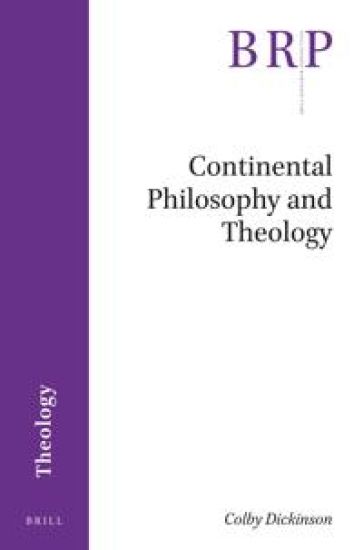
Continental Philosophy and Theology
Continental philosophy underwent a 'return to religion' or a 'theological turn' in the late 20th century. And yet any conversation between continental philosophy and theology must begin by addressing the perceived distance between them: that one is concerned with destroying all normative, metaphysical order (continental philosophy's task) and the other with preserving religious identity and community in the face of an increasingly secular society (theology's task). Colby Dickinson argues in Continental Philosophy and Theology rather that perhaps such a tension is constitutive of the nature of order, thinking and representation which typically take dualistic forms and which might be rethought, though not necessarily abolished. Such a shift in perspective even allows one to contemplate this distance as not opting for one side over the other or by striking a middle ground, but as calling for a nondualistic theology that measures the complexity and inherently comparative nature of theological inquiry in order to realign theology's relationship to continental philosophy entirely.
Words Fail

Words Fail

Colby Dickinson

Fordham University Press
2016
pokkari
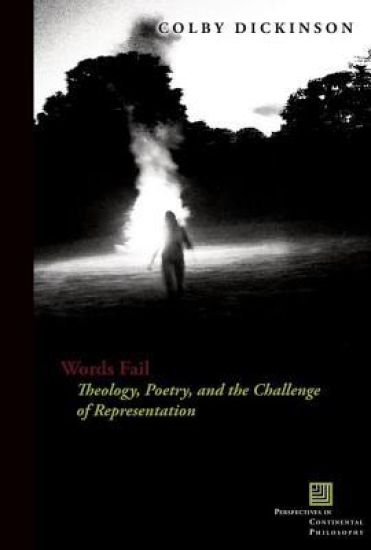
There has been much philosophical speculation on the potential failure of language as well as the search for a presentation of the "thing itself" beyond representation. Words Fail pursues the writings of a trio of philosophers—Jacques Derrida, Philippe Lacoue-Labarthe, and Giorgio Agamben—as prime examples of how modern poetry presents us with a profitable vantage point from which to survey the ongoing struggle of living in a highly fragmented world. Alongside these thinkers, this book looks specifically at the form of spirituality that is given shape by this intersection of poetics and theological-philosophical reflection—all of which offer rich suggestions about our spiritual nature.
Words Fail

Words Fail

Colby Dickinson

Fordham University Press
2016
sidottu
There has been much philosophical speculation on the potential failure of language as well as the search for a presentation of the "thing itself" beyond representation. Words Fail pursues the writings of a trio of philosophers—Jacques Derrida, Philippe Lacoue-Labarthe, and Giorgio Agamben—as prime examples of how modern poetry presents us with a profitable vantage point from which to survey the ongoing struggle of living in a highly fragmented world. Alongside these thinkers, this book looks specifically at the form of spirituality that is given shape by this intersection of poetics and theological-philosophical reflection—all of which offer rich suggestions about our spiritual nature.
Agamben's Coming Philosophy

Agamben's Coming Philosophy

Colby Dickinson; Adam Kotsko

Rowman Littlefield International
2015
sidottu
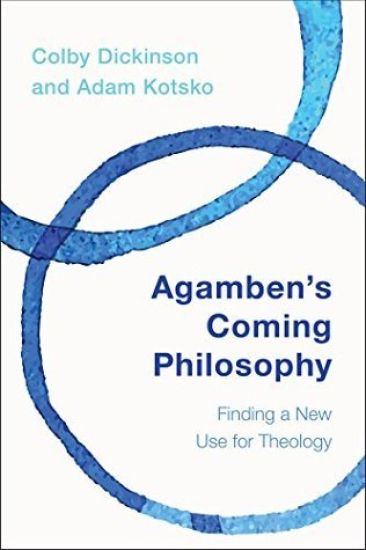
One of the many challenges for readers of Agamben’s sprawling and heterogeneous body of work is what to make of his increasingly insistent focus on theology. Agamben’s Coming Philosophy brings together Colby Dickinson, the author of Agamben and Theology, and Adam Kotsko, the translator of several of Agamben’s more recent theologically-oriented books, to discuss Agamben’s unique approach to theology—and its profound implications for understanding Agamben’s philosophical project and the deepest political and ethical problems of our time. The book covers the whole range of Agamben’s work, from his earliest reflections to his forthcoming magnum opus, The Use of Bodies. Along the way, the authors provide an overview of Agamben’s project as a whole, as well as incisive reflections on individual works and isolated themes. This volume is essential reading for anyone grappling with Agamben’s work. The theological starting point leads to a thorough examination of Agamben’s methodology, his relationship with his primary sources (most notably Walter Benjamin), and his relevance for questions of politics, ethics, and philosophy.
Agamben's Coming Philosophy

Agamben's Coming Philosophy

Colby Dickinson; Adam Kotsko

Rowman Littlefield International
2015
nidottu
One of the many challenges for readers of Agamben’s sprawling and heterogeneous body of work is what to make of his increasingly insistent focus on theology. Agamben’s Coming Philosophy brings together Colby Dickinson, the author of Agamben and Theology, and Adam Kotsko, the translator of several of Agamben’s more recent theologically-oriented books, to discuss Agamben’s unique approach to theology—and its profound implications for understanding Agamben’s philosophical project and the deepest political and ethical problems of our time. The book covers the whole range of Agamben’s work, from his earliest reflections to his forthcoming magnum opus, The Use of Bodies. Along the way, the authors provide an overview of Agamben’s project as a whole, as well as incisive reflections on individual works and isolated themes. This volume is essential reading for anyone grappling with Agamben’s work. The theological starting point leads to a thorough examination of Agamben’s methodology, his relationship with his primary sources (most notably Walter Benjamin), and his relevance for questions of politics, ethics, and philosophy.
Between the Canon and the Messiah

Between the Canon and the Messiah

Colby Dickinson

Bloomsbury Academic
2014
nidottu
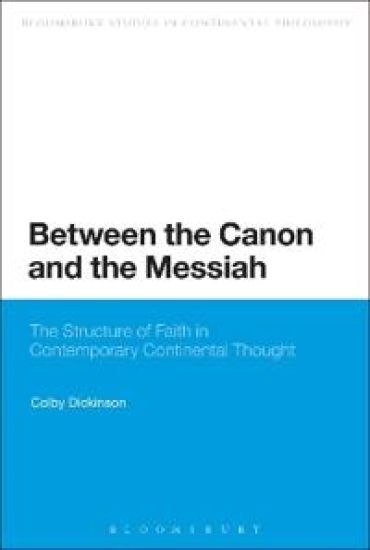
Dickinson traces the development of two concepts, the messianic and the canonical, as they circulate, interweave and contest each other in the work of three prominent continental philosophers: Walter Benjamin, Jacques Derrida and Giorgio Agamben, though a strong supporting cast of Jan Assmann, Gershom Scholem, Jacob Taubes and Paul Ricoeur, among others, also play their respective roles throughout this study. He isolates how their various interactions with their chosen terms reflects a good deal of what is said within the various discourses that constitute what we have conveniently labelled, often in mistakenly monolithic terms, as 'Theology'. By narrowing the scope of this study to the dynamics generated historically by these contrasting terms, he also seeks to determine what exactly lies at the heart of theology's seemingly most treasured object: the presentation beyond any representation, the supposed true nucleus of all revelation and what lies behind any search for a 'theology of immanence' today.
Between the Canon and the Messiah

Between the Canon and the Messiah

Colby Dickinson

Bloomsbury Academic USA
2013
sidottu
Dickinson traces the development of two concepts, the messianic and the canonical, as they circulate, interweave and contest each other in the work of three prominent continental philosophers: Walter Benjamin, Jacques Derrida and Giorgio Agamben, though a strong supporting cast of Jan Assmann, Gershom Scholem, Jacob Taubes and Paul Ricoeur, among others, also play their respective roles throughout this study. He isolates how their various interactions with their chosen terms reflects a good deal of what is said within the various discourses that constitute what we have conveniently labelled, often in mistakenly monolithic terms, as 'Theology'. By narrowing the scope of this study to the dynamics generated historically by these contrasting terms, he also seeks to determine what exactly lies at the heart of theology's seemingly most treasured object: the presentation beyond any representation, the supposed true nucleus of all revelation and what lies behind any search for a 'theology of immanence' today.