Kirjojen hintavertailu – 12 859 828 kirjaa ja 27 kauppaa

Kirjailija

Colin Griffin

Kirjat ja teokset yhdessä paikassa: 5 kirjaa, julkaisuja vuosilta 2000–2024, suosituimpiin kuuluu Adult Education: As Social Policy. Vertaile teosten hintoja ja tarkista saatavuus suomalaisista kirjakaupoista.

5 kirjaa

Kirjojen julkaisuvuodet: 2000–2024.

Adult Education: As Social Policy

Adult Education: As Social Policy

Colin Griffin

TAYLOR FRANCIS LTD
2024
nidottu
First published in 1987, Adult Education: As Social Policy intends to provide an introduction to the social policy analysis of adult education, contributing to the larger literature around lifelong or continuing education. The roots of policy in alternative social welfare models are traced to their ideological sources and to the origins of adult education theory itself. The development of professionalism is also considered in relation to policy analysis and there is a case study of major policy documents to illustrate the analysis. The book will be of interest to students of pedagogy, education, and policy.
Adult Education: As Social Policy

Adult Education: As Social Policy

Colin Griffin

TAYLOR FRANCIS LTD
2022
sidottu
First published in 1987, Adult Education: As Social Policy intends to provide an introduction to the social policy analysis of adult education, contributing to the larger literature around lifelong or continuing education. The roots of policy in alternative social welfare models are traced to their ideological sources and to the origins of adult education theory itself. The development of professionalism is also considered in relation to policy analysis and there is a case study of major policy documents to illustrate the analysis. The book will be of interest to students of pedagogy, education, and policy.
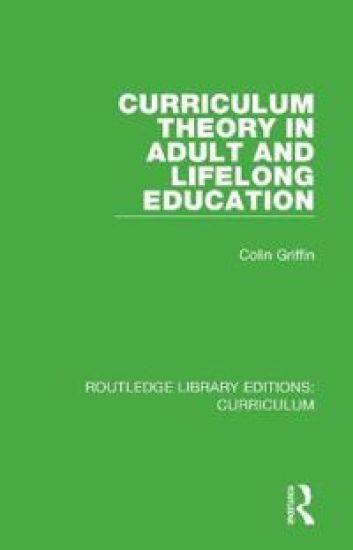
Curriculum Theory in Adult and Lifelong Education
Originally published in 1983. Curriculum studies and curriculum theory have tended to be pursued almost exclusively in the context of the school. Developments in curriculum theory have therefore not found reflections in much theoretical work in adult education. This book points to the necessity of a curriculum theory for adult and continuing education through discussion of both curriculum studies and the principles of adult education. The various ways in which systems of adult education are now developing are reviewed, in social, political and cultural terms, and recent advances in education theory are related to developments in post-school education.
The Golden Age

The Golden Age

Ian Inkster; Colin Griffin; Judith Rowbotham

Ashgate Publishing Limited
2000
sidottu
In 1850 the Industrial Revolution came to an end. In 1851 the Great Exhibition illustrated to the whole world the supremacy of industrial England. For the next twenty years Britain reigned supreme. From around 1870 Britain began to decline. Britain is now a second rate power with strong memories of its former supremacy. The above five sentences summarise a common view of the sequencing of Britain’s rise and relative fall, a stereotype that is challenged and modified in the essays of The Golden Age. By concentrating on central aspects of social and industrial change authors expose the underpinnings of supremacy, its unsung underside, its tarnished gold. Major themes cover industrial and technological change, social institutions and gender relations in a period during which industry and industrialism were equally celebrated and nurtured. Against this background it is difficult to argue for any sudden decline of energy, assets or institution, nor for any significant move from an industrial society to one in which a hearty manufacturing was replaced by commerce and land, sensibility and artifice.