Kirjojen hintavertailu – 12 903 724 kirjaa ja 27 kauppaa

Kirjailija

Cong Wang

Kirjat ja teokset yhdessä paikassa: 7 kirjaa, julkaisuja vuosilta 2009–2026, suosituimpiin kuuluu Wireless Rechargeable Sensor Networks. Vertaile teosten hintoja ja tarkista saatavuus suomalaisista kirjakaupoista.

7 kirjaa

Kirjojen julkaisuvuodet: 2009–2026.

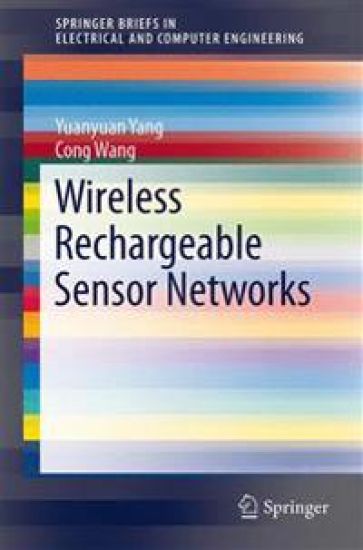
Wireless Rechargeable Sensor Networks

Wireless Rechargeable Sensor Networks

Yuanyuan Yang; Cong Wang

Springer International Publishing AG
2015
nidottu
This SpringerBrief provides a concise guide to applying wireless energy transfer techniques in traditional battery-powered sensor networks. It examines the benefits and challenges of wireless power including efficiency and reliability. The authors build a wireless rechargeable sensor networks from scratch and aim to provide perpetual network operation. Chapters cover a wide range of topics from the collection of energy information and recharge scheduling to joint design with typical sensing applications such as data gathering. Problems are approached using a natural combination of probability theory, optimization, algorithm and protocol designs. All proposed mechanisms are evaluated by extensive simulations. Wireless Rechargeable Sensor Networks targets professionals and researchers working in networks, wireless communications, energy technology and information technology. Advanced-level students studying electrical engineering and computer science will also find this material useful as a study guide.

Searchable Encryption

Searchable Encryption

Kui Ren; Cong Wang

Springer International Publishing AG
2024
nidottu
This book comprehensively reviews searchable encryption, which represents a series of research developments that directly enable search functionality over encrypted data. The book majorly covers: 1) the design and implementation of encrypted search algorithms, data structures, and systems that facilitate various forms of search over always-encrypted databases; 2) different threat models, assumptions, and the related security guarantees, when using searchable encryption in the real-world settings; and 3) latest efforts in building full-fledged encrypted database systems that draw insights from searchable encryption constructions. The book fits in the timely context, where the necessity of safeguarding important and sensitive data has been globally recognized. Traditional security measures, such as storing data behind network firewalls and layers of access control mechanisms to keep attackers out, are no longer sufficient to cope with the expandinglandscape of surging cyber threats. There is an urgent call to keep sensitive data always encrypted to protect the data at rest, in transit, and in use. Doing so guarantees data confidentiality for owners, even if the data is out of their hands, e.g., hosted at in-the-cloud databases. The daunting challenge is how to perform computation over encrypted data. As we unfold in this book, searchable encryption, as a specific line of research in this broadly defined area, has received tremendous advancements over the past decades. This book is majorly oriented toward senior undergraduates, graduate students, and researchers, who want to work in the field and need extensive coverage of encrypted database research. It also targets security practitioners who want to make well-informed deployment choices of the latest advancements in searchable encryption for their targeted applications. Hopefully, this book will be beneficial in both regards.
Searchable Encryption

Searchable Encryption

Kui Ren; Cong Wang

Springer International Publishing AG
2023
sidottu
This book comprehensively reviews searchable encryption, which represents a series of research developments that directly enable search functionality over encrypted data. The book majorly covers: 1) the design and implementation of encrypted search algorithms, data structures, and systems that facilitate various forms of search over always-encrypted databases; 2) different threat models, assumptions, and the related security guarantees, when using searchable encryption in the real-world settings; and 3) latest efforts in building full-fledged encrypted database systems that draw insights from searchable encryption constructions. The book fits in the timely context, where the necessity of safeguarding important and sensitive data has been globally recognized. Traditional security measures, such as storing data behind network firewalls and layers of access control mechanisms to keep attackers out, are no longer sufficient to cope with the expandinglandscape of surging cyber threats. There is an urgent call to keep sensitive data always encrypted to protect the data at rest, in transit, and in use. Doing so guarantees data confidentiality for owners, even if the data is out of their hands, e.g., hosted at in-the-cloud databases. The daunting challenge is how to perform computation over encrypted data. As we unfold in this book, searchable encryption, as a specific line of research in this broadly defined area, has received tremendous advancements over the past decades. This book is majorly oriented toward senior undergraduates, graduate students, and researchers, who want to work in the field and need extensive coverage of encrypted database research. It also targets security practitioners who want to make well-informed deployment choices of the latest advancements in searchable encryption for their targeted applications. Hopefully, this book will be beneficial in both regards.
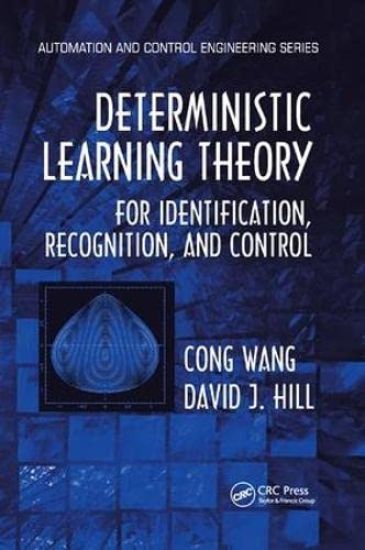
Deterministic Learning Theory for Identification, Recognition, and Control
Deterministic Learning Theory for Identification, Recognition, and Control presents a unified conceptual framework for knowledge acquisition, representation, and knowledge utilization in uncertain dynamic environments. It provides systematic design approaches for identification, recognition, and control of linear uncertain systems. Unlike many books currently available that focus on statistical principles, this book stresses learning through closed-loop neural control, effective representation and recognition of temporal patterns in a deterministic way. A Deterministic View of Learning in Dynamic EnvironmentsThe authors begin with an introduction to the concepts of deterministic learning theory, followed by a discussion of the persistent excitation property of RBF networks. They describe the elements of deterministic learning, and address dynamical pattern recognition and pattern-based control processes. The results are applicable to areas such as detection and isolation of oscillation faults, ECG/EEG pattern recognition, robot learning and control, and security analysis and control of power systems. A New Model of Information ProcessingThis book elucidates a learning theory which is developed using concepts and tools from the discipline of systems and control. Fundamental knowledge about system dynamics is obtained from dynamical processes, and is then utilized to achieve rapid recognition of dynamical patterns and pattern-based closed-loop control via the so-called internal and dynamical matching of system dynamics. This actually represents a new model of information processing, i.e. a model of dynamical parallel distributed processing (DPDP).
Deterministic Learning Theory for Identification, Recognition, and Control
Deterministic Learning Theory for Identification, Recognition, and Control presents a unified conceptual framework for knowledge acquisition, representation, and knowledge utilization in uncertain dynamic environments. It provides systematic design approaches for identification, recognition, and control of linear uncertain systems. Unlike many books currently available that focus on statistical principles, this book stresses learning through closed-loop neural control, effective representation and recognition of temporal patterns in a deterministic way. A Deterministic View of Learning in Dynamic EnvironmentsThe authors begin with an introduction to the concepts of deterministic learning theory, followed by a discussion of the persistent excitation property of RBF networks. They describe the elements of deterministic learning, and address dynamical pattern recognition and pattern-based control processes. The results are applicable to areas such as detection and isolation of oscillation faults, ECG/EEG pattern recognition, robot learning and control, and security analysis and control of power systems. A New Model of Information ProcessingThis book elucidates a learning theory which is developed using concepts and tools from the discipline of systems and control. Fundamental knowledge about system dynamics is obtained from dynamical processes, and is then utilized to achieve rapid recognition of dynamical patterns and pattern-based closed-loop control via the so-called internal and dynamical matching of system dynamics. This actually represents a new model of information processing, i.e. a model of dynamical parallel distributed processing (DPDP).