Kirjailija
Conrad C. Crane
Kirjat ja teokset yhdessä paikassa: 10 kirjaa, julkaisuja vuosilta 2000–2016, suosituimpiin kuuluu Reconstructing Iraq. Vertaile teosten hintoja ja tarkista saatavuus suomalaisista kirjakaupoista.
Nimi esiintyy myös muodoissa: Conrad C Crane
10 kirjaa
Kirjojen julkaisuvuodet: 2000–2016.
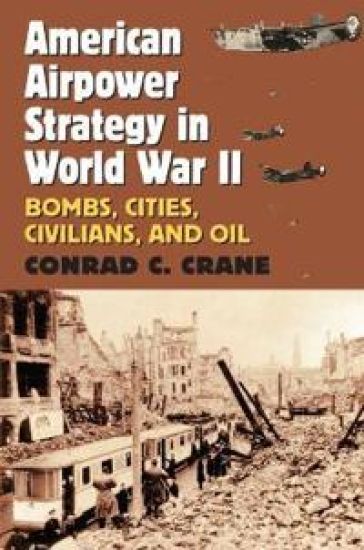
Resistance is a Product of will times means, Carl von Clausewitz postulated in his treatise On War. In his 1993 Bombs, Cities, and Civilians, which the American Historical Review judged “must reading for anyone interested in the Subject of air warfare,” Conrad C. Crane focused on the moral dimension of American air strategy in World War II—specifically, the Allied effort to break the enemy’s will through targeting civilians. With decades of research and reflection, and a wealth of new material at his command, Crane returns to the Subject of America's WWII airpower strategy to offer an analysis fully engaged with the 'means' side of Clausewitz's equation: the design and impact of strategic bombing of the enemy's infrastructure and thus its capacity to fight. A marked advance in our understanding of the use of airpower in war in general and the Second World War in particular, Crane's work shows how, despite an undeniable lack of concern about civilian casualties in Germany and Japan late in the war, American strategic bombing in WWII consistently focused on destroying the enemy's war-making capacity instead of its collapsing will. Further, Crane persuasively argues that in the limited wars since then, separating such targets has become increasingly more difficult, and all air campaigns against states have subsequently escalated to accept greater risks for civilians. American Airpower Strategy in World War II also provides an expanded close look at the use of airpower in the last three months of the strategic air war against Germany, when so many bombing missions relied upon radar aids, as well as the first direct comparison of 8th and 15th Air Force bombing campaigns in Europe. The result is the most coherent and concise analysis of the application and legacy of Allied strategic airpower in WWII and a work that will inform all future practical and theoretical consideration of the use, and the role, of airpower in war.
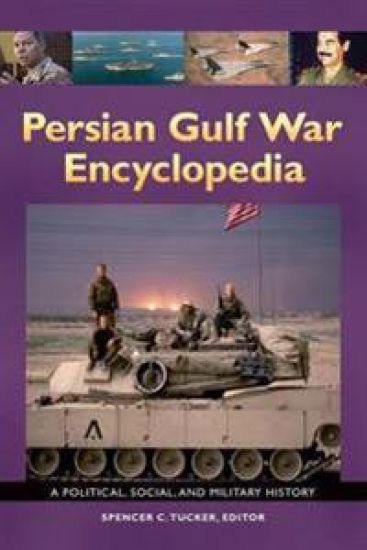
Ideal for high school and college-level readers as well as students attending military academies and general audiences, this encyclopedia covers the details of the Persian Gulf War as well as the long-term consequences and historical lessons learned from this important 20th-century conflict. This encyclopedia provides a rich historical account of the Persian Gulf War, examining the conflict from a holistic perspective that addresses the details of the military operations as well as the social, political, economic, and cultural aspects of the war. The alphabetically arranged entries chart the events of the war, provide cross references and sources for additional study, and identify the most important individuals and groups associated with the conflict. In addition, it includes primary source documents that will provide readers with valuable insights and foster their critical thinking and historical reasoning skills. The Persian Gulf War served as the first live-combat test of much of the United States' then-new high-tech weaponry. The war also held many lessons about the play of national interests, the process of coalition building, the need for effective communication and coordination, and the role of individuals in shaping history. This book addresses all key battles, the nations involved, strategies employed by both sides, weapon systems used, the role of the media, the role played by women, and environmental and medical issues associated with the conflict.
Even before the Bush administration in Washington began its defense reviews, the topic of transforming America's armed forces to meet the security demands of the post-Cold War era and beyond was receiving much attention. The sharp debates about the direction and impact of President George W. Bush's and Secretary Donald Rumsfeld's plans for defense reform have magnified that trend. For that reason, the theme of the Twelfth Annual Strategy Conference conducted by the U. S. Army War College in April 2001, "Transforming Defense in an Era of Peace and Prosperity," was especially timely. The ideas and issues presented in this collection of papers from that gathering will educate and inform anyone interested in the past and future course of American defense reform. Though conference attendees had many differing opinions about the barriers to defense transformation and how to overcome them, a broad consensus formed that some change is essential to meet future security requirements.
Landpower and Crises: Army Roles and Missions in Smaller-Scale Contingencies During the 1990s
Conrad C. Crane; Strategic Studies Institute
Lulu.com
2014
nidottu
Prior to World War II, the majority of instances where American armed forces were used abroad involved Marine or Navy actions to protect U. S. citizens or promote national interests. The use of American military forces (especially the Army) expanded considerably with the advent of the Cold War and America's ascension to superpower status.2 Since the end of the Cold War, there has been another significant increase in the use of military forces (with special emphasis again on the Army) by American political leaders to achieve policy objectives. Except for the major theater war of Operation DESERT STORM, these deployments have fallen under the broad heading of smaller-scale contingencies (SSCs). While this overall increase in theater military operations began in the aftermath of Operation DESERT STORM, it stabilized at a high level during the first full year of the Clinton administration. Since mid-1993, American military forces have engaged in 170 separate SSCs...
Facing the Hydra: Maintaining Strategic Balance While Pursuing A Global War Against Terrorism
Conrad C. Crane; Strategic Studies Institute
Lulu.com
2014
nidottu
As the global war on terrorism continues, members of Congress and media pundits are starting to say that American military forces are being stretched too thin by far-flung commitments. While Bush administration officials dispute this, they have expressed desires to reduce peacekeeping commitments and reexamine the number of overseas stations and deployments. Dr. Conrad Crane analyzes the impact of the war on terrorism and the requirements of the 2001 Quadrennial Defense Review on the many essential missions conducted by the U. S. Armed Forces. Focusing primarily on the Army, he highlights the requirements associated with combat operations against terrorists, accelerating transformation and the new emphasis on homeland security and force protection. At the same time, he points out that the Army and the other Services must remain involved worldwide in day-to-day assurance, dissuasion, and deterrence activities; execution of peace operations and other smaller-scale contingencies...
Reconstructing Iraq
Conrad C Crane; W Andrew Terrill; Strategic Studies Institute
Lulu.com
2014
pokkari
During World War II, the U. S. military's extensive planning for the occupation of Germany was a major factor in achieving long-term strategic objectives after the war was won. More recent examples of military operations also emphasize the challenges of post-conflict operations and the criticality of detailed planning and preparation. As the possibility of war with Iraq looms on the horizon, it is important to look beyond the conflict to the challenges of occupying the country. In October 2002, the U. S. Army War College's Strategic Studies Institute, in coordination with the Office of the Army Deputy Chief of Staff/G-3, initiated a study to analyze how American and coalition forces can best address the requirements that will necessarily follow operational victory in a war with Iraq. The objectives of the project were to determine and analyze probable missions for military forces in a post-Saddam Iraq; examine associated challenges...
Reconstructing Iraq: Insights, Challenges, and Missions for Military Forces in A Post-Conflict Scenario
Conrad C. Crane; W. Andrew Terrill; Strategic Studies Institute
Lulu.com
2014
nidottu
During World War II, the U. S. military's extensive planning for the occupation of Germany was a major factor in achieving long-term strategic objectives after the war was won. More recent examples of military operations also emphasize the challenges of post-conflict operations and the criticality of detailed planning and preparation. As the possibility of war with Iraq looms on the horizon, it is important to look beyond the conflict to the challenges of occupying the country. In October 2002, the U. S. Army War College's Strategic Studies Institute, in coordination with the Office of the Army Deputy Chief of Staff/G-3, initiated a study to analyze how American and coalition forces can best address the requirements that will necessarily follow operational victory in a war with Iraq. The objectives of the project were to determine and analyze probable missions for military forces in a post-Saddam Iraq; examine associated challenges; and formulate strategic recommendations for transferring responsibilities...
Precedents, Variables, and Options in Planning A U.S. Military Disengagement Strategy from Iraq
W. Andrew Terrill; Conrad C. Crane; Strategic Studies Institute
Lulu.com
2014
nidottu
The United States is engaged in a massive effort to rehabilitate the government and political culture of Iraq, following the destruction of the Saddam Hussein regime in spring 2003. The U. S. goal and ideal for Iraq is the establishment and maintenance of a strong, self-sufficient, and forward-looking government. Currently, Iraq is in transition, as that country's political leaders seek to establish a new, more representative form of government, while at the same time attempting to cope with a vicious ongoing insurgency. To accomplish these tasks, the government needs significant U. S. military support which will be reduced and then eliminated over time as the Iraqis hopefully become more self-sufficient. According to President George W. Bush in his June 25, 2005, address to the nation, "We will stay in Iraq as long as we are needed-and not a day longer."
American Airpower Strategy in Korea, 1950-53
Conrad C. Crane
University Press of Kansas
2000
sidottu
Analyzes both the success and failures of the US Air Force in Korea, offering an examination of how the air war in Korea actually unfolded. The book considers not only the actual air effort in Korea but also its ramifications.