Kirjojen hintavertailu – 12 903 724 kirjaa ja 27 kauppaa

Kirjailija

Constantine R. Campbell

Kirjat ja teokset yhdessä paikassa: 20 kirjaa, julkaisuja vuosilta 2007–2026, suosituimpiin kuuluu Explorations in the Fusion of Jazz and Greek Rebetiko Music. Vertaile teosten hintoja ja tarkista saatavuus suomalaisista kirjakaupoista.

Nimi esiintyy myös muodoissa: Constantine R Campbell

20 kirjaa

Kirjojen julkaisuvuodet: 2007–2026.

Explorations in the Fusion of Jazz and Greek Rebetiko Music

Explorations in the Fusion of Jazz and Greek Rebetiko Music

Constantine R. Campbell

TAYLOR FRANCIS LTD
2026
sidottu
Explorations in the Fusion of Jazz and Greek Rebetiko Music offers an account of a research-led hybridity experiment in creative practice that fuses jazz and Greek rebetiko. It traces the history and nature of jazz fusion—or hybridity—with a view to understanding its significance for the genre of jazz, while situating the rebetiko-jazz fusion experiment within it. The author adopts a similar historical approach to Greek rebetiko music and its nature in order to pay homage to its traditions, heritage, and musicians. In particular, he advances an invitation to embrace its spirit and learn from its mechanisms for the purposes of hybridity. The book then guides readers through wider issues related to the politics of fusion, including genre, authenticity, appropriation, and transculturation. Finally, this text offers an exegesis of creative practice, describing the inspiration, methods, processes, and outcomes of this rebetiko-jazz fusion experiment. It culminates in twelve original compositions, which have been performed and recorded across two albums. Recordings are signposted throughout the manuscript. The author concludes with a personal note, reflecting on his creative practice as a glocalised expression of both jazz and rebetiko. This original book is a valuable resource for postgraduate students who are interested in jazz fusion, rebetiko, or especially research-informed creative practice.
Reading Paul as Christian Scripture

Reading Paul as Christian Scripture

Constantine R. Campbell

BAKER PUBLISHING GROUP
2024
sidottu
Designed to meet the needs of contemporary evangelical undergraduates, this survey textbook offers an engaging introduction to Paul's Letters in their literary, theological, and canonical contexts. Constantine Campbell, a recognized Pauline and Greek scholar, explores Paul's Letters with an eye to fitting them within the life, ministry, and theology of the apostle Paul. Campbell reflects on the reception history of Paul's Letters, presents them in the context of the apostle's missionary journeys, and fits the Pauline corpus within the larger story and tradition of Christian Scripture. The book also covers the book of Acts as it relates to Paul's Letters. Beautifully designed in full color with an abundance of maps, sidebars, images, and other visual aids to hold interest and aid learning, this addition to the Reading Christian Scripture series offers a faith-friendly introduction to students of Paul's Letters. Additional resources for instructors and students are available through Textbook eSources.
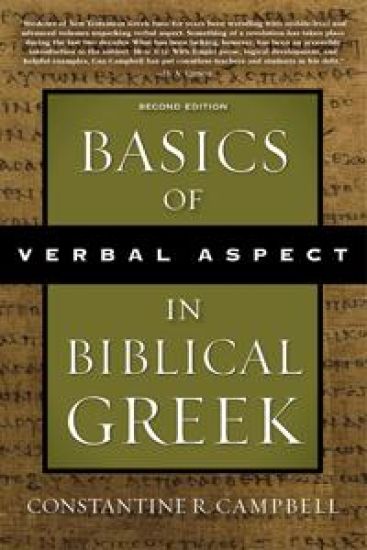
Basics of Verbal Aspect in Biblical Greek

Basics of Verbal Aspect in Biblical Greek

Constantine R. Campbell

ZONDERVAN
2024
nidottu
Verbal aspect in the Greek language has been a topic of significant debate in recent scholarship. The majority of scholars now believe that an understanding of verbal aspect is even more important than verb tense (past, present, etc.). Yet there still are no alternative accessible textbooks, both in terms of level and price. In the second edition, Constantine R. Campbell investigates the function of verbal aspect within the New Testament Greek narrative in light of the last fifteen years of the latest scholarship. In Basics of Verbal Aspect in Biblical Greek, Second Edition, Campbell has done a marvelous job in this book of simplifying the concept without getting caught up using terms of linguistics that only experts can understand. The book includes expanded and updated discussion, revised exercises, an answer key, a glossary of key concepts, an appendix covering space and time, and an index of Scriptures cited. Professors and students, at both the undergraduate and graduate levels, will use this is as a supplemental text in both beginning and advanced Greek courses. Pastors that study the Greek text will also appreciate this resource as a supplement to their preaching and teaching.
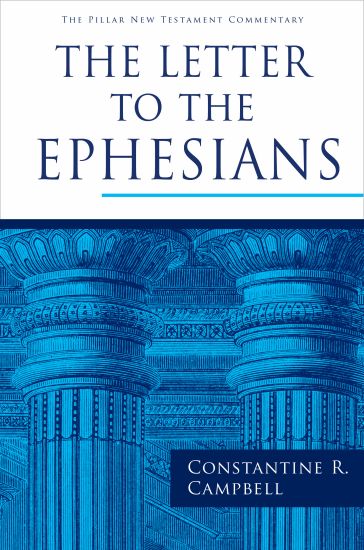
The Letter to the Ephesians

The Letter to the Ephesians

Constantine R Campbell

WILLIAM B EERDMANS PUBLISHING CO
2023
sidottu
A clear and comprehensive commentary on Paul's Letter to the Ephesians. In the latest Pillar New Testament Commentary, Constantine R. Campbell illuminates the Letter to the Ephesians with scholarly precision and pastoral warmth. In line with the christological concerns of the letter, Campbell calls special attention to its theme of union with Christ. His thorough analysis covers a breadth of topics, including salvation and grace, the glory of God, and the church and its mission. Aimed at students and scholars of the Pauline epistles, Campbell's commentary carefully explains each verse of Ephesians with attention to historical and linguistic context. Yet the commentary prioritizes imminent theological concerns and remains accessible to any serious reader of the New Testament.
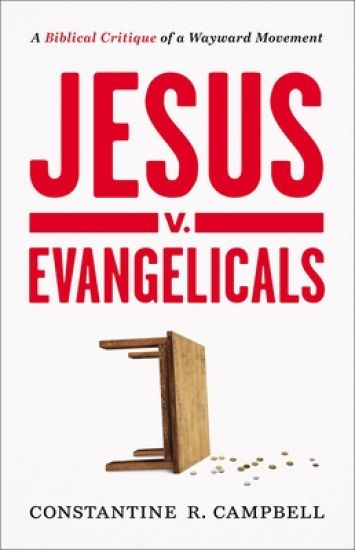
Jesus v. Evangelicals

Jesus v. Evangelicals

Constantine R. Campbell

ZONDERVAN
2023
nidottu
American evangelicalism is at a crisis point. The naked grasping at political power at the expense of moral credibility has revealed a movement in disarray. Evangelicals are now faced with a quandary: will they double-down and continue along this perilous path, or will they stop, reflect, and change course? And while support of Donald Trump has produced the tipping point of the evangelical crisis, it is not by any means its only problem. Evangelicals claim the Bible as the supreme authority in matters of faith. But in reality, it is particular readings of the Bible that govern evangelical faith. Some evangelical readings of the Bible can be highly selective. They distort the Bible's teaching in crucial ways and often lead evangelicals to misguided attempts to relate to the world around them. Many Christians who once self-professed as "evangelicals" can no longer use the term of themselves because of what it has come to represent--power-mongering, divisiveness, judgementalism, hypocrisy, pride, greed. Some leave not just evangelicalism but Christianity for good. Jesus v. Evangelicals is an insider's critique of the evangelical movement according to its own rules. Since evangelicals regard themselves governed by the Bible, biblical scholar Constantine Campbell engages the Bible to critique evangelicals and to call out the problems within the contemporary evangelical movement. By revealing evangelical distortions of the Bible, this book seeks to restore the dignity of the Christian faith and to renew public interest in Jesus, while calling evangelicals back to his teaching. Constantine Campbell appeals to evangelicals to break free from the grid that has distorted their understanding of the Bible and to restore public respect for Christianity in spite of its misrepresentations by the evangelical church.
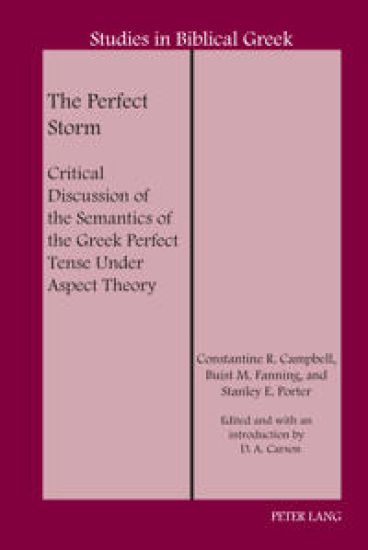
The Perfect Storm

The Perfect Storm

Constantine R. Campbell; Buist M. Fanning; Stanley E. Porter

Peter Lang Publishing Inc
2021
sidottu
Nowhere are the chaotic debates surrounding contemporary aspect theory more heated than in discussions of the theory’s application to Hellenistic Greek, and especially its understanding of the semantics of the Greek perfect tense. This book is a distilled academic debate among three of the best-known scholars on the subject, each defending his own unique interpretation while engaging the other two. The Perfect Storm will prove an indispensable resource for any scholar seeking to write convincingly on the Greek perfect in the future.
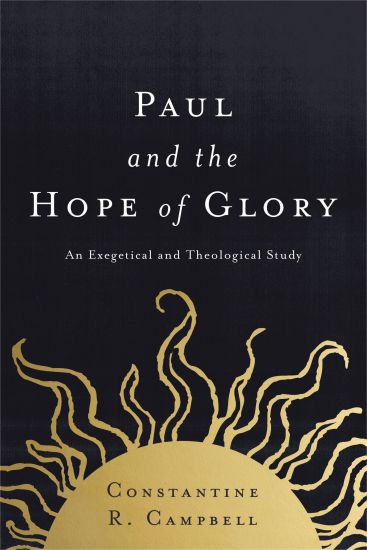
Paul and the Hope of Glory

Paul and the Hope of Glory

Constantine R. Campbell

Zondervan
2020
nidottu
A Unique Study of Pauline Eschatology that Is Both Exegetical and TheologicalOne of the trajectories coming out of Constantine Campbell's award-winning book Paul and Union with Christ is the significance of eschatology for the apostle. Along with union with Christ, eschatology is a feature of Paul’s thinking that affects virtually everything else. While union with Christ is the "webbing" that joins Paul's thought together, eschatology provides the "shape" of his thought, and thus gives shape to his teaching about justification, resurrection, the cross, ethics, and so forth. There is considerable debate, however, about Paul's eschatology, asking whether he is a "covenant" or an "apocalyptic" theologian. In Paul and the Hope of Glory Campbell conducts a thorough exegetical study of the relevant elements of Paul's eschatological language, metaphors, and images including "parousia," "the last day," "inheritance," "hope," and others. He examines each passage in context, aiming to build inductively an overall sense of Paul's thinking. The results of this exegetical study then feed into a theological study that demonstrates the integration of Paul's eschatological thought into his overall theological framework. The study is comprised of three parts:The first part introduces the key issues--both exegetical and theological--and sets the parameters and methodology of the book. It also offers an historical survey of the scholarly work produced on Paul's eschatology through the twentieth century to the present day. The second part contains the detailed exegetical analysis, with chapters on each important Pauline phrase, metaphor, and image related to eschatology. The third part turns its attention to theological synthesis. It recapitulates relevant conclusions from the evidence adduced in part two and launches into theological discussion engaging current issues and debates. This volume combines high-level scholarship and a concern for practical application of a topic currently debated in the academy and the church. More than a monograph, this book is a helpful reference tool for students, scholars, and pastors to consult its treatment of any particular instance of any phrase or metaphor that relates to eschatology in Paul's thinking.
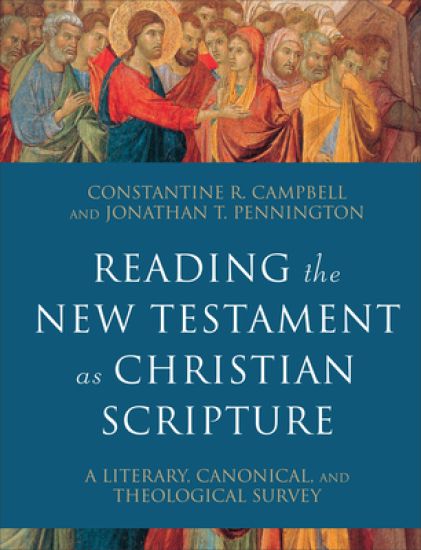
Reading the New Testament as Christian Scripture – A Literary, Canonical, and Theological Survey

Reading the New Testament as Christian Scripture – A Literary, Canonical, and Theological Survey

Constantine R. Campbell; Jonathan T. Pennington

Baker Academic, Div of Baker Publishing Group
2020
sidottu
This survey textbook by two respected New Testament scholars is designed to meet the needs of contemporary evangelical undergraduates. The book effectively covers the New Testament books and major topics in the New Testament, assuming no prior academic study of the Bible. The authors pay attention to how the New Testament documents fit together as a canonical whole that supplements the Old Testament to make up the Christian Scriptures. They also show how the New Testament writings provide basic material for Christian doctrine, spirituality, and engagement with culture. Chapters can be assigned in any order, making this an ideal textbook for one-semester courses at evangelical schools. This is the first volume in a new series of survey textbooks that will cover the Old and New Testaments. The book features full-color illustrations that hold interest and aid learning and offers a full array of pedagogical aids: photographs, sidebars, maps, time lines, charts, glossary, and discussion questions. Additional resources for instructors and students are available through Textbook eSources.
Reading Biblical Greek Pack

Reading Biblical Greek Pack

Richard J. Gibson; Constantine R. Campbell

Zondervan
2017
muu
The Reading Biblical Greek Pack contains everything you need to grasp of the fundamentals of the Greek language so you can read and translate the Greek of the New Testament. The learning approach revolves around three core elements: grammar, vocabulary, and reading & translation. The Reading Biblical Greek Pack includes: Reading Biblical Greek, a Greek textbook introducing first-year Greek students to the essential information—no more and no less—optimizing their grasp of the fundamentals of the Greek languageReading Biblical Greek Workbook, a companion resource to the main grammar that breaks up the Greek text of Mark 1–4 into manageable portions and provides the vocabulary and grammatical assistance required for beginning studentsReading Biblical Greek Video Lectures, consisting of 82 micro-lessons of up to 10 minutes each, presenting the information in small, digestible chunks The Reading Biblical Greek Pack provides all the essential information needed to learn the basics of the Greek language and helps individuals on their own or in a classroom setting begin reading and translating the New Testament.
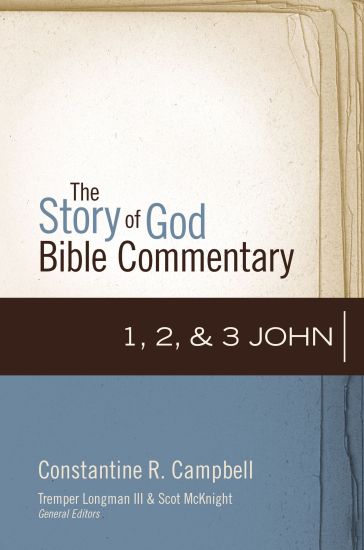
1, 2, and 3 John

1, 2, and 3 John

Constantine R. Campbell

Zondervan
2017
sidottu
A new commentary for today's world, The Story of God Bible Commentary explains and illuminates each passage of Scripture in light of the Bible's grand story. The first commentary series to do so, SGBC offers a clear and compelling exposition of biblical texts, guiding everyday readers in how to creatively and faithfully live out the Bible in their own contexts. Its story-centric approach is ideal for pastors, students, Sunday school teachers, and laypeople alike. Each volume employs three main, easy-to-use sections designed to help readers live out God's story:LISTEN to the Story: Includes complete NIV text with references to other texts at work in each passage, encouraging the reader to hear it within the Bible's grand story. EXPLAIN the Story: Explores and illuminates each text as embedded in its canonical and historical setting. LIVE the Story: Reflects on how each text can be lived today and includes contemporary stories and illustrations to aid preachers, teachers, and students. —1, 2, & 3 John—The three letters of John are ripe with immediate encouragement, practical application, and profound insight. The twin themes of love and truth dominate their theological content. If these letters seem, at times, more detached from the biblical narrative than most of the New Testament, we can still understand them in light of that story. Edited by Scot McKnight and Tremper Longman III, and written by a number of top-notch theologians, The Story of God Bible Commentary series will bring relevant, balanced, and clear-minded theological insight to any biblical education or ministry.
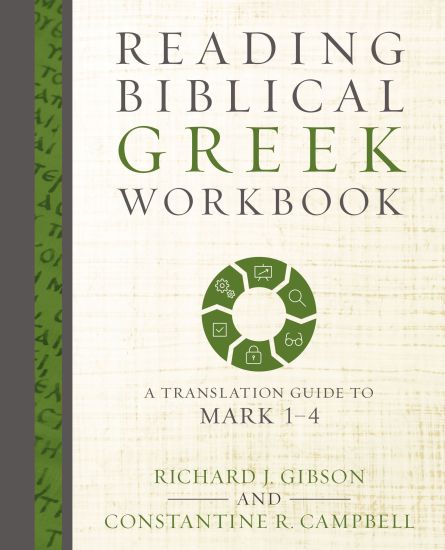
Reading Biblical Greek Workbook

Reading Biblical Greek Workbook

Richard J. Gibson; Constantine R. Campbell

Zondervan
2017
nidottu
The Reading Biblical Greek Workbook is a companion resource to Reading Biblical Greek: A Grammar for Students. The workbook breaks up the Greek text of Mark 1-4 into manageable portions and provides the vocabulary and grammatical assistance required for beginning students. The Reading Biblical Greek Workbook is an integral part of the learning experience for students, it helps them to read and translate the Greek of the New Testament, and ultimately equips them to read the Greek New Testament itself. The student will have read and translated the whole of Mark 1-4 by the time they complete the workbook
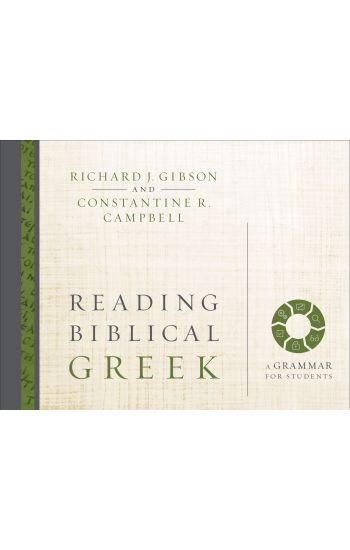
Reading Biblical Greek

Reading Biblical Greek

Richard J. Gibson; Constantine R. Campbell

Zondervan
2017
sidottu
Reading Biblical Greek introduces first-year Greek students to the essential information needed to optimize their grasp of the fundamentals of the Greek language—no more and no less—enabling them to read and translate the Greek of the New Testament as soon as possible. The learning approach in Reading Biblical Greek revolves around three core elements: grammar, vocabulary, and reading & translation. Grammar. The grammar consists of micro-lessons, which break up information in small, digestible chunks. Each micro-lesson addresses a single point. This arrangement makes for easy comprehension and review. It also allows the teacher to pace the material based on its difficulty and ability of their students. New learning is incremental and recursive—each new piece builds on and reinforces prior learning. Lessons are structured in three columns: 1) Introducing new topic; 2) Material to be memorized; and 3) Examples and exercises. Vocabulary. As an essential complement to grammar, vocabulary is introduced at strategic points and is arranged first by what the student has been learning in grammar, and then by frequency. The vocabulary lists are collated at the back of the book for easy access. The first 13 vocabulary lists are keyed to Mark 1-4 to help students to integrate their vocabulary learning with a “real” Greek text. Reading & Translation. The goal of this grammar is to enable students to read and translate the Greek of the New Testament. Thus, the content is structured and tied to a specific Greek text to enable reading as soon as possible. The student will have read and translated the whole of Mark 1–4 by the end of the course. The accompanying Reading Biblical Greek Workbook is a vital part of the approach. It breaks up the text of Mark 1–4 into manageable portions and provides vocabulary and grammatical assistance as required. While Reading Biblical Greek only introduces students to information that is essential to grasp of the fundamentals of the Greek language, it is informed by the latest and best of Greek and linguistic scholarship, enabling students to move seamlessly to further study.
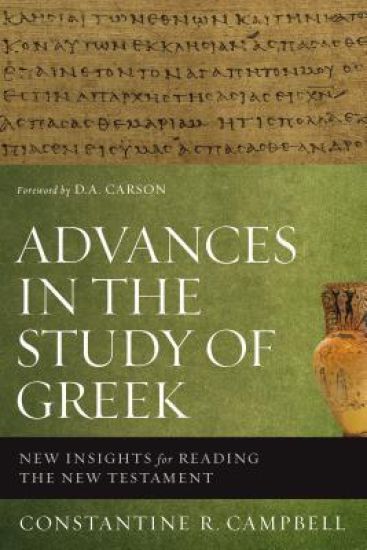
Advances in the Study of Greek

Advances in the Study of Greek

Constantine R. Campbell; D. A. Carson

Zondervan
2015
nidottu
Advances in the Study of Greek offers an introduction to issues of interest in the current world of Greek scholarship. Those within Greek scholarship will welcome this book as a tool that puts students, pastors, professors, and commentators firmly in touch with what is going on in Greek studies. Those outside Greek scholarship will warmly receive Advances in the Study of Greek as a resource to get themselves up to speed in Greek studies. Free of technical linguistic jargon, the scholarship contained within is highly accessible to outsiders. Advances in the Study of Greek provides an accessible introduction for students, pastors, professors, and commentators to understand the current issues of interest in this period of paradigm shift.
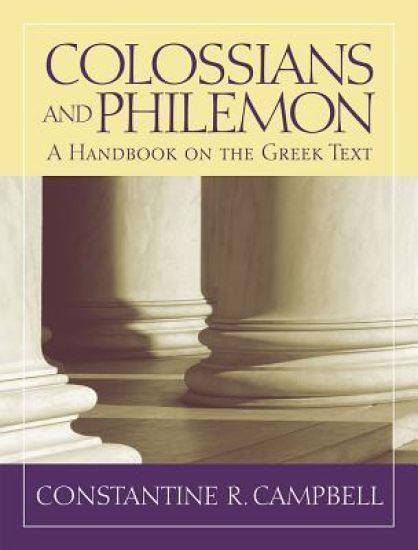
Colossians and Philemon

Colossians and Philemon

Constantine R. Campbell

Baylor University Press
2013
nidottu
Colossians and Philemon delivers to students and teachers an exhaustive and thoughtful translation of the Greek in these two Pauline texts. Constantine R. Campbell reveals the lexical, syntactic, and grammatical features of these New Testament epistles in order to provide readers with an intermediate knowledge of biblical Greek a guide through Paul's words. The result is a comprehensive study of Pauline Greek that can be used alongside commentaries to understand better the world of the Apostle.
Paul and Union with Christ

Paul and Union with Christ

Constantine R. Campbell

Zondervan
2012
nidottu
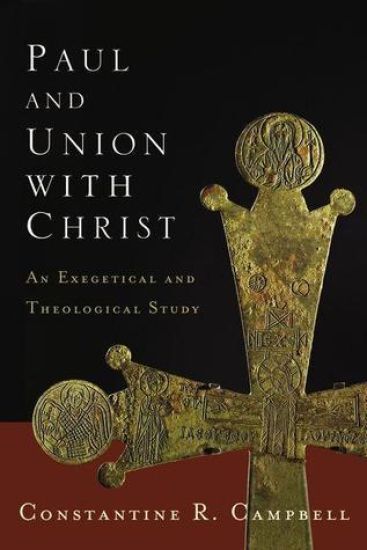
Paul and Union with Christ fills the gap for biblical scholars, theologians, and pastors pondering and debating the meaning of union with Christ. Following a selective survey of the scholarly work on union with Christ through the twentieth century to the present day, Greek scholar Constantine Campbell carefully examines every occurrence of the phrases ‘in Christ’, ‘with Christ’, ‘through Christ’, ‘into Christ,’ and other related expressions, exegeting each passage in context and taking into account the unique lexical contribution of each Greek preposition. Campbell then builds a holistic portrayal of Paul’s thinking and engages contemporary theological discussions about union with Christ by employing his evidence-based understanding of the theme. This volume combines high-level scholarship and a concern for practical application of a topic currently debated in the academy and the church. More than a monograph, this book is a helpful reference tool for students, scholars, and pastors to consult its treatment of any particular instance of any phrase or metaphor that relates to union with Christ in the Pauline corpus.
Keep Your Greek

Keep Your Greek

Constantine R. Campbell

Zondervan
2010
nidottu
Ten techniques for keeping your knowledge of Greek fresh long after college. Seminarians spend countless hours mastering biblical languages and learning how the knowledge of them illuminates the reading, understanding, and application of Scripture. But while excellent language acquisition resources abound, few really teach students how to maintain their use of Greek for the long term. Consequently, many pastors and other former Greek students find that under the pressures of work, ministry, preaching, and life, their hard-earned Greek skills begin to disappear. Constantine Campbell has been counseling one-time Greek students for years, teaching them how to keep their language facility for the benefit of their ministry. In Keep Your Greek, he shows how following the right principles makes it possible for many to retain--and in some cases regain--their Greek language skills. In Keep Your Greek, you will acquire strategies such as,How to wisely use Bible software tools so that you don't become dependent on them. How different methods of reading practices can assist your memory and keep you from becoming discouraged. How to make time to keep up on your language skills for the sake of your busy ministry. Pastors will find Keep Your Greek an encouraging and practical guide to strengthening their Greek abilities. Current students will learn how to build skills that will serve them well once they complete their formal language instruction. Loosing a skill or knowledge set is always discouraging, but with a little guidance, you can dust off your Greek and continue making linguistic insights a regular part of your study and teaching.
Basics of Verbal Aspect in Biblical Greek

Basics of Verbal Aspect in Biblical Greek

Constantine R. Campbell

Zondervan
2008
nidottu
New Testament scholar Constantine Campbell investigates the function of verbal aspect within the New Testament Greek narrative. Verbal aspect in the Greek language has been a topic of significant debate in recent scholarship. The majority of scholars now believe that an understanding of verbal aspect is even more important than verb tense (past, present, etc.). This accessible and affordable textbook has done the job of simplifying the concept without getting caught up using terms of linguistics that no one except those schooled in that field can understand. Includes exercises, an answer key, glossary of key concepts, an appendix covering space and time, and an index to Scripture cited. Professors and students, at both the undergraduate and graduate levels, can use this is as a supplemental text in both beginning and advanced Greek courses. Pastors that study the Greek text will also appreciate this resource as a supplement to their preaching and teaching._____________"An accessible introduction to the question of aspect and time, comfortably hitting a center position that sees aspect as primary, but time as still important, and yet not oversimplifying the debate. This is an excellent place to start investigating this important issue." —William D. Mounce, author of Basics of Biblical Greek
Verbal Aspect and Non-Indicative Verbs

Verbal Aspect and Non-Indicative Verbs

Constantine R. Campbell

Peter Lang Publishing Inc
2008
nidottu
Constantine R. Campbell continues the work begun in his previous volume, Verbal Aspect, the Indicative Mood, and Narrative: Soundings in the Greek of the New Testament. In this book, he investigates the function of verbal aspect in non-indicative Greek verbs, which are of great significance for the translation and exegesis of Biblical texts. Campbell demonstrates that the model developed in his first volume provides strong power of explanation for the workings of non-indicative verbs, and challenges some of the conclusions reached by previous scholarship.
Verbal Aspect, the Indicative Mood, and Narrative

Verbal Aspect, the Indicative Mood, and Narrative

Constantine R. Campbell

Peter Lang Publishing Inc
2007
nidottu
Verbal aspect in Ancient Greek has been a topic of significant debate in recent scholarship. In this book, Constantine R. Campbell investigates the function of verbal aspect within New Testament Greek narrative. He argues that the primary role of verbal aspect in narrative is to delineate and shape the various 'discourse strands' of which it is constructed, such as mainline, offline, and direct discourse. Campbell accounts for this function in terms of the semantic value of each tense-form. Consequently, in the search for more effective conclusions and explanations, he challenges and reassesses some of the conclusions reached in previous scholarship. One such reassessment involves a boldly innovative approach to the perfect tense-form.