Kirjojen hintavertailu – 12 903 724 kirjaa ja 27 kauppaa

Kirjailija

Constantine Santas

Kirjat ja teokset yhdessä paikassa: 9 kirjaa, julkaisuja vuosilta 2002–2020, suosituimpiin kuuluu Returning to Ionia. Vertaile teosten hintoja ja tarkista saatavuus suomalaisista kirjakaupoista.

9 kirjaa

Kirjojen julkaisuvuodet: 2002–2020.

Returning to Ionia

Returning to Ionia

Constantine Santas

iUniverse
2020
sidottu
Largely based on historical events, the occupation of Greece by Italy's fascist dictatorship of Benito Mussolini and the Nazis of Adolph Hitler of Germany, this narrative is fictional in its entirety. The narrator, a boy ages 10-15, the duration of the War, is entirely invented as are the characters in the story and the events narrated. I spent many years writing the stories and read them to audiences on occasion. Some were published in literary magazines while I was still a student and some in blogs today. Most, however, remained unpublished and gradually became what one might call the "spine" of the present narrative. My emphasis was in plotting a narrative of episodes I had written over a long period of time and, as I went along, I sought to turn a pastiche of disparate parts into a streaming whole. The reader will decide whether I have succeeded. One final word about the title: Returning to Ionia is mostly a reference to the last part of the story, which tells the reader about the protagonist and his return to the place of his birth and is busy still designing the ending of his story. Ionia is a made-up name, an unidentified place in the Western part of Greece, the Ionian Sea, dotted with the famous Seven Islands, conquered by the Venetian Empire, later became part of the English Empire, and were donated to Greece by Queen Victoria, on the occasion of the ascension to the throne of King George the First, in 1964.
Returning to Ionia

Returning to Ionia

Constantine Santas

iUniverse
2020
pokkari
Largely based on historical events, the occupation of Greece by Italy's fascist dictatorship of Benito Mussolini and the Nazis of Adolph Hitler of Germany, this narrative is fictional in its entirety. The narrator, a boy ages 10-15, the duration of the War, is entirely invented as are the characters in the story and the events narrated. I spent many years writing the stories and read them to audiences on occasion. Some were published in literary magazines while I was still a student and some in blogs today. Most, however, remained unpublished and gradually became what one might call the "spine" of the present narrative. My emphasis was in plotting a narrative of episodes I had written over a long period of time and, as I went along, I sought to turn a pastiche of disparate parts into a streaming whole. The reader will decide whether I have succeeded. One final word about the title: Returning to Ionia is mostly a reference to the last part of the story, which tells the reader about the protagonist and his return to the place of his birth and is busy still designing the ending of his story. Ionia is a made-up name, an unidentified place in the Western part of Greece, the Ionian Sea, dotted with the famous Seven Islands, conquered by the Venetian Empire, later became part of the English Empire, and were donated to Greece by Queen Victoria, on the occasion of the ascension to the throne of King George the First, in 1964.
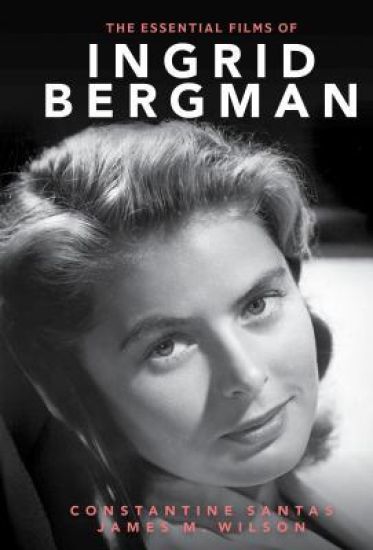
The Essential Films of Ingrid Bergman

The Essential Films of Ingrid Bergman

Constantine Santas; James M. Wilson

Rowman Littlefield
2018
sidottu
Ingrid Bergman was not only an incomparable beauty but one of the finest actresses of cinema’s Golden Age. She made her start in modest productions in Sweden before Hollywood beckoned and soon became one of filmdom’s brightest stars. She appeared in many acclaimed films including Casablanca, For Whom the Bell Tolls, and Gaslight. While her personal life was briefly tainted by an affair and a consequent falling out with the American public, Bergman was eventually able to return to Hollywood, and eventually earned two of her three Academy Awards. In The Essential Films of Ingrid Bergman, Constantine Santas and James Wilson look at the most notable performances of the award-winning actress’s career. From her early work in Swedish films to her final role in the mini-series A Woman called Golda, this book analyzes the entirety of Bergman’s on-screen career, paying special attention to those aspects of her acting that made her stand out most—her undeniable range of emotion, her stunning vulnerability, and her indisputable beauty. Among the films discussed in this volume are Casablanca, Gaslight, Spellbound, The Bells of St. Mary’s, Notorious, Indiscreet, and Murder on the Orient Express. This volume looks at each of Bergman’s most significant films, covering nearly five decades of film making, from Swedish productions to her final films. Each entry provides production history, plot summaries, film highlights, and major award details. Highlighting more than twenty productions, The Essential Films of Ingrid Bergman is a must-have for every fan of the legendary actress.
The Essential Humphrey Bogart

The Essential Humphrey Bogart

Constantine Santas

Rowman Littlefield
2016
sidottu
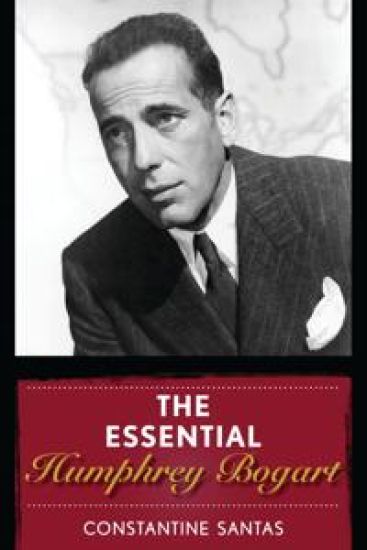
Many film fans consider Humphrey Bogart the ultimate star of Hollywood’s golden era. He rose from supporting roles in the early 1930s to become a superstar by the end of the decade. Bogart appeared in more classic films than just about any other actor in American cinema. In addition to The Maltese Falcon, Casablanca, The Big Sleep, The Treasure of Sierra Madre, and The African Queen, Bogart starred in dozens of other highly regarded films until his death in 1956. In The Essential Humphrey Bogart, Constantine Santas looks at the most important films of this Hollywood legend’s career. Along with the established classics, this book discusses other films that showcase Bogart’s superb acting talents, such as High Sierra, To Have and Have Not, Key Largo, In a Lonely Place, Beat the Devil, The Caine Mutiny, Sabrina, and The Desperate Hours. Presented in chronological order, these films chart the actor’s ascent from stereotypical roles as gangsters in The Petrified Forest and Dead End to iconic roles like that of Sam Spade, Rick Blaine, and Philip Marlowe. In all of these performances Bogart showed his versatility, playing a variety of characters from tough detectives and war heroes to a lawyer, writer, gold prospector, river rat, and even a priest. Containing a brief biographical sketch of the actor, this volume then looks at each of Bogart’s most significant films. Each entry states why the particular movie was included and is followed by a plot analysis, critical views from film historians, and DVD/Blu-ray availability. A key to the ranking system helps the reader select what film to view at his or her leisure. Highlighting more than thirty-five films, The Essential Humphrey Bogart is a must-have companion for every fan of this actor’s work and will no doubt introduce viewers to other films to put on their must-see list.
The Encyclopedia of Epic Films

The Encyclopedia of Epic Films

Constantine Santas; James M. Wilson; Maria Colavito; Djoymi Baker

Rowman Littlefield Publishers
2014
sidottu
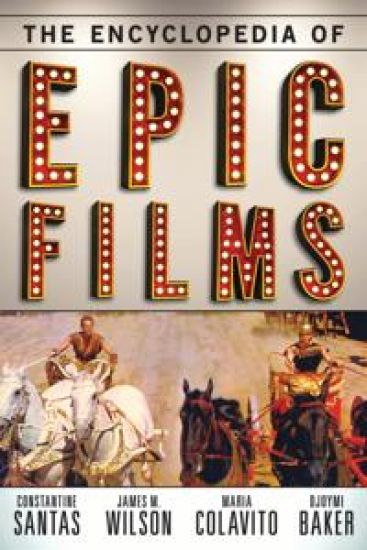
Soon after film came into existence, the term epic was used to describe productions that were lengthy, spectacular, live with action, and often filmed in exotic locales with large casts and staggering budgets. The effort and extravagance needed to mount an epic film paid off handsomely at the box office, for the genre became an immediate favorite with audiences. Epic films survived the tribulations of two world wars and the Depression and have retained the basic characteristics of size and glamour for more than a hundred years. Length was, and still is, one of the traits of the epic, though monolithic three- to four-hour spectacles like Gone with the Wind (1939) and Lawrence of Arabia (1962) have been replaced today by such franchises as the Harry Potter films and the Lord of the Rings trilogy. Although the form has evolved during many decades of existence, its central elements have been retained, refined, and modernized to suit the tastes of every new generation. The Encyclopedia of Epic Films identifies, describes, and analyzes those films that meet the criteria of the epic—sweeping drama, panoramic landscapes, lengthy adventure sequences, and, in many cases, casts of thousands. This volume looks at the wide variety of epics produced over the last century—from the silent spectacles of D. W. Griffith and biblical melodramas of Cecil B. DeMille to the historical dramas of David Lean and rollercoaster thrillers of Steven Spielberg. Each entry contains: ·Major personnel behind the camera, including directors and screenwriters ·Cast and character listings ·Plot summary ·Analysis ·Academy Award wins and nominations ·DVD and Blu-ray availability ·Resources for further study This volume also includes appendixes of foreign epics, superhero spectaculars, and epics produced for television, along with a list of all the directors in the book. Despite a lack of overall critical recognition and respect as a genre, the epic remains a favorite of audiences, and this book pays homage to a form of mass entertainment that continues to fill movie theaters. The Encyclopedia of Epic Films will be of interest to academics and scholars, as well as any fan of films made on a grand scale.
The Epic Films of David Lean

The Epic Films of David Lean

Constantine Santas

Scarecrow Press
2011
sidottu
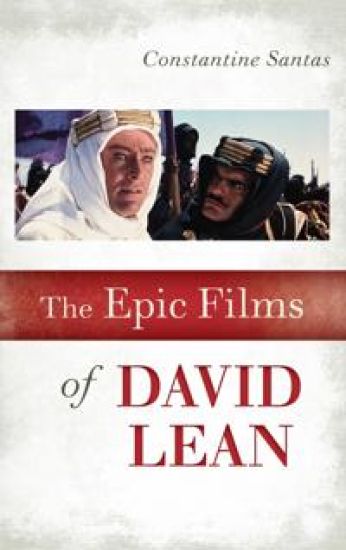
Widely regarded as one of cinema's most accomplished directors, David Lean helmed such classics as Brief Encounter, Great Expectations, and Oliver Twist. He twice received the Academy Award for best director, and two of his films, The Bridge on the River Kwai and Lawrence of Arabia won the Oscar for best picture. Both are featured on the American Film Institute's Top 100, with Lawrence of Arabia at number seven. Despite the awards and accolades for these motion pictures, many critics often look more favorably upon the smaller films that Lean produced earlier in his career, and in recent years his reputation as a director has diminished. In this study, Constantine Santas seeks to restore these now undervalued epics to the elevated esteem they once held. Without dismissing the earlier works or regarding them as irrelevant to Lean's evolution as an artist, this book shows that the epics, if analyzed from certain vantage points, are as worthy as any of Lean's previous films. In addition to Lean's Academy-Award-winning blockbusters, Santas also provides close analytical looks at Doctor Zhivago, Ryan's Daughter, and the director's final film, A Passage to India. Santas argues that the epics show a progression and refinement of Lean's work and that they are thematically broader and feature more complex characterization than his earlier films. In his analyses, Santas provides background material on the production of each epic; insights into structure, characters, techniques, and themes; and a look into the relationship between the films and their literary sources. Written in a clear and engaging manner, The Epic Films of David Lean will appeal not only to cinema students and scholars but also to the general fan of David Lean and his work.
The Epic in Film

The Epic in Film

Constantine Santas

Rowman Littlefield Publishers
2007
sidottu
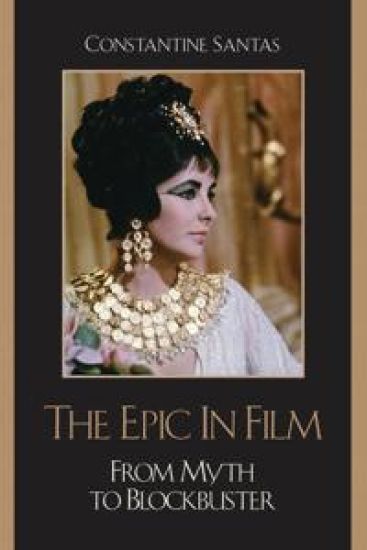
Constantine Santas encourages us to wonder why film critics have so routinely dismissed the epic film. In The Epic in Film, he argues that "blockbuster" and "artistic" are not mutually exclusive terms, and, perhaps more importantly, epic film is an inherently profound genre in its ability to tap into a nation's, and sometimes humanity's, dreams and fears. Why do we see dozens and dozens of films based on the King Arthur legend? Why would a presidential-hopeful borrow a phrase, "Read my lips," from Clint Eastwood's Dirty Harry? Why do war epics proliferate in times of war or national crisis? Why are epics as a whole the most popular movie genre? Start with an individual quest of some kind undertaken by an attractive hero or heroine, add the weight of a nation, and perhaps humanity, into that character's struggle, sprinkle some awe-inspiring special effects and a general sense of largesse, and don't forget the happy ending; and there you have a recipe for a film that can contain the deepest emotions—fear, hope, insecurity, pride—of a nation, and, sometimes, a world. Whether you love Gone with the Wind and hate Troy; find Akira Kurosawa's films brilliant; or marvel over the depth of the Matrix trilogy, film buffs will want to read this first book-length treatment of the epic, a wildly popular, infinitely fascinating, and critically underappreciated genre.
The Epic in Film

The Epic in Film

Constantine Santas

Rowman Littlefield Publishers
2007
nidottu
Constantine Santas encourages us to wonder why film critics have so routinely dismissed the epic film. In The Epic in Film, he argues that 'blockbuster' and 'artistic' are not mutually exclusive terms, and, perhaps more importantly, epic film is an inherently profound genre in its ability to tap into a nation's, and sometimes humanity's, dreams and fears. Why do we see dozens and dozens of films based on the King Arthur legend? Why would a presidential-hopeful borrow a phrase, 'Read my lips,' from Clint Eastwood's Dirty Harry? Why do war epics proliferate in times of war or national crisis? Why are epics as a whole the most popular movie genre? Start with an individual quest of some kind undertaken by an attractive hero or heroine, add the weight of a nation, and perhaps humanity, into that character's struggle, sprinkle some awe-inspiring special effects and a general sense of largesse, and don't forget the happy ending; and there you have a recipe for a film that can contain the deepest emotions_fear, hope, insecurity, pride_of a nation, and, sometimes, a world. Whether you love Gone with the Wind and hate Troy; find Akira Kurosawa's films brilliant; or marvel over the depth of the Matrix trilogy, film buffs will want to read this first book-length treatment of the epic, a wildly popular, infinitely fascinating, and critically underappreciated genre.
Responding to Film

Responding to Film

Constantine Santas

Rowman Littlefield
2002
nidottu
Responding to Film is a dynamic tool for students who seek as complete an understanding of film as is humanly possible. By focusing on film, the author looks at how it offers students an understanding of themselves, of their culture, and of art. This guide also seeks to familiarize the students with the practical methodology for studying film: how to understand film genres, techniques, and language. The book is supplemented by comprehensive lists of films for study, web sites, and model films. It also includes a model course for instructors. Teachers will find this marvelous guide valuable in a variety of courses, including film literature, film aesthetics, and film as an adaptation of literature. A Burnham Publishers book