Kirjojen hintavertailu – 12 859 827 kirjaa ja 27 kauppaa
Kirjailija
Cornel West
Kirjat ja teokset yhdessä paikassa: 49 kirjaa, julkaisuja vuosilta 1989–2025, suosituimpiin kuuluu The John Carlos Story. Vertaile teosten hintoja ja tarkista saatavuus suomalaisista kirjakaupoista.
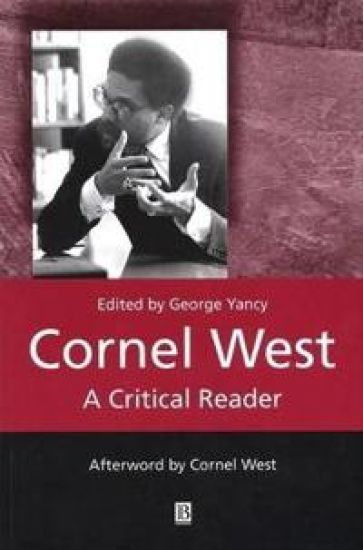
This comprehensive text offers a systematic and thematic approach to West's philosophical work. It moves the reader through his distinctive form of prophetic pragmatism, his historicist and improvisational philosophy of religion, his socialist democratic and truncated Marxist political philosophy, and his reflections on a range of cultural issues.
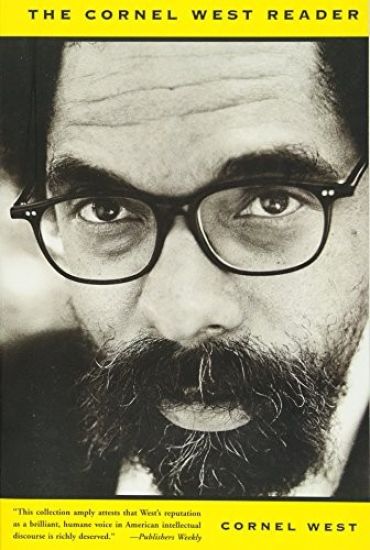
Cornel West is one of the nation's premier public intellectuals and one of the great prophetic voices of our era. Whether he is writing a scholarly book or an article for Newsweek, whether he is speaking of Emerson, Gramsci, or Marvin Gaye, his work radiates a passion that reflects the rich traditions he draws on and weaves togetherBaptist preaching, American transcendentalism, jazz, radical politics. This anthology reveals the dazzling range of West's work, from his explorations of "Prophetic Pragmatism" to his philosophizing on hip-hop. The Cornel West Reader traces the development of West's extraordinary career as academic, public intellectual, and activist. In his essays, articles, books, and interviews, West emerges as America's social conscience, urging attention to complicated issues of racial and economic justice, sexuality and gender, history and politics. This collection represents the best work of an always compelling, often controversial, and absolutely essential philosopher of the modern American experience.
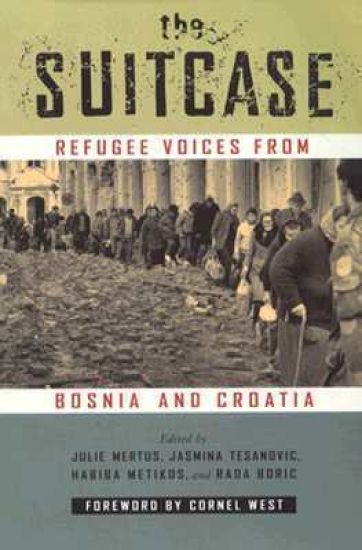
The whirlwind of Europe's longest war in half a century has produced this powerful collection of personal narratives - essays, letters, and poems - from refugees fleeing Bosnia and Croatia. Taking us behind the barrage of media coverage, these stories tell of perseverance, brutality, forced departure, exile, and courage. With startling immediacy and in moving detail, speakers tell of stuffing a few belongings - a handful of photographs, a rock from the garden, a change of clothes--into a suitcase and fleeing their homeland. Contributors from all ethnic groups and every region of Bosnia and Croatia describe their sense of lost community, memories of those left behind, recollections of town squares that no longer exist, and homes now occupied by neighbors. The editors of "The Suitcase", themselves representing the diverse people of the region, traveled to camps and temporary homes across the globe to collect these stories. An antidote to apathy, this work moves beyond and outside the vicissitudes of daily politics to portray the human tragedy at the center of present-day Bosnia and Croatia. Probing the intimate losses of countless individuals, it delivers a powerful indictment of injustice, militarism, prejudice, and warfare.
"This collection of writings, drawn from a wide variety of sources, reveals the intellectual depth and breadth of the author. The articles include political commentary, cultural critique, literary analysis, extended book reviews, and even a short story by West. All of these are held together by a prophetic Afro-American Christian perspective. The value of this book is that it provides easy access to a significant selection of the author's corpus." --Religious Studies Review (October 1989) "This volume collects over 50 articles, book reviews, and addresses by a Union Seminary theologian . . . . The most eloquent pieces are those in which West explains and interprets his more personally felt tradition of Afro-American Protestantism." -- Library Journal
In this powerful collection by one of today's leading African American intellectuals, Keeping Faith situates the current position of African Americans, tracing the geneology of the "Afro-American Rebellion" from Martin Luther King to the rise of black revolutionary leftists. In Cornel West's hands issues of race and freedom are inextricably tied to questions of philosophy and, above all, to a belief in the power of the human spirit.
In this fresh, original analysis of Marxist thought, Cornel West makes a significant contribution to today's debates about the relevance of Marxism by putting the issue of ethics squarely on the Marxist agenda. West, professor of religion and director of the Afro-American studies program at Princeton University, shows that not only was ethics an integral part of the development of Marx's own thinking throughout his career, but that this crucial concern has been obscured by such leading and influential interpreters as Engels, Kautsky, Lukacs, and others who diverted Marx's theory into narrow forms of positivism, economism, and Hegelianism.
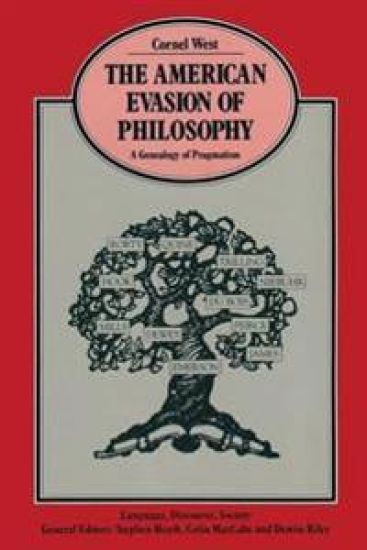
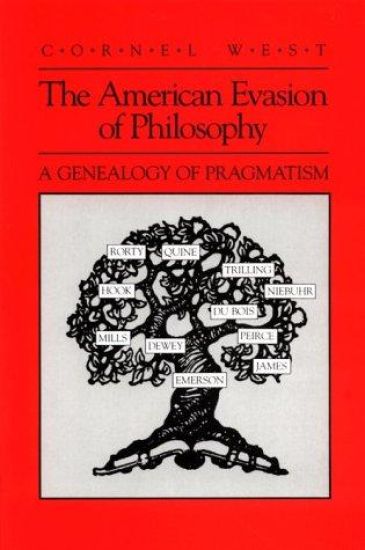
A study of American pragmatism, this book looks at all the different stages from the Emersonian roots, through the dilemma of the mid-century pragmatic intellectual up to the decline and resurgence of American pragmatism. It also discusses prophetic pragmatism.
Taking Emerson as his starting point, Cornel West’s basic task in this ambitious enterprise is to chart the emergence, development, decline, and recent resurgence of American pragmatism. John Dewey is the central figure in West’s pantheon of pragmatists, but he treats as well such varied mid-century representatives of the tradition as Sidney Hook, C. Wright Mills, W. E. B. Du Bois, Reinhold Niebuhr, and Lionel Trilling. West’s "genealogy" is, ultimately, a very personal work, for it is imbued throughout with the author’s conviction that a thorough reexamination of American pragmatism may help inspire and instruct contemporary efforts to remake and reform American society and culture." West . . . may well be the pre-eminent African American intellectual of our generation."—The Nation"The American Evasion of Philosophy is a highly intelligent and provocative book. Cornel West gives us illuminating readings of the political thought of Emerson and James; provides a penetrating critical assessment of Dewey, his central figure; and offers a brilliant interpretation—appreciative yet far from uncritical—of the contemporary philosopher and neo-pragmatist Richard Rorty. . . . What shines through, throughout the work, is West's firm commitment to a radical vision of a philosophic discourse as inextricably linked to cultural criticism and political engagement."—Paul S. Boyer, professor emeritus of history, University of Wisconsin–Madison. Wisconsin Project on American WritersFrank Lentricchia, General Editor