Kirjojen hintavertailu – 12 903 725 kirjaa ja 27 kauppaa

Kirjailija

Cornelis Bennema

Kirjat ja teokset yhdessä paikassa: 7 kirjaa, julkaisuja vuosilta 2002–2025, suosituimpiin kuuluu The Power of Saving Wisdom. Vertaile teosten hintoja ja tarkista saatavuus suomalaisista kirjakaupoista.

7 kirjaa

Kirjojen julkaisuvuodet: 2002–2025.

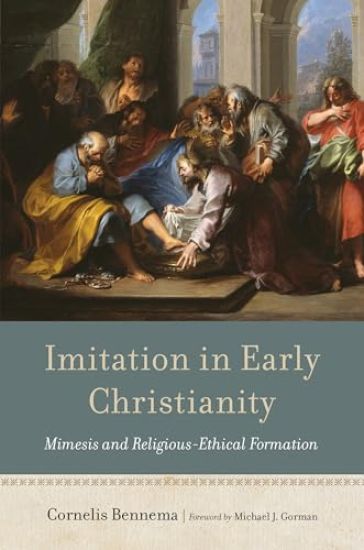
Imitation in Early Christianity: Mimesis and Religious-Ethical Formation

Imitation in Early Christianity: Mimesis and Religious-Ethical Formation

Cornelis Bennema

William B. Eerdmans Publishing Company
2025
sidottu

Halvin toimitettuna 50,10 €

What did exhortations to "follow Jesus" or "imitate Christ" mean to early Christians? Cornelis Bennema examines mimesis as a religious-ethical concept in early Christianity--the imitation of Jesus (and other exemplars) to become a better, more Christlike person. Situating appeals for imitation in the New Testament and Apostolic Fathers within the cultural and social context of the broader Greco-Roman world, Bennema shows how early Christian mimesis was not about literal replication, but instead was a creative, cognitive, and transformative means for shaping conduct and character. As part of this study, Bennema explores key questions about the historic origins of early Christian mimesis; the language that early Christian authors used to articulate the concept of mimesis; the scope, nature, and workings of mimesis in each major section of early Christian literature; and how early Christians navigated the challenges of imitating exemplars (such as Paul or Jesus) who were not physically present. Offering well-researched answers to these questions, Bennema provides readers with a nuanced and informative picture of exhortations to imitation in the New Testament and Apostolic Fathers.
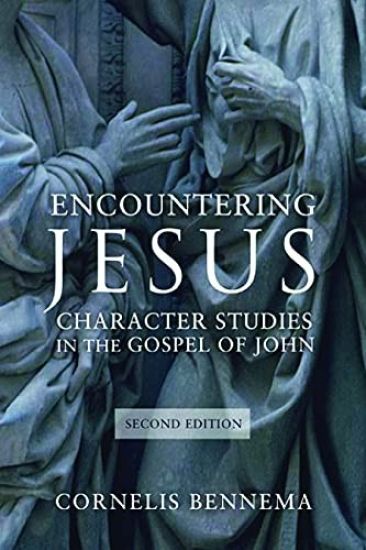
Encountering Jesus

Encountering Jesus

Cornelis Bennema

Fortress Press,U.S.
2014
pokkari

Halvin toimitettuna 44,10 €

The last thirty years have seen an increased interest in the Bible as literature and story. Yet "character" appears to be neglected in both literary theory and narrative criticism. Indeed, there is not even agreement amongst scholars on how to approach, analyze and classify characters. Applying a comprehensive theory of character to the Gospel of John, Cornelis Bennema provides a fresh analysis of both the characters and their responses to Jesus. While the majority of scholars view most Johannine characters as "flat," Bennema demonstrates that many are complex, developing, and "round." John's broad array of characters and their responses to Jesus correspond to people and their choices in real life in any culture and time. This book highlights how John's Gospel seeks to challenge its readers, past and present, about where they stand in relation to Jesus.
A Theory of Character in New Testament Narrative

A Theory of Character in New Testament Narrative

Cornelis Bennema; R. Alan Culpepper

Fortress Press,U.S.
2014
pokkari
Cornelis Bennema presents a new theory of characterization in the New Testament literature. Although character has been the subject of focused literary-critical study of the New Testament (and a point of connection with "character ethics") since the 1970s, Cornelis Bennema observes that there is still no consensus regarding how characterization should be understood in contemporary literary theory or in biblical studies. Many New Testament scholars seem to presume that characters in Greco-Roman literature are two-dimensional, "Aristotelian" figures, unlike the well-rounded, psychologized individuals who appear in modern fiction. They continue nevertheless to apply contemporary literary theory to characters in ancient writings. Bennema here offers a full, comprehensive, and non-reductionist theory for the analysis, classification, and evaluation of characters in the New Testament.
Indian and Christian: Changing Identities in Modern India: Papers from the first SAIACS Academic Consultation
This book is a unique contribution in the larger area of Missions. 'Who am I' is a question that every human needs to ask him- or herself. In this book, this question is looked at from a dual perspective - Indian and Christian. Can one be both 'Indian' and 'Christian' in the modern world? Should one have a single identity or can one have multiple identities? The book tries to address these issues with great clarity and conviction.
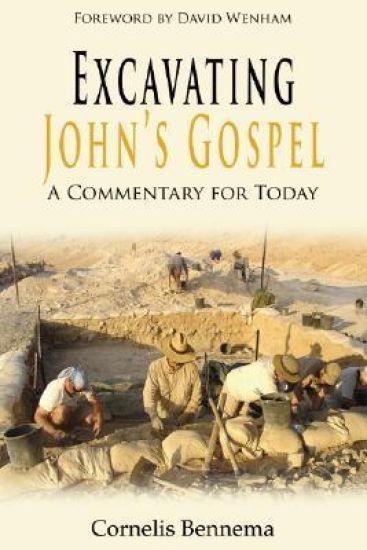
Excavating John's Gospel

Excavating John's Gospel

Cornelis Bennema

Wipf Stock Publishers
2008
nidottu
Among people who read the Bible, some barely scratch the surface; others want to delve deeper and gain a better understanding of its original meaning and significance for today. This commentary will aid the latter category of people. Cornelis Bennema presents the study of John's Gospel as an archeological expedition at the site of John's Gospel where one digs up its meaning and applies it to today's context. If you are ready for some mental effort, perspiration, and dirty hands, you will soon realize that beneath the surface of John's Gospel there is a treasure to be discovered. Written in everyday language, this commentary will help one to get a deeper understanding and appreciation of God's message for today.
The Power of Saving Wisdom

The Power of Saving Wisdom

Cornelis Bennema

Wipf Stock Publishers
2008
pokkari
Cornelis Bennema explains the role of the Spirit in salvation according to John's Gospel against the background of intertestamental Jewish wisdom literature. He comes to the conclusion that the salvific function of the Spirit is that of a cognitive agent who, through the mediation of life-giving wisdom, creates and sustains a saving relationship between the believer and the Father and Son. ""With meticulous detail, Bennema examines both prior scholarly works on related subjects and ancient sources relevant to the conceptual background of the Spirit in John. His examination strengthens the link between God's Spirit and Wisdom that scholars have sometimes noted in early Jewish sources, and contributes some different perspectives to current debates regarding Johannine pneumatology and soteriology."" -Craig S. Keener, Professor of New Testament, Palmer Theological Seminary ""This book is one of the most interesting and informative books I have read recently on John's gospel... The book is lucidly written, interacts intelligently and informatively with a wide variety of other literature on John, and again and again says insightful things about John's gospel... Some books on John make the gospel seem more obscure not less; this is not one of them. Bennema I found illuminating and helpful."" -David Wenham, Trinity College, Bristol (Evangelical Quarterly, April 2006) ""To draw the attention to the importance of the Spirit in relation to salvific knowledge is indeed an important contribution and makes Bennema's effort a worthwhile exercise. He is a good researcher who is able to present both his material and his arguments in a logical and consistent way. If one wants to disagree with him, one will have to engage in his well-motivated arguments. I regard Bennema's book as one of the better doctoral studies on Johannine theology to appear during the last decade. It therefore demands attention from Johannine scholars. Bennema's thesis indeed forces research to take cognizance of the role of the Spirit as well as a possible way in which the message of Jesus could be integrated as an affective force in the lives of the Christian community."" -Jan van der Watt, Professor of New Testament Studies, University of Pretoria (Review of Biblical Literature, July 2004) ""Whether or not one finally agrees with Bennema's conclusions, he has indubitably done the guild a service by focusing so closely on a single aspect of the Fourth Gospel: pneumatology. Scholars will find the book useful to consult when treating any aspects of the Gospel that may intersect with spirit, wisdom, and salvation. Teachers could assign a particular section, such as that devoted to the Wisdom traditions in the Hebrew Scriptures, LXX, and Philo or that which provides an overview of Johannine soteriology, to provide a relatively brief overview of a particular aspect of the Gospel. Advanced students researching Johannine pneumatology might use the book as a dialogue partner more than an authoritative voice."" -Jaime Clark-Soles, Associate Professor of New Testament, Perkins School of Theology (Religious Studies Review, April 2006) Cornelis Bennema is Associate Professor and Head of New Testament at the South Asia Institute of Advanced Christian Studies (SAIACS, www.saiacs.org) in Bangalore, India. He has published various articles on the Fourth Gospel in international journals and is also the author of Excavating John's Gospel: A Commentary for Today (2005).

The Power of Saving Wisdom

The Power of Saving Wisdom

Cornelis Bennema

Mohr Siebeck
2002
nidottu
Cornelis Bennema elucidates the soteriological function of the Spirit in the Fourth Gospel, and analyzes the interrelationship between John's pneumatology and soteriology along the trajectory of wisdom. As a possible conceptual background for aspects of Johannine pneumatology, he selects the Jewish wisdom tradition and suggests that sapient Judaism understood 'salvation' as an intensification of that work of the Spirit that is already immanent to a person, namely, the mediation of life and wisdom. The development of an overall model of Johannine soteriology, which holds together both the relational and cognitive aspects of salvation, assists in identifying the specific activities in which the Spirit is involved. The author argues that the soteriological function of the Spirit is twofold. First, the Spirit creates a saving relationship between the believer and the Father and Son, by mediating to people the saving wisdom present in Jesus' life-giving teaching. The Spirit thus enables the believer to come to an adequate understanding and belief-response. Second, the Spirit sustains this saving relationship through further mediation of wisdom that enables the believer to demonstrate discipleship as an ongoing belief-response. Hence, the Spirit accomplishes his soteriological role precisely in his function as a life-giving cognitive agent, i.e., through the mediation of saving wisdom the Spirit provides cognitive perception, understanding, and so life. This concept of the Spirit is the most important continuity between the models of salvation in sapient Judaism and in the Fourth Gospel.