Kirjojen hintavertailu – 12 859 819 kirjaa ja 27 kauppaa

Kirjailija

Costas A. Varotsos

Kirjat ja teokset yhdessä paikassa: 11 kirjaa, julkaisuja vuosilta 2004–2026, suosituimpiin kuuluu Constructive Processing of Microwave and Optical Data for Hydrogeochemical Applications. Vertaile teosten hintoja ja tarkista saatavuus suomalaisista kirjakaupoista.

Nimi esiintyy myös muodoissa: Costas A Varotsos

11 kirjaa

Kirjojen julkaisuvuodet: 2004–2026.

Constructive Processing of Microwave and Optical Data for Hydrogeochemical Applications

Constructive Processing of Microwave and Optical Data for Hydrogeochemical Applications

Costas A. Varotsos; Vladimir F. Krapivin; Ferdenant A. Mkrtchyan; Yong Xue

Springer International Publishing AG
2024
nidottu
This book presents results of the combined use of microwave remote sensing, optical tools, and ecoinformatics methods under solution-applied tasks at both regional and global scales. Ecoinformatics methods are used to assess links between global climate change and the level of ocean pollution, with specific focus on the Arctic Ocean, the Sea of Okhotsk, and the South-China Sea. The theoretical and applied aspects of instrumental tools are considered in this book as a basis for the monitoring of water quality in various watersheds, with particular attention to microwave remote sensing monitoring data to determine the ecotoxicological status of hydro-ecosystems affected by climate change. The book develops new information technologies that provide solutions for hydrochemical tasks using algorithms and models based on computer technologies for big data processing. This will help to synthesize effective computer-based systems for the solution of problems arising due to anthropogenic impacts on hydrological processes and objects at various spatial scales. This book is intended for specialists in the fields of environmental monitoring, climate change, human-nature interactions, and geopolitics. The book will be useful for undergraduate and postgraduate students studying these fields of science as well.

Constructive Processing of Microwave and Optical Data for Hydrogeochemical Applications

Constructive Processing of Microwave and Optical Data for Hydrogeochemical Applications

Costas A. Varotsos; Vladimir F. Krapivin; Ferdenant A. Mkrtchyan; Yong Xue

Springer International Publishing AG
2023
sidottu
This book presents results of the combined use of microwave remote sensing, optical tools, and ecoinformatics methods under solution-applied tasks at both regional and global scales. Ecoinformatics methods are used to assess links between global climate change and the level of ocean pollution, with specific focus on the Arctic Ocean, the Sea of Okhotsk, and the South-China Sea. The theoretical and applied aspects of instrumental tools are considered in this book as a basis for the monitoring of water quality in various watersheds, with particular attention to microwave remote sensing monitoring data to determine the ecotoxicological status of hydro-ecosystems affected by climate change. The book develops new information technologies that provide solutions for hydrochemical tasks using algorithms and models based on computer technologies for big data processing. This will help to synthesize effective computer-based systems for the solution of problems arising due to anthropogenic impacts on hydrological processes and objects at various spatial scales. This book is intended for specialists in the fields of environmental monitoring, climate change, human-nature interactions, and geopolitics. The book will be useful for undergraduate and postgraduate students studying these fields of science as well.
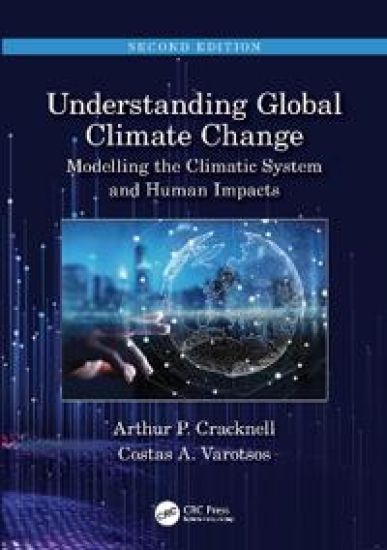
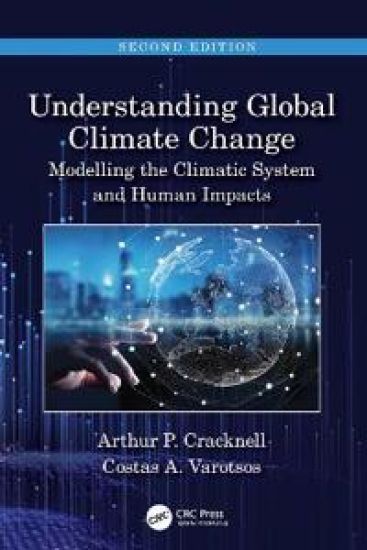
Understanding Global Climate Change

Understanding Global Climate Change

Arthur P Cracknell; Costas A Varotsos

CRC Press
2021
sidottu
Climate change, a familiar term today, is far more than just global warming due to atmospheric greenhouse gases including CO2. In order to understand the nature of climate change, it is necessary to consider the whole climatic system, its complexity, and the ways in which natural and anthropogenic activities act and influence that system and the environment. Over the past 20 years since the first edition of Understanding Global Climate Change was published, not only has the availability of climate-related data and computer modelling changed, but our perceptions of it and its impact have changed as well. Using a combination of ground data, satellite data, and human impacts, this second edition discusses the state of climate research today, on a global scale, and establishes a background for future discussions on climate change. This book is an essential reference text, relevant to any and all who study climate and climate change. Features Provides a thought-provoking and original approach to the science of climate. Emphasises that there are many factors contributing to the causation of climate change. Clarifies that while anthropogenic generation of carbon dioxide is important, it is only one of several human activities contributing to climate change. Considers climate change responses needed to be undertaken by politicians and society at national and global levels. Totally revised and updated with state-of-the-art satellite data and climate models currently in operation around the globe.
The Interplay Between the Biosphere and Climate

The Interplay Between the Biosphere and Climate

Costas A. Varotsos; Yuri A. Mazei

TAYLOR FRANCIS LTD
2026
sidottu
The climate issue is at the center of discussions related to the high frequency and greater intensity of devastating natural disasters, establishing a new term: “climate crisis.” This book explores the dialogue between the biosphere and the climate system and analyzes the threats to the biosphere from current climate change. It evaluates existing unsolved problems concerning the changes in the biosphere caused by human activities, especially those that are thought to be irreversible, such as the increase of carbon dioxide, the pollution of air, soil, fresh, and salt water, and deforestation. It focuses on the new techniques of studying the climate system and the methods that lead to the interconnection with the biosphere. Features A comprehensive evaluation of the present-day understanding of the Climate-Biosphere system evolution. Discusses the parameters of biogeochemical cycles and other environmental processes in the context of climate–biosphere interdependence. Explores interactive modeling of the natural and anthropogenic processes, and the link between their components. Describes the biosphere as a complex system and includes survivability indicators and development, verification, and application of climate-biosphere models. Highlights a new approach and relevant results of the internal variability of the climatic system based on Paleo-reconstruction of the climate. Explains the operational diagnostics, the estimation of the scale of damage, and the aftermath reduction of the stressful natural, biological, and hydrogeochemical processes. This reference is for professionals, researchers, academics, and students in Biology, Climatology, Ecology, Atmospheric Sciences, Geophysics, Hydrology, and Socio-Economic Sciences.
Understanding Global Climate Change

Understanding Global Climate Change

Arthur P Cracknell; Costas A Varotsos

Taylor Francis Ltd
2021
nidottu
Climate change, a familiar term today, is far more than just global warming due to atmospheric greenhouse gases including CO2. In order to understand the nature of climate change, it is necessary to consider the whole climatic system, its complexity, and the ways in which natural and anthropogenic activities act and influence that system and the environment. Over the past 20 years since the first edition of Understanding Global Climate Change was published, not only has the availability of climate-related data and computer modelling changed, but our perceptions of it and its impact have changed as well. Using a combination of ground data, satellite data, and human impacts, this second edition discusses the state of climate research today, on a global scale, and establishes a background for future discussions on climate change. This book is an essential reference text, relevant to any and all who study climate and climate change. Features Provides a thought-provoking and original approach to the science of climate. Emphasises that there are many factors contributing to the causation of climate change. Clarifies that while anthropogenic generation of carbon dioxide is important, it is only one of several human activities contributing to climate change. Considers climate change responses needed to be undertaken by politicians and society at national and global levels. Totally revised and updated with state-of-the-art satellite data and climate models currently in operation around the globe.
Microwave Remote Sensing Tools in Environmental Science

Microwave Remote Sensing Tools in Environmental Science

Costas A. Varotsos; Vladimir F. Krapivin

Springer Nature Switzerland AG
2021
nidottu
This book gives new insight to the study of the global environmental changes using the ecoinformatics and microwave remote sensing tools together with the adaptive-evolutionary technology of geoinformation monitoring. The main advantage of this book consists in the accumulation of the interdisciplinary scientific knowledge for the parameterization of the global biogeochemical cycles and other environmental processes in the context of globalization and sustainable development. In this regard, the crucial global problems of the dynamics of the climate-nature-society system have been considered and the key problems of ensuring its sustainable development have been addressed. An analysis of the present trend in changing ecological systems has been discussed, including different types of forest ecosystems and ocean aquatories. The emphasis has been given to the accomplishment of the global geoinformation monitoring, which could provide a reliable control of the environmental processes development with reliable prognostic estimates of the consequences of human activities. A new approach to the numerical modelling of the climate-nature-society system has been presented and demonstrative results have been given about the modelling of the dynamics of this system"s characteristics, in cases of realization of some scenarios of the anthropogenic impacts to the biogeochemical cycles, the land ecosystems and oceans. Methods and algorithms for the big data manipulation and processing in the remote sensing environmental monitoring systems have been described.
Microwave Remote Sensing Tools in Environmental Science

Microwave Remote Sensing Tools in Environmental Science

Costas A. Varotsos; Vladimir F. Krapivin

Springer Nature Switzerland AG
2020
sidottu
This book gives new insight to the study of the global environmental changes using the ecoinformatics and microwave remote sensing tools together with the adaptive-evolutionary technology of geoinformation monitoring. The main advantage of this book consists in the accumulation of the interdisciplinary scientific knowledge for the parameterization of the global biogeochemical cycles and other environmental processes in the context of globalization and sustainable development. In this regard, the crucial global problems of the dynamics of the climate-nature-society system have been considered and the key problems of ensuring its sustainable development have been addressed. An analysis of the present trend in changing ecological systems has been discussed, including different types of forest ecosystems and ocean aquatories. The emphasis has been given to the accomplishment of the global geoinformation monitoring, which could provide a reliable control of the environmental processes development with reliable prognostic estimates of the consequences of human activities. A new approach to the numerical modelling of the climate-nature-society system has been presented and demonstrative results have been given about the modelling of the dynamics of this system"s characteristics, in cases of realization of some scenarios of the anthropogenic impacts to the biogeochemical cycles, the land ecosystems and oceans. Methods and algorithms for the big data manipulation and processing in the remote sensing environmental monitoring systems have been described.
New Ecoinformatics Tools in Environmental Science

New Ecoinformatics Tools in Environmental Science

Vladimir F. Krapivin; Costas A. Varotsos; Vladimir Yu. Soldatov

Springer International Publishing AG
2016
nidottu
This book provides new insights on the study of global environmental changes using the ecoinformatics tools and the adaptive-evolutionary technology of geoinformation monitoring. The main advantage of this book is that it gathers and presents extensive interdisciplinary expertise in the parameterization of global biogeochemical cycles and other environmental processes in the context of globalization and sustainable development. In this regard, the crucial global problems concerning the dynamics of the nature-society system are considered and the key problems of ensuring the system’s sustainable development are studied. A new approach to the numerical modeling of the nature-society system is proposed and results are provided on modeling the dynamics of the system’s characteristics with regard to scenarios of anthropogenic impacts on biogeochemical cycles, land ecosystems and oceans. The main purpose of this book is to develop a universal guide to information-modeling technologies for assessing the function of environmental subsystems under various climatic and anthropogenic conditions.
New Ecoinformatics Tools in Environmental Science

New Ecoinformatics Tools in Environmental Science

Vladimir F. Krapivin; Costas A. Varotsos; Vladimir Yu. Soldatov

Springer International Publishing AG
2015
sidottu
This book provides new insights on the study of global environmental changes using the ecoinformatics tools and the adaptive-evolutionary technology of geoinformation monitoring. The main advantage of this book is that it gathers and presents extensive interdisciplinary expertise in the parameterization of global biogeochemical cycles and other environmental processes in the context of globalization and sustainable development. In this regard, the crucial global problems concerning the dynamics of the nature-society system are considered and the key problems of ensuring the system’s sustainable development are studied. A new approach to the numerical modeling of the nature-society system is proposed and results are provided on modeling the dynamics of the system’s characteristics with regard to scenarios of anthropogenic impacts on biogeochemical cycles, land ecosystems and oceans. The main purpose of this book is to develop a universal guide to information-modeling technologies for assessing the function of environmental subsystems under various climatic and anthropogenic conditions.
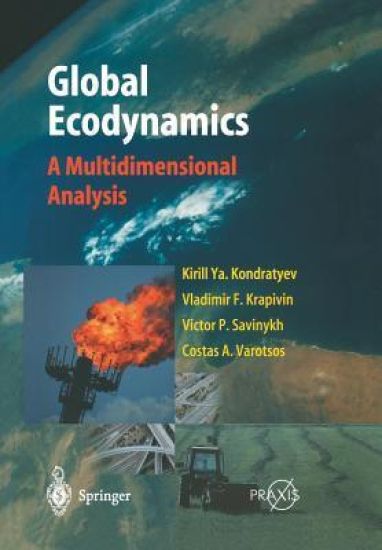
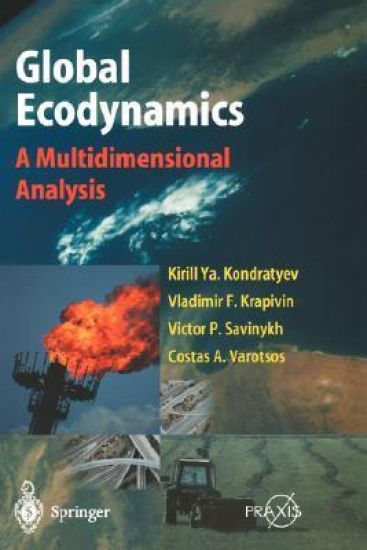
Global Ecodynamics

Global Ecodynamics

Kirill Y. Kondratyev; Vladimir F. Krapivin; V. P. Savinykh; Costas A. Varotsos

Springer-Verlag Berlin and Heidelberg GmbH Co. K
2012
nidottu
During recent decades the stirring up of the processes of globalization practically in all spheres of present-day civilization activities has aggravated and brought forth numerous problems resulting from the nature-society (N-S) interaction. It has become apparent that to solve these problems it is necessary to develop new concepts and approaches to the interpretation of global environmental changes that would enable one to select the first-priority directions in studies and to reliably assess the state of the nature-society system (NSS). One of these priorities is to predict global climate change. The growing interest in the problem of global climate change, determined by its practical importance and by available contra­ dictory estimates of the anthropogenic contribution to climate change, necessitates a systematization of knowledge of and data on the observed climate change and causes of this change. Despite an enormous amount of projects and programmes of studies of past and present climatic trends, the problem of reliable prediction of future climate change remains far from being solved. Emissions to the atmosphere of greenhouse gases (GHGs), mainly carbon dioxide, is considered as one of the main causes of an expected climate warming resulting in sufficiently negative consequences for humankind. Therefore, an attempt has been made in this book to construct a formalized technology to assess the levelof the greenhouse effectdue to anthropogenic sources of carbon dioxide as well as the effects of other gas components.
Global Ecodynamics

Global Ecodynamics

Kirill Y. Kondratyev; Vladimir F. Krapivin; V. P. Savinykh; Costas A. Varotsos

Springer-Verlag Berlin and Heidelberg GmbH Co. K
2004
sidottu
During recent decades the stirring up of the processes of globalization practically in all spheres of present-day civilization activities has aggravated and brought forth numerous problems resulting from the nature-society (N-S) interaction. It has become apparent that to solve these problems it is necessary to develop new concepts and approaches to the interpretation of global environmental changes that would enable one to select the first-priority directions in studies and to reliably assess the state of the nature-society system (NSS). One of these priorities is to predict global climate change. The growing interest in the problem of global climate change, determined by its practical importance and by available contra­ dictory estimates of the anthropogenic contribution to climate change, necessitates a systematization of knowledge of and data on the observed climate change and causes of this change. Despite an enormous amount of projects and programmes of studies of past and present climatic trends, the problem of reliable prediction of future climate change remains far from being solved. Emissions to the atmosphere of greenhouse gases (GHGs), mainly carbon dioxide, is considered as one of the main causes of an expected climate warming resulting in sufficiently negative consequences for humankind. Therefore, an attempt has been made in this book to construct a formalized technology to assess the levelof the greenhouse effectdue to anthropogenic sources of carbon dioxide as well as the effects of other gas components.