Kirjojen hintavertailu – 12 859 827 kirjaa ja 27 kauppaa

Kirjailija

Craig L. Blomberg

Kirjat ja teokset yhdessä paikassa: 45 kirjaa, julkaisuja vuosilta 1992–2027, suosituimpiin kuuluu James. Vertaile teosten hintoja ja tarkista saatavuus suomalaisista kirjakaupoista.

Nimi esiintyy myös muodoissa: Craig L Blomberg

45 kirjaa

Kirjojen julkaisuvuodet: 1992–2027.

Introduction to Biblical Interpretation Workbook

Introduction to Biblical Interpretation Workbook

William W. Klein; Craig L. Blomberg; Jr. Hubbard

Zondervan
2017
nidottu
This workbook accompanies the third edition of Introduction to Biblical Interpretation by William W. Klein, Craig L. Blomberg, and Robert L. Hubbard Jr. Following the textbook’s structure, it offers readings, activities, and exercises designed to teach students how to understand and apply the Bible. This workbook gives students a chance to get hands-on experience in interpreting biblical texts as they are guided along by insightful questions and pointers from the authors. Ultimately the workbook is designed to get students interacting with the content of the textbook and with the biblical text in a way that helps reinforce classroom learning, while at the same time giving both student and instructor a way to gauge how well the student is learning the material from the textbook. The third edition of a classic hermeneutics textbook sets forth concise, logical, and practical guidelines for discovering the truth in God’s Word. A valuable tool for readers who desire to understand and apply the Bible, this text:Defines and describes hermeneutics, the science of biblical interpretationSuggests effective methods to understand the meaning of the biblical textSurveys the literary, cultural, social, and historical issues that impact any textEvaluates both traditional and modern approaches to Bible interpretationExamines the reader’s role as an interpreter of the text and helps identify what the reader brings to the text that could distort its messageTackles the problem of how to apply the Bible in valid and significant ways todayProvides an extensive and revised annotated list of books that readers will find helpful in the practice of biblical interpretation
Introduction to Biblical Interpretation

Introduction to Biblical Interpretation

William W. Klein; Craig L. Blomberg; Jr. Hubbard

Zondervan
2017
sidottu

Halvin toimitettuna 61,00 €

Introduction to Biblical Interpretation, now in its third edition, is a bestselling hermeneutics textbook that sets forth concise, logical, and practical guidelines for discovering the truth in God’s Word. With updates and revisions throughout that keep pace with current scholarship, this book offers students the best and most up-to-date information needed to interpret Scripture. Introduction to Biblical Interpretation:Defines and describes hermeneutics, the science of biblical interpretationSuggests effective methods to understand the meaning of the biblical textSurveys the literary, cultural, social, and historical issues that impact any textEvaluates both traditional and modern approaches to Bible interpretationExamines the reader’s role as an interpreter of the text and helps identify what the reader brings to the text that could distort its messageTackles the problem of how to apply the Bible in valid and significant ways todayProvides an extensive and revised annotated list of books that readers will find helpful in the practice of biblical interpretationUsed in college and seminary classrooms around the world, this textbook is a trusted and valuable tool for students and other readers who desire to understand and apply the Bible.
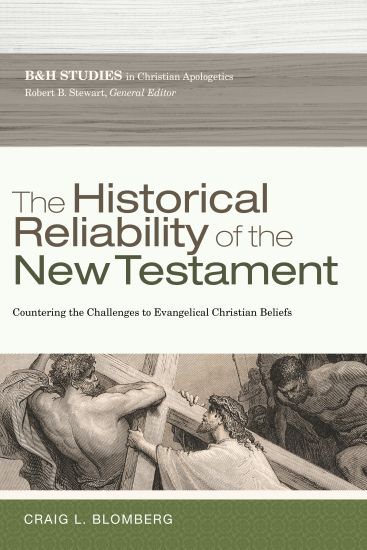
The Historical Reliability of the New Testament

The Historical Reliability of the New Testament

Craig L. Blomberg

Broadman Holman Publishers
2016
nidottu
Questions about the reliability of the New Testament are commonly raised today both by biblical scholars and popular media. Drawing on decades of research, Craig Blomberg addresses all of the major objections to the historicity of the New Testament in one comprehensive volume. Topics addressed include the formation of the Gospels, the transmission of the text, the formation of the canon, alleged contradictions, the relationship between Jesus and Paul, supposed Pauline forgeries, other gospels, miracles, and many more. Historical corroborations of details from all parts of the New Testament are also presented throughout. The Historical Reliability of the New Testament marshals the latest scholarship in responding to New Testament objections, while remaining accessible to non-specialists.
Effective Generational Ministry - Biblical and Practical Insights for Transforming Church Communities

Effective Generational Ministry - Biblical and Practical Insights for Transforming Church Communities

Craig L. Blomberg; Elisabeth A. Nesbit Sbanotto

Baker Academic, Div of Baker Publishing Group
2016
nidottu
Understanding generational differences is a key to effective ministry in a multigenerational church. This book offers students and practitioners cutting-edge research and biblical analysis of three generations--Boomers, GenXers, and Millennials--so churches can minister more effectively within and across generational lines. The authors, one an expert on generational differences and the other a respected New Testament scholar, represent different generations and areas of expertise. The book explores key characteristics of each generation, provides biblical-theological analysis of generational attributes, and offers specific suggestions for ministry.
Can We Still Believe the Bible? – An Evangelical Engagement with Contemporary Questions

Can We Still Believe the Bible? – An Evangelical Engagement with Contemporary Questions

Craig L. Blomberg

Brazos Press, Div of Baker Publishing Group
2014
nidottu
Christianity Today Book Award WinnerChallenges to the reliability of Scripture are perennial and have frequently been addressed. However, some of these challenges are noticeably more common today, and the topic is currently of particular interest among evangelicals. In this volume, highly regarded biblical scholar Craig Blomberg offers an accessible and nuanced argument for the Bible's reliability in response to the extreme views about Scripture and its authority articulated by both sides of the debate. He believes that a careful analysis of the relevant evidence shows we have reason to be more confident in the Bible than ever before. As he traces his own academic and spiritual journey, Blomberg sketches out the case for confidence in the Bible in spite of various challenges to the trustworthiness of Scripture, offering a positive, informed, and defensible approach.
Christians in an Age of Wealth

Christians in an Age of Wealth

Craig L. Blomberg

Zondervan
2013
nidottu
What does the Bible say about money, material possessions, and stewardship? In Christians in an Age of Wealth, Craig Blomberg addresses tough questions about the place and purpose of wealth and material possessions in a Christian's life. He points to the goodness of wealth, as God originally designed it, but also surveys the Bible's many warnings against making an idol out of money. Taking a close exegetical look at this topic as it’s discussed in Scripture, Blomberg answers the toughest questions about Christianity and wealth:Is there any one key to keeping possessions in their proper, God-intended perspective? Are there limits on how rich we should become or on how poor we should allow others to get? What does a truly Christian economic system look like? How does the Bible's teaching on wealth fit into the gospel? Blomberg expounds upon how the sharing of goods and possessions is the key safeguard against both greed and covetousness. He expands on the concept of giving generously, even sacrificially, to those who are needier, demonstrating how Christians can participate in God's original good design for abundance and demonstrate the world-altering gospel of Christ.____________Part of the Biblical Theology for Life series, this practical and challenging book will help you and your church ground your worldly possessions on the solid foundation of biblical understanding and reflection.
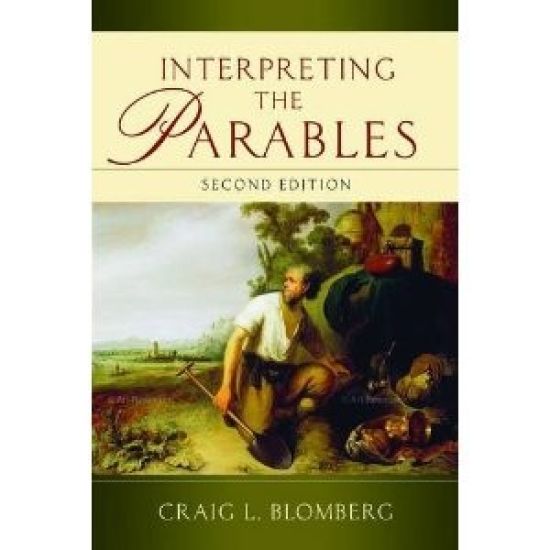
Interpreting the Parables

Interpreting the Parables

Craig L Blomberg

Apollos
2012
pokkari
This new edition of Blomberg's valuable textbook covers interpretative methods and controversies, expounds the meaning and significance of individual three-, two- and one-point parables, and surveys the theology of God's kingdom and the Christ in the parables. In this new and expanded edition of Interpreting the Parables, Craig Blomberg evaluates contemporary critical approaches to the parables - including those that have emerged in the twenty years since the first edition was published. Taking on the prevailing views of C. H. Dodd and Joachim Jeremias, Blomberg argues for a limited allegorical approach to the parables. This widely used text has taken a minority perspective and made it mainstream, with Blomberg ably defending his approach and offering brief interpretations of all the major parables. Interpreting the Parables can be read with profit by scholars, students, pastors and educated laypeople.
Interpreting the Parables

Interpreting the Parables

Craig L. Blomberg

INTERVARSITY PRESS
2012
nidottu
In the last century, more studies of the parables were produced than for any other section of comparable length in the Bible. The problem is that most Bible readers are unlikely ever to know of most of them. In this substantially new and expanded edition, Craig Blomberg surveys and evaluates contemporary critical approaches to the parables, challenging the prevailing consensus and making his own important new contribution to parable studies. Within proper definitions and boundaries, the author defends a limited allegorical approach. In support of this view ofparable interpretation, Blomberg not only sets forth theoretical considerations but devotes attention to all the major parables, providing brief interpretations that highlight the insights to be gained from his distinctive method. Interpreting the Parables can be read with profit by scholars, students, pastors and educated laypeople.
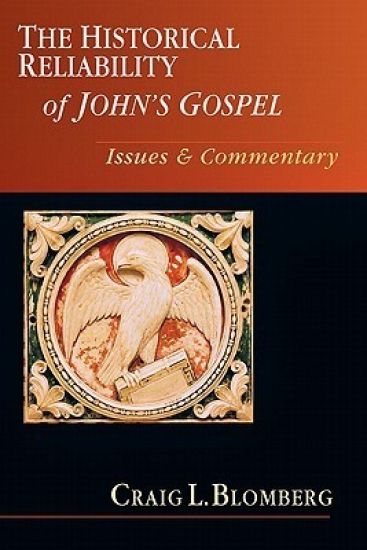
The Historical Reliability of John's Gospel

The Historical Reliability of John's Gospel

Craig L. Blomberg

INTERVARSITY PRESS
2011
nidottu
Throughout much of the twentieth century the Fourth Gospel took a back seat to the Synoptics when it came to historical reliability. Consequently, the contemporary quest of the historical Jesus discounted or excluded evidence from the Fourth Gospel. The question of the historical reliability of John's Gospel is well overdue for a thorough reinvestigation and reassessment. In this foundational study, Craig L. Blomberg sheds new light on persistent questions. He presents his conclusions largely in commentary form, following the principal scenes of the Gospel. His introduction frames the pathway into the discussion, taking up critical issues such asauthorship, date and provenance of the Fourth Gospelsources and omissions of the Fourth Gospelpoints where John's Gospel interlocks with the Synopticsgeneral indications of historicityliterary genre and unique audience of this Gospelburden of proof and criteria of authenticityIn his commentary examining the text of the Fourth Gospel, Blomberg asks two essential questions. First, using the recently nuanced criteria of authenticity, "What positive evidence do we have that the actions or words of the characters in John's narratives are indeed historical?" Second, "Is there anything in the text . . . that is implausible within the historical context to which it is attributed, particularly if we assume the general historical trustworthiness of the Synoptics?" The result is a seminal work for the present day--one that affirms the historical reliability of John's Gospel with intelligence and sure-footed care.
A Handbook of New Testament Exegesis

A Handbook of New Testament Exegesis

Craig L. Blomberg; Jennifer Foutz Markley

Baker Academic, Div of Baker Publishing Group
2010
nidottu
This handbook provides a one-stop-shopping guide to the New Testament exegetical method. Brief and approachable, it offers both a broad overview of the exegetical process and a step-by-step approach to studying the New Testament in depth, helping students and pastors understand the text and appropriate it responsibly. The book is chock-full of illustrations of New Testament texts where the method under discussion truly makes a difference." A wonderfully clear and accessible handbook for New Testament exegesis. Exegetically rigorous, theologically informed, and practically useful."--Thomas R. Schreiner, Southern Baptist Theological Seminary
Btv # 09: Preguntas Clave Sobre El Nuevo Testamento
This book faces three difficult theological issues: 1) The historic reliability of the New Testament, 2) the debate over who really founded Christianity, Jesus or Paul, and 3) the way in which the 21st century believers are going to apply the New Testament to everyday life. He answers these questions by giving well worked and reasoned answers that will help us appreciate the value of Christian faith, and to embrace it in a deeper way. Based on serious investigations, but written in an easy-to-understand style for the general public, this is an excellent guide for pastors, students and any person interested in obtaining a better comprehension of the New Testament.
Is There a Meaning in This Text?

Is There a Meaning in This Text?

Kevin J. Vanhoozer; Craig L. Blomberg

Zondervan
2009
nidottu
Is there a meaning in the Bible, or is meaning rather a matter of who is reading or of how one reads? Does Christian doctrine have anything to contribute to debates about interpretation, literary theory, and post modernity? These are questions of crucial importance for contemporary biblical studies and theology alike. Kevin Vanhoozer contends that the postmodern crisis in hermeneutics—”incredulity towards meaning,” a deep–set skepticism concerning the possibility of correct interpretation—is fundamentally a crisis in theology provoked by an inadequate view of God and by the announcement of God’s “death.” Part 1 examines the ways in which deconstruction and radical reader–response criticism “undo” the traditional concepts of author, text, and reading. Dr. Vanhoozer engages critically with the work of Derrida, Rorty, and Fish, among others, and demonstrates the detrimental influence of the postmodern “suspicion of hermeneutics” on biblical studies. In Part 2, Dr. Vanhoozer defends the concept of the author and the possibility of literary knowledge by drawing on the resources of Christian doctrine and by viewing meaning in terms of communicative action. He argues that there is a meaning in the text, that it can be known with relative adequacy, and that readers have a responsibility to do so by cultivating “interpretive virtues.” Successive chapters build on Trinitarian theology and speech act philosophy in order to treat the metaphysics, methodology, and morals of interpretation. From a Christian perspective, meaning and interpretation are ultimately grounded in God’s own communicative action in creation, in the canon, and preeminently in Christ. Prominent features in Part 2 include a new account of the author’s intention and of the literal sense, the reclaiming of the distinction between meaning and significance in terms of Word and Spirit, and the image of the reader as a disciple–martyr, whose vocation is to witness to something other than oneself. Is There a Meaning in This Text? guides the student toward greater confidence in the authority, clarity, and relevance of Scripture, and a well–reasoned expectation to understand accurately the message of the Bible. Is There a Meaning in This Text? is a comprehensive and creative analysis of current debates over biblical hermeneutics that draws on interdisciplinary resources, all coordinated by Christian theology. It makes a significant contribution to biblical interpretation that will be of interest to readers in a number of fields. The intention of the book is to revitalize and enlarge the concept of author–oriented interpretation and to restore confidence that readers of the Bible can reach understanding. The result is a major challenge to the central assumptions of postmodern biblical scholarship and a constructive alternative proposal—an Augustinian hermeneutic—that reinvigorates the notion of biblical authority and finds a new exegetical practice that recognizes the importance of both the reader’s situation and the literal sense.
A Case for Historic Premillennialism – An Alternative to "Left Behind" Eschatology

A Case for Historic Premillennialism – An Alternative to "Left Behind" Eschatology

Craig L. Blomberg; Sung Wook Chung

Baker Academic, Div of Baker Publishing Group
2009
nidottu

Halvin toimitettuna 32,00 €

Many evangelical readers who have learned the basics of eschatology from popular authors and more recently from novelists assume that dispensational premillennialism, with its distinctive teachings about the pretribulation rapture of the church, is the only reliable view of the end times and the return of Christ. This volume, however, offers a compelling case for an alternative perspective--one that was widely prevalent throughout church history. The contributors, all respected scholars in their respective fields, suggest that classic premillennialism offers believers a more coherent and viable approach to understanding eschatology. Their studies, which examine eschatology from biblical, theological, historical, and missiological approaches, provide a broadly accessible argument for returning to the perspectives of historic premillennial eschatology.
The Historical Reliability of the Gospels
Many people continue to believe that only a small percentage of the New Testament accounts of the life and teachings of Jesus of Nazareth reflect what he really said and did. The reasons for scepticism may vary over the years, but some arguments have proved remarkably persistent - for example, the Gospels were not written by people in a position to know what Jesus was like, primitive cultures believed in miracles that we know are impossible, theological interest precludes historical accuracy, non-canonical texts disprove the stories in the Gospels, and so on. Such claims are in fact weakly supported, or have actually been disproved. However, various issues contribute to the complexity of the question of the Gospels' trustworthiness, and disagreements remain. Furthermore, confusion has been compounded by fiction promoted in popular culture, or by eccentric, unrepresentative scholarship. Since its first appearance in 1987, Craig Blomberg's response to scepticism in 'The Historical Reliability of the Gospels' has been widely appreciated. Fully revised and updated, this new edition takes account of the vast amount of relevant scholarship that has appeared over the last two decades. Ranging over a wide field - differences between parallel accounts of the same event, the striking contrast between John and the Synoptic Gospels, the theological interests of the evangelists, the miracles of Jesus, the testimony of extrabiblical sources, and critical assessment of historical methods - Professor Blomberg presents a thorough, informed engagement with the main issues in the ongoing debates. Deliberately refusing to appeal to the inspiration of the Bible or to church tradition, he convincingly demonstrates the overall historical reliability of the Gospels.
The Historical Reliability of the Gospels

The Historical Reliability of the Gospels

Craig L. Blomberg

Inter-Varsity Press,US
2007
nidottu
For over twenty years, Craig Blomberg's "The Historical Reliability of the Gospels" has provided a useful antidote to many of the toxic effects of sceptical criticism of the Gospels. He offers an overview of the history of Gospel criticism. This is a thoroughly updated edition with added footnotes and two new appendixes.
Contagious Holiness

Contagious Holiness

Craig L. Blomberg

INTERVARSITY PRESS
2005
nidottu
Preaching magazine Year's Best Book for PreachersOne of humanity's most basic and common practices--eating meals--was transformed by Jesus into an occasion of divine encounter. In sharing food and drink with his companions, he invited them to share in the grace of God. He revealed his redemptive mission while eating with sinners, repentant and unrepentant alike. Jesus' "table fellowship" with sinners in the Gospels has been widely agreed to be historically reliable. However, this consensus has recently been challenged, for example, by the claim that the meals in which Jesus participated took the form of Greco-Roman symposia--or that the "sinners" involved were the most flagrantly wicked within Israel's society, not merely the ritually impure or those who did not satisfy strict Pharisaic standards of holiness. In this New Studies in Biblical Theology volume, Craig L. Blomberg engages with the debate and opens up the significance of the topic. He surveys meals in the Old Testament and the intertestamental period, examines all the Gospel texts relevant to Jesus' eating with sinners, and concludes with contemporary applications. Addressing key issues in biblical theology, the works comprising New Studies in Biblical Theology are creative attempts to help Christians better understand their Bibles. The NSBT series is edited by D. A. Carson, aiming to simultaneously instruct and to edify, to interact with current scholarship and to point the way ahead.
Contagious holiness

Contagious holiness

Craig L Blomberg

Apollos
2005
nidottu
One of humanity's most basic and common practices - eating meals - was transformed by Jesus into an occasion of divine encounter. In sharing food and drink with his companions, he invited them to share in the grace of God. His redemptive mission was revealed in his eating with sinners, repentant and unrepentant alike. Jesus' 'table fellowship' with sinners in the Gospels has been widely agreed to be historically reliable. However, this consensus has recently been challenged, for example, by the claim that the meals in which Jesus participated took the form of Greco-Roman symposia - or that the 'sinners' involved were the most flagrantly wicked within Israel's society, not merely the ritually impure or those who did not satisfy strict Pharisaic standards of holiness. In this excellent and thorough study, Craig Blomberg engages with the debate and opens up the significance of the topic. He surveys meals in the Old Testament and the intertestamental period, examines all the Gospel texts relevant to Jesus' eating with sinners, and concludes with some contemporary applications.
Preaching the Parables – From Responsible Interpretation to Powerful Proclamation

Preaching the Parables – From Responsible Interpretation to Powerful Proclamation

Craig L. Blomberg

Baker Academic, Div of Baker Publishing Group
2004
nidottu
Written with the rigor and precision of a New Testament specialist, Preaching the Parables provides a responsible introduction to understanding and proclaiming the parables that pastors, church leaders, and seminary students will appreciate. Craig Blomberg demonstrates how the structure of a parable is key to its interpretation and thus to its exposition. He shows how a parable, when properly contemporized, can be a powerful rhetorical device, and that recognizing the elements of the parable that were atypical to everyday life leads to important surprises that will be of significance to contemporary parishioners. Each of the fifteen exemplary sermons is accompanied by an analysis that points out key interpretive decisions.
Making sense of the New Testament

Making sense of the New Testament

Craig L Blomberg

Inter-Varsity Press
2004
nidottu
With exceptionally clear, original thinking, and thorough familiarity with the debates, Craig Blomberg offers carefully argued responses to crucial questions. His excellent, accessible introduction offers valuable guidance to all students of the Bible.