Kirjojen hintavertailu – 12 859 819 kirjaa ja 27 kauppaa

Kirjailija

Craig Moore

Kirjat ja teokset yhdessä paikassa: 12 kirjaa, julkaisuja vuosilta 2003–2025, suosituimpiin kuuluu Broken Eagles – Napoleon and his German Allies in the 1813 Campaign. Vertaile teosten hintoja ja tarkista saatavuus suomalaisista kirjakaupoista.

12 kirjaa

Kirjojen julkaisuvuodet: 2003–2025.

Broken Eagles – Napoleon and his German Allies in the 1813 Campaign

Broken Eagles – Napoleon and his German Allies in the 1813 Campaign

Craig Moore

GREENHILL BOOKS
2025
sidottu

Halvin toimitettuna 38,30 €

Traditional accounts of the campaigns of 1813 concentrate on the major powers: Napoleon’s France versus Russia, joined successively by Prussia, Sweden and Austria, and how, as in the French catastrophe of 1812, early successes were transformed into ruinous defeat. However, the smaller German states in Napoleon’s alliance system, the Confederation of the Rhine, or Rheinbund, also played an important part. Despite its significance, there are few books, especially in English, that explore the Rheinbund’s creation, evolution and demise. This groundbreaking new work seeks to redress this. Based on years of research in archives across Germany and France, as well as battlefield visits, this unprecedented study provides the first comprehensive analysis of the confederation’s military campaigns of 1813 – culminating in Napoleon’s defeat and the collapse of his German alliance. Presented in two parts, the first volume opens with an overview and brief history of the Rheinbund and an examination of the campaigns, battles and sieges of 1813. This second volume continues with an analysis of the forces of Württemberg, Baden and Hesse-Darmstadt, Westphalia and the multitude of smaller states that comprised the Rheinbund. Supplemented by more than 100 maps, charts and orders of battle, this is an essential reference work for any Napoleonic scholar and all those with an interest in the historical development of Germany.
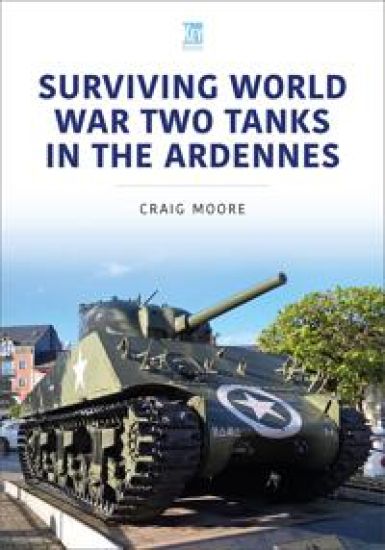
Surviving World War Two Tanks in the Ardennes
There are over 40 surviving World War Two tanks, self-propelled guns, tank destroyers, tank hunters and tank turrets in the Belgium and Luxembourg Ardennes. Not all the tanks on display fought in the December 1944 German offensive, the Battle of the Bulge. Some, such as the Matilda II, were the type of tank that defended France during the Blitzkrieg of May 1940. Others, such as the British Comet tank, were deployed in 1945 during the crossing of the Rhine and the push into Germany. There are also plenty of German Panzers to examine close up, including a Tiger II, three Panther Ausf. G tanks, three Jagdpanzer 38 (G13 Hetzer) tank hunters, a Panzer IV command tank and a StuG III assault tank. Illustrated with over 150 images, and containing detailed descriptions of the tanks and where to find them, this book is an invaluable resource for anyone visiting the Ardennes.
Surviving D-Day Tanks in Normandy

Surviving D-Day Tanks in Normandy

Craig Moore

KEY PUBLISHING LTD
2022
nidottu
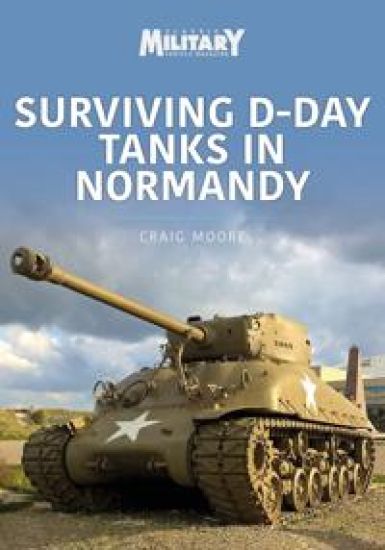
On June 6, 1944, D-Day, the Allied invasion of northern France began. Thousands of Allied soldiers, along with their equipment and vehicles, landed in Normandy on five main beaches. Most tanks arrived on the beaches by landing craft, and a few days later, after the construction of the temporary Mulberry harbor at Arromanches-les-Bains, tanks, along with supply trucks and more troops, started pouring from the ships into the ever-expanding beachhead. This guide book examines the surviving World War Two tanks, tank turrets and other armored fighting vehicles currently on display in Normandy, France, most of which took part in the fighting following the D-Day landings. The background history of each vehicle is explored, and location details are given. Many of the tanks are exhibited in museums, but a number are on display as war memorials, with some being in difficult-to-find places. Also included are the fascinating, little-known stories of the Allied tank attacks on two separate German beach defense fortifications at Gold Beach, both of which survived the initial Air Force bombing and Navy bombardment. They have been preserved and can be visited. 150 illustrations
How to Kill a Tiger Tank

How to Kill a Tiger Tank

Craig Moore

Fonthill Media Ltd
2021
nidottu

Halvin toimitettuna 38,30 €

When the Panzer VI Ausf. E Tiger I tank first arrived on the battlefield, it started the Allied and Soviet intelligence race to discover everything they could about this new threat. The British Army quickly needed to know how to knock it out, then communicate that information back to the troops that had to face this new German metal monster either by official means or via newspapers. This is not a typical book on the Tiger tank. It tries to show the reader what the British and Commonwealth forces knew about the Tiger I tank during the war and the results of scientific firing trials. Unpublished Second World War original documents, discovered in different archives, have been transcribed and reproduced along with any existing photographs found in those official secret reports. These include top-secret Bletchley Park and Enigma intercepts of German messages that were decoded and translated before being sent to wartime Prime Minister Winston Churchill. Illustrated with over 360 images, "How to Kill a Tiger Tank" is the definitive examination of a world-changing fighting vehicle.
American Panther Tanks

American Panther Tanks

Craig Moore

Fonthill Media
2021
nidottu
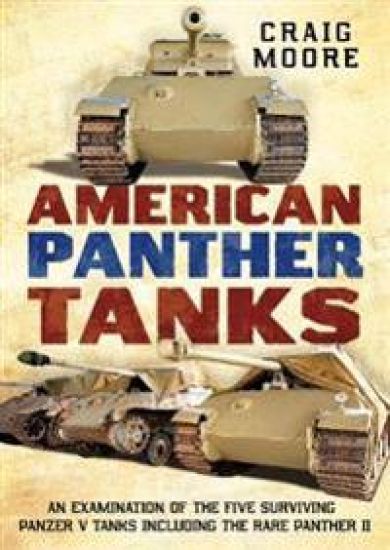
‘American Panther Tanks’ sounds a strange title for a book, but currently there are five surviving WW2 German Panther tanks in America. It is believed that fourteen captured Panzer V Panther tanks were shipped to the United States after the Second World War. Most were cut up and scrapped after being used for testing and targets on live firing ranges. The Panzer V Ausf. A Panther tank at the American Heritage Museum, Hudson, Massachusetts, near Boston, has been completely restored to a very high standard. The other four Panther tanks are at Fort Benning, Columbus, Georgia, under the care of the U. S. Army Armor and Cavalry Collection (U. S. AACC). They are awaiting their turn to be restored. The first four chapters briefly cover the development and production of the Panzer V Panther tank from the first version, the Ausf. D, to the second version the Ausf. A and to the final production version the Ausf. G, using photographs from other surviving Panther tanks around the world. The fifth chapter explores the design history of the Panther II prototype hull. Only one was built. The remaining chapters are dedicated to a photographic walk-around of the surviving Panther tanks in America.
How to Kill a Panther Tank

How to Kill a Panther Tank

Craig Moore

Fonthill Media
2020
nidottu
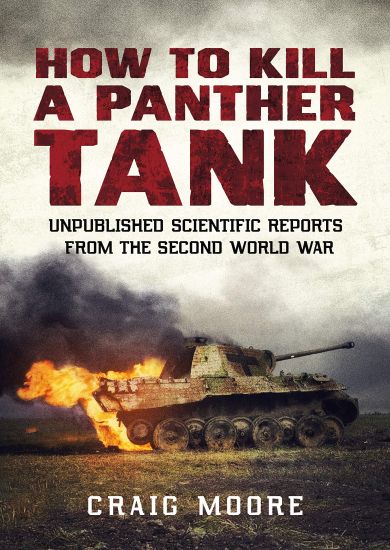
Using only original official period documents from the Second World War this book tries to provide the reader with the same information on the Panzer V Panther tank that was available to British and Commonwealth senior officers and tank crews during the war. As soon as intelligence reports confirmed the existence of the Panther tank the hunt was on to find reliable information on how to knock out this new German tank. Most people believe that the only way to stop a Panther was to penetrate its armour with an armour piercing A. P. round. Luckily the British 17 pdr anti-tank gun could do that but the British were also looking how to knock them out by using other weapons. They tested using high explosive artillery rounds and 20 mm air attack aircraft canon rounds to penetrate and damage the tank's rear engine deck and puncture the vehicle's radiators. Loss of water would cause the engine to overheat and stop working. Tank radiators were large and spares were not carried on the tank. If the Panther could not be recovered back to a maintenance depot the crew would have to abandon the tank and disable it by setting off internal explosive charges.
GERMAN TANKS OF WORLD WAR TWO

GERMAN TANKS OF WORLD WAR TWO

Craig Moore

Key Publishing Ltd
2020
nidottu

Halvin toimitettuna 24,70 €

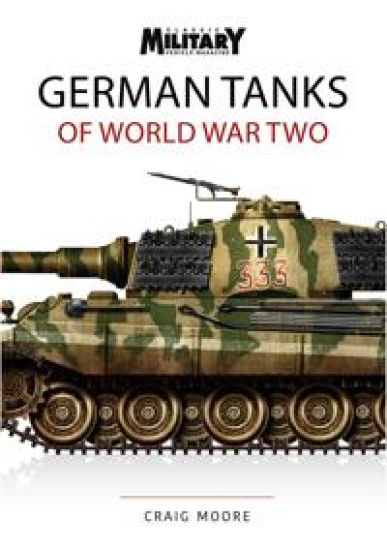
In World War Two, allied armies were issued with identification guides to the enemy armour they might encounter on the battlefield. These black & white printed books were a vital aide for soldiers dealing with the confusion of fighting and the difficulty of identification at distance or in all weathers. The German tanks were often lethal to become entangled with and known to be formidable pieces of military engineering. The German army deployed a wide variety of tanks in many different variants and forms of camouflage. The likes of the Tiger have become famous and continue to be fascinating examples of World War Two firepower. This book features a unique collection of colour illustrations, showing in detail the vehicles' development and differences in design. The artwork is accompanied by descriptions and technical information about each tank, written by respected expect Craig Moore, making this an essential handbook for anyone interested in the German armed forces and World War Two armour.
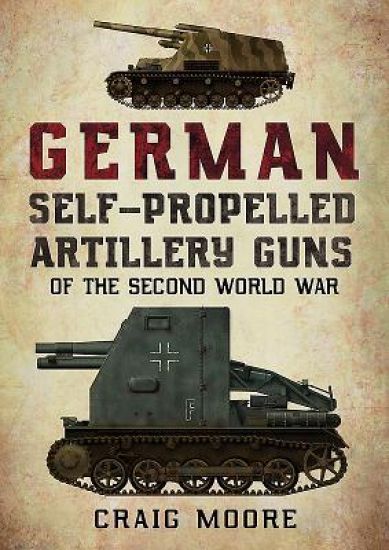
German Self-Propelled Artillery Guns of the Second World War
One towed artillery gun required a team of six horses and nine men. WW2 German engineers came up with the idea of mounting an artillery gun on top of a tank chassis. This new technology reduced the amount of resources required to deploy one artillery gun. Artillery self-propelled guns only needed a four or five man crew. They could also be made ready to fire more quickly. This book covers the development and use of this new weapon between 1939 and 1945. One type was successfully used in the invasion of France in May 1940. More were used on the Eastern Front against Soviet forces from 1941 until the end of the war in 1945. The 'Desert Fox', Ewin Rommel, needed artillery guns that could keep up with his Panzers in North Africa. Horses could not be used in the desert. He was sent 15 cm howitzers mounted on top of Panzer II tank chassis and captured French Army Lorraine 37L tracked armoured supply vehicles. Rommel's forces in Northern France were equipped with a variety of new artillery self-propelled guns. They were used against the Allies when they invaded the beaches of Normandy on D-Day 6th June 1944.
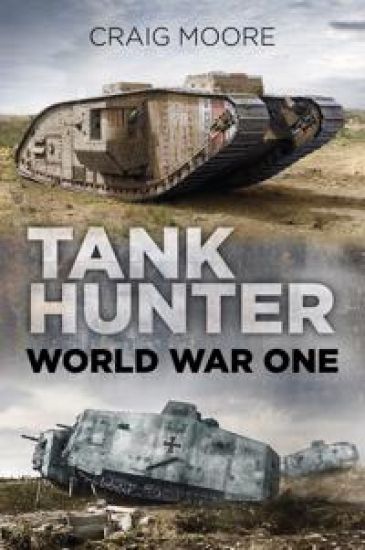
Tank Hunter

Tank Hunter

Craig Moore

The History Press Ltd
2017
nidottu
The First World War’s fierce battles saw the need to develop military technology beyond anything previously imagined: as exposed infantry and cavalry were mowed down by relentless machine-gun attacks, so tanks were developed. Here author Craig Moore presents every First World War tank, from the prototype ‘Little Willie’, through the French heavy tanks to the German light tank. He gives a focused history of the development of this game-changing vehicle and the engagements it was used in – vital battles such as the Somme and Cambrai. Stunningly illustrated in full colour throughout, Tank Hunter: World War One provides historical background, facts and figures for each First World War tank as well as the locations of any surviving examples, giving you the opportunity to become a Tank Hunter yourself.
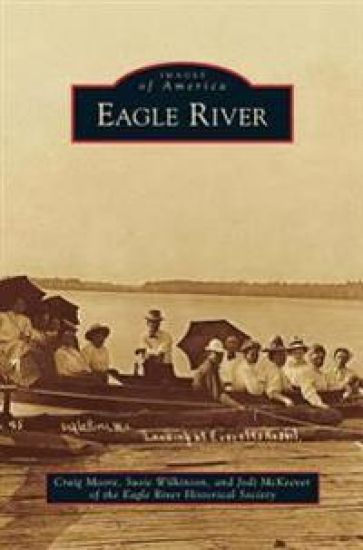
Eagle River

Eagle River

Craig Moore; Susie Wilkinson; Jodi McKeever

Arcadia Publishing (SC)
2013
nidottu
As drivers in the 1950s and 1960s traveled the roads of Wisconsin, they often came across billboards inviting them to Eagle River, "the nation's vacationland." Then, as now, vacationers and sportsmen came to Eagle River for the clean air, the restful woods and lakes, and the peace and quiet of the Northwoods. Eagle River, created in 1885, is the county seat of Vilas County and is home to the longest chain of freshwater lakes in the world--28 in total. By the late 1890s, the virgin pine forests were depleted, but Eagle River residents recognized that the abundant local hunting and fishing promised a new thriving industry: tourism. Anglers from all over the Midwest were lured to the Northern waters to try their luck. Resorts and summer camps quickly sprang up to accommodate these early tourists along with their families. Their descendants understand that "all hearts come home to Eagle River."
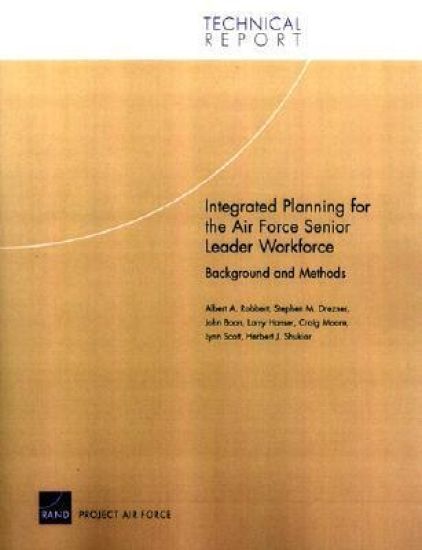
Integrated Planning for the Air Force Senior Leader Workforce

Integrated Planning for the Air Force Senior Leader Workforce

Albert A. Robbert; Stephen M. Drezner; John Boon; Larry Hanser; Craig Moore; Lynn Scott; Herbert J. Shukiar

RAND
2003
pokkari
One-liner: Describes the background for and methods used in a study carried out to better understand how to develop leaders who possess the operational knowledge and technical skills needed to perform effectively in senior Air Force positions. 450-character abstract: Rand Project Air Force and the Air Force Senior Leader Management Office undertook a study to help improve the development of Air Force senior leaders. This report provides background information to put the methods developed in the study into context and describes how those methods were developed and used to address the need for an improved leadership development program.