Kirjojen hintavertailu – 12 859 824 kirjaa ja 27 kauppaa

Kirjailija

Crewe Emma

Kirjat ja teokset yhdessä paikassa: 3 kirjaa, julkaisuja vuosilta 1998–2015, suosituimpiin kuuluu Commons and Lords. Vertaile teosten hintoja ja tarkista saatavuus suomalaisista kirjakaupoista.

3 kirjaa

Kirjojen julkaisuvuodet: 1998–2015.

Commons and Lords

Commons and Lords

Crewe Emma

Haus Publishing
2015
nidottu
The Westminster Parliament is worth closer scrutiny not just for the sake of democracy, but on intellectual grounds because the surprises it contains challenge our understanding of politics. Based on anthropological fieldwork between 1998-2000 in the House of Lords and 2011-2013 in the House of Commons and constituencies, this Curiosity explains how relationships within the two Houses are utterly different from their surface appearances. The high social status of peers in the House of Lords gives the impression of hierarchy and, more specifically, patriarchy. In contrast, the Commons conjures assumptions of equality and fairness between members of the lower House. But observation of the everyday relationships within the two Houses reveals the opposite: while the Lords has an egalitarian and co-operative ethos, and women thrive in the upper House, the competitive and aggressive Commons is a far less comfortable place for women. Paradoxically MPs have to be both an individual, serving their constituents, and a symbol of a collective, their political party. The inevitable messiness of representative politics, and the disappointment it brings, are both the virtue and weakness of parliamentary democracy. Emma Crewe looks beneath the surface and uncovers its surprises and secrets.
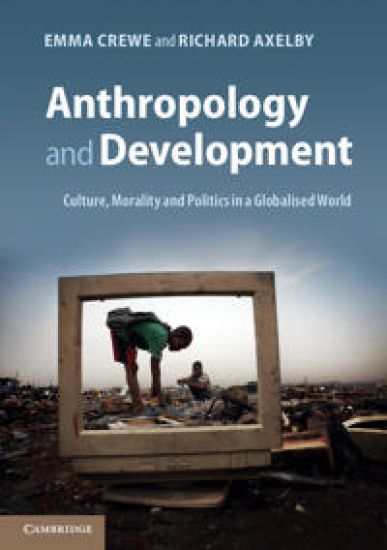
Anthropology and Development

Anthropology and Development

Crewe Emma; Axelby Richard

Cambridge University Press
2012
pokkari

Halvin toimitettuna 43,10 €

In recent decades international development has grown into a world-shaping industry. But how do aid agencies work and what do they achieve? How does aid appear to the adults and children who receive it? And why has there been so little improvement in the position of the poor? Viewing aid and development from anthropological perspectives gives illuminating answers to questions such as these. This essential textbook reveals anthropologists' often surprising findings and details ethnographic case studies on the cultures of development. The authors use a fertile literature to examine the socio-political organisation of aid communities, agencies and networks, as well as the judgements they make about each other. The everyday practice of development work is about negotiating power and culture, but in vastly different ways in different contexts and for different social groups. Exploring the spaces between policy and practice, success and failure, the future and the past, this book provides a rounded understanding of development work that suggests new moral and political possibilities for an increasingly globalised world.
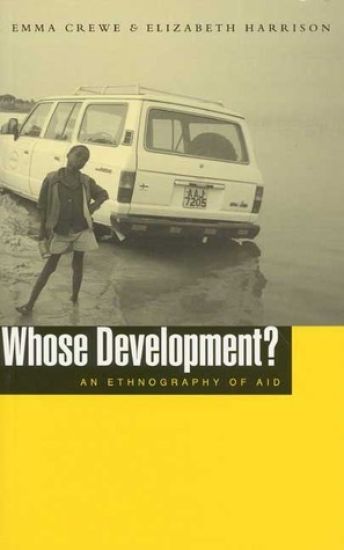
Whose Development?

Whose Development?

Crewe Emma; Elizabeth Harrison

Zed Books Ltd
1998
nidottu
The ‘anthropology of development’ is already challenging the received wisdom of development thought and practice. In this book, Crewe and Harrison build on existing work by using their own experience of aid projects in Africa and Asia to examine a number of deep-seated assumptions in the minds of ‘developers’. Flawed notions about progress, gender, technology, partnership, motivation, culture and race persist, and there are yawning gaps between these and the policies and actual practices of development. Through ethnographic case material from two different organizations - one an international NGO, the other a multilateral agency - the authors explore what actually happens when expatriate development personnel, local government officials and the intended beneficiaries of aid interact with one another. They describe how power inequalities based on race, class and gender are reflected in the processes of aid. This is a work of considerable subtlety. The authors find the dichotomies between ‘us’, the ‘developers’, and ‘them’, the ‘beneficiaries’ of development, inadequate. They question the apparently monolithic power of the developers, and show the need for a more nuanced, contextual account of the complex and often ambiguous relationships that exist within the aid industry. And while it refuses to provide simple answers, this book greatly enriches our understanding of the cultural and structural dynamics of the development process.