Kirjojen hintavertailu – 12 903 725 kirjaa ja 27 kauppaa

Kirjailija

Cris Tovani

Kirjat ja teokset yhdessä paikassa: 7 kirjaa, julkaisuja vuosilta 2000–2020, suosituimpiin kuuluu Point-Less: An English Teacher's Guide to More Meaningful Grading. Vertaile teosten hintoja ja tarkista saatavuus suomalaisista kirjakaupoista.

7 kirjaa

Kirjojen julkaisuvuodet: 2000–2020.

Why Do I Have to Read This?

Why Do I Have to Read This?

Cris Tovani

Stenhouse Publishers
2020
nidottu
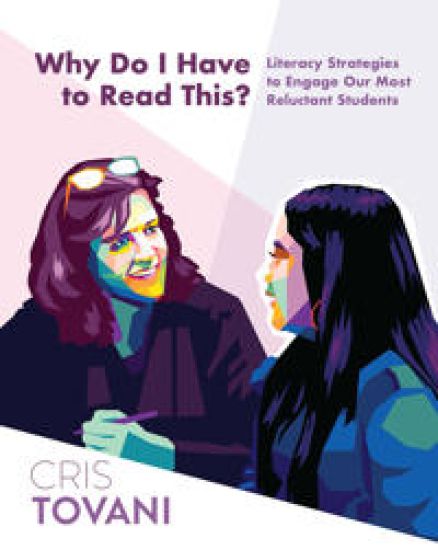
Why do I have to read this?- What teacher doesn't dread this question? It usually comes from our most disengaged students a student who cries of boredom, or one who is angry or apathetic. When we don't know what else to try, it's easy to become frustrated and give up on these challenging learners. Author Cris Tovani has spent her career figuring out how to entice challenging students back into the process of learning. Why Do I Have to Read This?: Literacy Strategies to Engage our Most Reluctant Students Tovani shares her best secrets, lessons learned from big fails, and her most effective literacy and planning strategies that hook these hard to get learners. You will meet many of Tovani's students inside this book. As she describes some of her favorites, you may even recognize a few of your own. You will laugh at her stories and take comfort in her easily adaptable strategies that help students remove their masks of disengagement. She shows teachers how to plan by anticipating students' needs. HerC urriculumY ouA nticipate structures of Topic, Task, Targets, Text, Tend to me, and Time willhelp you anticipate your curriculum. InsideWhy Do I Have to Read This? readers will find: Literacy strategies for all content areas that support and engage a wide range of learners so they can read and write a variety of complex textReference charts packed with small bites of instructional shifts that coaches and teachers can use to quickly adjust instruction to re-engage studentsPlanning strategies that show teachers how to connect day-to-day instruction so that no day lives in isolationVersatile think sheets that are reproducible and adaptable to different grade levels, content areas, and disciplinesAbove all, Tovani gives teachers energy to get back into the classroom and face students who wear masks of disengagement. She reminds us of the importance of connecting students to compelling topics, rich text, useful targets, and worthy tasks. Teachers must tendto students' basic needs and helps us consider how to best structure instructional time. After reading this book, teachers will have new ways to connect with students in a deep, authentic way. Written in a humorous, compassionate, and wise voice,Why Do I Have to Read This? will provide answers to the pressing questions we have when we try to teach and reach all of our students.

Point-Less: An English Teacher's Guide to More Meaningful Grading

Point-Less: An English Teacher's Guide to More Meaningful Grading

Cris Tovani; Sarah M. Zerwin

HEINEMANN EDUCATIONAL BOOKS
2020
nidottu
From the Foreword by Cris Tovani: "Sarah Zerwin has written the book I desperately needed to help my beliefs about learning match my assessment practices. In Point-Less, she nudges teachers to consider how traditional forms of grading get in the way of student growth. Her pioneering ways of marking, collecting, and sharing student work shows teachers how to assess with fidelity and in ways that serve student learning. Instead of assigning random points to student tasks, she demonstrates how teachers can provide students with concise, descriptive data that serves as meaningful and specific feedback. 'Inside this book, teachers will find: - online resources rife with tools and examples to manage feedback - ways to harness the electronic grade book as a useful instructional tool - frameworks that guide student and teacher feedback - checklists to simplify convoluted rubrics. 'Sarah addresses every grading obstacle one could think of. She provides ways to navigate objections that parents, athletic directors, administrators, colleagues, colleges, and even students might have with this innovative way of reporting grades. 'It's exciting to think how instruction could change if teachers weren't compelled to evaluate everything students did for the mere purpose of putting points in the grade book. Are you ready to find your path to a better way of grading? Are you ready to lead students on this journey to becoming better readers, writers, and thinkers? If so, you are going to love Point-Less "--Cris Tovani
Project-Based Writing: Teaching Writers to Manage Time and Clarify Purpose

Project-Based Writing: Teaching Writers to Manage Time and Clarify Purpose

Cris Tovani; Liz Prather

HEINEMANN EDUCATIONAL BOOKS
2017
nidottu
The idea that students should be "college and career ready" when they leave high school has become a major focus in education, but much of this conversation has been on reading readiness. What about writing readiness? Liz Prather argues that we can set students up for future success when we help them learn to care about what they're writing, and help them manage their time to write. "I needed a framework for teaching writing that would keep my students accountable and engaged," Liz explains, "but would allow them to write from their own passions, and instill in them an understanding of time management, goal setting, and production. By adding the tenets and practices of project-based learning, I could simultaneously protect the creative processes of my students while helping them learn to manage long term writing projects, the kind of projects they would be doing in college or in a career." Project-Based Writing provides a 7 step structure to conceive, manage, and deliver writing projects built upon student voice and student choice. Liz includes classroom-tested strategies for helping kids persevere through roadblocks, changes in direction, failed attempts, and most importantly, "anticipate the tricks of that wily saboteur, Time." Both practical and inspirational, Project-Based Writing teaches kids the real-world lessons they need to become real-world writers. "With this book, you will quite likely become the person students remember as the one who taught them how to write."--Cris Tovani
No More Telling as Teaching: Less Lecture, More Engaged Learning

No More Telling as Teaching: Less Lecture, More Engaged Learning

Ellin Oliver Keene; Nell K. Duke; Cris Tovani

HEINEMANN EDUCATIONAL BOOKS
2017
nidottu
Congratulations to Cris Tovani, recipient of ILA's Adolescent Literacy Thought Leader Award 2017 The truth is, when we rely on lecture in an effort to cover content, we're doing students a disservice. Although lecture can be engaging and even useful, lecture alone cannot give kids real opportunities to learn, retain, and transfer the disciplinary ideas, skills, and practices we're trying to teach. Cris Tovani and Elizabeth Moje help us translate the time spent lecturing into powerful learning experiences where students interact and inquire into topics that matter. Their research-based alternatives help you create the conditions for engaging, relevant work that's inherently interesting and sparks critical thinking. Elizabeth Moje helps us understand the latest research on how people learn, and shows powerful evidence that teachers can increase student learning with more purposeful student participation. Veteran teacher and instructional coach Cris Tovani provides a practical model for instruction that's backed by the current research and puts student engagement at the center of your teaching. Her examples of problem-based learning activities include connections to national standards and topics that matter outside the classroom walls. Together, Elizabeth and Cris make a convincing argument that when we minimize teaching-as-telling and transition to planning for kids to do the work, student engagement soars--and so does learning.
So What Do They Really Know?

So What Do They Really Know?

Cris Tovani

Stenhouse Publishers
2011
nidottu
So What Do They Really Know? Cris Tovani explores the complex issue of monitoring, assessing, and grading students' thinking and performance with fairness and fidelity. Like all teachers, Cris struggles to balance her student-centered instruction with school system mandates. Her recommendations are realistic and practical; she understands that what isn't manageable isn't sustainable. Cris describes the systems and structure she uses in her own classroom and shows teachers how to use assessments to monitor student growth and provide targeted feedback that enables students to master content goals. She also shares ways to bring students into the assessment cycle so they can monitor their own learning, maximizing motivation and engagement. So What Do They Really Know? includes a wealth of information: Lessons from Cris's classroomTemplates showing how teachers can use the workshop model to assess and differentiate instructionStudent work, including samples from linguistically diverse learners, struggling readers, and college-bound seniorsAnchor charts of student thinkingIdeas on how to give feedbackGuidelines that explain how conferring is different from monitoringSuggestions for assessing learning and differentiating instruction during conferencesAdvice for managing ongoing assessmentCris's willingness to share her own struggles continues to be a hallmark of her work. Teachers will recognize their own students and the challenges they face as they join Cris on the journey to figure out how to raise student achievement.
Do I Really Have to Teach Reading?

Do I Really Have to Teach Reading?

Cris Tovani

Stenhouse Publishers
2004
nidottu
Do I really have to teach reading? This is a question many teachers ask, wondering how they can add a new element to an overloaded curriculum. The answer is yes; if teachers want their students to learn complex new concepts in different disciplines, they need to help develop their students’ reading skills. In Do I Really Have to Teach Reading?: Content Comprehension, Grades 6-12 , author Cris Tovani takes on the challenge of helping students apply reading comprehension strategies in any subject. Tovani shows how teachers can expand on their content expertise to provide the instruction students need to understand specific technical and narrative texts. Inside the book you’ll find: Examples of how teachers can model their reading process for students Ideas for supplementing and enhancing the use of required textbooks Detailed descriptions of specific strategies taught in context Stories from different high school classrooms to show how reading instruction varies according to content Samples of student work, including both struggling readers and college-bound seniors Comprehension Constructors : guides designed to help students recognize and capture their thinking in writing while reading Guidance on assessing students Tips for balancing content and reading instruction Tovani’s humor, honesty, and willingness to share her own struggles as a teacher make this a unique take on content reading instruction that will be valuable to reading teachers as well as content specialists.
I Read It, but I Don't Get It

I Read It, but I Don't Get It

Cris Tovani

Stenhouse Publishers
2000
nidottu
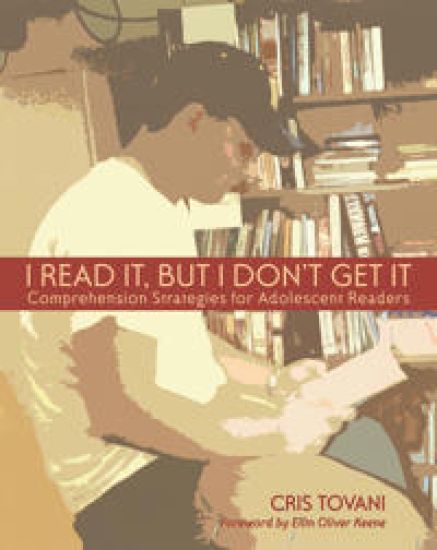
I Read It, but I Don't Get It: Comprehension Strategies for Adolescent Readers is a practical and engaging account of how teachers can help adolescents develop new reading comprehension skills. Cris Tovani is an accomplished teacher and staff developer who writes with verve and humor about the challenges of working with students at all levels of achievement-;from those who have mastered the art of fake reading to college-bound juniors and seniors who struggle with the different demands of content-area textbooks and novels. Enter Tovani's classroom, a place where students are continually learning new strategies for tackling difficult text. You will be taken step-by-step through practical, theory-based reading instruction that can be adapted for use in any subject area. The book features: Anecdotes in each chapter about real kids with real universal problems. You will identify with these adolescents and will see how these problems can be solvedA thoughtful explanation of current theories of comprehension instruction and how they might be adapted for use with adolescentsA What Works section in each of the last seven chapters that offers simple ideas you can immediately employ in your classroom. The suggestions can be used in a variety of content areas and grade levels (6-12)Teaching tips and ideas that benefit struggling readers as well as proficient and advanced readersAppendixes with reproducible materials that you can use in your classroom, including coding sheets, double entry diaries, and comprehension constructorsIn a time when students need increasingly sophisticated reading skills, this book will provide support for teachers who want to incorporate comprehension instruction into their daily lesson plans without sacrificing content knowledge.