Kirjojen hintavertailu – 12 859 819 kirjaa ja 27 kauppaa

Kirjailija

Cristina Devereaux Ramírez

Kirjat ja teokset yhdessä paikassa: 4 kirjaa, julkaisuja vuosilta 2015–2024, suosituimpiin kuuluu Occupying Our Space. Vertaile teosten hintoja ja tarkista saatavuus suomalaisista kirjakaupoista.

Nimi esiintyy myös muodoissa: Cristina Devereaux Ramirez

4 kirjaa

Kirjojen julkaisuvuodet: 2015–2024.

A Story of Stories

A Story of Stories

Cristina Devereaux Ramírez; Norma Elia Cantú

TRINITY UNIVERSITY PRESS,U.S.
2024
pokkari
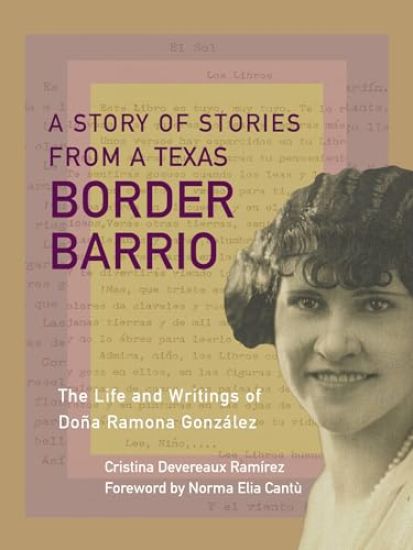
One afternoon in fall 2015 Cristina Devereaux Ramírez’s mother called and, with a tone of urgency in her voice, asked her to come to the house and take a look at something she had discovered when she was sorting through boxes in the attic. When Ramírez arrived, she found her family sifting through papers in an old vegetable box, reading some of the more than 750 pages of Spanish language poems, short stories, fables, and dichos Ramírez’s maternal grandmother, Ramona González, had written. Some pieces were works in progress, complete with word and phrase strikethroughs and handwritten notes in the margins, while others were neatly typed prose or what might have been final drafts. None of González’s writings had seen the outside of that box for decades, at least since 1995 when the family matriarch passed away. González—or Doña Ramona, as she was often called—was born in 1906 in the El Paso border barrio of Chihuahuita, sometimes referred to as the Ellis Island of the Southwest. Her writing celebrates the rich Mexican American culture of Chihuahuita, a neighborhood the National Trust for Historic Preservation identified in 2016 as one of America’s most endangered historic places. A mother, corner grocery store owner, published writer, and community activist, González was one of the few Tejanas profiled in Worthy Mothers of Texas, 1776–1976A Story of Stories from a Texas Border Barrio, Ramírez chronicles the life of her abuela with the care of a granddaughter and, with the eye of a scholar, analyzes selections from González’s work and its significance to El Paso history, Chicano literature, border barrio folklore, and cross-border civic movements in the mid-twentieth century.
Occupying Our Space

Occupying Our Space

Cristina Devereaux Ramírez; Jacqueline Jones Royster

University of Arizona Press
2023
nidottu
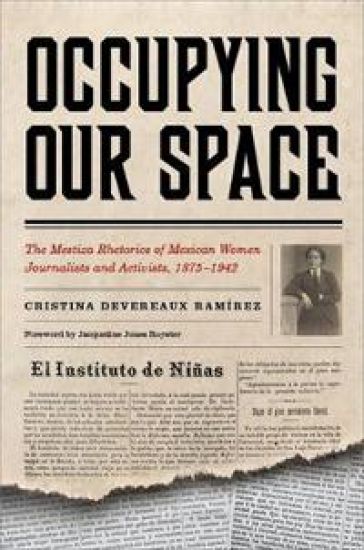
Winifred Bryan Horner Outstanding Book Award WinnerOccupying Our Space sheds new light on the contributions of Mexican women journalists and writers during the late nineteenth and early twentieth centuries, marked as the zenith of Mexican journalism. Journalists played a significant role in transforming Mexican social and political life before and after the Revolution (1910–1920), and women were a part of this movement as publishers, writers, public speakers, and political activists. However, their contributions to the broad historical changes associated with the Revolution, as well as the pre- and post-revolutionary eras, are often excluded or overlooked. This book fills a gap in feminine rhetorical history by providing an in-depth look at several important journalists who claimed rhetorical puestos, or public speaking spaces. The book closely examines the writings of Laureana Wright de Kleinhans (1842–1896), Juana BelÉn GutiÉrrez de Mendoza (1875­–1942), the political group Las mujeres de ZitÁcuaro (1900), Hermila Galindo (1896–1954), and others. Grounded in the overarching theoretical lens of mestiza rhetoric, Occupying Our Space considers the ways in which Mexican women journalists negotiated shifting feminine identities and the emerging national politics of the late nineteenth and early twentieth centuries. With full-length Spanish primary documents along with their translations, this scholarship reframes the conversation about the rhetorical and intellectual role women played in the ever-changing political and identity culture in Mexico.
Mestiza Rhetorics

Mestiza Rhetorics

Jessica Enoch; Cristina Devereaux Ramirez

Southern Illinois University Press
2019
nidottu
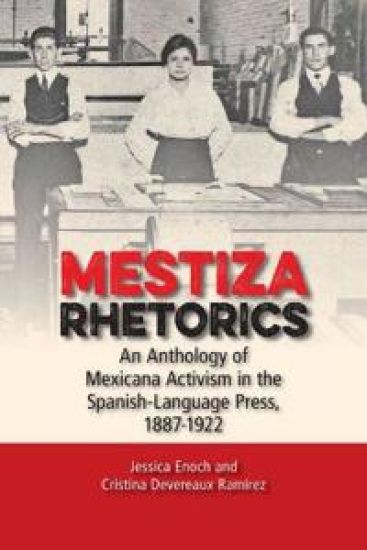
This critical bilingual anthology collects and contextualizes thirty-four primary writings of understudied revolutionary mexicana rhetors and social activists who published with presses within the United States and Mexico during the late nineteenth and early twentieth centuries—a time of cross-border revolutionary upheaval and change. These mexicana newspaperwomen leveraged diverse and compelling rhetorical strategies and used the press to advance the early feminist movement in Mexico and the U. S. Southwest; to define their rights and roles in and confront the hypocrisies of their societies’ patriarchal systems; to engage in important debates about education, women’s rights, and language instruction; and to protest injustices in society and construct possible solutions. Because these presses were in both Mexico and the United States, their writings offer opportunities to explore the concerns, struggles, and triumphs of mexicanas in both U. S. and Mexican cities and throughout the borderlands. Mestiza Rhetorics is the first anthology dedicated to mexicana rhetors and provides unmatched access to mexicana rhetorics. This collection puts forward the work of mexicana newspaperwomen in Spanish and English, provides evidence of their participation in political and educational debates at the turn of the twentieth century, and demonstrates how the Spanish-language press operated as a rhetorical space for mexicanas.
Occupying Our Space

Occupying Our Space

Cristina Devereaux Ramírez; Jacqueline Jones Royster

University of Arizona Press
2015
sidottu
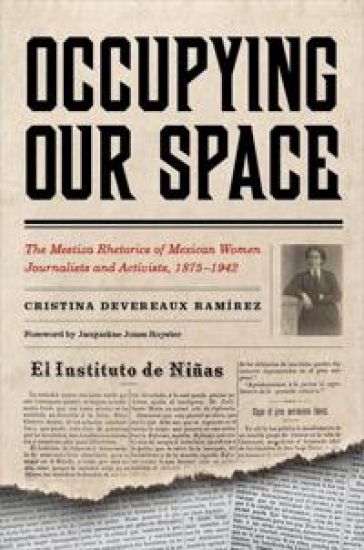
Occupying Our Space sheds new light on the contributions of Mexican women journalists and writers during the late nineteenth and early twentieth centuries, marked as the zenith of Mexican journalism. Journalists played a significant role in transforming Mexican social and political life before and after the Revolution (1910-1920), and women were a part of this movement as publishers, writers, public speakers, and political activists. However, their contributions to the broad historical changes associated with the Revolution, as well as the pre- and post-revolutionary eras, are often excluded or overlooked. Occupying our Space: The Mestiza Rhetorics of Mexican Women Journalists, 1875-1942, fills a gap in feminine rhetorical history by providing an in-depth look at several important journalists who claimed rhetorical puestos, or public speaking spaces. This book closely examines the writings of Laureana Wright de Kleinhans (1842-1896), Juana Belen Gutierrez de Mendoza (1875--1942), the political group Las mujeres de Zitacuaro (1900), Hermila Galindo (1896-1954), and others. Grounded in the overarching theoretical lens of mestiza rhetoric, Occupying Our Space considers the ways in which Mexican women journalists negotiated shifting feminine identities and the emerging national politics of the late nineteenth and early twentieth centuries. With full length Spanish primary documents along with their translations, this scholarship reframes the conversation about the rhetorical and intellectual role women played in the ever-changing political and identity culture in Mexico.