Kirjojen hintavertailu – 12 903 725 kirjaa ja 27 kauppaa

Kirjailija

Cristina Peri Rossi

Kirjat ja teokset yhdessä paikassa: 11 kirjaa, julkaisuja vuosilta 1989–2026, suosituimpiin kuuluu Evoe. Vertaile teosten hintoja ja tarkista saatavuus suomalaisista kirjakaupoista.

11 kirjaa

Kirjojen julkaisuvuodet: 1989–2026.

Evoe

Evoe

Cristina Peri Rossi

Komet
2026
nidottu
Evoe, först publicerad i Montevideo 1971, är en lyrisk hyllning till kärleken, en lovsång till begäret och inte minst till orden vi använder för att skriva fram den älskade. På grund av sina frispråkiga skildringar av lesbisk kärlek blev boken snart förbjuden. Med åren har den blivit en kultbok, läst och hyllad för sina erotiska beskrivningar.
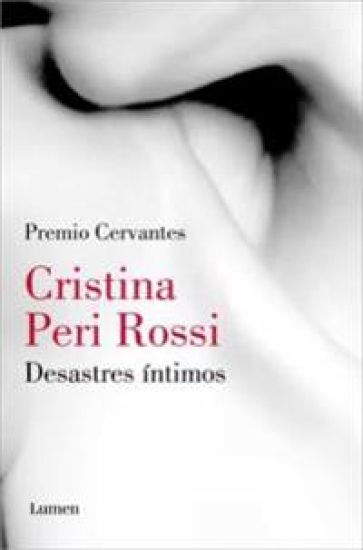
Desastres Íntimos / Intimate Disasters

Desastres Íntimos / Intimate Disasters

Cristina Peri Rossi

Lumen Press
2022
nidottu
Hoy, cuando los medios de comunicaci n han convertido la historia individual y colectiva en espect culo, la literatura es el espacio privilegiado de la subjetividad. Este libro se asoma al fascinante mundo interior de unos personajes atrapados en sus particulares delirios: un Club de Fetichistas que intercambian sus man as sexuales, un hombre enamorado de una mujer-ballena, un marido a quien su mujer ha abandonado por otra, o una bella y eficiente secretaria-modelo-mam asfixiada por la familia nuclear. Como ni os locos encerrados en un gabinete lleno de figuras, que son s mbolos, que son pulsiones. «Cada vez que me sumerjo en el interior de estos personajes, encuentro algo de m misma , declar Cristina Peri Rossi. A los lectores y lectoras de Desastres ntimos les ocurrir otro tanto, sea cual sea su identidad u opci n sexual. «Su literatura es un ejercicio constante de exploraci n y cr tica, sin rehuir el valor de la palabra como expresi n de un compromiso con temas claves de la conversaci n contempor nea como la condici n de la mujer y la sexualidad . --Acta del Jurado del Premio Cervantes 2021 ENGLISH DESCRIPTION In this modern age, when the means of communication have turned individual and collective history into a spectacle, literature is the privileged place of subjectivity. This book allows us to peer into the fascinating world of characters trapped in their particular deliriums: a club of fetishists who discuss their particular manias, a man in love with a whale woman, a man whose wife has left him for another woman, and a beautiful secretary who is also a mother feeling asphyxiated by her family. Readers, no matter how they see themselves and what their sexual preferences may be, will experience the same sensation.
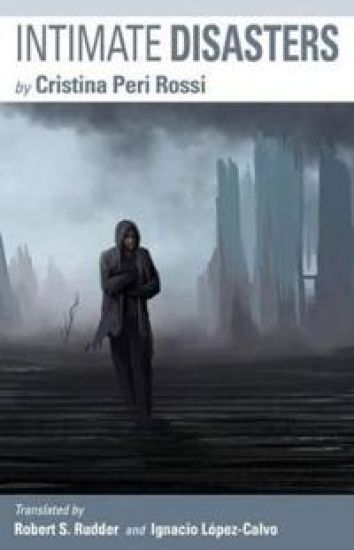
Intimate Disasters

Intimate Disasters

Cristina Peri Rossi; Robert S. Rudder; Ignacio Lopez-Calvo

Latin American Literary Review Press,U.S.
2014
nidottu
In this modern age, when the means of communication have turned individual and collective history into a spectacle, literature is the privileged space of subjectivity. This book allows us to peer into the fascinating inner world of characters trapped in their particular deliriums: a club of fetishists who discuss their sexual manias, a man in love with a whale-woman, a man whose wife has left him for another woman, and a beautiful secretary who is also a mother feeling asphyxiated by her family. Readers, no matter how they see themselves and what their sexual preferences may be, will experience the same sensation.
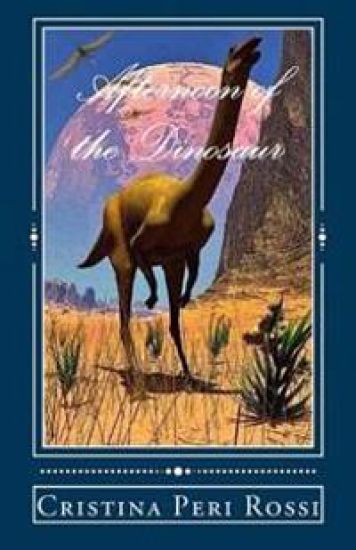
Afternoon of the Dinosaur

Afternoon of the Dinosaur

Cristina Peri Rossi

Svenson Publishers
2014
nidottu
Afternoon of the Dinosaur, by Cristina Peri Rossi, one of the most important Spanish writers of our time, was first published in 1976. Due to censorship in Spain under Franco, it was initially distributed only in Latin America. Then, in 1984, it was published again by Plaza y Jan s (Barcelona), and in 2008 it was reissued by Tropo Editores (Zaragoza). This volume is composed of eight lyrical and powerful short stories bound together by themes of alienation and generational conflict in the modern world. According to the author, "the stories are all connected by a sense of persecution and by the solidarity that this sometimes creates between two persons." The first, "From Brother to Sister," deals with the yearnings of love of an adolescent for his sister. In the second, "At the Beach," a young couple encounters a child who both mystifies and troubles them with her extraordinary questions. With "The Influence of Edgar A. Poe on the Poet Raimundo Arias," we find the deep-felt sense of exile of Peri Rossi herself. Two pieces of this collection that carry the title "Simulacrum" give us a science-fiction world of space travel in which human feelings are lost. As the author says, "the final word of the tale is 'mercy, ' (it is a sense of) pity that I feel for myself and for all human beings, because we are condemned to die, to suffer dictatorships, because we are condemned many times to oppression, and we need to seek out, in the midst of this suffering, our fellow men." As for the title story of this collection, "The Afternoon of the Dinosaur," the author confesses that her dreams, at the time of the military dictatorship in Montevideo when people simply disappeared," were often haunted by terrifying dinosaurs. The dinosaur, for her, symbolized fear, danger, the threat of the government. She wanted to tame the dinosaur, to change it into a loving character. It was only after she wrote this story that dinosaurs disappeared from her dreams. Julio Cort zar writes: "Cristina Peri Rossi is not only aware of the hells of this world, she understand the lures of paradise. Her exquisite prose projects her readers into a surrealistic realm that is filled with forbidden yet fascinating choices." In his introduction to the Spanish version of "La tarde del dinosaurio," he says: "In three of the stories from this book the children will lay bare the world of those who claim to control it, and will reduce it to a laughingstock of truth... Brothers and sisters, queens and slaves, false adults incapable of accepting the laws of the game, people that an Aubrey Beardsley or an Egon Schiele would have drawn with the perverse perfection of sterile desire, of a pursuit whose sole incentive is that of not catching the prey, whether it be named Patricia or Alexandra, Igor or Alina. False adults, for the simple reason that adults are false. And the adolescent turns to its past in a last, desperate act of resistance; but its sex and its hair and its voice drag it to the peak that the boy of the dinosaur contemplates in final horror. Now there are no victims or assassins in those rooms of the house; the last of its visitors is able only to utter one useless word: Mercy."

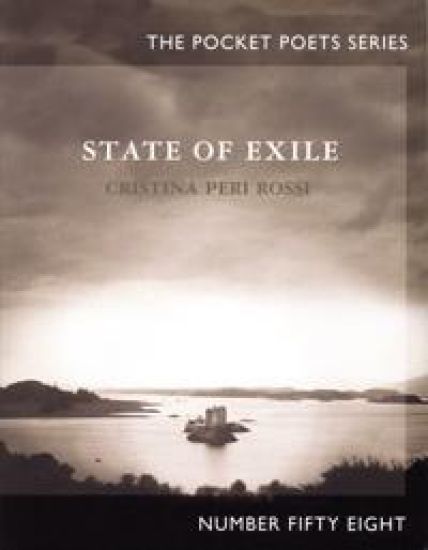
State of Exile

State of Exile

Cristina Peri Rossi

CITY LIGHTS BOOKS
2008
pokkari
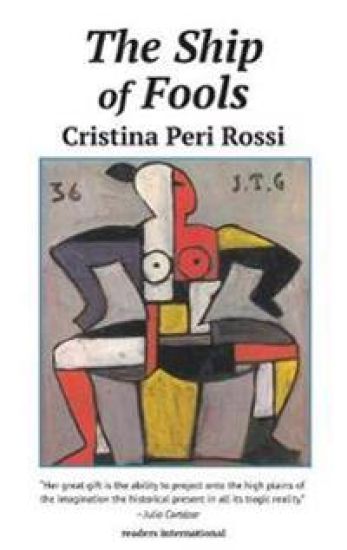
Cristina Peri Rossi was born in Uruguay and is considered a leading light of the "Latin American Boom" generation. In 1972, after her work was banned under a repressive military regime, she left her country, moving to Spain. This collection of poems, written during her journey and the first period of her self-exile, was so personal that it remained unpublished for almost thirty years. It is accompanied here by two brilliant essays on exile, one by Peri Rossi and the other by translator Marilyn Buck, who is an American political prisoner, exiled in her own land. Cristina Peri Rossi is the author of thirty-seven works, including The Ship of Fools.
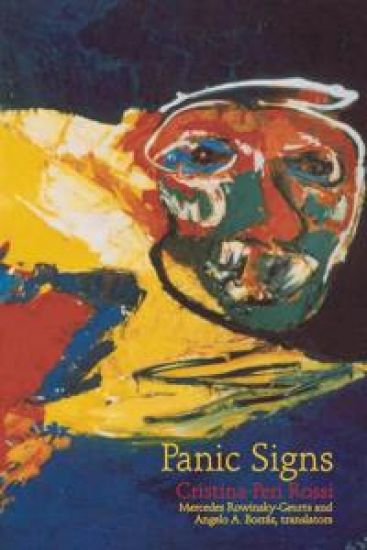
Panic Signs

Panic Signs

Cristina Peri Rossi

Wilfrid Laurier University Press
2002
nidottu
Cristina Peri Rossi is one of the most acclaimed and personal voices in Hispanic letters. This volume of short stories, Panic Signs , first published in 1970 in Montevideo, Uruguay, presages the atrocities that would come with dictatorship in 1972. The premonitory dimension is one of the striking characteristics in all the stories â a sense of impending catastrophe, sometimes hallucinatory and often graphic, leads us to undetermined places where the horrors of censorship, torture, and human bondage take place. At the same time, the stories expose the shackles that incapacitate us and deny us the acceptance of ourselves. This elegy for freedom mourns the loss of liberty and justice while seducing us into questioning what we hold true. The metaphorical procession of images, and the craftsmanship of a narrative that continually engage us, motivate us to explore our own uncertainties and values, and offer an unquestionable opportunity to reassess today's global conditions. Peri Rossi succeeds in creating a whirlwind of despair and self-discovery, impelling us to assess our own panic signs and so avoid being entrapped by those who hold power over us. The translation of this powerful text will help English-speaking readers attain a more profound understanding of the complexities of Latin America's cultural and socio-political issues.
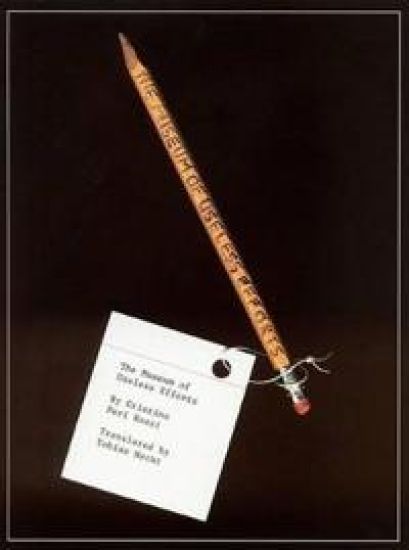
The Museum of Useless Efforts

The Museum of Useless Efforts

Cristina Peri Rossi

University of Nebraska Press
2001
pokkari
In The Museum of Useless Efforts Cristina Peri Rossi renders familiar, everyday situations uncanny through lyrical reinterpretations; at the same time, she somehow makes the uncanny appear quite ordinary. Crafting peculiar—and sometimes claustrophobically small—worlds, Peri Rossi explores the universal themes of desire, violence, and truth and the simultaneous and contradictory human capacities to repress and resist, speak and silence, desire and ignore. In these tales an insomniac is tormented by a stubborn lamb that refuses to jump over the fence; the momentary hesitation of a man on a crowded subway staircase who forgets whether he was going up or down unleashes pandemonium; and a patient receives a frantic call from his psychoanalyst, distraught that his wife has taken a new lover.
Solitaire of Love

Solitaire of Love

Cristina Peri Rossi

Duke University Press
2000
pokkari
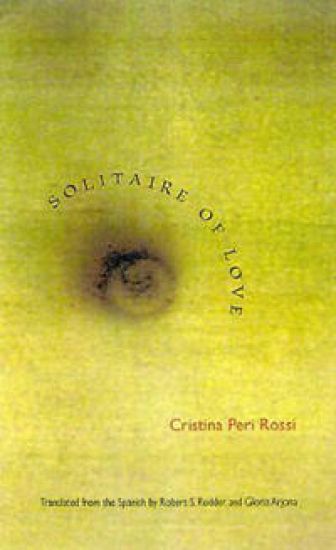
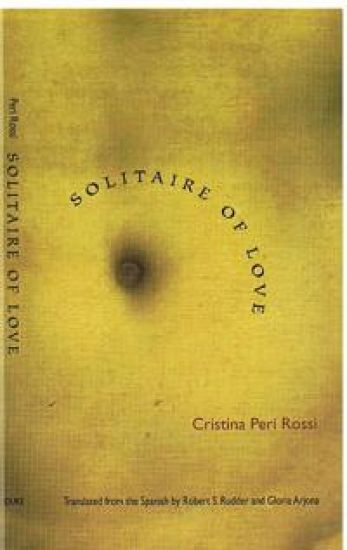
Solitaire of Love, an achingly lyrical novel by internationally acclaimed Latin American writer Cristina Peri Rossi, explores the sense of emotional exile that sexual passion can evoke. Only the fourth book of Peri Rossi’s to be translated into English-the others are The Ship of Fools, A Forbidden Passion, and Dostoevsky’s Last Night-Solitaire of Love showcases the mesmerizingly rhythmic language that has become the trademark of this award-winning and prolific author of novels, essay collections, poetry, and short stories. Tracing the course of a relationship as it evolves into uncompromising self-destruction, the narrator of Solitaire of Love becomes addicted to his own passion and to the body of his beloved. Erotic, romantic love becomes bewitchment, producing a heightened state where time is measured in the rhythms of a chosen body and pride becomes subservient to obsession. The specifics of this other body trump any claim to ordinary existence for the narrator, as sex becomes a kind of idolatrous slavery and love becomes a mechanism for self-immolation. As in Peri Rossi’s other works, an ambiguous sense of gender and sexuality arise from her uniquely experimental prose and mystically erotic logic. Language is subsumed into this process as a way to bear witness, to transfix and capture the love object. The limbo of obsession, as described by Peri Rossi, creates an infantilizing brand of loneliness, broken by flashes of joy, insight, fury, and fear. This novel was originally published in Spanish in 1988.
Solitaire of Love

Solitaire of Love

Cristina Peri Rossi

Duke University Press
2000
sidottu
Solitaire of Love, an achingly lyrical novel by internationally acclaimed Latin American writer Cristina Peri Rossi, explores the sense of emotional exile that sexual passion can evoke. Only the fourth book of Peri Rossi’s to be translated into English-the others are The Ship of Fools, A Forbidden Passion, and Dostoevsky’s Last Night-Solitaire of Love showcases the mesmerizingly rhythmic language that has become the trademark of this award-winning and prolific author of novels, essay collections, poetry, and short stories. Tracing the course of a relationship as it evolves into uncompromising self-destruction, the narrator of Solitaire of Love becomes addicted to his own passion and to the body of his beloved. Erotic, romantic love becomes bewitchment, producing a heightened state where time is measured in the rhythms of a chosen body and pride becomes subservient to obsession. The specifics of this other body trump any claim to ordinary existence for the narrator, as sex becomes a kind of idolatrous slavery and love becomes a mechanism for self-immolation. As in Peri Rossi’s other works, an ambiguous sense of gender and sexuality arise from her uniquely experimental prose and mystically erotic logic. Language is subsumed into this process as a way to bear witness, to transfix and capture the love object. The limbo of obsession, as described by Peri Rossi, creates an infantilizing brand of loneliness, broken by flashes of joy, insight, fury, and fear. This novel was originally published in Spanish in 1988.