Kirjojen hintavertailu – 12 865 792 kirjaa ja 27 kauppaa
Kirjailija
Cristina Rivera Garza
Kirjat ja teokset yhdessä paikassa: 41 kirjaa, julkaisuja vuosilta 2017–2027, suosituimpiin kuuluu De-blading the Knife. Vertaile teosten hintoja ja tarkista saatavuus suomalaisista kirjakaupoista.
Nimi esiintyy myös muodoissa: Cristina Rivera-Garza
«La creaci n literaria riveragarziana, la m s fuerte, la m s capaz de derribar barreras y limitaciones. -Elena Poniatowska En estos cuentos habitan un hombre que cree haberse enamorado de una sirena del Nevado de Toluca; una chica en Nueva York que traduce cartas sobre un amor secreto para una cosmet loga; un hombre que intenta hallar un lugar recurrente en sus sue os; y un adolescente enamoradizo que vive entre la casa de sus amantes y la cancha de futbol de su barrio. Todos ellos comparten un mismo conflicto: el encuentro con el otro, en particular, con la figura femenina, que irremediablemente los conduce a una constante sensaci n de soledad y vac o. Es en ese impasse del encuentro furtivo donde la pluma de Cristina Rivera Garza irrumpe para narrarnos aquello donde el tiempo y el espacio dejan de importar. ENGLISH DESCRIPTION "Rivera Garza's literary creation, the most powerful, the most capable of breaking down barriers and limitations." -Elena Poniatowska In these stories live: a man who believes he has fallen in love with a mermaid from Nevado de Toluca; a girl in New York who translates letters about a secret love for a cosmetologist; a man who tries to find a recurring place in his dreams; and a teenager who bounces from his many girlfriends' homes and his neighborhood soccer field. They all grapple with a common conflict: encounters with others, especially with the female figure, which invariably leaves them with a persistent sense of loneliness and emptiness. In these brief encounters, Cristina Rivera Garza's pen emerges to narrate all where conventional notions of time and space become irrelevant.
«Los cuentos de La frontera m s distante evocan un ambiente que transita lo fant stico, lo on rico y lo surrealista, pero no porque se pierda de vista la realidad, sino porque sta se depura hasta alcanzar un esqueleto, que la muestra despojada de cualquier tipo de atrezzo. -Beatriz Ferr s Ant n. Las historias aqu contenidas, si bien evocan formas y temas que se antojan familiares (un ensayo etnogr fico, un cuento policiaco, un relato de ciencia ficci n, un poema er tico), desaf an las convenciones impuestas a cada una de ellas. A la manera de un micelio, conforman juntas una red de significados que se extienden y filtran entre s . De este modo se retroalimentan y disipan sus fronteras para ampliar el universo mismo de la literatura. Las explicaciones sobran, pues como nica respuesta Cristina Rivera Garza, como la Agripina de Juan Rulfo en "Luvina", se alza de hombros para dejar que miremos por nosotros mismos el mundo en el que hemos desembarcado. ENGLISH DESCRIPTION "The stories in The Farthest Frontier, while evoking an atmosphere that is fantastical, dreamlike and surreal, not because they lose sight of reality but because they strip it down to the bone without any trappings." -Beatriz Ferr s Ant n. Although the stories in this volume may recall familiar genres and topics (an ethnographic essay, a detective story, science fiction, erotic poetry), they challenge the conventions imposed on each one. Like a mycelium, they build a network of meanings that extend across the collection, informing each other and dissolving boundaries to expand the universe of literature. Explanations aren't needed; Cristina Rivera Garza, like Agripina in Juan Rulfo's "Luvina," shrugs her shoulders and asks us to make up our own minds about the world in which we find ourselves.
The stories in Victoria Lancelotta’s Ways to Disappear excavate the unexamined places between dread and desire, promise and threat, where the body is both prison and salvation. Populated by the grieving and the exultant and those who see no difference between the two, by men and women who are only a little bit broken and boys and girls who can’t wait to be, by souls untethered, rootless, yet bound by blood and flesh, Lancelotta’s characters are driven by the irresistible need to be a bigger part of the worlds they each inhabit, by turns strange and commonplace. In language lush and jagged, never sentimental, these stories scrutinize the exhaustion and enchantment of the everyday: houses seething with resentment and devotion, cars dream-full and hurtling the children in them into a world they think they know but can’t imagine; front porches, back yards, luxury hotels, and truck stops. Lancelotta understands that sometimes people check their wounds not to see if they’ve healed, but to be sure they’re still there.
Ganador del Premio Pulitzer 2024 de Memoria o Autobiograf a PRESELECCIONADA PARA EL NATIONAL BOOK AWARDS EN LA CATEGORIA DE NO FICCI N Incluido en los libros de ficci n notables del New York Times de 2023 Este libro es para celebrar el paso de Liliana Rivera Garza por la tierra y para decirle que, claro que s , lo vamos a tirar. Al patriarcado lo vamos a tirar. «El 16 de julio de 1990, Liliana Rivera Garza, mi hermana, fue v ctima de un feminicidio. Era una muchacha de 20 a os, estudiante de arquitectura. Ten a a os tratando de terminar su relaci n con un novio de la preparatoria que insist a en no dejarla ir. Unas cuantas semanas antes de la tragedia, Liliana por fin tom una decisi n definitiva: en lo m s crudo del invierno hab a descubierto que en ella, como bien lo hab a dicho Albert Camus, hab a un invencible verano. Lo dejar a atr s. Empezar a una nueva vida. Har a una maestr a y despu s un doctorado; viajar a a Londres. La decisi n de l fue que ella no tendr a una vida sin l. Hace apenas un a o decid abrir las cajas donde depositamos las pertenencias de mi hermana. Su voz atraves el tiempo y, como la de tantas mujeres desaparecidas y ultrajadas en M xico, demand justicia. El invencible verano de Liliana es una excavaci n en la vida de una mujer brillante y audaz que careci , como nosotros mismos, como todos los dem s, del lenguaje necesario para identificar, denunciar y combatir la violencia sexista y el terrorismo de pareja que caracteriza a tantas relaciones patriarcales . - Cristina Rivera Garza " Enorme Ojal millones lo lean " -- Francisco Goldman, autor de Monkey Boy, finalista del Premio Pulitzer de Ficci n 2022ENGLISH DESCRIPTION Winner of the 2024 Pulitzer Prize in Memoir or Autobiography LONGLISTED FOR THE 2023 NONFICTION NATIONAL BOOK AWARDS Listed as one of The New York Times' Notable Fiction Books of 2023 A haunting, unforgettable memoir about a beloved younger sister and the painful memory of her murder, from "one of Mexico's greatest living writers" (Jonathan Lethem). Can you enjoy yourself while you are in pain? The question, which is not new, arises over and over again during that eternity that is mourning. In the early hours of July 16, 1990, Liliana Rivera Garza was murdered by her abusive ex-boyfriend. A life full of promise and hope, cut tragically short, Liliana's story instead became subsumed into Mexico's dark and relentless history of domestic violence. With Liliana's case file abandoned by a corrupt criminal justice system, her family, including her older sister Cristina, was forced to process their grief and guilt in private, without any hope for justice. In luminous, poetic prose, Rivera Garza tells a singular yet universally resonant story: that of a spirited, wondrously hopeful young woman who tried to survive in a world of increasingly normalized gendered violence. It traces the story of her childhood, her early romance with a handsome-but possessive and short-tempered-man, through the exhilarating weeks leading up to that fateful July morning, a summer when Liliana loved, thought, and traveled more widely and freely than she ever had before. Using her remarkable talents as a scholar, novelist, and poet, Cristina Rivera Garza returns to Mexico after decades of living in the United States to collect and curate evidence --handwritten letters, police reports, school notebooks, architectural blueprints-- in order to render and understand a life beyond the crime itself. Tracing the full arc of their childhood and adolescence in central Mexico, through the painful and confusing years after Liliana's death, Rivera Garza confronts the trauma of losing her sister, and examines from multiple angles how this tragedy continues to shape who she is--and what she fights for--today.
«La autora no s lo nos adentra en la complejidad del manicomio y su contexto social, sino que consigue dotar de una identidad presente a esos seres que nunca pudieron tenerla en el pasado. --Claudia Guill n La historia de este manicomio mexicano, fundado en 1910, se desarrolla entre di logos obsesivos de internos, doctores, familiares y otros personajes alrededor del tema de la locura. En ellos se habla de fe, sexo, pobreza, p rdida, rencor, celos, amor y pol tica. Los m dicos traduc an lo que escuchaban a los t rminos de la incipiente psiquiatr a, mientras que los internos lograban transmitir sus experiencias personales e historias ntimas a trav s del padecimiento mental. La Casta eda fue un hospital, una c rcel apenas disfrazada; una ltima oportunidad. Para algunos fue una ciudad de juguete; para otros, una met fora de los tiempos que estaban por venir. ENGLISH DESCRIPTION La Casta eda Insane Asylum is the first inside view of the workings of La Casta eda General Insane Asylum-- a public mental health institution founded in Mexico City in 1910 only months before the outbreak of the Mexican Revolution. It links life within the asylum's walls to the radical transformations brought about as Mexico entered the Revolution's armed phase and then endured under succeeding modernizing regimes. Author Cristina Rivera Garza brings the history of La Casta eda asylum to life as inmates, doctors, relatives, and others engage in dialogues on insanity. They discuss faith, sex, poverty, loss, resentment, envy, love, and politics. Doctors translated what they heard into the emerging language of psychiatry, while inmates conveyed their personal experiences and private histories through expressions of mental suffering. The language of pain--physical and spiritual, mild to excruciating--allowed patients to detail the sources and consequences of their misfortune.
A story collection drawn from across her career brings into English for the first time the extraordinary stylistic and thematic range of the Mexican writer and MacArthur "genius" Cristina Rivera Garza. "One of Mexico's greatest living writers," wrote Jonathan Lethem in 2018 about Cristina Rivera Garza, "we are just barely beginning to catch up to what she has to offer." In the years since, Rivera Garza's work has received widespread recognition: She was awarded a MacArthur Genius Grant for fiction that "interrogates culturally constructed notions of language, memory, and gender from a transnational perspective," and was a finalist for the 2020 National Book Critics Circle Award for Criticism. Yet we have still only started to discover the full range of a writer who is at once an incisive voice on migration, borders, and violence against women, as well as a high stylist in the manner of Lispector or Duras. New and Selected Stories now brings together in English translation stories from across Rivera Garza's career, drawing from three collections spanning over 30 years and including new writing not yet published in Spanish. It is a unique and remarkable body of work, and a window into the ever-evolving stylistic and thematic development of one of the boldest, most original and affecting writers in the world today.
La CastaÑeda Insane Asylum is the first inside view of the workings of La CastaÑeda General Insane Asylum - a public mental health institution founded in Mexico City in 1910 only months before the outbreak of the Mexican Revolution. It links life within the asylum's walls to the radical transformations brought about as Mexico entered the Revolution's armed phase and then endured under succeeding modernizing regimes. Author Cristina Rivera Garza brings the history of La CastaÑeda asylum to life as inmates, doctors, relatives, and others engage in dialogues on insanity. They discuss faith, sex, poverty, loss, resentment, envy, love, and politics. Doctors translated what they heard into the emerging language of psychiatry, while inmates conveyed their personal experiences and private histories through expressions of mental suffering. The language of pain - physical and spiritual, mild to excruciating - allowed patients to detail the sources and consequences of their misfortune. Available now for the first time in English, this edition contains updated sources and features a note by the translator, Laura Kanost.
Autobiograf a del algod n dota de un nuevo y extraordinario significante al territorio de la frontera norte de M xico, que aqu se erige majestuoso sobre el movimiento n mada y la ruta de los recuerdos. - Y snaya Elena Aguilar. Indagar sobre el origen personal es abrir una puerta a muchas preguntas a silencios y respuestas impensadas que aveces terminan por ser un rev s de la memoria. En autobiograf a del algod n, Cristina Rivera Garza sigue con curiosidad y asombro los pasos de aquellos hombres y mujeres que habitan su pasado familiar, obreros, campesinos que trabajaron la tierra que ahora conforma la frontera entre Tamaulipas y Texas, una regi n que alcanz un alto nivel econ mico, social y cultural gracias al sistema de siembra del algod n. Es as que esta novela es, adem s de ntima, un reencuentro con el territorio. O un desencuentro, debido a la migraci n, deportaci n, expulsi n y repatriaci n de aquellos campesinos algodoneros, que tras el fracaso del sistema, dejaron libre su espacio, antes s mbolo de progreso, hoy ocupado por la llamada guerra contra el narco. ENGLISH DESCRIPTION The Autobiography of Cotton provides a new and extraordinary signifier to the territory of the northern border of Mexico, that here raises up majestically upon the nomadic movement and the route of memories." - Y snaya Elena Aguilar. To look into personal origins is to open the door to many questions of silence and unthinkable answers that sometimes end up being a mishap of memory. In The Autobiography of Cotton, Cristina Rivera Garza follows, with curiosity and amazement, the steps of those men and women who dwell in her family's past, laborers, peasants who worked the land that now makes up the border between Tamaulipas and Texas, a region that achieved economic, social, and cultural prosperity thanks to the cultivation of cotton. Thus, this novel is, in addition to being intimate, a reunion with the land. Or, a disunion, due to the migration, deportation, expulsion, and repatriation of those cotton workers, who after the system failed, left their area unoccupied, before a symbol of progress, today taken over by the so-called war on drugs,
Based on comparative readings of contemporary books from Latin America, Spain, and the United States, the essays of this book present a radical critique against strategies of literary appropriation that were once thought of as neutral, and even concomitant, components of the writing process. Debunking the position of the author as center of analysis, Cristina Rivera Garza argues for the communality-a term used by anthropologist Floriberto DÍaz to describe modes of life of indigenous peoples of Oaxaca based on notions of collaborative labor-permeating all writing processes. Disappropriating is a political operation at the core of projects acknowledging, both at ethical and aesthetic levels, that writers always work with materials that are not their own. Writers borrow from the practitioners of a language, entering in a debt relationship that can only be covered by ushering the text back to the communities in which it grew. In an increasingly violent world, where the experiences of many are erased by pillage and extraction, writing among and for the dead is a form of necrowriting that may as well become a life-affirming act of decolonization and resistance.
Based on comparative readings of contemporary books from Latin America, Spain, and the United States, the essays of this book present a radical critique against strategies of literary appropriation that were once thought of as neutral, and even concomitant, components of the writing process. Debunking the position of the author as center of analysis, Cristina Rivera Garza argues for the communality-a term used by anthropologist Floriberto DÍaz to describe modes of life of indigenous peoples of Oaxaca based on notions of collaborative labor-permeating all writing processes. Disappropriating is a political operation at the core of projects acknowledging, both at ethical and aesthetic levels, that writers always work with materials that are not their own. Writers borrow from the practitioners of a language, entering in a debt relationship that can only be covered by ushering the text back to the communities in which it grew. In an increasingly violent world, where the experiences of many are erased by pillage and extraction, writing among and for the dead is a form of necrowriting that may as well become a life-affirming act of decolonization and resistance.
Finalist for the 2020 National Book Critics' Circle Award for Criticism By one of Mexico's greatest contemporary writers, this investigation into state violence and mourning gives voice to the political experience of collective pain. Grieving is a hybrid collection of short cr nicas, journalism, and personal essays on systemic violence in contemporary Mexico and along the US-Mexico border. Drawing together literary theory and historical analysis, she outlines how neoliberalism, corruption, and drug trafficking--culminating in the misnamed "war on drugs"--has shaped her country. Working from and against this political context, Cristina Rivera Garza posits that collective grief is an act of resistance against state violence, and that writing is a powerful mode of seeking social justice and embodying resilience. She states: "As we write, as we work with language--the humblest and most powerful force available to us--we activate the potential of words, phrases, sentences. Writing as we grieve, grieving as we write: a practice able to create refuge from the open. Writing with others. Grieving like someone who takes refuge from the open. Grieving, which is always a radically different mode of writing." "A lucid, poignant collection of essays and poetry. . . . deeply hopeful, ultimately love letters to writing itself, and to the power of language to overcome the silence that impunity imposes." --New York Times Book Review For all the losses tallied, the pieces are imbued with optimism and an activist's passion for reshaping the world. --The New Yorker
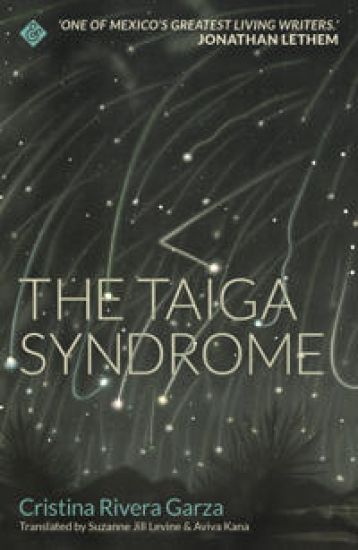
ste no es un cuento de hadas, detective -interrumpi otra vez-. sta es una historia de amor. De desamor -lo correg a mi vez. Una ex detective vuelve, despu s de mucho tiempo y bastantes fracasos, a aceptar un caso: encontrar y traer de vuelta a una mujer que abandon a su marido para huir con otro hombre hacia el interior de la taiga. Este marido traicionado est convencido, por un breve telegrama que recibi , que en realidad su segunda ex esposa quiere que l la encuentre. La ahora escritora de novelas negras contrata a un traductor para que se internen en ese bosque donde cosas extra as suceden, donde la realidad se distorsiona y donde la traducci n misma comienza a traicionar el sentido del lenguaje y de los sentidos. Se dice que la gente que vive en la taiga se vuelve loca por la desesperaci n de huir de ah . La taiga es monoton a y soledad, un territorio invadido por los primitivos excesos del capitalismo (acumulaci n y expulsi n, corrupci n y crueldad), aunque las lecciones de su viaje ser n m s vivenciales que morales: as como el amor puede volar, el desamor tambi n. A veces dejar todo atr s es lo nico que queda por hacer, porque hay algo que de verdad exista para siempre? ENGLISH DESCRIPTION "This isn't a fairy tale, detective," he interrupted again. "This is a story about love." "About indifference," I corrected in turn. An ex-detective returns, after a long time and many failures, to take on a case: find and bring back a woman who abandoned her husband to flee with another man into the taiga. This betrayed husband is convinced--thanks to a brief telegram he received--that in reality his second ex-wife wants to be found. The crime writer has hired a translator to live in the forest with her, where strange things happen, where reality becomes distorted, and where translation itself starts to betray the meaning of language and the senses. They say that the people who live in the taiga go crazy from the desperation to leave. The taiga is monotony and loneliness, a territory invaded by the primitive excesses of capitalism (accumulation and expulsion, corruption and cruelty), although the lessons of her journey will be more about survival than morals: just like love can fly, so can indifference. Sometimes leaving everything behind is the only thing left to do, because... does anything ever really last forever?
A fairy tale run amok, The Taiga Syndrome follows an unnamed Ex-Detective as she searches for a couple that has fled to the far reaches of the Earth. A betrayed husband is convinced by a brief telegram that his second ex-wife wants him to track her down - that she wants to be found. He hires the Ex-Detective, who sets out with a translator into a snowy, hostile forest where strange things happen and translation serves to betray both sense and the senses. The stories of Hansel and Gretel and Little Red Riding Hood haunt the Ex-Detective's quest. As she enters a territory overrun with the primitive excesses of capitalism - accumulation and expulsion, corruption and cruelty -the lessons of her journey unfold: that sometimes leaving everything behind is the only thing left to do.
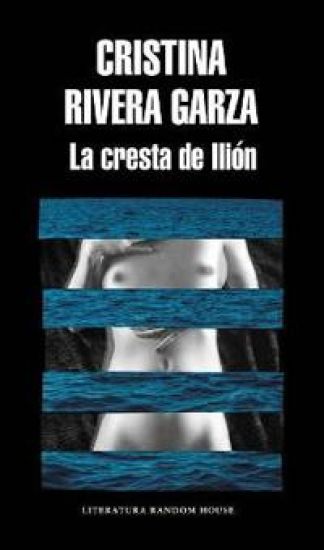
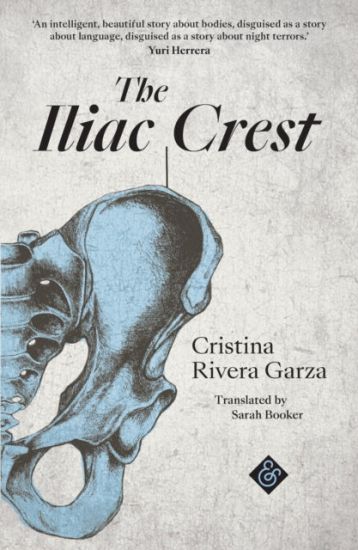
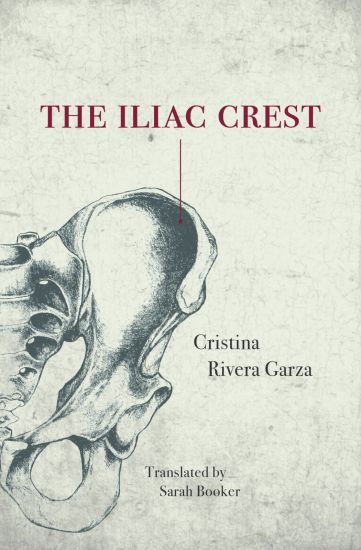
Un oscuro relato de terror sicol gico sobre los retos de enfrentar nuestra propia identidad, un texto que se mueve entre diversas fronteras y nos recuerda que, al final, s lo los huesos quedan para contar nuestra historia. Durante una inclemente noche de tormenta, alguien llama a la puerta de una casa ubicada en un agreste y solitario lugar frente al oc ano. Su due o, un m dico dedicado a paliar el dolor de los enfermos terminales, no imagina que su vida est a punto de cambiar de forma definitiva. Al abrir la puerta, dos mujeres misteriosas invaden su casa y someten a su anfitri n a un despiadado interrogatorio. Mientras que ellas muestran una extra a complicidad -e incluso hablan un lenguaje privado-, acosan al m dico repitiendo a cada instante que conocen su mayor secreto, uno que pone en riesgo su identidad. En esta nueva edici n revisada de La cresta de Ili n, Cristina Rivera Garza reitera su desaf o a la certidumbre en una historia de una nutrida imaginaci n que cuestiona los marcadores de g nero y experimenta con el lenguaje para explorar los miedos m s profundos. El resultado es un oscuro relato de terror sicol gico sobre los retos de enfrentar nuestra propia identidad, un texto que se mueve entre diversas fronteras y nos recuerda que, al final, s lo los huesos quedan para contar nuestra historia. «Cristina Rivera Garza reta lo que se espera de una escritora, de una novela y del lenguaje mismo. Es una rebelde. .- Yuri Herrera ENGLISH DESCRIPTION A dark psychological thriller about the challenges of facing our own identity; a text that moves between different frontiers and reminds us that, in the end, only bones remain to tell our stories. One dark and stormy night, two mysterious women invade an unnamed narrator's house, where they proceed to ruthlessly question their host's identity. While the women are strangely intimate―even inventing a secret language―they harass the narrator by repeatedly claiming that they know his greatest secret: that he is, in fact, a woman. As the increasingly frantic protagonist fails to defend his supposed masculinity, he eventually finds himself in a sanatorium. In this newly revised edition, Cristina Rivera Garza again challenges certainty in an imaginative story that questions gender markers and experiments with language to explore our darkest fears.
Fairy tale meets detective drama in this David Lynch-like novel by a writer Jonathan Lethem calls "one of Mexico's greatest . . . we are just barely beginning to catch up to what she has to offer." A fairy tale run amok, The Taiga Syndrome follows an unnamed Ex-Detective as she searches for a couple who has fled to the far reaches of the earth. A betrayed husband is convinced by a brief telegram that his second ex-wife wants him to track her down--that she wants to be found. He hires the Ex-Detective, who sets out with a translator into a snowy, hostile forest where strange things happen and translation betrays both sense and one's senses. Tales of Hansel and Gretel and Little Red Riding Hood haunt the Ex-Detective's quest into a territory overrun with the primitive excesses of Capitalism--accumulation and expulsion, corruption and cruelty--though the lessons of her journey are more experiential than moral: that just as love can fly away, sometimes unloving flies away as well. That sometimes leaving everything behind is the only thing left to do.
On a dark and stormy night, an unnamed narrator is visited by two women: one a former lover, the other a stranger. They ruthlessly question their host and claim to know his greatest secret: that he is, in fact, a woman. In increasingly desperate attempts to defend his masculinity, perplexed by the stranger’s dubious claims to be the writer Amparo Dávila, he finds himself spiralling deeper into a haunted past that may or may not be his own. This surreal novel enfolds a masterful exploration of gender in taut, atmospheric mystery.
On a dark and stormy night, two mysterious women invade an unnamed narrator's house, where they proceed to ruthlessly question their host's gender and identity. The increasingly frantic protagonist fails to defend his supposed masculinity and eventually finds himself in a sanatorium. A Gothic tale of destabilized male-female binaries and subverted literary tropes, this is the book's first English publication.