Kirjojen hintavertailu – 12 903 735 kirjaa ja 27 kauppaa

Kirjailija

Csaba Varga

Kirjat ja teokset yhdessä paikassa: 12 kirjaa, julkaisuja vuosilta 2001–2021, suosituimpiin kuuluu Zeichen - Buchstaben - Zahlen. Vertaile teosten hintoja ja tarkista saatavuus suomalaisista kirjakaupoista.

12 kirjaa

Kirjojen julkaisuvuodet: 2001–2021.

Variational and Monotonicity Methods in Nonsmooth Analysis

Variational and Monotonicity Methods in Nonsmooth Analysis

Nicusor Costea; Alexandru Kristály; Csaba Varga

Springer Nature Switzerland AG
2021
nidottu
This book provides a modern and comprehensive presentation of a wide variety of problems arising in nonlinear analysis, game theory, engineering, mathematical physics and contact mechanics. It includes recent achievements and puts them into the context of the existing literature. The volume is organized in four parts. Part I contains fundamental mathematical results concerning convex and locally Lipschits functions. Together with the Appendices, this foundational part establishes the self-contained character of the text. As the title suggests, in the following sections, both variational and topological methods are developed based on critical and fixed point results for nonsmooth functions. The authors employ these methods to handle the exemplary problems from game theory and engineering that are investigated in Part II, respectively Part III. Part IV is devoted to applications in contact mechanics. The book will be of interest to PhD students and researchers in applied mathematics as well as specialists working in nonsmooth analysis and engineering.
The Origin of Intellect

The Origin of Intellect

Csaba Varga

Createspace Independent Publishing Platform
2013
nidottu
The writer introduces you to finds, reminders of cultural products created in prehistoric times. Some archaeological finds contain drawings, writings, numerals made partially 20-30.000 years ago. We can see petrified human foot prints together wit that of dinosaurs. A three million years old human skeleton was found looking like we do. There are remnants of very old cultures we never learned about. Darwin said once, if somebody brings him just one example contradicting his theory, he would call his theory as not valid. By now, numerous finds contradicting Darwin's theory are known to our scientists, but of our children still have to grow up with this hypothetic, in many ways wrong teaching. We have to review our school books finally. This book contains 250 pictures and presents even alternate theories of our past "evolution".
Variational Principles in Mathematical Physics, Geometry, and Economics

Variational Principles in Mathematical Physics, Geometry, and Economics

Alexandru Kristály; Vicentiu D. Radulescu; Csaba Varga

Cambridge University Press
2010
sidottu
This comprehensive introduction to the calculus of variations and its main principles also presents their real-life applications in various contexts: mathematical physics, differential geometry, and optimization in economics. Based on the authors' original work, it provides an overview of the field, with examples and exercises suitable for graduate students entering research. The method of presentation will appeal to readers with diverse backgrounds in functional analysis, differential geometry and partial differential equations. Each chapter includes detailed heuristic arguments, providing thorough motivation for the material developed later in the text. Since much of the material has a strong geometric flavor, the authors have supplemented the text with figures to illustrate the abstract concepts. Its extensive reference list and index also make this a valuable resource for researchers working in a variety of fields who are interested in partial differential equations and functional analysis.
Our Words From The Past

Our Words From The Past

Csaba Varga

Createspace Independent Publishing Platform
2010
nidottu
Etymological comparison of word-samples out of different languages. "And the whole earth was of one language and of one speech". (Genesis I.11.1) Where did this language develop?, What kind of language was it? Is it still around? Supposedly we found it - what's the proof of it being the mother of all languages? - We will find the answers for all these questions by reading this book and following the author's sharp logic.
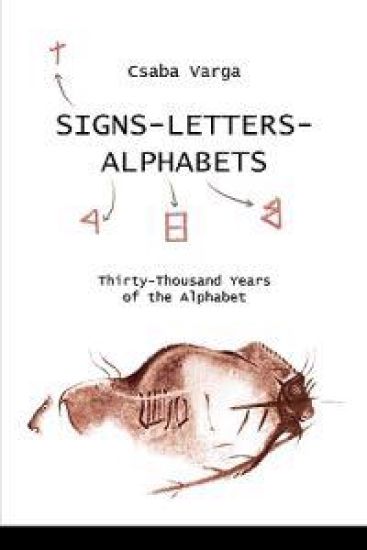
Zeichen - Buchstaben - Zahlen

Zeichen - Buchstaben - Zahlen

Csaba Varga

Peter Lang Gmbh, Internationaler Verlag Der Wissenschaften
2010
nidottu
Ein berraschendes Buch, das Geschichte machen wird Es erschlie t uns versunken geglaubte Welten, die uns pl tzlich ganz nah erscheinen. Das Buch behandelt die Geschichte der Schrift. Diese geht mindestens auf 30.000 Jahre zur ck, wie uns der Autor in akribischer und spannender Kleinarbeit erkl rt. Mit viel Sp rsinn erzeugt Varga ein Raster, mit dem er die Zeichen der Vergangenheit untr glich nach ihren Anf ngen abtasten kann. Er f hrt uns bildhaft vor, dass die Grundlage des Alphabets der gro en Kulturen auf die Kerbschrift des fr hen Karpaten-Beckens zur ckf hrbar ist. Das beweist eine viel intensivere Kommunikation der Kulturen der Vorzeit und des Altertums als bisher angenommen. Der Autor f hrt uns vor Augen, dass sich der Mensch bereits vor 20.000-30.000 Jahren uns hnlich verhielt. Die Zeichen der Vorzeit verraten zudem das von Weisheit gepr gte Weltbild jener Menschen. Das Buch ist in einer Sprache verfasst, die es auch f r den wissenschaftlich interessierten Laien spannend und unterhaltsam macht.
The Living Language of the Stone Age: "The proto-nostratic" language of prehistoric times"
All languages of Eurasia and some aboriginal languages in America contain more or less remnants of the archaic, so-called "proto-nostratic" language, the first(?) one of humanity, the language of the Stone-Age, of prehistoric times. Our culture, customs and religions are the product of the archaic culture, the creator of this language. The author invites you to explore this archaic but up-to-date language. One of the most impressive recognition in the book is that "the word of the Stone Age man is a picture". Those early ancestors told pictures to each other, loudly expressed pictures.