
Kirjojen hintavertailu – 12 903 724 kirjaa ja 27 kauppaa

Kirjailija

Curt D. Furberg

Kirjat ja teokset yhdessä paikassa: 3 kirjaa, julkaisuja vuosilta 2007–2015, suosituimpiin kuuluu Fundamentals of Clinical Trials. Vertaile teosten hintoja ja tarkista saatavuus suomalaisista kirjakaupoista.

3 kirjaa

Kirjojen julkaisuvuodet: 2007–2015.

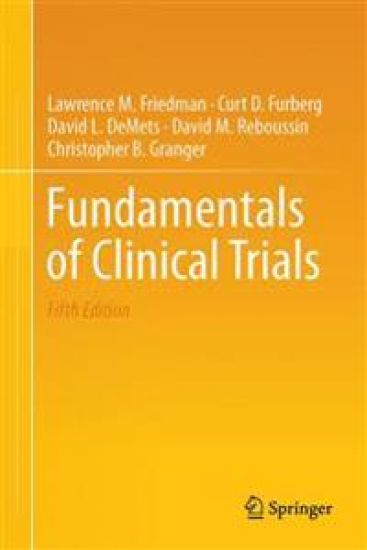
Fundamentals of Clinical Trials

Fundamentals of Clinical Trials

Lawrence M. Friedman; Curt D. Furberg; David L. DeMets; David M. Reboussin; Christopher B. Granger

Springer International Publishing AG
2015
sidottu
This is the fifth edition of a very successful textbook on clinical trials methodology, written by recognized leaders who have long and extensive experience in all areas of clinical trials. The three authors of the first four editions have been joined by two others who add great expertise. A chapter on regulatory issues has been included and the chapter on data monitoring has been split into two and expanded. Many contemporary clinical trial examples have been added. There is much new material on adverse events, adherence, issues in analysis, electronic data, data sharing and international trials. This book is intended for the clinical researcher who is interested in designing a clinical trial and developing a protocol. It is also of value to researchers and practitioners who must critically evaluate the literature of published clinical trials and assess the merits of each trial and the implications for the care and treatment of patients. The authors use numerous examplesof published clinical trials to illustrate the fundamentals. The text is organized sequentially from defining the question to trial closeout. One chapter is devoted to each of the critical areas to aid the clinical trial researcher. These areas include pre-specifying the scientific questions to be tested and appropriate outcome measures, determining the organizational structure, estimating an adequate sample size, specifying the randomization procedure, implementing the intervention and visit schedules for participant evaluation, establishing an interim data and safety monitoring plan, detailing the final analysis plan and reporting the trial results according to the pre-specified objectives. Although a basic introductory statistics course is helpful in maximizing the benefit of this book, a researcher or practitioner with limited statistical background would still find most if not all the chapters understandable and helpful. While the technical material has been kept to aminimum, the statistician may still find the principles and fundamentals presented in this text useful.
Fundamentals of Clinical Trials

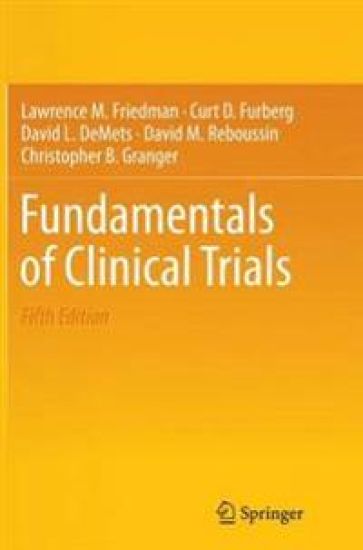
Fundamentals of Clinical Trials

Lawrence M. Friedman; Curt D. Furberg; David L. DeMets; David M. Reboussin; Christopher B. Granger

Springer International Publishing AG
2015
nidottu

Halvin toimitettuna 64,50 €

This is the fifth edition of a very successful textbook on clinical trials methodology, written by recognized leaders who have long and extensive experience in all areas of clinical trials. The three authors of the first four editions have been joined by two others who add great expertise. A chapter on regulatory issues has been included and the chapter on data monitoring has been split into two and expanded. Many contemporary clinical trial examples have been added. There is much new material on adverse events, adherence, issues in analysis, electronic data, data sharing and international trials. This book is intended for the clinical researcher who is interested in designing a clinical trial and developing a protocol. It is also of value to researchers and practitioners who must critically evaluate the literature of published clinical trials and assess the merits of each trial and the implications for the care and treatment of patients. The authors use numerous examplesof published clinical trials to illustrate the fundamentals. The text is organized sequentially from defining the question to trial closeout. One chapter is devoted to each of the critical areas to aid the clinical trial researcher. These areas include pre-specifying the scientific questions to be tested and appropriate outcome measures, determining the organizational structure, estimating an adequate sample size, specifying the randomization procedure, implementing the intervention and visit schedules for participant evaluation, establishing an interim data and safety monitoring plan, detailing the final analysis plan and reporting the trial results according to the pre-specified objectives. Although a basic introductory statistics course is helpful in maximizing the benefit of this book, a researcher or practitioner with limited statistical background would still find most if not all the chapters understandable and helpful. While the technical material has been kept to aminimum, the statistician may still find the principles and fundamentals presented in this text useful.

Evaluating Clinical Research

Evaluating Clinical Research

Bengt D. Furberg; Curt D. Furberg

Springer-Verlag New York Inc.
2007
nidottu
The objective of this book is to make its readers better informed and more critical consumers of clinical research to help them recognize the strengths and the weaknesses of scientific publications. In doing so, the reader will be able to distinguish patient-important and methodologically sound studies from those having limitations in design, conduct and interpretation. There are no prerequisites for reading this book. The text is basic and has no statistical formulas. Key take-home messages are listed at the end of each chapter. The large number of cartoons has two purposes: First, to make the text easier to read and generate a few laughs and, second, to underscore specific points, sometimes in a provocative way.