Kirjojen hintavertailu – 12 859 828 kirjaa ja 27 kauppaa
Kirjailija
Curtis M. Grimm
Kirjat ja teokset yhdessä paikassa: 2 kirjaa, julkaisuja vuosilta 1990–2005, suosituimpiin kuuluu The Economic Effects of Surface Freight Deregulation. Vertaile teosten hintoja ja tarkista saatavuus suomalaisista kirjakaupoista.
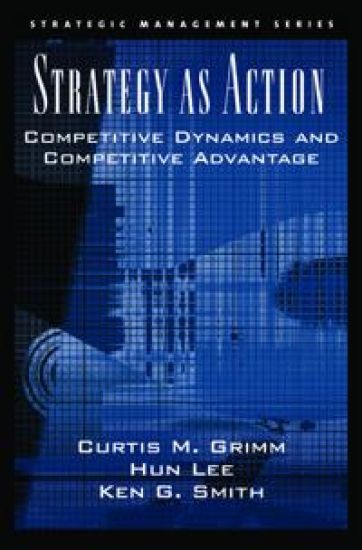
Strategy as Action presents an action plan for how firms can build, improve, and defend their competitive advantage at every stage of their life cycle. For start-up firms entering a market, it provides a model for exploiting competitve uncertainty and blind spots; for growth firms who have established some market advantages, it provides an action plan for exploiting relative resources; for mature firms, it explains how to exploit market position; finally, for firms that have no decisive resource advantage, it provides an action plan based on firm co-operative reactions.
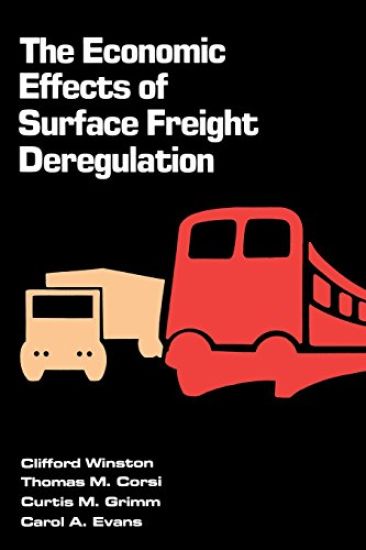
For close to 100 years, America's surface freight industries, primarily rail and trucking, operated under the protective wing of the U. S. government. In 1980 Congress, finding vast inefficiencies in the two industries, substantially deregulated both, opening them at last to market competition. Deregulation has brought with it many changes?for firms within the industries, for their labor force, and for shippers and their customers. Clifford Winston, Thomas M. Corsi, Curtis M. Grimm, and Carol A Evans provide a comprehensive evaluation of the effect of the deregulation legislation on the rail and trucking industries. According to the authors, deregulation has made substantial progress in solving the two most vexing problems of the surface freight transportation industry?excessive rates in the trucking industry and insufficient returns on investment in the rail industry. Competition and efficiency have returned to both industries, and although the labor force in each has suffered wage and job losses, shippers and their customers have gained roughly $20 billion a year in benefits. The authors recommend policies that would continue to promote competition and the efficient use of highway and railway infrastructure.