Kirjojen hintavertailu – 12 903 735 kirjaa ja 27 kauppaa
Kirjailija
Cynthia Baron
Kirjat ja teokset yhdessä paikassa: 5 kirjaa, julkaisuja vuosilta 2008–2020, suosituimpiin kuuluu Acting Indie. Vertaile teosten hintoja ja tarkista saatavuus suomalaisista kirjakaupoista.
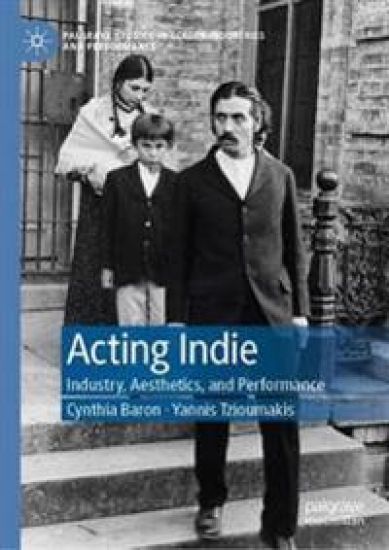
This book illustrates the many ways that actors contribute to American independent cinema. Analyzing industrial developments, it examines the impact of actors as writers, directors, and producers, and as stars able to attract investment and bring visibility to small-scale productions. Exploring cultural-aesthetic factors, the book identifies the various traditions that shape narrative designs, casting choices, and performance styles. The book offers a genealogy of industrial and aesthetic practices that connects independent filmmaking in the studio era and the 1960s and 1970s to American independent cinema in its independent, indie, indiewood, and late-indiewood forms. Chapters on actors’ involvement in the evolution of American independent cinema as a sector alternate with chapters that show how traditions such as naturalism, modernism, postmodernism, and Third Cinema influence films and performances.
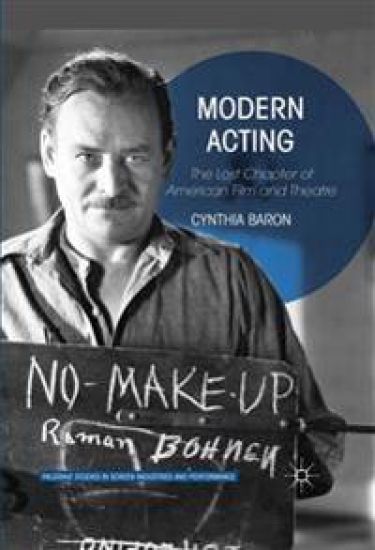
Everyone has heard of Method acting . . . but what about Modern acting? This book makes the simple but radical proposal that we acknowledge the Modern acting principles that continue to guide actors’ work in the twenty-first century. Developments in modern drama and new stagecraft led Modern acting strategies to coalesce by the 1930s – and Hollywood’s new role as America’s primary performing arts provider ensured these techniques circulated widely as the migration of Broadway talent and the demands of sound cinema created a rich exchange of ideas among actors. Decades after Strasberg’s death in 1982, he and his Method are still famous, while accounts of American acting tend to overlook the contributions of Modern acting teachers such as Josephine Dillon, Charles Jehlinger, and Sophie Rosenstein. Baron’s examination of acting manuals, workshop notes, and oral histories illustrates the shared vision of Modern acting that connects these little-known teachers to the landmark work of Stanislavsky. It reveals that Stella Adler, long associated with the Method, is best understood as a Modern acting teacher and that Modern acting, not Method, might be seen as central to American performing arts if the Actors’ Lab in Hollywood (1941-1950) had survived the Cold War.
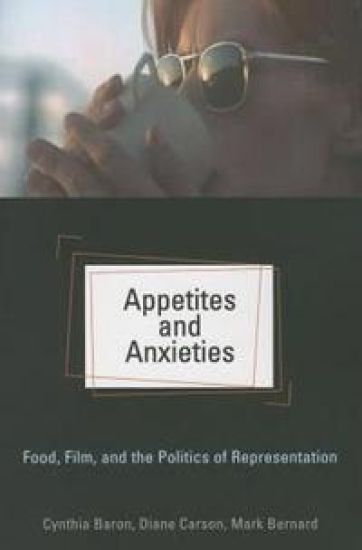
Cinema is a mosaic of memorable food scenes. Detectives drink alone. Gangsters talk with their mouths full. Families around the world argue at dinner. Food documentaries challenge popular consumption-centred visions. In Appetites and Anxieties: Food, Film, and the Politics of Representation, authors Cynthia Baron, Diane Carson, and Mark Bernard use a foodways paradigm, drawn from the fields of folklore and cultural anthropology, to illuminate film's cultural and material politics. In looking at how films do and do not represent food procurement, preparation, presentation, consumption, clean-up, and disposal, the authors bring the pleasures, dangers, and implications of consumption to centre stage. In nine chapters, Baron, Carson, and Bernard consider food in fiction films and documentaries-from both American and international cinema. The first chapter examines film practice from the foodways perspective, supplying a foundation for the collection of case studies that follow. Chapter 2 takes a political economy approach as it examines the food industry and the film industry's policies that determine representations of food in film. In chapter 3, the authors explore food and food interactions as a means for creating community in Bagdad Café, while in chapter 4 they take a close look at 301/302, in which food is used to mount social critique. Chapter 5 focuses on cannibal films, showing how the foodways paradigm unlocks the implications of films that dramatise one of society's greatest food taboos. In chapter 6, the authors demonstrate ways that insights generated by the foodways lens can enrich genre and auteur studies. Chapter 7 considers documentaries about food and water resources, while chapter 8 examines food documentaries that slip through the cracks of film censorship by going into exhibition without an MPAA rating. Finally, in chapter 9, the authors study films from several national cinemas to explore the intersection of food, gender, and ethnicity. Four appendices provide insights from a food stylist, a selected filmography of fiction films and a filmography of documentaries that feature foodways components, and a list of selected works in food and cultural studies. Scholars of film studies and food studies will enjoy the thought-provoking analysis of Appetites and Anxieties.
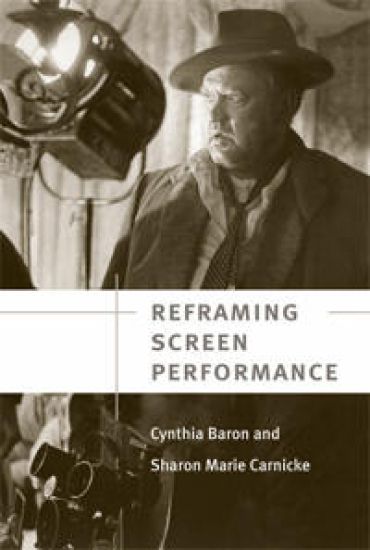
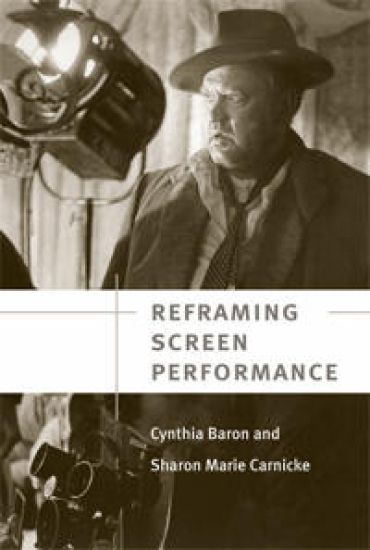
"A significant contribution to the literature on screen performance studies, Reframing Screen Performance brings the study of film acting up to date. It should be of interest to those within cinema studies as well as general readers."---Frank P. Tomasulo, Florida State UniversityReframing Screen Performance is a groundbreaking study of film acting that challenges the long held belief that great cinematic performances are created in the editing room. Surveying the changing attitudes and practices of film acting---from the silent films of Charlie Chaplin to the rise of Lee Strasberg's Actor's Studio in the 1950s to the eclecticism found in contemporary cinema---this volume argues that screen acting is a vital component of film and that it can be understood in the same way as theatrical performance. This richly illustrated volume shows how and why the evocative details of actors' voices, gestures, expressions, and actions are as significant as filmic narrative and audiovisual design. The book features in-depth studies of performances by Anjelica Huston, John Cusack, and Julianne Moore (among others) alongside subtle analyses of directors like Robert Altman and Akira Kurosawa, Sally Potter and Orson Welles. The book bridges the disparate fields of cinema studies and theater studies as it persuasively demonstrates the how theater theory can be illuminate the screen actor's craft. Reframing Screen Performance brings the study of film acting into the twenty-first century and is an essential text for actors, directors, cinema studies scholars, and cinephiles eager to know more about the building blocks of memorable screen performance. Cynthia Baron is Associate Professor of Film Studies at Bowling Green State University and co-editor of More Than a Method: Trends and Traditions in Contemporary Film Performance. Sharon Carnicke is Professor of Theater and Slavic Studies and Associate Dean of Theater at the University of Southern California and author of Stanislavsky in Focus.
"A significant contribution to the literature on screen performance studies, Reframing Screen Performance brings the study of film acting up to date. It should be of interest to those within cinema studies as well as general readers."---Frank P. Tomasulo, Florida State UniversityReframing Screen Performance is a groundbreaking study of film acting that challenges the long held belief that great cinematic performances are created in the editing room. Surveying the changing attitudes and practices of film acting---from the silent films of Charlie Chaplin to the rise of Lee Strasberg's Actor's Studio in the 1950s to the eclecticism found in contemporary cinema---this volume argues that screen acting is a vital component of film and that it can be understood in the same way as theatrical performance. This richly illustrated volume shows how and why the evocative details of actors' voices, gestures, expressions, and actions are as significant as filmic narrative and audiovisual design. The book features in-depth studies of performances by Anjelica Huston, John Cusack, and Julianne Moore (among others) alongside subtle analyses of directors like Robert Altman and Akira Kurosawa, Sally Potter and Orson Welles. The book bridges the disparate fields of cinema studies and theater studies as it persuasively demonstrates the how theater theory can be illuminate the screen actor's craft. Reframing Screen Performance brings the study of film acting into the twenty-first century and is an essential text for actors, directors, cinema studies scholars, and cinephiles eager to know more about the building blocks of memorable screen performance. Cynthia Baron is Associate Professor of Film Studies at Bowling Green State University and co-editor of More Than a Method: Trends and Traditions in Contemporary Film Performance. Sharon Carnicke is Professor of Theater and Slavic Studies and Associate Dean of Theater at the University of Southern California and author of Stanislavsky in Focus.