Kirjojen hintavertailu – 12 859 827 kirjaa ja 27 kauppaa
Kirjailija
Cynthia R. Comacchio
Kirjat ja teokset yhdessä paikassa: 4 kirjaa, julkaisuja vuosilta 1998–2024, suosituimpiin kuuluu The Infinite Bonds of Family. Vertaile teosten hintoja ja tarkista saatavuus suomalaisista kirjakaupoista.
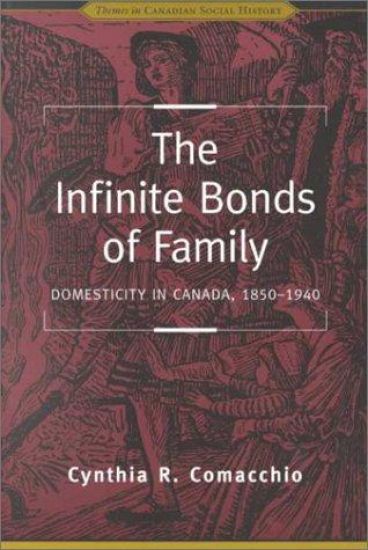
The history of the family is a relatively new, yet rapidly developing area of academic study. With this book, Cynthia Comacchio presents the first historical overview of domestic life in Canada. According to Comacchio, the social anxiety resulting from an ongoing perception of the family as being 'in crisis' has had a significant influence on evolving social policy. Comacchio shows how families have both changed and remained the same, through transitions brought about by urbanization, industrialization, and war. Her many stories of individual families highlight both historical trends and the more intimate issues related to race, gender, class, region, and age. This is the only synthesis to date of the historical literature on Canadian families. Designed for students at graduate and undergraduate levels, it not only introduces the key concepts and approaches of a developing field of study, but also summarizes the major issues and trends that affected Canadian families from 1850 to1940.
The history of the family is a relatively new, yet rapidly developing area of academic study. With this book, Cynthia Comacchio presents the first historical overview of domestic life in Canada. According to Comacchio, the social anxiety resulting from an ongoing perception of the family as being 'in crisis' has had a significant influence on evolving social policy. Comacchio shows how families have both changed and remained the same, through transitions brought about by urbanization, industrialization, and war. Her many stories of individual families highlight both historical trends and the more intimate issues related to race, gender, class, region, and age. This is the only synthesis to date of the historical literature on Canadian families. Designed for students at graduate and undergraduate levels, it not only introduces the key concepts and approaches of a developing field of study, but also summarizes the major issues and trends that affected Canadian families from 1850 to1940.
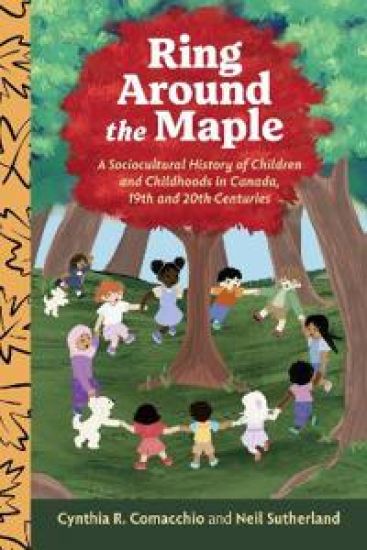
Ring Around the Maple is about the condition of children in Canada from roughly 1850 to 2000, a time during which “the modern” increasingly disrupted traditional ways. Authors Cynthia R. Comacchio and Neil Sutherland trace the lives of children over this “long century” with a view to synthesizing the rich interdisciplinary, often multi-disciplinary, literature that has emerged since the 1970s. Integrated into this synthesis is the authors’ new research into many, often seemingly disparate, archival and published primary sources. Emphasizing how “the child” and childhood are sociohistoric constructs, and employing age analytically and relationally, they discuss the constants and the variants in their historic dimensions. While childhood tangibly modernized during these years, it remained a far from universal experience due to identifiers of race, gender, culture, region, and intergenerational adaptations that characterize the process of growing up. This work highlights children’s perspectives through close, critical, “against the grain” readings of diaries, correspondence, memoirs, interviews, oral histories and autobiographies, many buried in obscure archives. It is the only extant historical discussion of Canadian children that interweaves the experiences of First Nations, Métis, and Inuit children with those of children from a number of settler groups. Ring Around the Maple makes use of photographs, catalogues, advertisements, government publications, musical recordings, radio shows, television shows, material goods, documentary and feature films, and other such visual and aural testimony. Much of this evidence has not to date been used as historical testimony to uncover the lives of ordinary children. This book is generously illustrated with photographs and ephemera carefully selected to reflect children’s lives, conditions, interests, and obligations. It will be of special interest to historians and social scientists interested in children and the culture of childhood, but will also appeal to readers who enjoy the "little stories" that together make up our collective history, especially when those are told by the children who lived them.
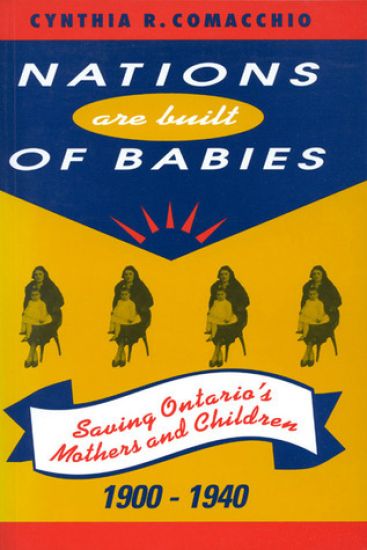
This volume is a study of the campaign, designed and led by physicians, to reduce infant and maternal mortality in early-20th-century Ontario. Against a background of socio-economic transformation, infant and maternal mortality were identified as public health problems of national significance. Cynthia Comacchio examines the evolving relationships between medicine, mothers, families and the state within the context of modernization. Armed with a secure faith in science and aided by the increasingly important position of experts in Canadian society, the medical profession tackled the "national tragedy" of infant and maternal mortality by advocating "scientific motherhood". Canadian mothers were believed to be handicapped by an ignorance which could be remedied only through expert tutoring and supervision of child-rearing duties. Medical information about child health and child-rearing methods was provided to mothers through state-sponsored advice literature, diagnostic clinics and visiting nurse services. The book demonstrates that the attempt to save infants and mothers from unnecessary death was part of a conscious plan to modernize Canadian families to meet the ideological imperatives of industrial capitalism. It was believed that ensuring both social reproduction and economic productivity required that the necessary values be instilled at the earliest possible moment. If infants could be saved and their physical, mental, and moral health regulated, doctors reasoned, the benefits in socio-economic terms would more than offset any individual or state investment. The largely male medical profession, as respected members of the dominant class, upheld a vision of the healthy "modern" family that nonetheless left its traditional structure and gender relations intact. Working within a Marxist-feminist framework, the author draws on a wide variety of sources, including advice literature, popular magazines, government reports, medical and nursing journals, and municipal, provincial and national archives.