Kirjailija
D.T. Suzuki
Kirjat ja teokset yhdessä paikassa: 10 kirjaa, julkaisuja vuosilta 1974–2025, suosituimpiin kuuluu Zen Buddhism and Psychoanalysis. Vertaile teosten hintoja ja tarkista saatavuus suomalaisista kirjakaupoista.
Nimi esiintyy myös muodoissa: D. T. Suzuki, D T Suzuki
10 kirjaa
Kirjojen julkaisuvuodet: 1974–2025.
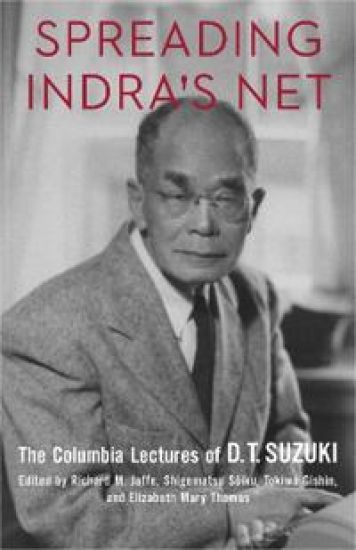
D. T. Suzuki’s 1950s lectures at Columbia University were foundational for the postwar Zen boom. Speaking softly in a bookcase-lined room, Suzuki, then in his eighties, introduced East Asian Buddhism to a rapt audience of the general public, scholars, and students. He offered a distinctive interpretation of Zen, weaving together his understanding of classical Buddhist texts, especially the Flower Garland Sutra, with Christian mysticism, psychology, and twentieth-century European and American philosophy. The freewheeling lectures captivated listeners drawn from the New York intelligentsia and art world—including Carolyn Brown, John Cage, Arthur Danto, Sari Dienes, Erich Fromm, Phillip Guston, Ibram Lassaw, and Dorothy Norman—and catalyzed public interest in Buddhism. Spreading Indra’s Net presents Suzuki’s 1952–1953 lectures in full, giving a vivid look at how one of the most important global Buddhist figures of the twentieth century interpreted Zen for an American audience. Drawing on archival research in Japan and the United States, editor Richard M. Jaffe provides an extensive introduction that traces Suzuki’s path to Columbia, analyzes the content of the lectures, and surveys their reception. Among the most accessible works of a major figure and a record of a crucial moment in New York history, this book displays Suzuki’s gifts as a teacher, scholar, writer, and thinker.
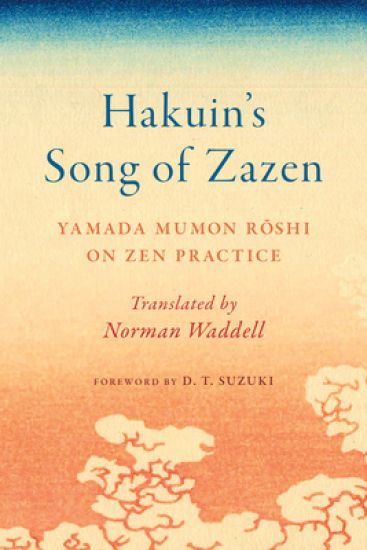
Hakuin's Song of Zazen
Yamada Mumon Roshi; D. T. Suzuki
SHAMBHALA PUBLICATIONS INC
2024
nidottu
Halvin toimitettuna 26,80 €
Renowned modern Zen master Yamada Mumon Rōshi uses Hakuin's famous poem of spiritual realization, Song of Zazen, as a starting point to embark on a lively commentary on Zen practice in contemporary life. First published in Japan in 1962, Hakuin's Song of Zazen is a celebrated collection of short essays by Zen master Yamada Mumon Rōshi. Translated into English for the first time, it introduces the story of Hakuin's early life and training, then uses his classic Zen chanting poem, Song of Zazen, to make wide-ranging considerations of the Zen tradition and its applications in modern Japanese life. As Daisetz Suzuki remarks in his foreword, what gives Mumon's book its unique flavor and makes it different from previous works by Zen teachers are his forays into matters of ordinary, everyday life, expanding his Zen teaching to encompass interests that are closely linked with his lay audience. He responds to a news article that catches his eye in the morning paper, delivers criticism on contemporary political and social trends, explores matters as diversified as the uses of atomic energy, the court culture of seventeenth-century France, a leper hospital on an island in the Inland Sea, Albert Schweitzer and other noted Western figures--and more. In doing this Mumon gives readers open access to the opinions, judgements, and practical thinking of a leading Zen master--a map of his planet, so to speak. Each brief chapter of Mumon's book is an invitation to follow Hakuin and himself down the path of true Zen realization.
A collection of the most important essays of D. T. Suzuki, the leading authority on Buddhism of the twentieth century.
If the Western world knows anything about Zen Buddhism, it is down to the efforts of one remarkable man, D. T. Suzuki. The twenty-seven year-old Japanese scholar first visited the West in 1897, and over the course of the next seventy years became the world's leading authority on Zen. His radical and penetrating insights earned him many disciples, from Carl Jung to Allen Ginsberg, from Thomas Merton to John Cage. In Mysticism: Christian and Buddhist Suzuki compares the teachings of the great Christian mystic Meister Eckhart with the spiritual wisdom of Shin and Zen Buddhism. By juxtaposing cultures that seem to be radically opposed, Suzuki raises one of the fundamental questions of human experience: at the limits of our understanding is there an experience that is universal to all humanity? Mysticism: Christian and Buddhist is a book that challenges and inspires; it will benefit readers of all religions who seek to understand something of the nature of spiritual life.
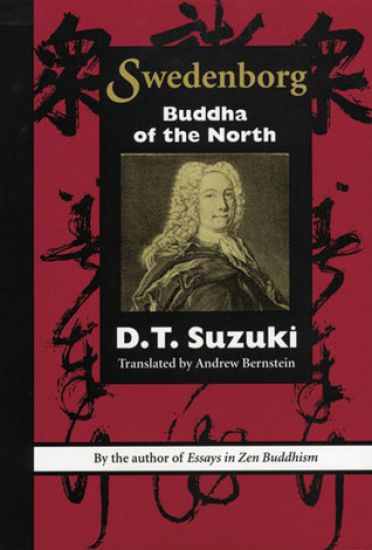
The first complete English translation of two works by Zen scholar D. T. Suzuki introduces Emanuel Swedenborg and compares Swedenborgian thought to Buddhism. The first work stresses Swedenborg's message that true spirituality demands an engagement in this world; the second compares Swedenborg's description of heaven to the paradise of Pure Land Buddhism.
Introduction To Zen Buddhism
D T Suzuki; Daisetz Teitaro Suzuki
Ebury Press
1991
pokkari
Halvin toimitettuna 21,80 €
This reissued introduction presents the nature, technique and practice of Zen. A Japanese Zen master, Dr Suzuki taught regularly in the USA and Europe.
Zen Buddhism and Psychoanalysis
Erich Fromm; Richard De Martino; D.T. Suzuki
Souvenir Press Ltd
1974
nidottu
Halvin toimitettuna 21,20 €
The key book in our quest for understanding of ourselves and our lives. What differences are there in Eastern and Western thought regarding the nature of the human mind and our role in the cosmos? How can Zen and psychoanalysis help us in our struggle to realise our full potential as human beings and members of society? Erich Fromm's seminal work among contemporary efforts to resolve our spiritual crisis results here in the great achievement of a language to reveal the contributions of Zen and psychoanalysis to our 'struggle to be fully born'. He shows how both can teach us in their different ways to live our lives rather than be 'lived by them'. The book includes material from D. T. Suzuki, who explains with profound and gentle wisdom how Western materialism and intellectualism contrast with the Eastern concept of acceptance as the basis of well-being for the 'whole man'. His illuminating discussion of the unconscious and the self shed fresh light on our understanding of our own nature. Combined with Richard De Martino's clear account of the psychology of Zen, these writings make up a work of brilliance and value that has much to help us in our quest for understanding.