

Kirjailija
Dacia Maraini
Kirjat ja teokset yhdessä paikassa: 32 kirjaa, julkaisuja vuosilta 1993–2026, suosituimpiin kuuluu Querido Pier Paolo. Vertaile teosten hintoja ja tarkista saatavuus suomalaisista kirjakaupoista.
32 kirjaa
Kirjojen julkaisuvuodet: 1993–2026.
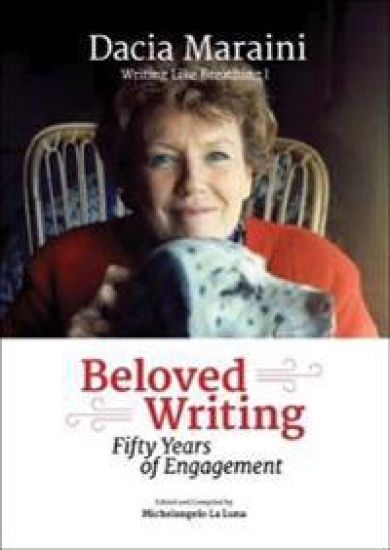
Dacia Maraini is today's most prominent Italian writer. She's won, among others, both Campiello and Strega prizes, which are the most prestigious Italian literature awards. Her books have been translated into 22 languages and some of her bestsellers - such as Storia di Piera [Piera's Story], L'eta del malessere [The Age of Malaise], La lunga vita di Marianna Ucria [The Silent Duchess], Voci [Voices], and Memorie di una ladra [Memories of a Thief] - were turned into successful movies. Writing like Breathing is a unique collection comprising some of her most important works, the majority of which have never been translated into English. The series is divided into four major volumes that are meant to give a full picture of Maraini's production from 1962 to the present: I. Autobiography, novels, short stories and poems; II. Plays; III. Articles; IV. Essays, talks and interviews. Writing like Breathing shows how the finest Italian woman writer alive today has embraced and fought for a vast number of issues: women's rights, abuse of women and children, emigration, discrimination, politics, the Holocaust, among many others. Moreover, this collection of Maraini's autobiographies, novels, short stories, and poems, emphasises the author's long relationship with Japan and the United States, countries to which she has devoted several books and articles, both autobiographical and fictional. Some unpublished manuscripts enrich this unique first volume: two short stories ("A Christmas in the Snow Globe" and "Aylan") and three poems ("At Night", "Rome", "Like Sea Bass Underwater"). The other volumes contain unpublished plays ("Diotima and Socrates," "My Name is Antonino Calderone," "Celia Carli, Ornithologist", and "Lia, Who Thought Herself Antigone"), essays, talks, conversations, and interviews given by the author at American universities.
The collection includes four theatrical works of acclaimed Italian author, Dacia Maraini, in a dual-language format (Italian/English). The works have been chosen around the themes of distress, exclusion, and various manifestations of tragedy with particular reference to women. The works were chosen within a modern and a historical reference in order to give breadth to the main themes. The individual works include: (a) Stravaganza/Extravagance. The unfolding drama alludes to the Legge Basaglia (the so-called Basaglia Law, 180/1978), whose prescriptions included the closure of insane asylums throughout Italy; (b) Camille. In this piece, Maraini offers a reinterpretation of the storied and controversial relationship between the sculptor, Auguste Rodin, and his young apprentice/assistant, Camille Claudel; (c) Storia di Isabella di Morra raccontata da Benedetto Croce/The Story of Isabella di Morra as Told by Benedetto Croce. In this play, the power of literature and the written word (the implicit, culpable “character” in this play) culminates in atrocious homicide; (d) I digiuni di Catarina da Siena/The Fasting of Catherine of Siena. Powerful relationships dominate this account of Saint Catherine’s profound religiosity.
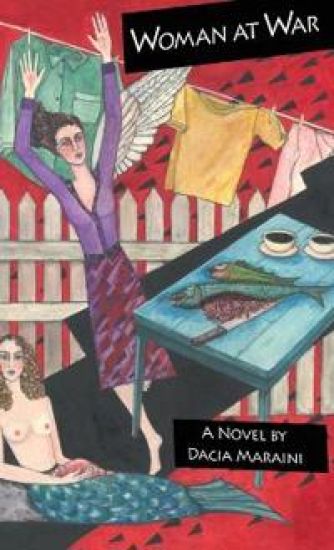
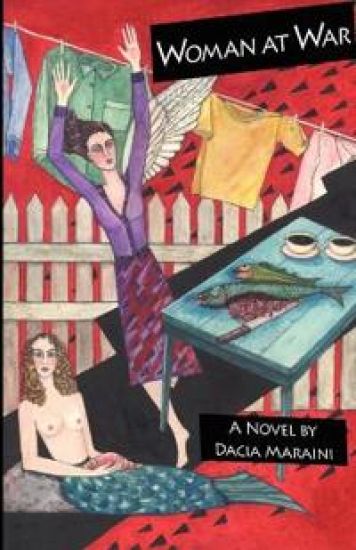
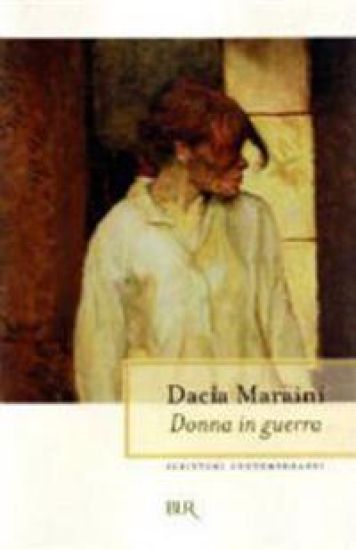
WOMAN AT WAR is the diary of a woman's growing self-awareness. Beginning as a passively absent narrator, Vannina encounters a fascinating array of characters during the holiday she takes on an island in the Bay of Naples with her husband, Giacinto. When he returns to work in a garage in Rome, Vannina travels to Naples with Suna, a friend she has made on vacation. This startling character opens Vannina to the possibility of finding love through other women and helps her reject the role of serving coffee to the men who would change the world through violence. Back in Rome, Vannina rejects her former life and moves toward complete, if difficult, independence. Maraini's writing is superb. Its warm and sensual style gives life to details: the food of the Mediterranean, the smell of its herbs, the acts of making coffee and making love, the step-by-step journey of an individual to self-awareness, self-reliance and independence. Everything is vivid and vibrant. Maraini's women grow in strength beyond the clamor of political slogans. The values of understanding, intuition and compassion effect real change that transcends the wearisome struggle between the chauvinisms of the political Right and the political correctness of the Left. A milestone in Italian literature.
In Italy, as in most Western cultures, the 1960s was a dynamic and turbulent decade of social change. Dacia Maraini, in this short story collection, explores the vexing, tragic, and often humorous experiences of women living in modern urban Italy. With a style as lean as Samuel Beckett's, and a love of the absurd that rivals Eugène Ionesco, Maraini's stories are both poignant and wickedly funny. The writer's ironic lens zooms in to examining sexual relations, working conditions, women's issues, and family dynamics, illuminating the lives of an entire generation. With classic existential angst, Maraini's characters are often profoundly dissatisfied with their situations, but also ill-equipped to initiate any real change. This feminist version of the absurd is deliciously wry and terrible. The stories have a real bite. Originally published as Mio marito in 1968, this is the first English translation of My Husband.
Finalist for the International Man Booker Prize, winner of the Premio Campiello (Italy's equivalent of the National Book Award), short-listed for the Independent Foreign Fiction Award upon its first English-language publication in the U. K., and published to critical acclaim in fourteen languages, this mesmerizing historical novel by one of Italy's premier women writers is available in the United States for the first time. The Silent Duchess is the story of Marianna Ucria, the victim of a mysterious childhood trauma that has left her deaf and mute, trapped in a world of silence. Marianna searches for knowledge and fulfillment in a society where women have few choices. In luminous language that conveys both the keen visual sight and the deep human insight possessed by her remarkable main character, Dacia Maraini captures the splendor and the corruption of Marianna's world and the strength of her spirit. The Silent Duchess is the timeless story of one woman's struggle to find her own voice after years of silence. Suggested for course use in: FictionComparative literatureItalian literature
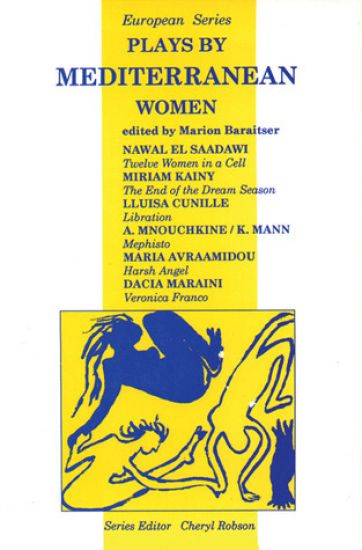
Plays by Mediterranean Women
Nawal El Saadawi; Miriam Kainy; Lluisa Cunille; Ariane Mnouchkine; Maria Avraamidou; Dacia Maraini
Aurora Metro Books
1994
nidottu
The Plays Libration by Lluisa Cunill (Spain): A mysterious, intense and comic two-hander about two women who meet in a city park at night. The End Of The Dream Season by Miriam Kainy (Israel): A woman doctor outwits her friends and relations to retain her inheritance. Harsh Angel by Maria Avraamidou (Cyprus): A gentle Chekhovian tale of a family torn by the partition of their native land. Mephisto adapted from the novel by Klaus Mann/ Ariane Mnouchkine (France/Germany): The story of a German actor who sells his soul to Nazi ideology. Also a feature film.
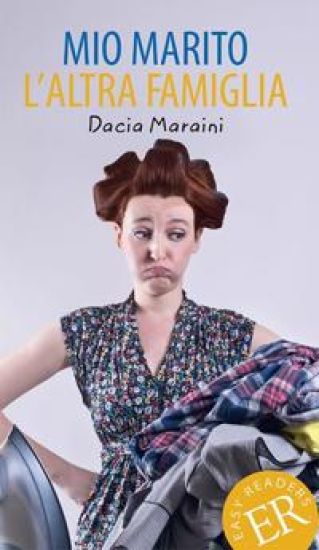
Questi due racconti di Dacia Maraini evidenziano i problemi della condizione femminile. Nel primo racconto, «Mio marito", viene descritta con forte accento caricaturale la vita di una donna che vive all?ombra di un uomo, il marito. È la moglie che dice la sua ammirazione per questo uomo raccontando dei fatti che ne mettono alla luce il brutto carattere, la crudeltà ed il cinismo. Lei non si ribella mai, accetta e giustifica tutto. Il secondo racconto, «L?altra famiglia", ha per protagonist una donna indipendente e moderna che vive una doppia vita: ha infatti due famiglie. Sebbene la vita si svolga in maniera del tutto differente in ognuna delle famiglie, è sempre lei, la moglie, ad assumersi responsabilità, a lavorare, a curarsi dei figli. Easy Readers er bearbejdede og forkortede udgaver af romaner og noveller. De findes på niveau A, B, C og D, hvor A er lettest. Niveauerne relaterer til Common European Framework of Reference for Languages (level A2 til B2).