

Kirjailija
Daina Ramey Berry
Kirjat ja teokset yhdessä paikassa: 16 kirjaa, julkaisuja vuosilta 2007–2025, suosituimpiin kuuluu America. Vertaile teosten hintoja ja tarkista saatavuus suomalaisista kirjakaupoista.
16 kirjaa
Kirjojen julkaisuvuodet: 2007–2025.






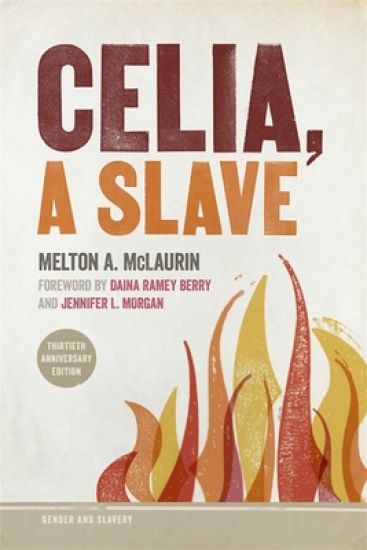
Celia, a Slave
Melton A. McLaurin; Daina Ramey Berry; Jennifer L. Morgan
University of Georgia Press
2021
nidottu
Originally published in 1991, Celia, a Slave illuminates the moral dilemmas that lie at the heart of a slaveholding society by telling the story of a young slave who was sexually exploited by her enslaver and ultimately executed for his murder. Melton A. McLaurin uses Celia’s story to reveal the tensions that strained the fabric of antebellum southern society by focusing on the role of gender and the manner in which the legal system was used to justify slavery. An important addition to our understanding of the pre–Civil War era, Celia, a Slave is also an intensely compelling narrative of one woman pushed beyond the limits of her endurance by a system that denied her humanity at the most basic level.

A Black Women's History of the United States
Daina Ramey Berry; Kali Nicole Gross
Beacon Press
2020
sidottu
A vibrant and empowering history that emphasizes the perspectives and stories of African American women to show how they are--and have always been--instrumental in shaping our country In centering Black women's stories, two award-winning historians seek both to empower African American women and to show their allies that Black women's unique ability to make their own communities while combatting centuries of oppression is an essential component in our continued resistance to systemic racism and sexism. Daina Ramey Berry and Kali Nicole Gross offer an examination and celebration of Black womanhood, beginning with the first African women who arrived in what became the United States to African American women of today. A Black Women's History of the United States reaches far beyond a single narrative to showcase Black women's lives in all their fraught complexities. Berry and Gross prioritize many voices: enslaved women, freedwomen, religious leaders, artists, queer women, activists, and women who lived outside the law. The result is a starting point for exploring Black women's history and a testament to the beauty, richness, rhythm, tragedy, heartbreak, rage, and enduring love that abounds in the spirit of Black women in communities throughout the nation.
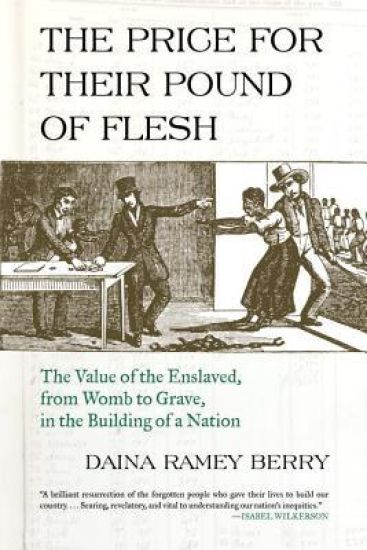
Groundbreaking look at slaves as commodities through every phase of life, from birth to death and beyond, in early America In life and in death, slaves were commodities, their monetary value assigned based on their age, gender, health, and the demands of the market. The Price for Their Pound of Flesh is the first book to explore the economic value of enslaved people through every phase of their lives--including preconception, infancy, childhood, adolescence, adulthood, the senior years, and death--in the early American domestic slave trade. Covering the full "life cycle," historian Daina Ramey Berry shows the lengths to which enslavers would go to maximize profits and protect their investments. Illuminating "ghost values" or the prices placed on dead enslaved people, Berry explores the little-known domestic cadaver trade and traces the illicit sales of dead bodies to medical schools. This book is the culmination of more than ten years of Berry's exhaustive research on enslaved values, drawing on data unearthed from sources such as slave-trading records, insurance policies, cemetery records, and life insurance policies. Writing with sensitivity and depth, she resurrects the voices of the enslaved and provides a rare window into enslaved peoples' experiences and thoughts, revealing how enslaved people recalled and responded to being appraised, bartered, and sold throughout the course of their lives. Reaching out from these pages, they compel the reader to bear witness to their stories, to see them as human beings, not merely commodities. A profoundly humane look at an inhumane institution, The Price for Their Pound of Flesh will have a major impact how we think about slavery, reparations, capitalism, nineteenth-century medical education, and the value of life and death. Winner of the 2018 Hamilton Book Award - from the University Coop (Austin, TX) Winner of the 2018 Society for Historians of the Early American Republic Book Prize (SHEAR) Winner of the 2018 Phillis Wheatley Literary Award, from the Sons and Daughters of the US Middle Passage Finalist for the 2018 Frederick Douglass Book Prize from Yale University's Gilder Lehrman Center for the Study of Slavery, Resistance, and Abolition
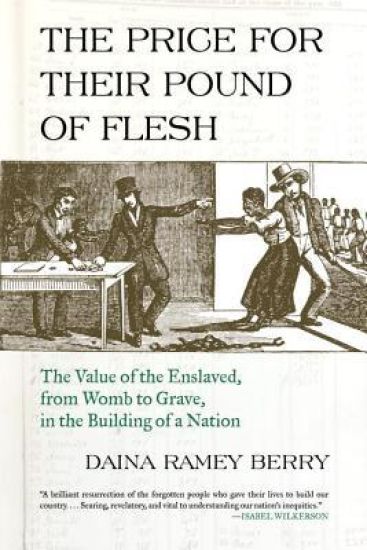
Groundbreaking look at slaves as commodities through every phase of life, from birth to death and beyond, in early America In life and in death, slaves were commodities, their monetary value assigned based on their age, gender, health, and the demands of the market. The Price for Their Pound of Flesh is the first book to explore the economic value of enslaved people through every phase of their lives--including preconception, infancy, childhood, adolescence, adulthood, the senior years, and death--in the early American domestic slave trade. Covering the full "life cycle," historian Daina Ramey Berry shows the lengths to which enslavers would go to maximize profits and protect their investments. Illuminating "ghost values" or the prices placed on dead enslaved people, Berry explores the little-known domestic cadaver trade and traces the illicit sales of dead bodies to medical schools. This book is the culmination of more than ten years of Berry's exhaustive research on enslaved values, drawing on data unearthed from sources such as slave-trading records, insurance policies, cemetery records, and life insurance policies. Writing with sensitivity and depth, she resurrects the voices of the enslaved and provides a rare window into enslaved peoples' experiences and thoughts, revealing how enslaved people recalled and responded to being appraised, bartered, and sold throughout the course of their lives. Reaching out from these pages, they compel the reader to bear witness to their stories, to see them as human beings, not merely commodities. A profoundly humane look at an inhumane institution, The Price for Their Pound of Flesh will have a major impact how we think about slavery, reparations, capitalism, nineteenth-century medical education, and the value of life and death. Winner of the 2018 Hamilton Book Award - from the University Coop (Austin, TX) Winner of the 2018 Society for Historians of the Early American Republic Book Prize (SHEAR) Winner of the 2018 Phillis Wheatley Literary Award, from the Sons and Daughters of the US Middle Passage Finalist for the 2018 Frederick Douglass Book Prize from Yale University's Gilder Lehrman Center for the Study of Slavery, Resistance, and Abolition
"Swing the Sickle for the Harvest is Ripe"
Daina Ramey Berry
University of Illinois Press
2010
nidottu
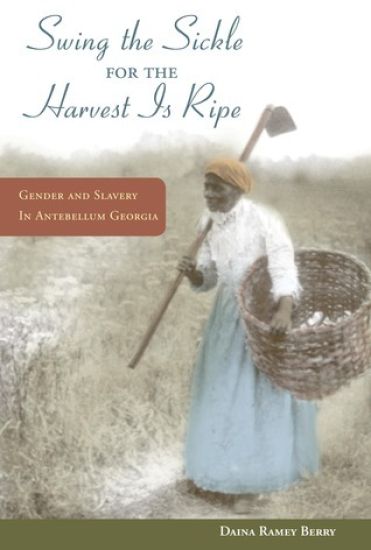
Examining how labor and economy shaped the family life of bondwomen and bondmen in the antebellum South "Swing the Sickle for the Harvest Is Ripe" compares the work, family, and economic experiences of enslaved women and men in upcountry and lowland Georgia during the nineteenth century. Mining planters' daybooks, plantation records, and a wealth of other sources, Daina Ramey Berry shows how slaves' experiences on large plantations, which were essentially self-contained, closed communities, contrasted with those on small plantations, where planters' interests in sharing their workforce allowed slaves more open, fluid communications. By inviting readers into slaves' internal lives through her detailed examination of domestic violence, separation and sale, and forced breeding, Berry also reveals important new ways of understanding what it meant to be a female or male slave, as well as how public and private aspects of slave life influenced each other on the plantation. A volume in the series Women in American History, edited by Anne Firor Scott, Susan Armitage, Susan K. Cahn, and Deborah Gray White
"Swing the Sickle for the Harvest is Ripe"
Daina Ramey Berry
University of Illinois Press
2007
sidottu
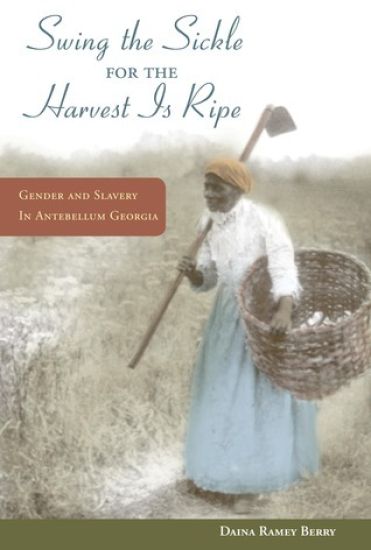
Examining how labor and economy shaped the family life of bondwomen and bondmen in the antebellum South "Swing the Sickle for the Harvest Is Ripe" compares the work, family, and economic experiences of enslaved women and men in upcountry and lowland Georgia during the nineteenth century. Mining planters' daybooks, plantation records, and a wealth of other sources, Daina Ramey Berry shows how slaves' experiences on large plantations, which were essentially self-contained, closed communities, contrasted with those on small plantations, where planters' interests in sharing their workforce allowed slaves more open, fluid communications. By inviting readers into slaves' internal lives through her detailed examination of domestic violence, separation and sale, and forced breeding, Berry also reveals important new ways of understanding what it meant to be a female or male slave, as well as how public and private aspects of slave life influenced each other on the plantation. A volume in the series Women in American History, edited by Anne Firor Scott, Susan Armitage, Susan K. Cahn, and Deborah Gray White