Kirjojen hintavertailu – 12 903 725 kirjaa ja 27 kauppaa
Kirjailija
Daisetz Teitaro Suzuki
Kirjat ja teokset yhdessä paikassa: 41 kirjaa, julkaisuja vuosilta 1991–2026, suosituimpiin kuuluu Outlines of Mahayana Buddhism. Vertaile teosten hintoja ja tarkista saatavuus suomalaisista kirjakaupoista.
Daisetsu Teitaro Suzuki was a Japanese author of books and essays on Buddhism, Zen and Shin that were instrumental in spreading interest in both Zen and Shin (and Far Eastern philosophy in general) to the West. Suzuki was also a prolific translator of Chinese, Japanese, and Sanskrit literature. Suzuki spent several lengthy stretches teaching or lecturing at Western universities, and devoted many years to a professorship at Otani University, a Japanese Buddhist school. Besides living in the United States, Suzuki traveled through Europe before taking up a professorship back in Japan. In 1911, Suzuki married Beatrice Erskine Lane, a Radcliffe graduate and Theosophist with multiple contacts with the Baha Faith both in America and in Japan. Later Suzuki himself joined the Theosophical Society Adyar and was an active Theosophist. While he was in Kyoto, he visited Dr. Hoseki Shinichi Hisamatsu, a famous Zen Buddhist scholar, and discussed Zen Buddhism together at Shunkoin temple in the Myoshinji temple complex. In 1921 he and his wife, Beatrice, founded the Eastern Buddhist Society; the Society is focused on Mahayana Buddhism and offers lectures and seminars, and publishes a scholarly journal. Besides teaching about Zen practice and the history of Zen (Chinese Chan) Buddhism, Suzuki was an expert scholar on the related philosophy called, in Japanese, Kegon, which he thought of as the intellectual explication of Zen experience. In addition to his popularly oriented works, Suzuki wrote a translation of the Lankavatara Sutra and a commentary on its Sanskrit terminology. He looked in on the efforts of Saburo Hasegawa, Judith Tyberg, Alan Watts and the others who worked in the California Academy of Asian Studies (now known as the California Institute of Integral Studies), in San Francisco in the 1950s. Suzuki is often linked to the Kyoto School of philosophy, but he is not considered one of its official members. Suzuki took an interest in other traditions besides Zen. His book Zen and Japanese Buddhism delved into the history and scope of interest of all the major Japanese Buddhist sects. In his later years, he began to explore the Jodo Shinshu faith of his mother's upbringing, and gave guest lectures on Jodo Shinshu Buddhism at the Buddhist Churches of America. D. T. Suzuki also produced an incomplete English translation of the Kyogyoshinsho, the magnum opus of Shinran, founder of the Jodo Shinshu school. However, Suzuki did not attempt to popularize the Shin doctrine in the West, as he believed Zen was better suited to the Western preference for Eastern mysticism, though he is quoted as saying that Jodo Shinshu Buddhism is the "most remarkable development of Mahayana Buddhism ever achieved in East Asia". Suzuki also took an interest in Christian mysticism and in some of the most significant mystics of the West, for example, Meister Eckhart, whom he compared with the Jodo Shinshu followers called Myokonin. Suzuki was among the first to bring research on the Myokonin to audiences outside Japan as well. Suzuki's books have been widely read and commented on by many important figures. A notable example is An Introduction to Zen Buddhism, which includes a commentary by famous analytical psychologist Carl Jung. Other works include Essays in Zen Buddhism, Studies in Zen Buddhism, and Manual of Zen Buddhism. Additionally, American philosopher William Barrett has compiled many of Suzuki's articles and essays concerning Zen into a volume entitled Zen Buddhism." Suzuki believed that the Far Eastern peoples had a more sensitive or attuned to nature than either the people of Europe or those of Northern India. Suzuki subscribed to the idea that religions are each a sort of organism, an organism that is (through time) subject to "irritation" and having a capacity to change or evolve.
""Studies in Zen"" is a comprehensive book on the philosophy and practice of Zen Buddhism, written by Daisetz Teitaro Suzuki, a renowned scholar and practitioner of Zen. The book delves into the history, teachings, and practices of Zen, offering a deep understanding of this ancient spiritual tradition. The book is divided into several sections, each exploring a different aspect of Zen. The first section provides an overview of the history and development of Zen, tracing its roots back to ancient India and China. The second section discusses the fundamental teachings of Zen, including the concept of emptiness, the nature of reality, and the role of meditation in attaining enlightenment. The third section focuses on the practice of Zen, offering practical guidance on meditation, mindfulness, and other techniques for cultivating inner peace and wisdom. The fourth section explores the relationship between Zen and other spiritual traditions, including Taoism, Confucianism, and Christianity. Throughout the book, Suzuki draws on his extensive knowledge of Zen and his own experiences as a practitioner to provide a rich and insightful exploration of this profound spiritual tradition. Whether you are a beginner or an experienced practitioner, ""Studies in Zen"" offers a valuable resource for anyone seeking to deepen their understanding of Zen Buddhism. This scarce antiquarian book is a facsimile reprint of the old original and may contain some imperfections such as library marks and notations. Because we believe this work is culturally important, we have made it available as part of our commitment for protecting, preserving, and promoting the world's literature in affordable, high quality, modern editions, that are true to their original work.
""Mysticism: Christian and Buddhist"" is a book written by Daisetz Teitaro Suzuki, a renowned Japanese scholar of Buddhism and Zen philosophy. The book explores the similarities and differences between Christian and Buddhist mysticism, highlighting the mystical experiences and practices of both religions. Suzuki delves into the concept of mysticism and its role in religion, examining how it relates to the search for ultimate truth and the experience of the divine. He then compares the mystical experiences of Christian mystics such as Saint John of the Cross and Meister Eckhart with those of Buddhist mystics like Hakuin Ekaku and Dogen Zenji. The book also covers various practices and techniques used in Christian and Buddhist mysticism, such as prayer, meditation, and contemplation. Suzuki provides insights into how these practices are used to attain spiritual enlightenment and union with the divine. Overall, ""Mysticism: Christian and Buddhist"" is a comprehensive and insightful exploration of the mystical traditions of two of the world's major religions. It offers a unique perspective on the similarities and differences between Christian and Buddhist mysticism, and provides valuable insights into the nature of mystical experience and its role in religious practice. The Eastern And Western Way. This scarce antiquarian book is a facsimile reprint of the old original and may contain some imperfections such as library marks and notations. Because we believe this work is culturally important, we have made it available as part of our commitment for protecting, preserving, and promoting the world's literature in affordable, high quality, modern editions, that are true to their original work.
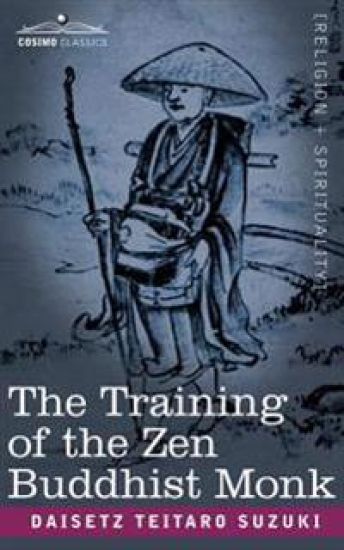
Daisetz Teitaro Suzuki's "The Training of the Zen Buddhist Monk" invites you to step inside the mysterious world of the Zendo, where monks live their lives in simplicity. Suzuki, best known as the man who brought Zen classics to the West, sheds light on all phases of a monk's experience, from being refused admittance at the door to finally understanding the meaning of one's "koan". Suzuki explains the initiation ceremony, the act of begging, and the life of prayers, meditation, and service.
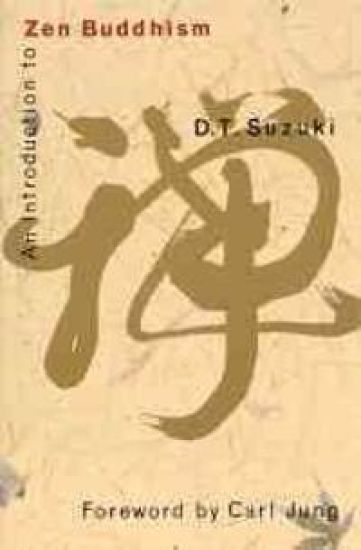
One of the world s leading authorities on Zen Buddhism, D. T. Suzuki was the author of more than a hundred works on the subject in both Japanese and English, and was most instrumental in bringing the teachings of Zen Buddhism to the attention of the Western world. Written in a lively, accessible, and straightforward manner, An Introduction to Zen Buddhism is illuminating for the serious student and layperson alike. Suzuki provides a complete vision of Zen, which emphasizes self-understanding and enlightenment through many systems of philosophy, psychology, and ethics. With a foreword by the renowned psychiatrist Dr. Carl Jung, this volume has been generally acknowledged a classic introduction to the subject for many years. It provides, along with Suzuki s Essays and Manual of Zen Buddhism, a framework for living a balanced and fulfilled existence through Zen."