Kirjojen hintavertailu – 12 859 826 kirjaa ja 27 kauppaa

Kirjailija

Dal Yong Jin

Kirjat ja teokset yhdessä paikassa: 29 kirjaa, julkaisuja vuosilta 2013–2026, suosituimpiin kuuluu AI in Popular Culture. Vertaile teosten hintoja ja tarkista saatavuus suomalaisista kirjakaupoista.

29 kirjaa

Kirjojen julkaisuvuodet: 2013–2026.

Globalization and Media in the Digital Platform Age
Global media expert Dal Yong Jin examines the nexus of globalization, digital media, and contemporary popular culture in this empirically rich, student-friendly book. Offering an in-depth look at globalization processes, histories, texts, and state policies as they relate to the global media, Jin maps out the increasing role of digital platforms as they have shifted the contours of globalization. Case studies and examples focus on ubiquitous digital platforms, including Facebook, YouTube, and Netflix, in tandem with globalization so that the readers are able to apply diverse theoretical frameworks of globalization in different media milieu. Readers are taught core theoretical concepts which they should apply critically to a broad range of contemporary media policies, practices, movements, and technologies in different geographic regions of the world – North America, Europe, Africa, Latin America, and Asia – with a view to determining how they shape and are shaped by globalization. End-of-chapter discussion questions prompt further critical thinking and research. Students doing coursework in digital media, global media, international communication, and globalization will find this new textbook to be an essential introduction to how media have influenced a complex set of globalization processes in broad international and comparative contexts.
Understanding the Business of Global Media in the Digital Age
This new introductory textbook provides students with the tools they need to understand the way digital technologies have transformed the global media business of the 21st century. Focusing on three main approaches – media economics, critical political economy, and production studies – the authors provide an empirically rich analysis of ownership, organizational structures and culture, business strategies, markets, networks of strategic alliances, and state policies as they relate to global media. Examples throughout involve both traditional and digital media and are taken from different regions and countries to illustrate how the media business is influenced by interconnected historical, political, economic, and social factors. In addition to introducing today’s convergent world of global media, the book gives readers a greater understanding of their own potential roles within the global media industries.
Digital Platforms, Imperialism and Political Culture
In the networked twenty-first century, digital platforms have significantly influenced capital accumulation and digital culture. Platforms, such as social network sites (e.g. Facebook), search engines (e.g. Google), and smartphones (e.g. iPhone), are increasingly crucial because they function as major digital media intermediaries. Emerging companies in non-Western countries have created unique platforms, controlling their own national markets and competing with Western-based platform empires in the global markets. The reality though is that only a handful of Western countries, primarily the U. S., have dominated the global platform markets, resulting in capital accumulation in the hands of a few mega platform owners. This book contributes to the platform imperialism discourse by mapping out several core areas of platform imperialism, such as intellectual property, the global digital divide, and free labor, focusing on the role of the nation-state alongside transnational capital.
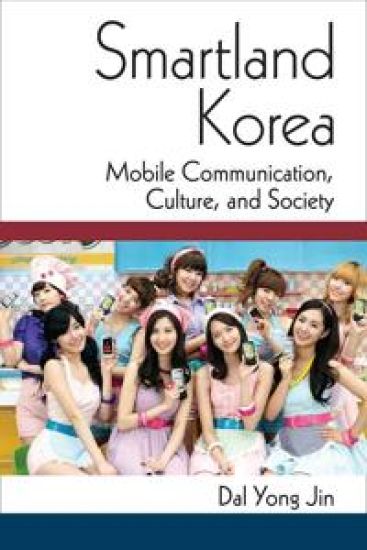
Smartland Korea

Smartland Korea

Dal Yong Jin

The University of Michigan Press
2017
sidottu
The dramatic advancement of cellphone technology has fundamentally changed our daily lives. Smartphones and their applications have created new capital for information and communication technology corporations and changed the way people communicate. Because of an interesting awareness of the significance for digital economy and people’s daily culture, many countries, from the U. S. to China, have massively invested in the smartphone industries since the early 21st century. Among them, South Korea has become one of the centers for technology development and digital culture, although the country was once lagging behind in the penetration of the phones and their apps. Yet within the last few years, the country has taken a big step toward their goal of becoming a ‘mobile game wonderland’ by appropriating smartphones and it now exists as a curious test-bed for the future of smartphone technology. Smartland Korea, as the first attempt to comprehensively analyze mobile communication in the context of Korean smartphones, looks into a largely neglected focus of inquiry, a localized mobile landscape, with particular reference to young Koreans’ engagement with their devices and applications. Dal Yong Jin focuses not only on the celebratory achievement of technological advancement, but also the significance of social milieu in the development of the smartphones. He situates the emergence of smartphones within the growth of mobile technologies and overall telecommunications industries embedded in Korea’s information and communication technologies. The book examines the technology’s innovation and the evolution, the digital economy through the lens of political economy, and the youth culture embedded in the Korean smartphone context.
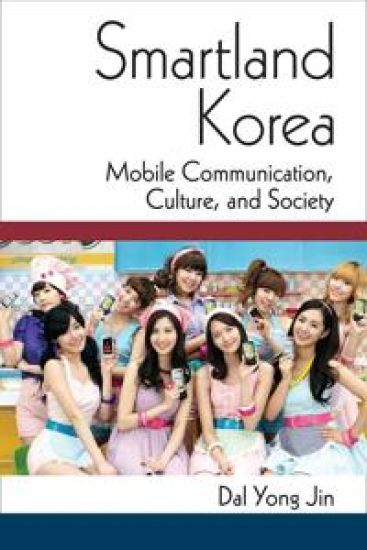
Smartland Korea

Smartland Korea

Dal Yong Jin

The University of Michigan Press
2017
nidottu
The dramatic advancement of cellphone technology has fundamentally changed our daily lives. Smartphones and their applications have created new capital for information and communication technology corporations and changed the way people communicate. Because of an interesting awareness of the significance for digital economy and people’s daily culture, many countries, from the U. S. to China, have massively invested in the smartphone industries since the early 21st century. Among them, South Korea has become one of the centers for technology development and digital culture, although the country was once lagging behind in the penetration of the phones and their apps. Yet within the last few years, the country has taken a big step toward their goal of becoming a ‘mobile game wonderland’ by appropriating smartphones and it now exists as a curious test-bed for the future of smartphone technology. Smartland Korea, as the first attempt to comprehensively analyze mobile communication in the context of Korean smartphones, looks into a largely neglected focus of inquiry, a localized mobile landscape, with particular reference to young Koreans’ engagement with their devices and applications. Dal Yong Jin focuses not only on the celebratory achievement of technological advancement, but also the significance of social milieu in the development of the smartphones. He situates the emergence of smartphones within the growth of mobile technologies and overall telecommunications industries embedded in Korea’s information and communication technologies. The book examines the technology’s innovation and the evolution, the digital economy through the lens of political economy, and the youth culture embedded in the Korean smartphone context.
De-Convergence of Global Media Industries
Convergence has become a buzzword, referring on the one hand to the integration between computers, television, and mobile devices or between print, broadcast, and online media and on the other hand, the ownership of multiple content or distribution channels in media and communications. Yet while convergence among communications companies has been the major trend in the neoliberal era, the splintering of companies, de-convergence, is now gaining momentum in the communications market. As the first comprehensive attempt to analyze the wave of de-convergence of the global media system in the context of globalization, this book makes sense of those transitions by looking at global trends and how global media firms have changed and developed their business paradigm from convergence to de-convergence. Jin traces the complex relationship between media industries, culture, and globalization by exploring it in a transitional yet contextually grounded framework, employing a political economic analysis integrating empirical data analysis.
Digital Platforms, Imperialism and Political Culture
In the networked twenty-first century, digital platforms have significantly influenced capital accumulation and digital culture. Platforms, such as social network sites (e.g. Facebook), search engines (e.g. Google), and smartphones (e.g. iPhone), are increasingly crucial because they function as major digital media intermediaries. Emerging companies in non-Western countries have created unique platforms, controlling their own national markets and competing with Western-based platform empires in the global markets. The reality though is that only a handful of Western countries, primarily the U. S., have dominated the global platform markets, resulting in capital accumulation in the hands of a few mega platform owners. This book contributes to the platform imperialism discourse by mapping out several core areas of platform imperialism, such as intellectual property, the global digital divide, and free labor, focusing on the role of the nation-state alongside transnational capital.
De-Convergence of Global Media Industries
Convergence has become a buzzword, referring on the one hand to the integration between computers, television, and mobile devices or between print, broadcast, and online media and on the other hand, the ownership of multiple content or distribution channels in media and communications. Yet while convergence among communications companies has been the major trend in the neoliberal era, the splintering of companies, de-convergence, is now gaining momentum in the communications market. As the first comprehensive attempt to analyze the wave of de-convergence of the global media system in the context of globalization, this book makes sense of those transitions by looking at global trends and how global media firms have changed and developed their business paradigm from convergence to de-convergence. Jin traces the complex relationship between media industries, culture, and globalization by exploring it in a transitional yet contextually grounded framework, employing a political economic analysis integrating empirical data analysis.