

Kirjailija
Dale Dougherty
Kirjat ja teokset yhdessä paikassa: 5 kirjaa, julkaisuja vuosilta 1997–2026, suosituimpiin kuuluu Make: Volume 97. Vertaile teosten hintoja ja tarkista saatavuus suomalaisista kirjakaupoista.
5 kirjaa
Kirjojen julkaisuvuodet: 1997–2026.

At Make: we've cheered, and sometimes steered, two decades of rapid evolution in digital fabrication tools for home, hobby, and business use. But this year is an astonishing one. Multi-material 3D printing is finally legit, with smart, tool-changing machines that don't waste filament on purges and poops. In this issue we review Snapmaker's U1 tool changer, plus new 3D printers from Elegoo, Flashforge, and Prusa that are packed with advanced features at plummeting prices. We also go hands-on with new lasers from xTool -- the burly MetalFab metal cutter/welder and petite MOPA F2 Ultra engraver -- and with desktop CNC mini mills that have achieved the trifecta of power, price, and software that doesn't suck. Tool makers are innovating outside the big categories, too. For the first time ever, you can do UV printing at home Why not try a full-sheet CNC router that stows on a shelf? Or new category-mashers like the LatheEngraver or Saltgator soft-gel injection molder? It's a good time to succumb to your tool temptations. Plus 15 fantastic projects, including: Embrace your inner mad scientist with a high voltage plasma toroid generator Track the position of the ISS in real time on an actual globe Hack a Spider-Man-style web flinger to control it with your mind Learn how to use smart serial servos with the Oxocard Connect Use WLED to create full-color LED displays 3D print concrete and metal And more
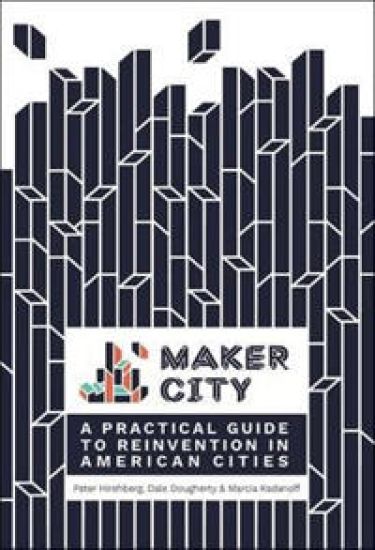
The Maker City Playbook is a comprehensive case studies and how-to information useful for city leaders, civic innovators, nonprofits, and others engaged in urban economic development. The Maker City Playbook is committed to going beyond stories to find patterns and discern promising practices to help city leaders make even more informed decisions. Maker City Playbook Chapter 1: Introduction and a Call to Action Chapter 2: The Maker movement and Cities Chapter 3: The Maker City as Open Ecosystem Chapter 4: Education and Learning in the Maker City Chapter 5: Workforce Development in the Maker City Chapter 6: Advanced Manufacturing and Supply Chain inside the Maker City Chapter 7: Real Estate Matters in the Maker City Chapter 8: Civic Engagement in the Maker City Chapter 9: The Future of the Maker City Maker City Project is a collaboration between the Kauffman Foundation, the Gray Area for the Arts, and Maker Media.
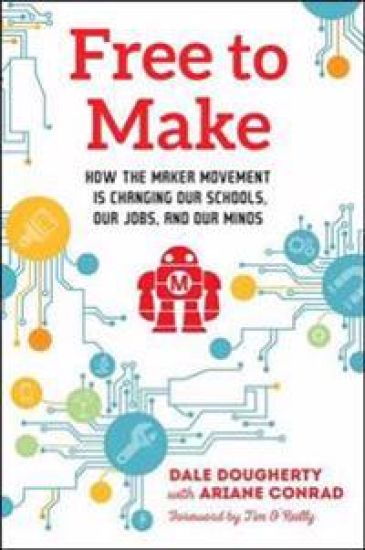
Dale Dougherty, creator of MAKE: magazine and the Maker Faire, provides a guided tour of the international phenomenon known as the Maker Movement, a social revolution that is changing what gets made, how it's made, where it's made, and who makes it. Free to Make is a call to join what Dougherty calls the "renaissance of making," an invitation to see ourselves as creators and shapers of the world around us. As the internet thrives and world-changing technologies--like 3D printers and tiny microcontrollers--become increasingly affordable, people around the world are moving away from the passivity of one-size-fits-all consumption and command-and-control models of education and business. Free to Make explores how making revives abandoned and neglected urban areas, reinvigorates community spaces like libraries and museums, and even impacts our personal and social development--fostering a mindset that is engaged, playful, and resourceful. Free to Make asks us to imagine a world where making is an everyday occurrence in our schools, workplaces, and local communities, grounding us in the physical world and empowering us to solve the challenges we face.

sed & awk describes two text processing programs that are mainstays of the UNIX programmer's toolbox. sed is a "stream editor" for editing streams of text that might be too large to edit as a single file, or that might be generated on the fly as part of a larger data processing step. The most common operation done with sed is substitution, replacing one block of text with another. awk is a complete programming language. Unlike many conventional languages, awk is "data driven" -- you specify what kind of data you are interested in and the operations to be performed when that data is found. awk does many things for you, including automatically opening and closing data files, reading records, breaking the records up into fields, and counting the records. While awk provides the features of most conventional programming languages, it also includes some unconventional features, such as extended regular expression matching and associative arrays. sed & awk describes both programs in detail and includes a chapter of example sed and awk scripts. This edition covers features of sed and awk that are mandated by the POSIX standard. This most notably affects awk, where POSIX standardized a new variable, CONVFMT, and new functions, toupper() and tolower(). The CONVFMT variable specifies the conversion format to use when converting numbers to strings (awk used to use OFMT for this purpose). The toupper() and tolower() functions each take a (presumably mixed case) string argument and return a new version of the string with all letters translated to the corresponding case. In addition, this edition covers GNU sed, newly available since the first edition. It also updates the first edition coverage of Bell Labs nawk and GNU awk (gawk), covers mawk, an additional freely available implementation of awk, and briefly discusses three commercial versions of awk, MKS awk, Thompson Automation awk (tawk), and Videosoft (VSAwk).