Kirjojen hintavertailu – 12 903 725 kirjaa ja 27 kauppaa
Kirjailija
Dale F. Eickelman
Kirjat ja teokset yhdessä paikassa: 4 kirjaa, julkaisuja vuosilta 1976–2014, suosituimpiin kuuluu Knowledge and Power in Morocco. Vertaile teosten hintoja ja tarkista saatavuus suomalaisista kirjakaupoista.
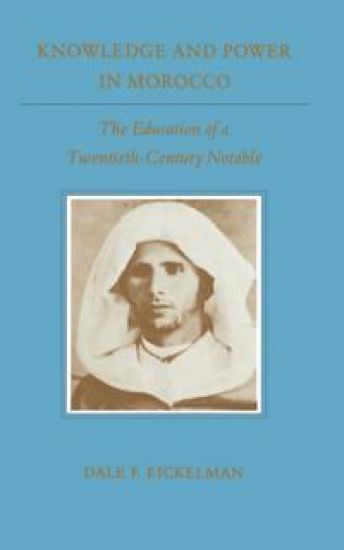
This intensive social biography of a rural Moroccan judge discusses Islamic education, the concept of knowledge it embodies, and its communication from the early years of colonial rule in twentieth-century Morocco to the present. The work sensitively combines the outlooks and perceptions of the author and those of the shrewd and reflective 'Abd ar-Rahman, supplementing our knowledge of resurgent militant Islamic movements by describing other popularly supported Islamic attitudes toward the contemporary world.
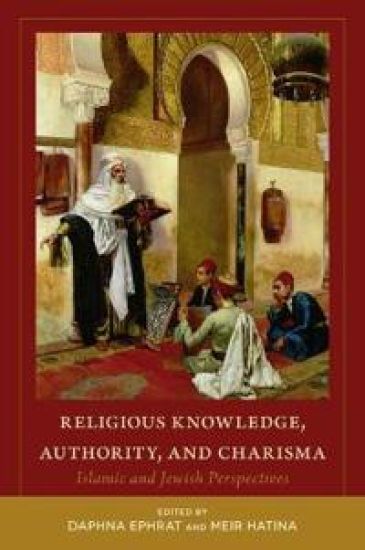
The issue of religious authority has long fascinated and ignited scholars across a range of disciplines: history, anthropology, the sociology of religion, and political science. Religious Knowledge, Authority, and Charisma juxtaposes religious leadership in premodern and modern Islam with examples from the Judaic tradition. By illustrating various iterations of authority in numerous historical and cultural contexts, this volume offers fresh insights into the nature of institutions of learning and other systems of establishing and disseminating authority, the mechanisms for cultivating committed adherents, and the processes by which religious leadership is polarized and fragmented. Contributors tease out the sources and types of authority that emerged out of the Sunni and Shi?i milieu and the evolution of Muslim elites who served as formulators and disseminators of knowledge and practice. Comparative insights are provided by the examination of ideological and historical developments among Jewish sages who inculcated similar modes of authority from within their traditions. The rigorous exploration of the dynamic interface of knowledge and power in Islam and Judaism serves to highlight a number of present tensions common to both religions. By intertwining a historical span that traces trajectories of continuity and change, integrative discussion of cross-sectional themes, and comparative perspectives, this volume makes a distinct contribution.
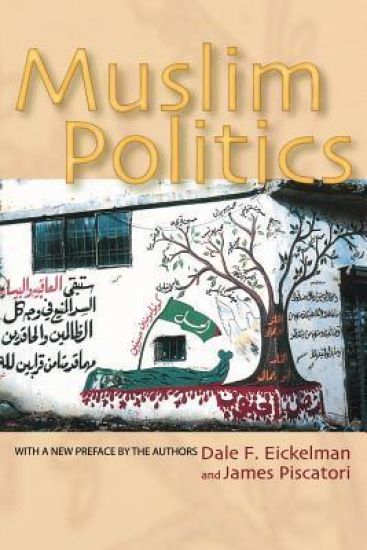
In this updated paperback edition, Dale Eickelman and James Piscatori explore how the politics of Islam play out in the lives of Muslims throughout the world. They discuss how recent events such as September 11 and the 2003 war in Iraq have contributed to reshaping the political and religious landscape of Muslim-majority countries and Muslim communities elsewhere. As they examine the role of women in public life and Islamic perspectives on modernization and free speech, the authors probe the diversity of the contemporary Islamic experience, suggesting general trends and challenging popular Western notions of Islam as a monolithic movement. In so doing, they clarify concepts such as tradition, authority, ethnicity, pro-test, and symbolic space, notions that are crucial to an in-depth understanding of ongoing political events. This book poses questions about ideological politics in a variety of transnational and regional settings throughout the Muslim world. Europe and North America, for example, have become active Muslim centers, profoundly influencing trends in the Middle East, Africa, Central Asia, and South and Southeast Asia. The authors examine the long-term cultural and political implications of this transnational shift as an emerging generation of Muslims, often the products of secular schooling, begin to reshape politics and society--sometimes in defiance of state authorities. Scholars, mothers, government leaders, and musicians are a few of the protagonists who, invoking shared Islamic symbols, try to reconfigure the boundaries of civic debate and public life. These symbolic politics explain why political actions are recognizably Muslim, and why "Islam" makes a difference in determining the politics of a broad swath of the world.
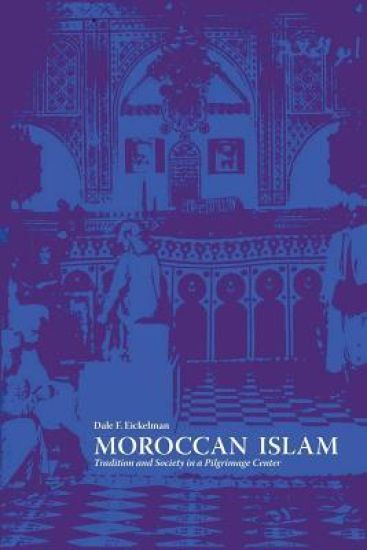
This book is one of the first comprehensive studies of Islam as locally understood in the Middle East. Specifically, it is concerned with the prevalent North African belief that certain men, called marabouts, have a special relation to God that enables them to serve as intermediaries and to influence the well-being of their clients and kin. Dale F. Eickelman examines the Moroccan pilgrimage center of Boujad and unpublished Moroccan and French archival materials related to it to show how popular Islam has been modified by its adherents to accommodate new social and economic realities. In the course of his analysis he demonstrates the necessary interrelationship between social history and the anthropological study of symbolism. Eickelman begins with an outline of the early development of Islam in Morocco, emphasizing the "maraboutic crisis" of the fourteenth through sixteenth centuries. He also examines the history and social characteristics of the Sherqawi religious lodge, on which the study focuses, in preprotectorate Morocco. In the central portion of the book, he analyzes the economic activities and social institutions of Boujad and its rural hinterland, as well as some basic assumptions the townspeople and tribesmen make about the social order. Finally, there is an intensive discussion of maraboutism as a phenomenon and the changing local character of Islam in Morocco. In focusing on the "folk" level of Islam, rather than on "high culture" tradition, the author has made possible a more general interpretation of Moroccan society that is in contrast with earlier accounts that postulated a marked discontinuity between tribe and town, past and present.