Kirjojen hintavertailu – 12 903 725 kirjaa ja 27 kauppaa

Kirjailija

Dale L. Hutchinson

Kirjat ja teokset yhdessä paikassa: 6 kirjaa, julkaisuja vuosilta 2002–2022, suosituimpiin kuuluu Foraging, Farming and Coastal Adaptation in Late Prehistoric North Carolina. Vertaile teosten hintoja ja tarkista saatavuus suomalaisista kirjakaupoista.

6 kirjaa

Kirjojen julkaisuvuodet: 2002–2022.

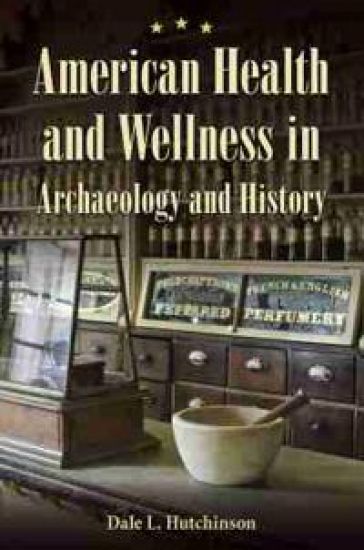
American Health and Wellness in Archaeology and History

American Health and Wellness in Archaeology and History

Dale L. Hutchinson

University Press of Florida
2022
sidottu
In this book, Dale Hutchinson traces the history of American healthcare and wellbeing from the colonial era to the present, drawing on evidence from material culture and historical documents to offer insights into the longstanding tension between traditional and institutionalized cures, as well as the emergence of the country's unique brand of medical consumerism. Hutchinson outlines three major trends that have influenced the course of American medicine—the convergence of different ancestral traditions, the formalization of the medical industry, and the rise of individual choice. He discusses how health challenges in the emergent nation led to increased numbers of healthcare specialists, and how in turn the developing prestige and lucrative nature of the medical profession caused widespread public distrust. Depicting the Civil War as a turning point in attitudes about health, Hutchinson demonstrates how sanitation and hygiene became important emphases of domestic life in the postbellum period. He also describes subsequent trends in self-care. Throughout, Hutchinson incorporates lessons learned from artifacts such as medical tools and the packaging of tonics, pills, salves, and other curatives. Looking back on this history from the perspective of the contemporary landscape of healthcare and wellness in the United States, Hutchinson points out that weaknesses in the system that became apparent amid the COVID-19 pandemic were the result of changes that have been unfolding since the founding of the nation.
Bioarchaeology of the Florida Gulf Coast

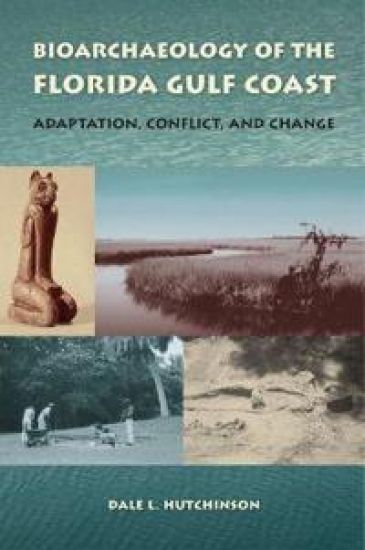
Bioarchaeology of the Florida Gulf Coast

Dale L. Hutchinson

University Press of Florida
2020
pokkari
In Bioarchaeology of the Florida Gulf Coast, Dale Hutchinson explores the role of human adaptation along the Gulf Coast of Florida and the influence of coastal foraging on several indigenous Florida populations. The Sarasota landmark known as Historic Spanish Point has captured the attention of historians and archaeologists for over 150 years. This picturesque location includes remnants of a prehistoric Indian village and a massive ancient burial mound-- known to archaeologists as the Palmer Site--that is one of the largest mortuary sites uncovered in the southeastern United States. Interpreting the Palmer population (numbering over 400 burials circa 800 A. D.) by analyzing such topics as health and diet, trauma, and demography, Hutchinson provides a unique view of a post-Archaic group of Indians who lived by hunting, collecting, and fishing rather than by agriculture. This book provides new data that support a general absence of agriculture among Florida Gulf Coast populations within the context of great similarities but also substantial differences in nutrition and health. Along the central and southern Florida Gulf Coast, multiple lines of evidence such as site architecture, settlement density and size, changes in ceramic technology, and the diversity of shell and stone tools suggest that this period was one of emerging social and political complexity accompanied by population growth. The comparisons between the Florida Gulf Coast and other coastal regions illuminate our understanding of coastal adaptation, while comparisons with interior populations further stimulate thoughts regarding the process of culture change during the agricultural era. A volume in the Florida Museum of Natural History: Ripley P. Bullen Series
Disease and Discrimination

Disease and Discrimination

Dale L. Hutchinson

University Press of Florida
2019
nidottu
Disease and discrimination are processes linked to class in the early American colonies. Many early colonists fell victim to mass sickness as Old and New World systems collided and new social, political, economic, and ecological dynamics allowed disease to spread. Dale Hutchinson argues that most colonists, slaves, servants, and nearby Native Americans suffered significant health risks due to their lower economic and social status. With examples ranging from indentured servitude in the Chesapeake to the housing and sewage systems of New York to the effects of conflict between European powers, Hutchinson posits that poverty and living conditions, more so than microbes, were often at the root of epidemics.
Disease and Discrimination

Disease and Discrimination

Dale L. Hutchinson

University Press of Florida
2016
sidottu
Disease and discrimination are processes linked to class in the early American colonies. Many early colonists fell victim to mass sickness as Old and New World systems collided and new social, political, economic, and ecological dynamics allowed disease to spread. Dale Hutchinson argues that most colonists, slaves, servants, and nearby Native Americans suffered significant health risks due to their lower economic and social status. With examples ranging from indentured servitude in the Chesapeake to the housing and sewage systems of New York to the effects of conflict between European powers, Hutchinson posits that poverty and living conditions, more so than microbes, were often at the root of epidemics.
Tatham Mound and the Bioarchaeology of European Contact

Tatham Mound and the Bioarchaeology of European Contact

Dale L. Hutchinson

University Press of Florida
2007
sidottu
This is the first systematic analysis of Tatham Mound, one of the most important archaeological sites in Central Gulf Coast Florida. Because it documents the earliest years of contact between the resident Native Americans of the area and European colonists, Tatham Mound has provided archaeologists and bioarchaeologists with a wealth of direct and indirect evidence from the early contact period - a rare occurrence in American archaeology. Hutchinson examines the skeletal remains of more than 350 burials as well as the European artifacts found within those burials. Comparing the bioarchaeological evidence and scientific data with the historic accounts of the early Spanish explorers, Hutchinson challenges the long-held theory that novel pathogens caused the immediate demographic collapse of native societies at the inception of the European colonial era. He argues that long-term political, social, economic, and biological changes - in addition to introduced epidemic disease - all contributed to the decline of Florida's native populations.
Foraging, Farming and Coastal Adaptation in Late Prehistoric North Carolina

Foraging, Farming and Coastal Adaptation in Late Prehistoric North Carolina

Dale L. Hutchinson; Jerald T. Milanich

University Press of Florida
2002
sidottu
Dale Hutchinson provides a detailed bioarchaeological analysis exploring human adaptation in the estuary zone of North Carolina and the influence of coastal foraging during the late prehistoric transition to agriculture. He draws on observations of human skeletal remains to look at nutrition, disease, physical activity, morbidity, and mortality of coastal populations, focusing particularly on changes in nutrition and health associated with the move from foraging to farming. Hutchinson confronts the prevailing notion of a universal agricultural transition by documenting a more variable and complex process of change. Among his notable findings is that skeletal and dental markers long accepted as indicators of corn consumption in fact occur more frequently among coastal foragers than among interior agriculturalists. His research shows that men and women differed not only in their economic roles but in their diets as well and that outer coastal populations continued to rely on maritime resources without the adoption of corn after A. D. 800, a reliance that almost surely influenced their evolving lifestyle. The combination of original data, well-supported interpretation, and the breadth of evidence from many categories significantly advances our anthropological understanding of the lives of these first North Carolinians.