Kirjojen hintavertailu – 12 903 725 kirjaa ja 27 kauppaa

Kirjailija

Damian Walford Davies

Kirjat ja teokset yhdessä paikassa: 9 kirjaa, julkaisuja vuosilta 2002–2023, suosituimpiin kuuluu R.S. Thomas. Vertaile teosten hintoja ja tarkista saatavuus suomalaisista kirjakaupoista.

Nimi esiintyy myös muodoissa: Damian Walford-Davies

9 kirjaa

Kirjojen julkaisuvuodet: 2002–2023.

R.S. Thomas

R.S. Thomas

Damian Walford-Davies

Seren
2013
nidottu
This new centenary volume brings together 52 poems – 4 previously unpublished – by RS Thomas to his wife 'Elsi', the distinguished artist Mildred E Eldridge. Together the poems reveal much of the changing (and challenging) dynamics of a complex yet vitally creative relationship. Tender and honest at one moment, ironic and accusatory the next, there are poems on marriage, family, anniversaries and bereavement – offering up a candid portrait of emotional intimacy, the painful process of ageing, and of loss. RS Thomas was born in Cardiff. Ordained as an Anglican priest in 1936, life in the rural parishes of north Wales became the inspiration for much of his poetry; it was in his first post in Denbighshire that he met 'Elsi'. He was awarded the Queen's Gold Medal in 1964, and nominated for the 1996 Nobel Prize in Literature. A Penguin Modern Classics Selected Poems was published in 2004, followed by Bloodaxe's Collected Later Poems (2004) and Uncollected Poems (2013). He died in 2000. Damian Walford Davies teaches at Aberystwyth University. His latest poetry collection is Witch (Seren, 2012). He is General Editor of the forthcoming Oxford Literary History of Wales.
Viva Bartali!

Viva Bartali!

Damian Walford Davies

POETRY WALES PRESS
2023
pokkari
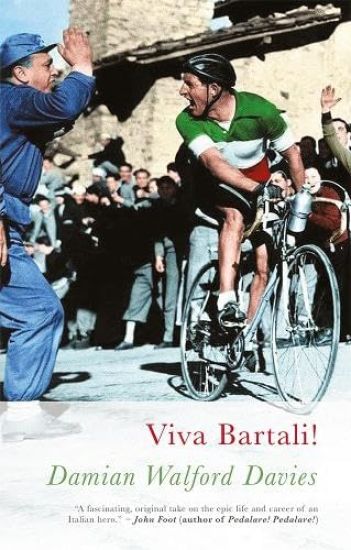
Inspired by the lyrical, mythic mode of Italian sports journalism from the 1930s to the 1950s, Viva Bartali! is a biography-in-verse of the iconic Italian cyclist Gino Bartali (1914-2000), two-time winner of the Tour de France (1938, 1948), known both as 'Gino the Pious' because of his fervent Catholic faith, and as Ginettaccio ('Gino the Terrible'), owing to the short shrift he so often gave the Press. Conjuring Bartali at crux moments in his personal and professional career, through joy and tragedy, defeat and victory, the collection places us alongside the young rider proving his mettle and adding to his palmares in the edgy atmosphere of Mussolini's Fascist Italy, whose political ideology he loathed. From amateur races to the professional one-day classics and on to Tour de France glory, Bartali is seen alongside his fellow riders as both vulnerable body and elite athlete; both cycling's hard man and fond and bereaved father; both kneeling believer and climbing god. The collection gives us an insight into the complex relationship that underpinned his great rivalry with the campionissimo ('champion of champions') Fausto Coppi - the 'man of glass' against Bartali's 'man of iron'. It was a rivalry that a divided a nation and defined a sport. We are with Bartali at the 1948 Tour de France when he takes a phone call from the Italian prime minister, who asks him to do his part in diffusing a political crisis that could have tipped over into violence. And we witness his remarkable secret missions in the saddle as a courier throughout Tuscany during World War 2, carrying forged identity documents that helped save the lives of hundreds of Italian Jews. It was a deed he never spoke about - one for which he was named 'Righteous Among the Nations' by Yad Vashem in 2013.
Docklands

Docklands

Damian Walford Davies

Seren
2019
pokkari
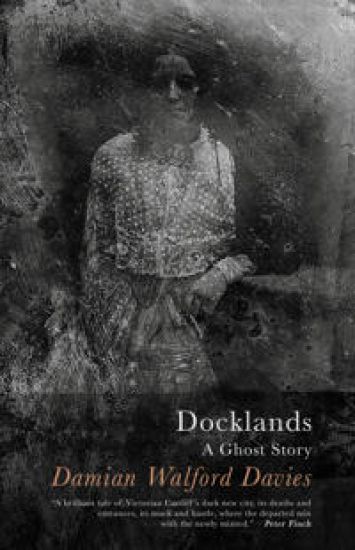
Victorian Cardiff – the world’s busiest port, booming on the back of the coal mined in the Welsh valleys – is vividly imagined through the eyes of the speaker of Damian Walford Davies’s new poetry collection, Docklands: A Ghost Story. It is 1890, and three dark terraces down the docks are to be levelled to make way for a new square. The commission is given to the chief partner in a successful Cardiff architectural firm – a man supremely sure of himself. Yielding to docklands’ temptations, he becomes ever more estranged from a wife tormented by the death of their child. As the square rises from the ruins of the terraces, the louche architect encounters ‘the girl’. A disquieting fin-de-siècle ghost story in verse, Docklands explores grey worlds at the edges of the eye, conjuring late-Victorian Cardiff’s hustling, booming, sullied docks – and the horrors they conceal. A study of the violences perpetrated against wives and daughters, and of patterns of grief and longing, this disturbing sequence summons lost children and dark desires. Seen through the architect’s eyes, the well-to-do streets of an expanding Cardiff and the shady spaces of the docks become the stage for a haunting play of presences that threaten to unravel his uneasy bourgeois world. Among his designs – churches, neo-gothic villas and gargoyles – is a mermaid-figure fountain that becomes a totem of dark desire. The architect’s broken wife, Eleanor, is a central and unsettling presence. Among the architect’s acquaintances – conjured as characters in their own right – is the Irish cabbie, O’Driscoll, who regularly ferries him to dark assignations and who confirms rumours of a ghostly girl; the ‘ladybirds’ or street walkers with whom the architect consorts; and Cardiff’s trade magnates. Also making an appearance in the architect’s social circle are the Dahls –the parents of the famous Cardiff-born children’s author.
Romanticism, History, Historicism

Romanticism, History, Historicism

Damian Walford Davies

Routledge
2012
nidottu
The "(re)turn to history" in Romantic Studies in the 1980s marked the beginning of a critical orthodoxy that continues to condition, if not define, our sense of the Romantic period twenty-five years on. Romantic New Historicism’s revisionary engagements have played a central role in the realignment of the field and in the expansion of the Romantic canon. In this major new collection of eleven essays, critics reflect on New Historicism’s inheritance, its achievements and its limitations. Integrating a self-reflexive engagement with New Historicism’s "history" and detailed attention to a range of Romantic lives and literary texts, the collection offers a close-up view of Romanticism’s hybrid present, and a dynamic vision of its future.
Witch

Witch

Damian Walford-Davies

Seren
2012
nidottu
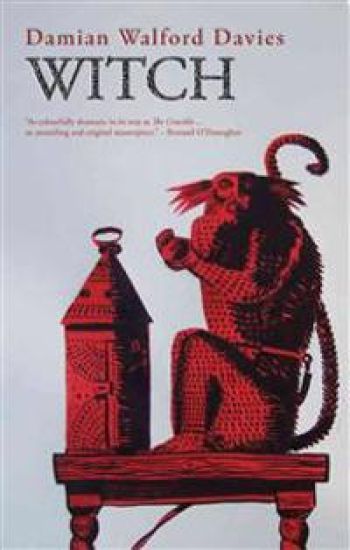
With the narrative pull of a novel and the vibrancy of a play for voices, Witch offers a thrilling portrait of a Suffolk village in the throes of the witchcraft hunts of the mid-seventeenth century. The poems in this collection are dark spells, compact and moving: seven sections, each of seven poems, each of seven couplets. Taken altogether, Witch is a damning parable that chimes with the terror and anxieties of our own haunted age." As colourfully dramatic in its way as The Crucible... an unsettling and original masterpiece." Bernard O'Donoghue"A performer with great panache and stylistic verve." Nicholas Murray"Fascinating and deeply unsettling"Wales Arts ReviewResponses to Suit of Lights (2009):"Astonishing, knock-you-backwards work... startlingly different." Jane Holland"His lines startle with freshness and animation... refined, but never squeamish... outstanding." Alison Brackenbury"A succession of well-observed, witty, sparely written poems, satisfyingly visceral, and unsentimental." Alice Kavounas, Poetry ReviewDamian Walford Davies was born in Aberystwyth in 1971. His two previous poetry collections are Whiteout (Parthian, 2006) and Suit of Lights (Seren, 2009), a Wales Literature Exchange Bookshelf Choice. He is Head of the Department of English and Creative Writing at Aberystwyth University.
Romanticism, History, Historicism

Romanticism, History, Historicism

Damian Walford Davies

Routledge
2008
sidottu
The "(re)turn to history" in Romantic Studies in the 1980s marked the beginning of a critical orthodoxy that continues to condition, if not define, our sense of the Romantic period twenty-five years on. Romantic New Historicism’s revisionary engagements have played a central role in the realignment of the field and in the expansion of the Romantic canon. In this major new collection of eleven essays, critics reflect on New Historicism’s inheritance, its achievements and its limitations. Integrating a self-reflexive engagement with New Historicism’s "history" and detailed attention to a range of Romantic lives and literary texts, the collection offers a close-up view of Romanticism’s hybrid present, and a dynamic vision of its future.
Whiteout

Whiteout

Damian Walford-Davies; Richard Marggraf-Turley

Parthian Books
2006
nidottu
A volume of impassioned poems, from the elegiac to the tongue-in- cheek. It succeeds in examining the state of the world, its uncertainties and disorders. The book is co-authored, a feature which is commensurate with the varying voices and perspectives in the material.
Presences That Disturb

Presences That Disturb

Damian Walford Davies

University of Wales Press
2002
sidottu
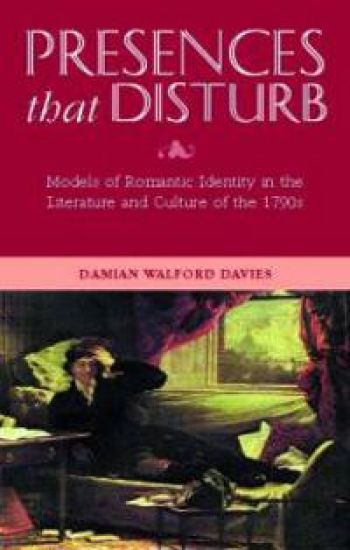
This work looks at the impact of five "archetypal" figures on literature and culture of the 1790s in Britain. The figures covered are: Tewdrig, the hermit-king; Vortigen, the Dark-Age traitor, the Polish General Kosciusko; Iolo Morganwg; and the Jacobin demagogue John Thelwall.