Kirjojen hintavertailu – 12 859 828 kirjaa ja 27 kauppaa

Kirjailija

Damien Kingsbury

Kirjat ja teokset yhdessä paikassa: 20 kirjaa, julkaisuja vuosilta 2000–2026, suosituimpiin kuuluu International Development. Vertaile teosten hintoja ja tarkista saatavuus suomalaisista kirjakaupoista.

20 kirjaa

Kirjojen julkaisuvuodet: 2000–2026.

International Development

International Development

Damien Kingsbury; John McKay; Matthew Clarke; Kyoko Kusakabe

BLOOMSBURY PUBLISHING PLC
2026
nidottu
How can a country industrialise without causing environmental damage? How do development professionals ensure they act in the interests of recipients, rather than their own donor country? And how is the humanitarian project of development complicated by ideological objectives? The fourth edition of this renowned textbook covers the most urgent issues facing the field of development. With the return of Russia as a global actor, renewed conflict in the Middle East, and global inequality exacerbated by climate change and global health crises, the questions underpinning international development are increasingly fraught. For most of its history, international development was shaped by Cold War competition; at the turn of the twenty-first century, the paradigm shifted as China assumed a greater role, and post-9/11 US development initiatives were intended to reduce militancy in the Middle East. As these tensions return to the world stage, it is ever more important for students to ask what development is – or should be – and what it can achieve. With increased attention to gender and postcolonial perspectives and strong coverage of security, economics and global order, this book is essential reading for students of international development.
International Development

International Development

Damien Kingsbury; John McKay; Matthew Clarke; Kyoko Kusakabe

BLOOMSBURY PUBLISHING PLC
2026
sidottu
How can a country industrialise without causing environmental damage? How do development professionals ensure they act in the interests of recipients, rather than their own donor country? And how is the humanitarian project of development complicated by ideological objectives? The fourth edition of this renowned textbook covers the most urgent issues facing the field of development. With the return of Russia as a global actor, renewed conflict in the Middle East, and global inequality exacerbated by climate change and global health crises, the questions underpinning international development are increasingly fraught. For most of its history, international development was shaped by Cold War competition; at the turn of the twenty-first century, the paradigm shifted as China assumed a greater role, and post-9/11 US development initiatives were intended to reduce militancy in the Middle East. As these tensions return to the world stage, it is ever more important for students to ask what development is – or should be – and what it can achieve. With increased attention to gender and postcolonial perspectives and strong coverage of security, economics and global order, this book is essential reading for students of international development.
The Rise and Decline of Modern Democracy

The Rise and Decline of Modern Democracy

Damien Kingsbury

TAYLOR FRANCIS LTD
2023
nidottu
The Rise and Decline of Modern Democracy assesses the rise of, subsequent political challenges to, and decline of, contemporary liberal democratic processes, in particular since the ‘third wave’ of democratization from the 1990s. Democracy is in global decline. Fewer countries are democratic and fewer people, globally, live in substantive democracies. Autocracy is now the dominant political form and the future looks, at best, challenging for the retention of such democracies that remain. As they did a century ago, nationalism and populism have again reared their ugly heads, and more people are claiming that democracy no longer addresses their most compelling needs or interests. This book examines what democracy is and the circumstances that allowed – even encouraged – it to arise. Democracy has been a product of a need to find a political model that mediates between competing interests, building on conducive conditions. However, there have since been fundamental changes to those conditions, imbalances within democratic countries and between countries, that have diminished the strength of the democratic proposition. The question now arises as to whether democracy can continue as a matter of political will. Challengers to democracy, from the radical Right in developed countries to populist autocracy and state-centred authoritarianism in developing countries, have increasingly shown this may not be the case. Democracy may survive, as this book concludes, but is likely to do so only with more substantial and conscious commitment to the democratic project, with recognition of the need to replenish the fertility of the political soil in which democracy grows. This wide-ranging and empirically and theoretically rich book will be of interest to students, scholars and researchers of political science, international relations, history and democracy.
The Rise and Decline of Modern Democracy

The Rise and Decline of Modern Democracy

Damien Kingsbury

TAYLOR FRANCIS LTD
2023
sidottu
The Rise and Decline of Modern Democracy assesses the rise of, subsequent political challenges to, and decline of, contemporary liberal democratic processes, in particular since the ‘third wave’ of democratization from the 1990s. Democracy is in global decline. Fewer countries are democratic and fewer people, globally, live in substantive democracies. Autocracy is now the dominant political form and the future looks, at best, challenging for the retention of such democracies that remain. As they did a century ago, nationalism and populism have again reared their ugly heads, and more people are claiming that democracy no longer addresses their most compelling needs or interests. This book examines what democracy is and the circumstances that allowed – even encouraged – it to arise. Democracy has been a product of a need to find a political model that mediates between competing interests, building on conducive conditions. However, there have since been fundamental changes to those conditions, imbalances within democratic countries and between countries, that have diminished the strength of the democratic proposition. The question now arises as to whether democracy can continue as a matter of political will. Challengers to democracy, from the radical Right in developed countries to populist autocracy and state-centred authoritarianism in developing countries, have increasingly shown this may not be the case. Democracy may survive, as this book concludes, but is likely to do so only with more substantial and conscious commitment to the democratic project, with recognition of the need to replenish the fertility of the political soil in which democracy grows. This wide-ranging and empirically and theoretically rich book will be of interest to students, scholars and researchers of political science, international relations, history and democracy.
Separatism and the State

Separatism and the State

Damien Kingsbury

TAYLOR FRANCIS LTD
2022
nidottu
This book proposes and tests a ‘theory of separatism’ to determine if there are key commonalities as to why separatist movements rise and what fuels them. In the post-Cold War period separatism has been on the rise. Today, there are more than 100 active separatist movements, with around 70 of them engaging in violence. This book focuses on examples from Europe, the Middle East, Africa, and Asia to highlight the commonalities found across the case studies. It examines the idea of separatism, to better understand what drives movements to break away from preexisting states; demonstrates the factors which produce both violent separatism and the rise of armed non-state actors; and shows the options for the resolution of such conflict, based on considering claims for separatism from the perspectives of separatist movements. This book will be applicable for undergraduate and postgraduate students of International Relations and International Politics as well as Conflict/Peace Studies, Anthropology and Post-Colonial Studies.
Separatism and the State

Separatism and the State

Damien Kingsbury

Routledge
2021
sidottu
This book proposes and tests a ‘theory of separatism’ to determine if there are key commonalities as to why separatist movements rise and what fuels them. In the post-Cold War period separatism has been on the rise. Today, there are more than 100 active separatist movements, with around 70 of them engaging in violence. This book focuses on examples from Europe, the Middle East, Africa, and Asia to highlight the commonalities found across the case studies. It examines the idea of separatism, to better understand what drives movements to break away from preexisting states; demonstrates the factors which produce both violent separatism and the rise of armed non-state actors; and shows the options for the resolution of such conflict, based on considering claims for separatism from the perspectives of separatist movements. This book will be applicable for undergraduate and postgraduate students of International Relations and International Politics as well as Conflict/Peace Studies, Anthropology and Post-Colonial Studies.
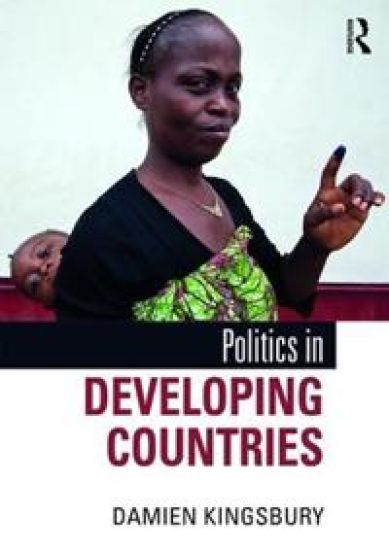
Politics in Developing Countries

Politics in Developing Countries

Damien Kingsbury

Routledge
2019
sidottu
Politics in Developing Countries provides a clear and reader-friendly introduction to the key factors and themes that shape political processes in developing countries. Achieving development outcomes such as reducing poverty and inequality is only possible through efficient governance, well-planned policies and careful allocation of resources, but often politics in developing countries has been identified with mismanagement, corruption, conflict and repression of dissent. This book assesses the politics of developing countries in the period since decolonisation, focusing on the ways in which states have or have not worked to the advancement of their citizens’ interests. Key topics include: Colonialism and its legacy Ethnicity and nation building Governance, corruption and the role of the state Poverty and the political economy of development Aid and outside influence. Drawing on a range of case studies from around the world, Politics in Developing Countries looks at the consistencies and variations between developing countries, examining why some have forestalled political change by liberalising their economies, and others have actively stifled calls for change. Wide-ranging and engagingly written, this introductory textbook is perfect for students of politics and international development, as well as for those with a general interest in the challenges faced by countries in the Global South.
Politics in Developing Countries

Politics in Developing Countries

Damien Kingsbury

Routledge
2019
nidottu
Politics in Developing Countries provides a clear and reader-friendly introduction to the key factors and themes that shape political processes in developing countries. Achieving development outcomes such as reducing poverty and inequality is only possible through efficient governance, well-planned policies and careful allocation of resources, but often politics in developing countries has been identified with mismanagement, corruption, conflict and repression of dissent. This book assesses the politics of developing countries in the period since decolonisation, focusing on the ways in which states have or have not worked to the advancement of their citizens’ interests. Key topics include: Colonialism and its legacy Ethnicity and nation building Governance, corruption and the role of the state Poverty and the political economy of development Aid and outside influence. Drawing on a range of case studies from around the world, Politics in Developing Countries looks at the consistencies and variations between developing countries, examining why some have forestalled political change by liberalising their economies, and others have actively stifled calls for change. Wide-ranging and engagingly written, this introductory textbook is perfect for students of politics and international development, as well as for those with a general interest in the challenges faced by countries in the Global South.
Power Politics and the Indonesian Military
Throughout the postwar history of Indonesia, the military have played a key role in the politics of the country and in imposing unity on a fragmentary state. The collapse of the authoritarian New Order government of President Suharto weakened the state and the armed forces briefly lost their grip on control of the archipelago. However, under President Megawati, the military has again begun to assert itself, and re-impose its heavy hand on control of the state, most notably in the fracturing outer provinces. Based on extensive original research, this book examines the role of the military in Indonesian politics. It looks at the role of the military historically, examines the different ways it is involved in politics, and considers how the role of the military might develop in what is still an uncertain future.
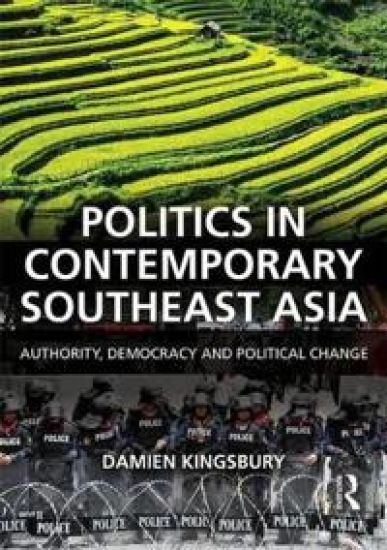
Politics in Contemporary Southeast Asia
The countries of Southeast Asia continue to change, evolve and chart courses that sometimes leave outside observers puzzled. Politics in Contemporary Southeast Asia thoroughly assesses the political challenges and changes faced by the countries of Southeast Asia in the 21st century. Focusing on political processes throughout, Kingsbury introduces readers to the challenges of representation and accountability of the regional governments, degrees of good governance and transparency, and the role of elites and militaries in shaping or determining political outcomes. This book provides: A comprehensive, but accessible, introduction to political change and processes in Southeast Asia. Analytic criteria for assessment of case studies. Detailed country-specific surveys. Information based on extensive research on, and work in, the region. Providing cutting-edge coverage of Southeast Asian politics in all regions, this highly accessible and comprehensive book is suitable for undergraduate and postgraduate courses on Southeast Asian Studies, Asian Politics, and Democratization.
International Development

International Development

Damien Kingsbury; John McKay; Janet Hunt

Red Globe Press
2016
sidottu
This comprehensive and broad-ranging introductory textbook examines the key aspects of contemporary international development from both a practical and theoretical perspective. It addresses the fundamental question of what 'development' actually is and examines social, economic and environmental developments around the world. Written by experts with extensive field experience, this text introduces key issues in the development debate from how the developing world is changing global order to discussions on gender and development as well as security and development. International Development is a critical and interdisciplinary introduction to the contested field of development that is the ideal companion for both undergraduate and postgraduate students studying modules in development on degrees in international politics, international relations and development studies. This title will also appeal to policy-makers working in areas of development and professionals working in the area.
International Development

International Development

Damien Kingsbury; John McKay; Janet Hunt

Red Globe Press
2016
nidottu

Halvin toimitettuna 62,40 €

This comprehensive and broad-ranging introductory textbook examines the key aspects of contemporary international development from both a practical and theoretical perspective. It addresses the fundamental question of what 'development' actually is and examines social, economic and environmental developments around the world. Written by experts with extensive field experience, this text introduces key issues in the development debate from how the developing world is changing global order to discussions on gender and development as well as security and development. International Development is a critical and interdisciplinary introduction to the contested field of development that is the ideal companion for both undergraduate and postgraduate students studying modules in development on degrees in international politics, international relations and development studies. This title will also appeal to policy-makers working in areas of development and professionals working in the area.
Sri Lanka and the Responsibility to Protect
This book provides a study of the war by Liberation Tigers of Tamil Eelam (LTTE) to create a separate state in Sri Lanka. It examines the ways in which this war should, in principle, have invoked ‘Responsibility to Protect’ principles, as well as the political, legal and practical problems involved and, ultimately, why the international community failed to act. Over the years there have been several events, including those in Rwanda, Sierra Leone, Timor-Leste, Darfur, and Kosovo, that have led the international community to accept a responsibility to protect. However, despite its overwhelming preliminary endorsement, the principles of this concept are still not universally sanctioned and there are some strong international opponents, including some countries that were initial signatories of the convention. By considering the example of Sri Lanka, the text focuses on what conditions could satisfy or demand the application of responsibility to protect. It further presents a case as to why this conflict was, and may still be, the normative responsibility of the international community. Sri Lanka and the Responsibility to Protect will be of great interest to students of South-East Asian politics, human rights, international law, ethnic conflict, security studies and IR in general.
Political Development

Political Development

Damien Kingsbury

Routledge
2007
sidottu
This book fills a growing gap in the literature on international development by addressing the debates about good governance and institution-building within the context of political development. Political Development returns the key issues of human rights and democratization to the centre of the development debate and offers the reader an alternative to the conventional approach to, and definition of, the idea of ‘development’. Discussing political development in its broadest context, it includes chapters on democracy, institution-building, the state, state failure, nation, human rights and political violence. Damien Kingsbury, a leading expert on development and Southeast Asia, argues that ‘good governance’, in its common usage, is too narrowly defined and that good governance is not just about ensuring the integrity of a state’s financial arrangements, but that it goes to the core social and political issues of transparency and accountability, implying a range of social structures defined as ‘institutions’. Providing new insights into political development, this comprehensive text can be used on advanced undergraduate and postgraduate courses in international development, comparative politics, political theory and international relations.
Political Development

Political Development

Damien Kingsbury

Routledge
2007
nidottu
This book fills a growing gap in the literature on international development by addressing the debates about good governance and institution-building within the context of political development. Political Development returns the key issues of human rights and democratization to the centre of the development debate and offers the reader an alternative to the conventional approach to, and definition of, the idea of ‘development’. Discussing political development in its broadest context, it includes chapters on democracy, institution-building, the state, state failure, nation, human rights and political violence. Damien Kingsbury, a leading expert on development and Southeast Asia, argues that ‘good governance’, in its common usage, is too narrowly defined and that good governance is not just about ensuring the integrity of a state’s financial arrangements, but that it goes to the core social and political issues of transparency and accountability, implying a range of social structures defined as ‘institutions’. Providing new insights into political development, this comprehensive text can be used on advanced undergraduate and postgraduate courses in international development, comparative politics, political theory and international relations.
Violence in Between

Violence in Between

Damien Kingsbury

Monash University Publishing
2005
nidottu
A recent series of terrorist attacks, the uncovering of a large terrorist network, and a string of continuing regional conflicts have raised an awareness that Southeast Asia is amongst the world's most troubled areas. This book analyzes local terrorism and state repression in this populous, strategically important region.
Power Politics and the Indonesian Military
Throughout the postwar history of Indonesia, the military have played a key role in the politics of the country and in imposing unity on a fragmentary state. The collapse of the authoritarian New Order government of President Suharto weakened the state and the armed forces briefly lost their grip on control of the archipelago. However, under President Megawati, the military has again begun to assert itself, and re-impose its heavy hand on control of the state, most notably in the fracturing outer provinces. Based on extensive original research, this book examines the role of the military in Indonesian politics. It looks at the role of the military historically, examines the different ways it is involved in politics, and considers how the role of the military might develop in what is still an uncertain future.
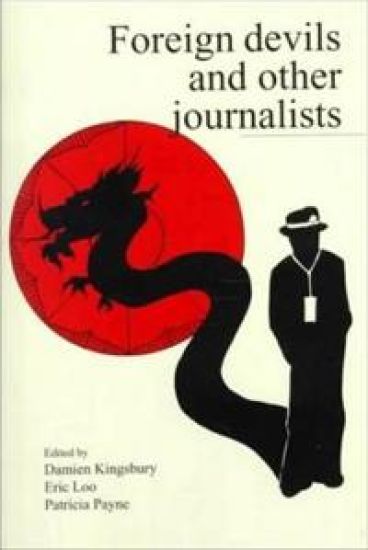
Foreign Devils and Other Journalists

Foreign Devils and Other Journalists

Damien Kingsbury

Monash Asia Institute Press (MAI Press)
2000
nidottu
How do the Western media represent Asia? How do the Asian media represent the West? What is the role of the media? What should be the media's relationship with the state? Australia's leading academics on the media in Southeast Asia provide provocative essays focusing on key issues in reporting on and within the region.