Kirjojen hintavertailu – 12 859 824 kirjaa ja 27 kauppaa

Kirjailija

Dan Awrey

Kirjat ja teokset yhdessä paikassa: 4 kirjaa, julkaisuja vuosilta 2016–2026, suosituimpiin kuuluu Principles of Financial Regulation. Vertaile teosten hintoja ja tarkista saatavuus suomalaisista kirjakaupoista.

4 kirjaa

Kirjojen julkaisuvuodet: 2016–2026.

Principles of Financial Regulation

Principles of Financial Regulation

John Armour; Dan Awrey; Paul Davies; Luca Enriques; Jeffrey N. Gordon; Colin Mayer; Jennifer Payne

Oxford University Press
2016
nidottu

Halvin toimitettuna 64,70 €

The financial crisis of 2007-9 revealed serious failings in the regulation of financial institutions and markets, and prompted a fundamental reconsideration of the design of financial regulation. As the financial system has become ever-more complex and interconnected, the pace of evolution continues to accelerate. It is now clear that regulation must focus on the financial system as a whole, but this poses significant challenges for regulators. Principles of Financial Regulation describes how to address those challenges. Examining the subject from a holistic and multidisciplinary perspective, Principles of Financial Regulation considers the underlying policies and the objectives of regulation by drawing on economics, finance, and law methodologies. The volume examines regulation in a purposive and dynamic way by framing the book in terms of what the financial system does, rather than what financial regulation is. By analysing specific regulatory measures, the book provides readers to the opportunity to assess regulatory choices on specific policy issues and encourages critical reflection on the design of regulation.

Principles of Financial Regulation

Principles of Financial Regulation

John Armour; Dan Awrey; Paul Davies; Luca Enriques; Jeffrey N. Gordon; Colin Mayer; Jennifer Payne

Oxford University Press
2016
sidottu
The financial crisis of 2007-9 revealed serious failings in the regulation of financial institutions and markets, and prompted a fundamental reconsideration of the design of financial regulation. As the financial system has become ever-more complex and interconnected, the pace of evolution continues to accelerate. It is now clear that regulation must focus on the financial system as a whole, but this poses significant challenges for regulators. Principles of Financial Regulation describes how to address those challenges. Examining the subject from a holistic and multidisciplinary perspective, Principles of Financial Regulation considers the underlying policies and the objectives of regulation by drawing on economics, finance, and law methodologies. The volume examines regulation in a purposive and dynamic way by framing the book in terms of what the financial system does, rather than what financial regulation is. By analysing specific regulatory measures, the book provides readers to the opportunity to assess regulatory choices on specific policy issues and encourages critical reflection on the design of regulation.
Beyond Banks

Beyond Banks

Dan Awrey

PRINCETON UNIVERSITY PRESS
2026
pokkari
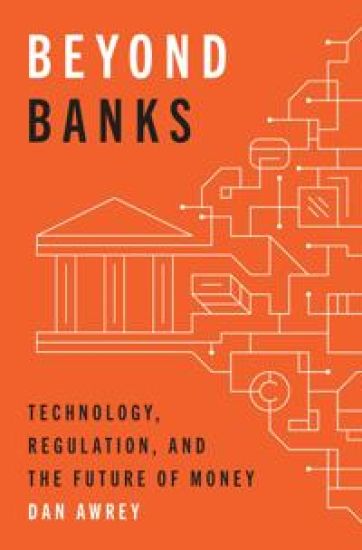
How new technology is rapidly changing the nature of money and the way we pay A diverse and growing range of financial institutions and platforms—from PayPal and Venmo to WeChat, Alipay, and the brave new world of stablecoins—has harnessed new technology to disrupt the system of money and payments as we know it. Beyond Banks explains why this disruption holds out the promise of faster, cheaper, more convenient, and more secure payments, but also how it increasingly risks exposing consumers, businesses, and governments to the problem of bad money. Dan Awrey traces the origins of our current bundled system of banking, money, and payments. He explains why the problem of bad money—the result of antiquated and inadequate laws and regulation that fail to establish credible commitments to hold, transfer, or return a customer’s money on demand—requires that policymakers fundamentally rethink their approach toward the design of the laws and institutions at the heart of this system. He presents ways to effectively unbundle banking from money and payments, ensure the credibility of monetary commitments, and promote the stability of this system. Awrey also envisions a more forward-looking role for policymakers in encouraging greater technological experimentation, competition, and innovation in the realm of payments. Beyond Banks sheds critical light on the important but too often dysfunctional relationship among technology, regulation, and money, and lays the foundations for a safer, more nimble, and more inclusive system of money and payments.
Beyond Banks

Beyond Banks

Dan Awrey

PRINCETON UNIVERSITY PRESS
2024
sidottu
How new technology is rapidly changing the nature of money and the way we payA diverse and growing range of financial institutions and platforms—from PayPal and Venmo to WeChat, Alipay, and the brave new world of stablecoins—has harnessed new technology to disrupt the system of money and payments as we know it. Beyond Banks explains why this disruption holds out the promise of faster, cheaper, more convenient, and more secure payments, but also how it increasingly risks exposing consumers, businesses, and governments to the problem of bad money. Dan Awrey traces the origins of our current bundled system of banking, money, and payments. He explains why the problem of bad money—the result of antiquated and inadequate laws and regulation that fail to establish credible commitments to hold, transfer, or return a customer’s money on demand—requires that policymakers fundamentally rethink their approach toward the design of the laws and institutions at the heart of this system. He presents ways to effectively unbundle banking from money and payments, ensure the credibility of monetary commitments, and promote the stability of this system. Awrey also envisions a more forward-looking role for policymakers in encouraging greater technological experimentation, competition, and innovation in the realm of payments. Beyond Banks sheds critical light on the important but too often dysfunctional relationship among technology, regulation, and money, and lays the foundations for a safer, more nimble, and more inclusive system of money and payments.