Kirjojen hintavertailu – 12 903 725 kirjaa ja 27 kauppaa
Kirjailija
Dan Cohn-Sherbok
Kirjat ja teokset yhdessä paikassa: 44 kirjaa, julkaisuja vuosilta 1991–2022, suosituimpiin kuuluu The Wisdom of Judaism. Vertaile teosten hintoja ja tarkista saatavuus suomalaisista kirjakaupoista.
Life expectancy is going up. Our parents are increasingly likely to be living into their eighties and nineties. Many find themselves in the position of caring for their parents when they are already retired themselves, or not in good health, or still have children to support financially. What can we do for the best in these situations? Do you feel your parents are a burden? Do they feel that? How do we cope with the huge costs of geriatric care? How do we manage this conflicting tangle of interests? This is a practical book that looks at the range of alternatives and provides realistic solutions. It also recognizes the negative and ambivalent feelings that plague families on all sides. Extreme old age is not easy. We need to help our parents through the difficulties they inevitably face during their final years, and balance those needs with equally pressing ones elsewhere. Dan and Lavinia Cohn-Sherbok, drawing on their own experiences, here provide a succinct overview of the problems and answers for all with elderly parents.
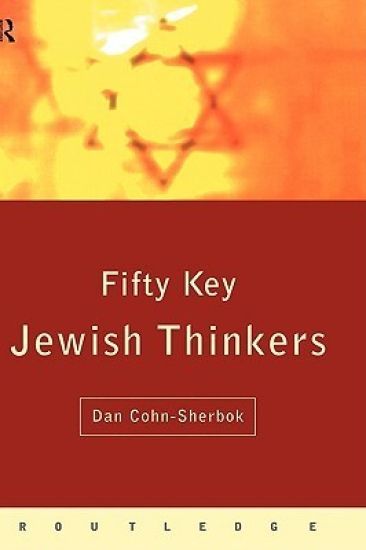
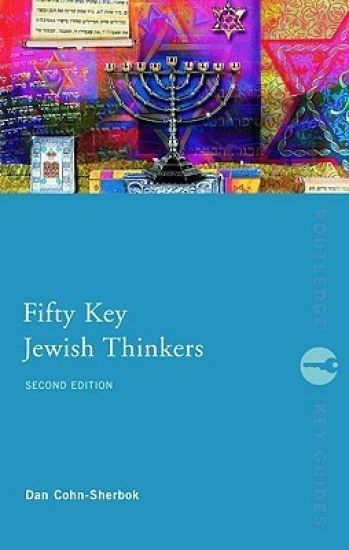
Fifty Key Jewish Thinkers is a panoramic survey of over 2,000 years of Jewish thought, religious and secular, ancient and modern. Now in its second edition, this essential reference guide contains new introductions to the lives and works of such thinkers as: Hannah Arendt, Immanuel Levinas, Judith Plaskow, Sigmund Freud, and Walter Benjamin. Also including fully updated guides to further reading on figures from the middle ages through to the twenty-first century, historical maps and a chronology placing the thinkers in context, this is an essential and affordable one-volume reference to a rich and complex tradition.
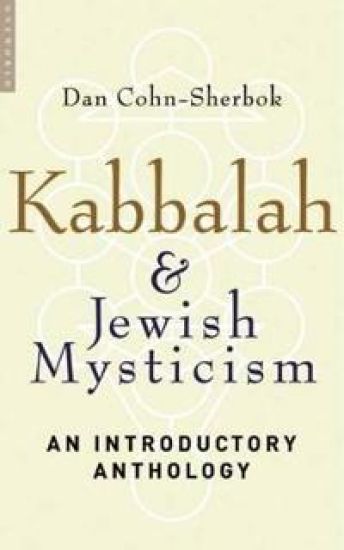
Traditionally, 'kabbalah' refers to the teachings of Jewish mystics, their reflections on the Divine and their experiences of God: through Kabbalah, we embark upon a spiritual quest to discover God, our souls and the nature of the world. In this fascinating anthology of Jewish mystical texts, Dan Cohn-Sherbok traces the tradition's development from the early rabbinic period to its present day resurgence. Beginning with an illuminating introduction to its history, this book presents the important texts which underpin Kabbalah and Jewish mysticism, with supporting explanations provided to help readers unfamiliar with the subject. Essential for a deep understanding of this esoteric spiritual quest, Kabbalah and Jewish Mysticism will captivate the interested reader and student alike.
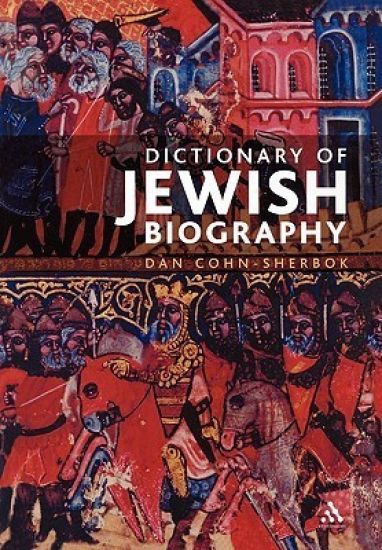
"The Dictionary of Jewish Biography" provides a rapid reference to those Jewish men and women who have, over the last four thousand years, contributed to the life, history and study of Judaism in all its facets. From Abraham to Saul Bellow, from Moses Maimonides to Woody Allen, from the Baal Shem Tov to Albert Einstein, this comprehensive dictionary of Jewish biographies provides a first point of entry into the fascinating richness of the Jewish heritage. Modelled on the highly acclaimed Dictionary of Christian Biography (Continuum 2001) and with the advice of leading Jewish scholars, the Dictionary of Jewish Biography provides a rapid reference to those Jewish men and women who have, over the last four thousand years, contributed to the life of the Jewish people and the history of the Jewish religion. This dictionary will prove essential for general readers interested in the evolution of Judaism from ancient times to the present day, a perfect study aid for students and teachers. Designed as an accessible reference tool, this volume is an indispensable guide for anyone interested in the history of the Jewish people - the uninitiated will become initiated; the curious will become informed; the informed will now have a handy reference tool. This panoramic bibliographic survey provides a unique guide to the leading figures of the past and present. Included are: Rabbinic Scholars, Key Religious Thinkers, Spiritual Leaders, Founders Of Religious Movements, Major Writers, Enlightenment Figures, Novelists And Journalists, Artists Scientists, Mystics, Israeli Politicians, Zionists, Musicians, Actors and Actresses, Film Stars, Famous Rabbis, Distinguished Cantors, Biblical Figures, Athletes, Economists, Architects, and Radicals and Heretics.
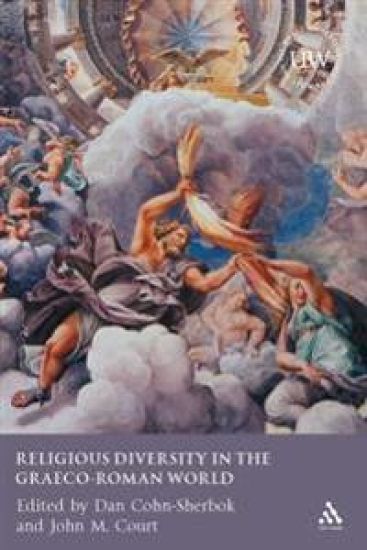
Over the last hundred years there has been a great deal of interest in the nature of religious diversity in the Graeco-Roman World and a variety of scholars have attempted to untangle the complexities of reliogious interaction and conflict. For students of this period there is a need for an introduction to this vast field of scholarship. This book makes a comprehensive survey of this field of enquiry. The first three chapters deal with Judaism: Palestinian Judaism, Diaspora Judaism and Essenes. Philip Esler's account of Palestinian Judaism draws particular attention to the introduction of the analytic methods of social-scientific research to religious research. The next three chapters form a triptych of studies on Christianity, examining in turn the Jesus of history, the apostle Paul, and the early church The final group of three contributors are concerned with religious diversity within the pagan and syncretistic phenomena of the Roman world, treating political, philosophical and practical aspects in the legacy of Greek religion, in Gnosticism, and in Mithraism as an example of the Mystery Religions.
This reader includes extracts from a wide variety of sources, from the Pentateuch and the Talmud of ancient history, through to modern Jewish documents. Among the areas covered by this wide array of literature are the exile of the Jews, Rabbinic Judaism, philosophy, mysticism, Anti-Semitism and Zionism, the Holocaust and its aftermath, and the challenges facing today's Jewish community.
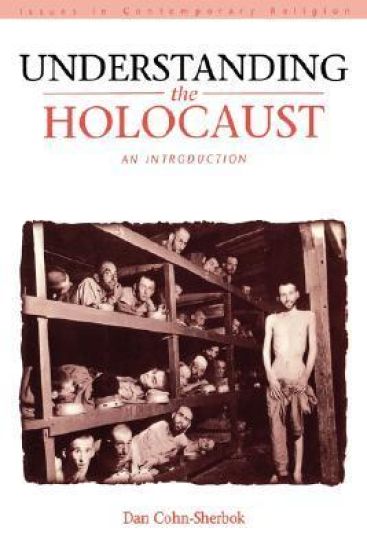
What is the Holocaust? Were Hitlet and his executioners sadistic psychopaths? Were ordinary Germans morally culpable for murdering millions of innocent victims? This volume seeks to explore these and other ethical, cultural and religious questions within a historical context. Beginning with the origin and growth of anti-Semitism, this historical survey continues with a consideration of the legacy of the Holocaust in the modern world. Designed as a book for students in colleges and universities, as well as for the general reader, Understanding the Holocaust details the key themes and events of the Holocaust and discusses their implications. Unlike other books on the subject it contains both a history of the Holocaust and extensive reflections on the social, religious and moral issues raised by the emergence of the Third Reich and its impact on subsequent history. The book also contains maps and illustrations related to the growth and development of Nazism and a lengthy biography. Rabbi Professor Dan Cihn-Sherbok received a doctorate in philosophy from Cambridge University and an honorary doctorate in divinity from the Hebrew Union College-Jewish Institute of Religion. He is Professor of Judaism at the University of Wales at Lampeter. His previous books include The Crucified Jew: Twenty Centuries of Christian Anti-Semitism (1992) and God and the Holocaust (1996).
For nearly four thousand years the wisdom of Judaism has supported people through exile and suffering, good times and bad. Founded on the universal principles of justice, integrity and righteousness, its message is as relevant today as ever, and has much to offer all members of the global community, regardless of race or creed. Contained within this beautiful little book are some of the most profound and pertinent extracts from Jewish writing. Addressing a multitude of timeless themes, from the nature of God to family life, the passages are drawn not only from the scriptures, but also from the work of great Jewish thinkers ancient and modern, male and female. For solace, for inspiration, or simply for browsing through at moments of quiet, this exquisite anthology will be treasured by readers as a source of perpetual wisdom.
Who are the Messianic Jews? What do they believe and practice? What is the Jewish community's reaction to the development of Messianic Judaism? In this pioneering study, Dan Cohn-Sherbok traces the development of the Messianic movement from ancient times to its transformation after World War II. Focusing on the nature of the movement today, the volume continues with a detailed examination of Messianic practices, and the place of Messianic Judaism within the contemporary Jewish community.
This book covers all the elements of Jewish history, from the times of the Ancient Middle East, Mesopotamia and Babylon, to the Jewish diaspora today. It opens with a consideration of the background to the Jewish faith, and its emergence from the Ancient Middle East. It then considers the Pentateuch, its origins, status, and the various different sources. The book then moves on to the themes of conquest and exile, through the Northern Kingdom, the Babylonian conquest and the Maccabean Revolt. Chapter 5 considers Rabbinic Judaism and the Academy at Javneb, while Chapter 6 examines the dispersion of Jews, in the Roman Empire, under early Islamic rule, and in Christian Europe. Chapter 7 studies the Jewish philosophical tradition, while Chapter 8 outlines the origins of Jewish mysticism, including information on the Kabbalah and the Zohar. Chapter 9 is a study of Jewry in Eastern Europe, while Chapter 10 addresses progressive Judaism and the Reform Movement. Chapters 11 and 12 deal with Anti-Semitism, Zionism and the Holocaust; the book closes with a consideration of the challenges facing the Jewish community today, including coverage of the state of Israel and the role of feminism.
Written with clarity and authority by an expert in the field, this new encyclopedia offers an in-depth study of all facets of this rich tradition. Combining breadth with a readable yet concise style, the author has produced a comprehensive volume that is balanced and accessible. It features a complete historical survey of Judaism, and covers figures from Cain to Chagall, topics from fasting to euthanasia, and locations from the Garden of Eden to the Wailing Wall. Dan Cohn-Sherbok's Concise Encyclopedia of Judaism is a lucid and invaluable addition to the library of students and anyone interested in the Jewish faith past and present.
This concise dictionary of Judaism contains over a thousand entries describing all the key aspects of religion, culture and history in the Jewish faith. Designed for the student as well as the general reader, it deserves a place in every library and every Jewish home.
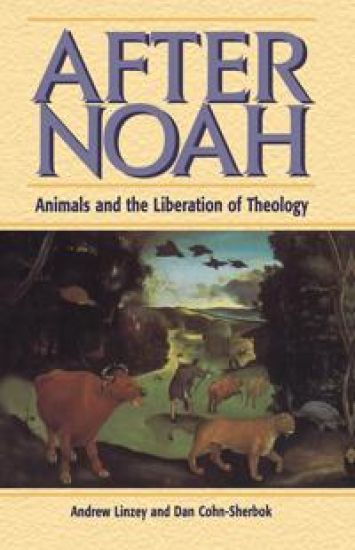
A comprehensive study of Jewish and Christian teaching about animals, this text argues that the treatment of animals is not only a moral issue, but also a theological and spiritual one. The authors show how Jews and Christians have often failed to promote a compassionate and sensitive regard for animals. The text argues that the way we treat animals is a benchmark of the kind of society we are, and that in recognizing the true, and biblically based, value of animals, we liberate ourselves from the idolatry which is to be found at the heart of much contemporary spirituality. It is addressed to all people of faith who believe that, in devaluing animals, we ultimately devalue ourselves and our own souls.
Beginning with the earliest philosopher of the Middle Ages, Saadiah ben Joseph al-Fayyumi, this work surveys the writings of such figures as Solomon ben Joseph ibn Gabirol, Bahya ben Joseph ibn Pakuda, Abraham ben david Halevi ibn Daud, Judah Halevi, Moses Maimonides, Gersonides, Hasdai Crescas, Simon ben Zemah Duran, Joseph Albo, Isaac Arama, and Isaac Abrabanel. Throughout an attempt is made to place these thinkers in an historical context and describe their contributions to the history of Jewish medieval thought in simple and lucid terms. The book is directed to students enrolled in Jewish studies courses as well as to those who seek an awareness and appreciation of the riches of medieval Jewish philosophical tradition.
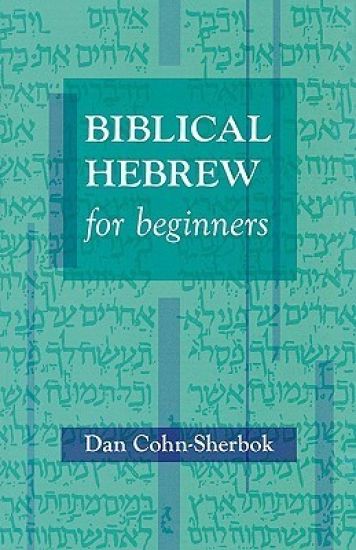
Have you ever wondered what Adam really said to Eve? Or what God said to Job? Learning Hebrew can be easy - and fun. This book shows you how to master the essentials of the language in clear, simple steps - starting right from scratch with the Hebrew alphabet on how to read passages from the Bible itself. There are simple exercises (including answers), a word list, and plenty of examples throughout. Whether you are studying in a group or by yourself, this book will make the words of the Bible come alive in a way you never imagined before. 'For learning Hebrew, the best way is to have an expert by your side. Here is the next best thing - Hebrew without such an aid and without tears! I commend the book warmly.' Lord Coggan (formerly Archbishop of Canterbury).
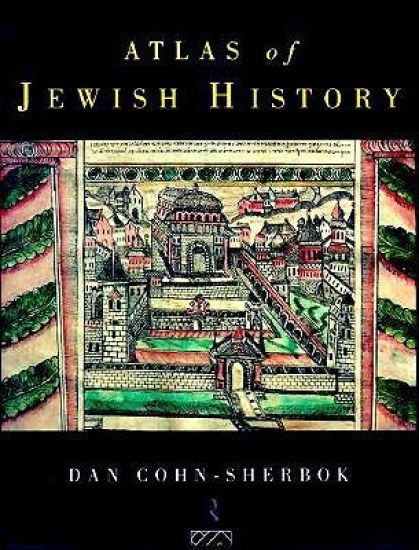
In this illuminating history, Dan Cohn-Sherbok traces the development of Jewish history from ancient times to the present day. Containing over 100 maps and 30 photographs, this is a comprehensive atlas of Jewish history designed for students and the general reader. It is ideally suited for those courses in Jewish or Biblical Studies, serving as a handy reference guide as well as a textbook.
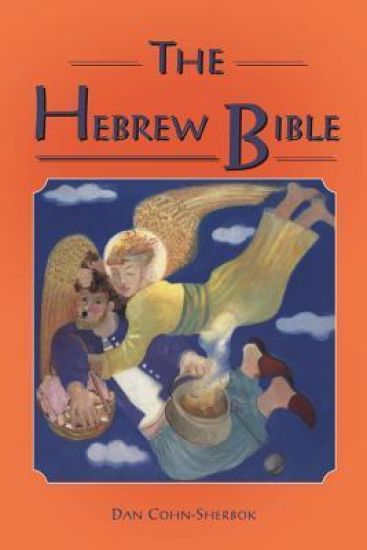
Aiming to provide a concise account of the Hebrew Bible, this text gives a brief account of the place of the Hebrew scriptures in Jewish life and thought, from the early Rabbinic period to the present day. This is followed by an outline of each of the 36 books of the Jewish canon, and a brief presentation of their contents, illustrated by quotations from scripture. The presentation follows the actual structure of the book.