Kirjojen hintavertailu – 12 859 828 kirjaa ja 27 kauppaa

Kirjailija

Dan Davies

Kirjat ja teokset yhdessä paikassa: 23 kirjaa, julkaisuja vuosilta 2001–2025, suosituimpiin kuuluu Brompton. Vertaile teosten hintoja ja tarkista saatavuus suomalaisista kirjakaupoista.

23 kirjaa

Kirjojen julkaisuvuodet: 2001–2025.
The Brompton: Engineering for Change

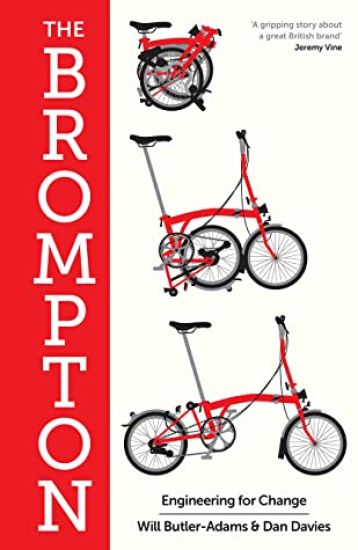
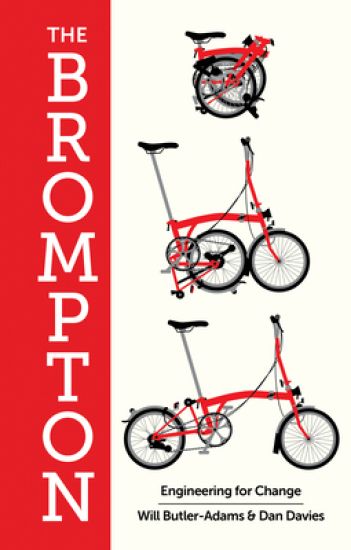
The Brompton: Engineering for Change

William Butler-Adams; Dan Davies

Experiment
2022
sidottu
Lightweight, compact, distinctively styled, and now, electric: The Brompton isn't the only folding bicycle--or even the first. But everyone who has been on one will enthusiastically testify to its marvelous design (virtually unchanged over decades) and the particular joy of riding it. Will Butler-Adams, CEO of Brompton Bicycles, has been at the company for twenty years. Initially, he worked as an engineer for Andrew Ritchie, the bike's brilliant inventor and the business's founder, before taking the helm in 2008. Butler-Adams's heartfelt mission is to grow and promote sustainable urban transportation and to improve city-dwellers' lives everywhere. Under his leadership, Brompton has grown from making a few hundred bikes a year to over 90,000, with revenue of $130 million. But progress hasn't always been easy: There have been boardroom struggles, supply-chain problems, and conflicts with founder Andrew Ritchie. In The Brompton, Butler-Adams brings to life what it means to grow a company to global scale. He also tells the stories of the people who make the Brompton and the people who ride it. And he explains how customers all around the world fell in love with a brand that never set out to be a brand.
Primary Design and Technology for the Future

Primary Design and Technology for the Future

Alan Howe; Dan Davies; Ron Ritchie

CRC Press
2017
sidottu
This is a challenging new book for primary teachers interested in developing their teaching of Design & Technology, subject leaders in D&T, and for student teachers choosing this as their specialty. It will also appeal to in-service providers and LEA advisory staff. Children's creativity, cultural development and citizenship are important but currently underdeveloped in primary education. This book uniquely focuses on how these aspects can be emphasized in the teaching of Design and Technology. The National Curriculum has the potential to bring creativity, cultural development and citizenship into the mainstream and the authors show the considerable extent to which D & T, integrated with other curriculum subjects, can contribute to realizing these goals. There are examples throughout of best current practice showing how such ideas have been implemented.
Primary Design and Technology for the Future

Primary Design and Technology for the Future

Alan Howe; Dan Davies; Ron Ritchie

David Fulton Publishers Ltd
2001
nidottu
This is a challenging new book for primary teachers interested in developing their teaching of Design & Technology, subject leaders in D&T, and for student teachers choosing this as their specialty. It will also appeal to in-service providers and LEA advisory staff. Children's creativity, cultural development and citizenship are important but currently underdeveloped in primary education. This book uniquely focuses on how these aspects can be emphasized in the teaching of Design and Technology. The National Curriculum has the potential to bring creativity, cultural development and citizenship into the mainstream and the authors show the considerable extent to which D & T, integrated with other curriculum subjects, can contribute to realizing these goals. There are examples throughout of best current practice showing how such ideas have been implemented.
The Unaccountability Machine: Why Big Systems Make Terrible Decisions--And How the World Lost Its Mind
Longlisted for the 2024 Financial Times Book of the Year. How life and the economy became a black box--a collection of systems no one understands, producing outcomes no one likes. Passengers get bumped from flights. Phone menus disconnect. Automated financial trades produce market collapse. Of all the challenges in modern life, some of the most vexing come from our relationships with automation: a large system does us wrong, and there's nothing we can do about it. The problem, economist Dan Davies shows, is accountability sinks: systems in which decisions are delegated to a complex rule book or set of standard procedures, making it impossible to identify the source of mistakes when they happen. In our increasingly unhuman world--lives dominated by algorithms, artificial intelligence, and large organizations--these accountability sinks produce more than just aggravation. They make life and economy unknowable--a black box for no reason. In The Unaccountability Machine, Davies lays bare how markets, institutions, and even governments systematically generate outcomes that no one--not even those involved in making them--seems to want. Since the earliest days of the computer age, theorists have foreseen the dangers of complex systems without personal accountability. In response, British business scholar Stafford Beer developed an accountability-first approach to management called "cybernetics," which might have taken off had his biggest client (the Chilean government) not fallen to a bloody coup in 1973. With his signature blend of economic and journalistic rigor, Davies examines what's gone wrong since Beer, including what might have been had the world embraced cybernetics when it had the chance. The Unaccountability Machine is a revelatory and resonant account of how modern life became predisposed to dysfunction.
The Unaccountability Machine

The Unaccountability Machine

Dan Davies

Profile Books Ltd
2025
pokkari

Halvin toimitettuna 17,60 €

LONGLISTED FOR THE FINANCIAL TIMES AND SCHRODERS BUSINESS BOOK OF THE YEAR 2024 A NEW STATESMAN BOOK OF THE YEAR 2024 'A great book ... a wonderful way of talking about our current world' Rory Stewart 'Mischievous and fiercely intelligent' Ed Smith, New Statesman 'One of the most insightful books I've read in a long time' Sam Freedman 'The kind of book from which you look up to find the world suddenly more comprehensible' Guardian 'One of the most useful books of 2024' Economist When we avoid taking a decision, what happens to it? In The Unaccountability Machine, Dan Davies examines why markets, institutions and even governments systematically generate outcomes that everyone involved claims not to want. He casts new light on the writing of Stafford Beer, a legendary economist who argued in the 1950s that we should regard organisations as artificial intelligences, capable of taking decisions that are distinct from the intentions of their members. Management cybernetics was Beer's science of applying self-regulation in organisational settings, but it was largely ignored - with the result being the political and economic crises that that we see today. With his signature blend of cynicism and journalistic rigour, Davies looks at what's gone wrong, and what might have been, had the world listened to Stafford Beer when it had the chance.
Science 5-11

Science 5-11

Kendra McMahon; Alan Howe; Chris Collier; Sarah Earle; Dan Davies; Darren McKay; Kerry-Anne Barber; Lisa Howarth
TAYLOR FRANCIS LTD
2024
nidottu
This fully updated fourth edition of the bestselling textbook Science 5-11 provides a comprehensive introduction to current research and professional practice for teaching science in the primary school. Chapters are organised into five sections, first introducing theory and practice, then providing specific guidance on teaching topics in biology, chemistry and physics, and finally discussing supporting science across the whole school. Updates to the new edition include:Responding to recent changes in the Initial Teacher Education framework, discussion about cognitive science is integrated more fully throughout. Supporting all children's engagement in science by suggesting inclusive and creative ways of building and consolidating knowledge including making connections between topics and with the wider world. New discussion on planning to support pupil progression in scientific knowledge throughout their time at primary school, building on Early Years and preparing for transition to secondary school. Presenting current research and outlining guidance on best practice, Science 5-11 provides a guide to the subject knowledge, curriculum requirements and pedagogical techniques to successfully teach science within the primary school.
Science 5-11

Science 5-11

Kendra McMahon; Alan Howe; Chris Collier; Sarah Earle; Dan Davies; Darren McKay; Kerry-Anne Barber; Lisa Howarth

TAYLOR FRANCIS LTD
2024
sidottu
This fully updated fourth edition of the bestselling textbook Science 5-11 provides a comprehensive introduction to current research and professional practice for teaching science in the primary school. Chapters are organised into five sections, first introducing theory and practice, then providing specific guidance on teaching topics in biology, chemistry and physics, and finally discussing supporting science across the whole school. Updates to the new edition include:Responding to recent changes in the Initial Teacher Education framework, discussion about cognitive science is integrated more fully throughout. Supporting all children's engagement in science by suggesting inclusive and creative ways of building and consolidating knowledge including making connections between topics and with the wider world. New discussion on planning to support pupil progression in scientific knowledge throughout their time at primary school, building on Early Years and preparing for transition to secondary school. Presenting current research and outlining guidance on best practice, Science 5-11 provides a guide to the subject knowledge, curriculum requirements and pedagogical techniques to successfully teach science within the primary school.
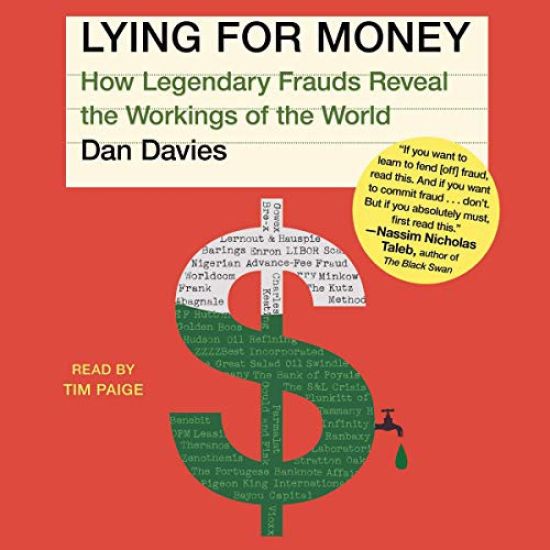
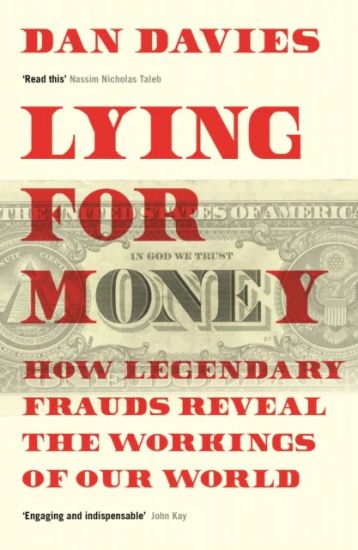
Lying for Money: How Legendary Frauds Reveal the Workings of the World
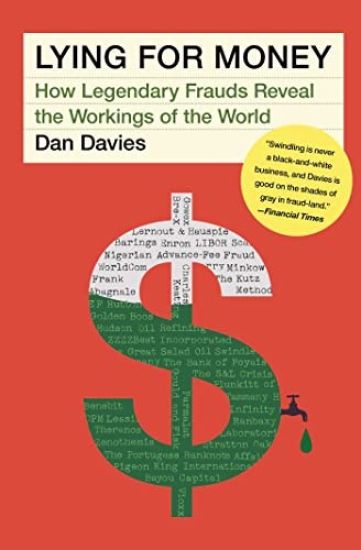
An entertaining, deeply informative explanation of how high-level financial crimes work, written "with verve and wit" (The Sunday Times, London) by an industry insider who's an expert in the field. The way most white-collar crime works is by manipulating institutional psychology. That means creating something that looks as much as possible like a normal set of transactions. The drama comes later, when it all unwinds. Financial crime seems horribly complicated, but there are only so many ways you can con someone out of what's theirs. In Lying for Money, veteran regulatory economist and market analyst Dan Davies tells the story of fraud through a genealogy of financial malfeasance, including: the Great Salad Oil swindle, the Pigeon King International fraud, the fictional British colony of Poyais in South America, the Boston Ladies' Deposit Company, the Portuguese Banknote Affair, Theranos, and the Bre-X scam. Davies brings new insights into these schemes and shows how all frauds, current and historical, belong to one of four categories ("long firm," counterfeiting, control fraud, and market crimes) and operate on the same basic principles. The only elements that change are the victims, the scammers, and the terminology. Revealing some of the most famous frauds of the modern age, Davies explains how fraud has shaped the entire development of the modern world economy. For those "who like their true-crime stories laced with economics will enjoy these forays into the dark side" (Kirkus Reviews) this is a gripping and vivid look at modern market societies.
Lying for Money

Lying for Money

Dan Davies

Profile Books Ltd
2019
pokkari

Halvin toimitettuna 18,50 €

Financial crime seems horribly complicated but there are only so many ways you can con someone out of what's theirs. In fact, there are four. A veteran regulatory economist and market analyst, Dan Davies has years of experience picking the bones out of some of the most famous frauds of the modern age. Now he reveals the big picture that emerges from their labyrinths of deceit. Along the way you'll find out how to fake a gold mine with a wedding ring, a file and a shotgun. You'll see how close Charles Ponzi, the king of pyramid schemes, came to acquiring his own private navy. You'll learn how fraud has shaped the entire development of the modern world economy. And you'll discover whether you have what it takes to be a white-collar criminal mastermind, if that's what you want. (Which you don't. You really, really don't.)
Teaching Science and Technology in the Early Years (3–7)

Teaching Science and Technology in the Early Years (3–7)

Dan Davies; Alan Howe; Christopher Collier; Rebecca Digby; Sarah Earle; Kendra McMahon
Routledge
2019
sidottu
Teaching Science and Technology in the Early Years (3–7) celebrates young children’s amazing capabilities as scientists, designers and technologists. Research-based yet practical and accessible, it demonstrates how scientific designing and making activities are natural to young children, and have the potential for contributing to all aspects of their learning. By identifying the scientific and technological concepts, skills and activities being developed, the book enables the reader to make more focused diagnostic observations of young children and plan for how they can help move them forward in their learning. This third edition has been thoroughly updated and features: fresh insights into young children’s learning from neuroscience and ‘new-materialist’ perspectives; a UK-wide perspective on Early Years curricula and how they support the inclusion of science and technology as an entitlement for young children; new case studies of successful, evidence-based Early Years practice, alongside new examples of practical planning for learning, and advice on documenting children’s learning stories; an updated chapter on assessing and documenting children’s learning, drawing upon findings from the Teacher Assessment in Primary Science (TAPS) project at Bath Spa University. Based on the latest research and first-hand experience, this practical and accessible book is essential reading for Early Years and Primary students on undergraduate, PGCE and Masters-level courses.
Teaching Science and Technology in the Early Years (3–7)

Teaching Science and Technology in the Early Years (3–7)

Dan Davies; Alan Howe; Christopher Collier; Rebecca Digby; Sarah Earle; Kendra McMahon
Routledge
2019
nidottu
Teaching Science and Technology in the Early Years (3–7) celebrates young children’s amazing capabilities as scientists, designers and technologists. Research-based yet practical and accessible, it demonstrates how scientific designing and making activities are natural to young children, and have the potential for contributing to all aspects of their learning. By identifying the scientific and technological concepts, skills and activities being developed, the book enables the reader to make more focused diagnostic observations of young children and plan for how they can help move them forward in their learning. This third edition has been thoroughly updated and features: fresh insights into young children’s learning from neuroscience and ‘new-materialist’ perspectives; a UK-wide perspective on Early Years curricula and how they support the inclusion of science and technology as an entitlement for young children; new case studies of successful, evidence-based Early Years practice, alongside new examples of practical planning for learning, and advice on documenting children’s learning stories; an updated chapter on assessing and documenting children’s learning, drawing upon findings from the Teacher Assessment in Primary Science (TAPS) project at Bath Spa University. Based on the latest research and first-hand experience, this practical and accessible book is essential reading for Early Years and Primary students on undergraduate, PGCE and Masters-level courses.
Science 5-11

Science 5-11

Kendra McMahon; Alan Howe; Chris Collier; Sarah Earle; Dan Davies
Routledge
2017
nidottu
This third edition of the bestselling textbook Science 5–11 has been fully updated to provide a synthesis of research and best practice in teaching and learning that focuses on successful ways to engage and motivate young scientists. Responding to the new curriculum, particularly ‘Working Scientifically’, this edition now includes: New sections on whole-school assessment, mentoring, transitions and a topics-based approach. Reference to the ‘big ideas’ of biology, chemistry and physics with chapters clearly related to this new subject structure. Updated tables of progression in each topic area and reference to cross-curricular contexts. New self-assessment questions for teachers, the option for higher-level thinking and further reading. An updated chapter on subject leadership with an increasing emphasis on monitoring progress. Bringing together research undertaken from a range of activities in the field, this book forms a comprehensive and clear guide, outlining the subject knowledge that a teacher needs, the curriculum requirements and the best ways to go about teaching. A practical guide ideal for students, trainees, mentors and other practising teachers, the book provides information on appropriate science topics for Key Stage 1 and 2.
Teaching Science Creatively

Teaching Science Creatively

Dan Davies; Deb McGregor

Routledge
2016
nidottu
How can you unlock your own creativity to help children learn science creatively? How do you bring the world of ‘real science’ into the classroom? Where does science fit in a creative curriculum? This second edition of Teaching Science Creatively has been fully updated to reflect new research, initiatives and developments in the field. It offers innovative starting points to enhance your teaching and highlights curiosity, observation, exploration and enquiry as central components of children’s creative learning in science. Illustrated throughout with examples from the classroom and beyond, the book explores how creative teaching can harness children’s sense of wonder about the world around them. With easily accessible chapters, it offers a comprehensive introduction to the core elements of creative science learning, supporting both teacher and child in developing scientific concepts and skills. The book explores key issues such as:• the links between scientific and creative processes• how to teach creatively, and for creativity• the role of play in early scientific learning• developing scientific understanding through drama (new)• using the outdoors in science• how theories of learning relate to children’s creative development• teaching science topics in innovative and creative ways – games, drama, role play, puppets, mini-safaris and welly walks! Stimulating and accessible, with contemporary and cutting-edge practice at the forefront, Teaching Science Creatively introduces fresh ideas to support and motivate both new and experienced primary teachers. It is an essential purchase for any professional who wishes to incorporate creative approaches to teaching science in their classroom.
Teaching Science Creatively

Teaching Science Creatively

Dan Davies; Deb McGregor

Routledge
2016
sidottu
How can you unlock your own creativity to help children learn science creatively? How do you bring the world of ‘real science’ into the classroom? Where does science fit in a creative curriculum? This second edition of Teaching Science Creatively has been fully updated to reflect new research, initiatives and developments in the field. It offers innovative starting points to enhance your teaching and highlights curiosity, observation, exploration and enquiry as central components of children’s creative learning in science. Illustrated throughout with examples from the classroom and beyond, the book explores how creative teaching can harness children’s sense of wonder about the world around them. With easily accessible chapters, it offers a comprehensive introduction to the core elements of creative science learning, supporting both teacher and child in developing scientific concepts and skills. The book explores key issues such as:• the links between scientific and creative processes• how to teach creatively, and for creativity• the role of play in early scientific learning• developing scientific understanding through drama (new)• using the outdoors in science• how theories of learning relate to children’s creative development• teaching science topics in innovative and creative ways – games, drama, role play, puppets, mini-safaris and welly walks! Stimulating and accessible, with contemporary and cutting-edge practice at the forefront, Teaching Science Creatively introduces fresh ideas to support and motivate both new and experienced primary teachers. It is an essential purchase for any professional who wishes to incorporate creative approaches to teaching science in their classroom.
In Plain Sight

In Plain Sight

Dan Davies

Quercus Publishing
2015
pokkari

Halvin toimitettuna 19,30 €

A major source for the BBC drama The ReckoningWinner of the 2015 Gordon Burn Prize and the 2015 CWA Non-Fiction DaggerShortlisted for the Orwell Prize and the James Tait Black Prize'An astonishing account' Observer'A compulsive, colourful and chilling read' Sunday Times'An extraordinary book' Mail on SundayDan Davies spent more than a decade on a quest to find the real Jimmy Savile, and interviewed him extensively over a period of six years before his death. Dan also interviewed scores of people, many of them unobtainable while Savile was alive. Jimmy Savile was cynical, calculating and predatory. He revelled in his status as a Pied Piper of youth and used his power to abuse the vulnerable and underage, all the while covering his tracks by moving into the innermost circles of the establishment. IN PLAIN SIGHT is a devastating and definitive account of a national figure turned national disgrace.