Kirjojen hintavertailu – 12 903 725 kirjaa ja 27 kauppaa

Kirjailija

Dan Edelstein

Kirjat ja teokset yhdessä paikassa: 9 kirjaa, julkaisuja vuosilta 2009–2026, suosituimpiin kuuluu The Revolution to Come: A History of an Idea from Thucydides to Lenin. Vertaile teosten hintoja ja tarkista saatavuus suomalaisista kirjakaupoista.

9 kirjaa

Kirjojen julkaisuvuodet: 2009–2026.

The Revolution to Come

The Revolution to Come

Dan Edelstein

PRINCETON UNIVERSITY PRESS
2025
sidottu

Halvin toimitettuna 33,80 €

How an event once considered the greatest of all political dangers came to be seen as a solution to all social problemsPolitical thinkers from Plato to John Adams saw revolutions as a grave threat to society and advocated for a constitution that prevented them by balancing social interests and forms of government. The Revolution to Come traces how evolving conceptions of history ushered in a faith in the power of revolution to create more just and reasonable societies. Taking readers from Greek antiquity to Leninist Russia, Dan Edelstein describes how classical philosophers viewed history as chaotic and directionless, and sought to keep historical change—especially revolutions—at bay. This conception prevailed until the eighteenth century, when Enlightenment thinkers conceived of history as a form of progress and of revolution as its catalyst. These ideas were put to the test during the French Revolution and came to define revolutions well into the twentieth century. Edelstein demonstrates how the coming of the revolution leaves societies divided over its goals, giving rise to new forms of violence in which rivals are targeted as counterrevolutionaries. A panoramic work of intellectual history, The Revolution to Come challenges us to reflect on the aims and consequences of revolution and to balance the value of stability over the hope for change in our own moment of fear and upheaval.
On the Spirit of Rights

On the Spirit of Rights

Dan Edelstein

University of Chicago Press
2021
nidottu

Halvin toimitettuna 36,90 €

By the end of the eighteenth century, politicians in America and France were invoking the natural rights of man to wrest sovereignty away from kings and lay down universal basic entitlements. Exactly how and when did “rights” come to justify such measures? In On the Spirit of Rights, Dan Edelstein answers this question by examining the complex genealogy of the rights that regimes enshrined in the American and French Revolutions. With a lively attention to detail, he surveys a sprawling series of debates among rulers, jurists, philosophers, political reformers, writers, and others who were all engaged in laying the groundwork for our contemporary systems of constitutional governance. Every seemingly new claim about rights turns out to be a variation on a theme, as late medieval notions were subtly repeated and refined to yield the talk of “rights” we recognize today. From the Wars of Religion to the French Declaration of the Rights of Man and of the Citizen to the 1948 Universal Declaration of Human Rights, On the Spirit of Rights is a sweeping tour through centuries of European intellectual history and an essential guide to our ways of thinking about human rights today.
On the Spirit of Rights

On the Spirit of Rights

Dan Edelstein

University of Chicago Press
2018
sidottu
By the end of the eighteenth century, politicians in America and France were invoking the natural rights of man to wrest sovereignty away from kings and lay down universal basic entitlements. Exactly how and when did “rights” come to justify such measures? In On the Spirit of Rights, Dan Edelstein answers this question by examining the complex genealogy of the rights that regimes enshrined in the American and French Revolutions. With a lively attention to detail, he surveys a sprawling series of debates among rulers, jurists, philosophers, political reformers, writers, and others who were all engaged in laying the groundwork for our contemporary systems of constitutional governance. Every seemingly new claim about rights turns out to be a variation on a theme, as late medieval notions were subtly repeated and refined to yield the talk of “rights” we recognize today. From the Wars of Religion to the French Declaration of the Rights of Man and of the Citizen to the 1948 Universal Declaration of Human Rights, On the Spirit of Rights is a sweeping tour through centuries of European intellectual history and an essential guide to our ways of thinking about human rights today.
The Enlightenment

The Enlightenment

Dan Edelstein

University of Chicago Press
2010
nidottu
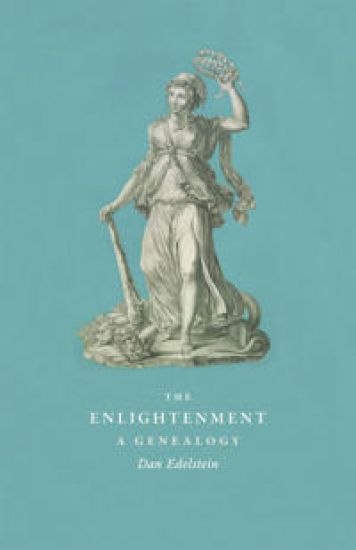
What was the Enlightenment? Though many scholars have attempted to solve this riddle, none has made as much use of contemporary answers as Dan Edelstein does here. In seeking to recover where, when, and how the concept of 'the Enlightenment' first emerged, Edelstein departs from genealogies that trace it back to political and philosophical developments in England and the Dutch Republic. According to Edelstein, by the 1720s scholars and authors in France were already employing a constellation of terms - such as l'esprit philosophique - to describe what we would today call the Enlightenment. But Edelstein argues that it was within the French Academies, and in the context of the "Quarrel of the Ancients and the Moderns", that the key definition, concepts, and historical narratives of the Enlightenment were crafted. A necessary corrective to many of our contemporary ideas about the Enlightenment, Edelstein's book turns conventional thinking about the period on its head. Concise, clear, and contrarian, "The Enlightenment" will be welcomed by all teachers and students of the period.

The Enlightenment

The Enlightenment

Dan Edelstein

University of Chicago Press
2010
sidottu
What was the Enlightenment? Though many scholars have attempted to solve this riddle, none has made as much use of contemporary answers as Dan Edelstein does here. In seeking to recover where, when, and how the concept of 'the Enlightenment' first emerged, Edelstein departs from genealogies that trace it back to political and philosophical developments in England and the Dutch Republic. According to Edelstein, by the 1720s scholars and authors in France were already employing a constellation of terms - such as l'esprit philosophique - to describe what we would today call the Enlightenment. But Edelstein argues that it was within the French Academies, and in the context of the "Quarrel of the Ancients and the Moderns", that the key definition, concepts, and historical narratives of the Enlightenment were crafted. A necessary corrective to many of our contemporary ideas about the Enlightenment, Edelstein's book turns conventional thinking about the period on its head. Concise, clear, and contrarian, "The Enlightenment" will be welcomed by all teachers and students of the period.

The Terror of Natural Right – Republicanism, the Cult of Nature, and the French Revolution
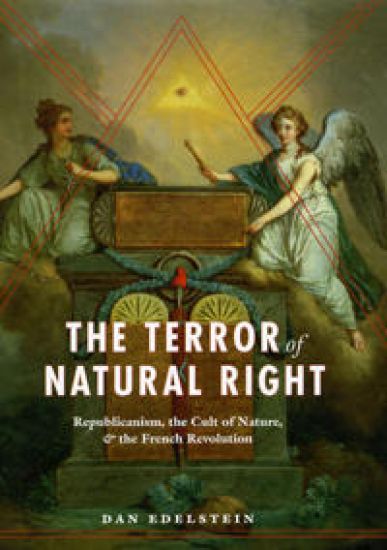
Natural right - the idea that there is a collection of laws and rights based not on custom or belief but that are 'natural' in origin - is typically associated with liberal politics and freedom. "In The Terror of Natural Right", Dan Edelstein argues that the revolutionaries of eighteenth-century France used the natural right concept of the 'enemy of the human race' - an individual who has transgressed the laws of nature and must be executed without judicial formalities - to authorize three-quarters of the deaths during the Terror. Edelstein further contends that the Jacobins shared a political philosophy that he calls 'natural republicanism,' which assumed that the natural state of society was a republic and that natural right provided its only acceptable laws. Ultimately, he proves that what we call the Terror was in fact only one facet of the republican theory that prevailed from Louis's trial until the fall of Robespierre. A highly original work of historical analysis, political theory, literary criticism, and intellectual history, "The Terror of Natural Right" challenges prevailing assumptions about the Terror to offer a new perspective on the Revolutionary period.
The Terror of Natural Right

The Terror of Natural Right

Dan Edelstein

University of Chicago Press
2009
sidottu
Natural right - the idea that there is a collection of laws and rights based not on custom or belief but that are 'natural' in origin - is typically associated with liberal politics and freedom. "In The Terror of Natural Right", Dan Edelstein argues that the revolutionaries of eighteenth-century France used the natural right concept of the 'enemy of the human race' - an individual who has transgressed the laws of nature and must be executed without judicial formalities - to authorize three-quarters of the deaths during the Terror. Edelstein further contends that the Jacobins shared a political philosophy that he calls 'natural republicanism,' which assumed that the natural state of society was a republic and that natural right provided its only acceptable laws. Ultimately, he proves that what we call the Terror was in fact only one facet of the republican theory that prevailed from Louis's trial until the fall of Robespierre. A highly original work of historical analysis, political theory, literary criticism, and intellectual history, "The Terror of Natural Right" challenges prevailing assumptions about the Terror to offer a new perspective on the Revolutionary period.