Kirjojen hintavertailu – 12 875 973 kirjaa ja 26 kauppaa

Kirjailija

Dan Egan

Kirjat ja teokset yhdessä paikassa: 9 kirjaa, julkaisuja vuosilta 2017–2025, suosituimpiin kuuluu Paholaisen alkuaine. Vertaile teosten hintoja ja tarkista saatavuus suomalaisista kirjakaupoista.

9 kirjaa

Kirjojen julkaisuvuodet: 2017–2025.

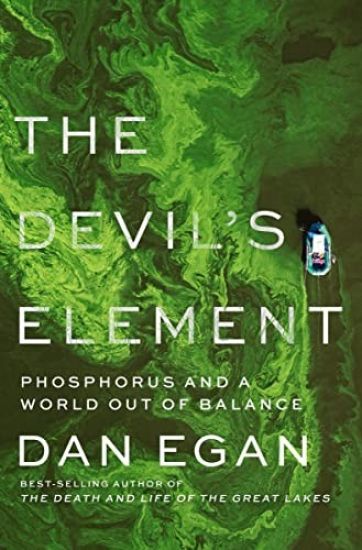
Paholaisen alkuaine

Paholaisen alkuaine

Dan Egan

Aula Co
2025
sidottu

Halvin toimitettuna 24,90 €

Elämän ja kuoleman alkuaine sai kerran ihmiskunnan kukoistamaan. Nyt se tuhoaa luontoa. Fosfori on yksi maapallon yleisimmistä alkuaineista. Se on samaan aikaan sekä elämän edellytys että sen tuhoaja - väkevä lannoite, joka mahdollistaa ruoan kasvattamisen miljardeille ihmisille, ja kuolettava myrkky, jota loytyy niin palopommeista, rotanmyrkysta kuin hermokaasustakin. Fosforia onkin ihan syystä kutsuttu aikamme ”oljyksi”. Fosfori eristettiin ensimmäisen kerran 1600-luvun Hampurissa, ja siitä tuli hyvin nopeasti himoittu resurssi. Sita on kaivettu Waterloon taistelukentille kuolleiden sotilaiden luista, Perun tarunomaisilta guanosaarilta, Floridan luulaaksosta ja Lansi-Saharan hiekkadyyneilta. Liiallisella fosforin kulutuksella on kuitenkin kaantopuolensa. Luontoon valuvat ravinteet rehevöittävät vesistöjä ja ruokkivat valtavia, myrkyllisiä sinilevalauttoja ympari maailmaa - myös Itamerellä. Taistelu fosforivarannoista voi tulevaisuudessa johtaa niin nalanhataan kuin konflikteihinkin ja vaikuttaa siten miljoonien ihmisten elämään. Kirjan on suomentanut J. Pekka Makela. Dan Egan on wisconsinilainen vesistotutkija ja toimittaja, joka on ollut kahdesti ehdolla Pulitzer- palkinnon saajaksi. Egan asuu Milwaukeen kaupungissa Michiganjarven rannalla. Paholaisen alkuaine on hanen toinen kirjansa.

The Devil's Element: Phosphorus and a World Out of Balance

The Devil's Element: Phosphorus and a World Out of Balance

Dan Egan

W. W. Norton Company
2024
nidottu

Halvin toimitettuna 21,10 €

Phosphorus has played a critical role in some of the most lethal substances on earth: firebombs, rat poison, nerve gas. But it's also the key component of one of the most vital: fertilizer, which has sustained life for billions of people. In this major work of explanatory science and environmental journalism, Pulitzer Prize finalist Dan Egan investigates the past, present, and future of what has been called "the oil of our time." The story of phosphorus spans the globe and vast tracts of human history. First discovered in a seventeenth-century alchemy lab in Hamburg, it soon became a highly sought-after resource. The race to mine phosphorus took people from the battlefields of Waterloo, which were looted for the bones of fallen soldiers, to the fabled guano islands off Peru, the Bone Valley of Florida, and the sand dunes of the Western Sahara. Over the past century, phosphorus has made farming vastly more productive, feeding the enormous increase in the human population. Yet, as Egan harrowingly reports, our overreliance on this vital crop nutrient is today causing toxic algae blooms and "dead zones" in waterways from the coasts of Florida to the Mississippi River basin to the Great Lakes and beyond. Egan also explores the alarming reality that diminishing access to phosphorus poses a threat to the food system worldwide--which risks rising conflict and even war. With The Devil's Element, Egan has written an essential and eye-opening account that urges us to pay attention to one of the most perilous but little-known environmental issues of our time.
The Devil's Element: Phosphorus and a World Out of Balance
Phosphorus has played a critical role in some of the most lethal substances on earth: firebombs, rat poison, nerve gas. But it's also the key component of one of the most vital: fertilizer, which has sustained life for billions of people. In this major work of explanatory science and environmental journalism, Pulitzer Prize finalist Dan Egan investigates the past, present, and future of what has been called "the oil of our time." The story of phosphorus spans the globe and vast tracts of human history. First discovered in a seventeenth-century alchemy lab in Hamburg, it soon became a highly sought-after resource. The race to mine phosphorus took people from the battlefields of Waterloo, which were looted for the bones of fallen soldiers, to the fabled guano islands off Peru, the Bone Valley of Florida, and the sand dunes of the Western Sahara. Over the past century, phosphorus has made farming vastly more productive, feeding the enormous increase in the human population. Yet, as Egan harrowingly reports, our overreliance on this vital crop nutrient is today causing toxic algae blooms and "dead zones" in waterways from the coasts of Florida to the Mississippi River basin to the Great Lakes and beyond. Egan also explores the alarming reality that diminishing access to phosphorus poses a threat to the food system worldwide--which risks rising conflict and even war. With The Devil's Element, Egan has written an essential and eye-opening account that urges us to pay attention to one of the most perilous but little-known environmental issues of our time.
Thirty Years in a White Haze

Thirty Years in a White Haze

Dan Egan; Eric Wilbur

Degan Media, Inc
2021
pokkari
Sheltered in a snow cave on Mount Elbrus, Dan Egan stares into the mouth of a storm on the tallest mountain on the European continent, a merciless mountain that claims more lives per year than Everest. In the belly of the beast, Egan takes stock of every moment that brought him here-the life of a Boston boy enthralled with self-determination and adventure. Egan emerges from the white haze of the storm to summit a climactic arc of perseverance we see repeated across decades on skis, on sailboats, in personal relationships, in entrepreneurial endeavors, and in examination of self. The world-renowned pioneer of extreme skiing takes the story of his youth growing up in New England and artfully creates the stage for the simultaneous evolution of big mountain skiing and his personal journey on snow and sea. Featured in 12 Warren Miller Entertainment ski films, on the Discovery Channel, ESPN, Good Morning America, in Powder Magazine, and other media outlets, Dan Egan is an award-winning broadcaster and film producer, and a ski legend who continues to teach and share his love of the sport around the globe. Dan and his brother John Egan, as the Egan Brothers, traveled to some of the world's most remote regions following the geopolitical events of the 1980s and 1990s. They made first descents on the Berlin Wall, skied beside the Persian Gulf War, and organized the 1993 Middle East Peace Ski in Lebanon; the brothers were willing to ski wherever the world would watch and listen. Thirty Years in a White Haze: Dan Egan's Story of Worldwide Adventure and the Evolution of Extreme Skiing chronicles Dan's trials, successes, and losses, as well as the technological boom and subsequent growth of the outdoor media industry. The book maps time and space, unraveling history as Egan ties together his own family's story, the ever-present mortality of his namesake, his grandfather's involvement in desegregating Boston's schools, and the rise of extreme skiing and technology into the new millennium. An ode to a life filled with curiosity, growth, freedom, and its costs, Dan Egan and Eric Wilbur's new book promises a heavy dose of humor, suspense, thrill, and documentary, as thirty years of haze dissipates to clarity.
The Death and Life of the Great Lakes
New York Times Bestseller Winner of the Los Angeles Times Book Prize Winner of the J. Anthony Lukas Award"Nimbly splices together history, science, reporting and personal experiences into a taut and cautiously hopeful narrative.... Egan's book is bursting with life (and yes, death)." --Robert Moor, New York Times Book Review
The Death and Life of the Great Lakes

The Death and Life of the Great Lakes

Dan Egan

W. W. Norton Company
2017
sidottu
The Great Lakes--Erie, Huron, Michigan, Ontario and Superior--hold 20 percent of the world's supply of surface fresh water and provide sustenance, work and recreation for tens of millions of Americans. But they are under threat as never before, and their problems are spreading across the continent. The Death and Life of the Great Lakes is prize-winning reporter Dan Egan's compulsively readable portrait of an ecological catastrophe happening right before our eyes, blending the epic story of the lakes with an examination of the perils they face and the ways we can restore and preserve them for generations to come. For thousands of years the pristine Great Lakes were separated from the Atlantic Ocean by the roaring Niagara Falls and from the Mississippi River basin by a "sub-continental divide." Beginning in the late 1800s, these barriers were circumvented to attract oceangoing freighters from the Atlantic and to allow Chicago's sewage to float out to the Mississippi. These were engineering marvels in their time--and the changes in Chicago arrested a deadly cycle of waterborne illnesses--but they have had horrendous unforeseen consequences. Egan provides a chilling account of how sea lamprey, zebra and quagga mussels and other invaders have made their way into the lakes, decimating native species and largely destroying the age-old ecosystem. And because the lakes are no longer isolated, the invaders now threaten water intake pipes, hydroelectric dams and other infrastructure across the country. Egan also explores why outbreaks of toxic algae stemming from the overapplication of farm fertilizer have left massive biological "dead zones" that threaten the supply of fresh water. He examines fluctuations in the levels of the lakes caused by manmade climate change and overzealous dredging of shipping channels. And he reports on the chronic threats to siphon off Great Lakes water to slake drier regions of America or to be sold abroad. In an age when dire problems like the Flint water crisis or the California drought bring ever more attention to the indispensability of safe, clean, easily available water, The Death and the Life of the Great Lakes is a powerful paean to what is arguably our most precious resource, an urgent examination of what threatens it and a convincing call to arms about the relatively simple things we need to do to protect it.