
Kirjojen hintavertailu – 12 859 819 kirjaa ja 27 kauppaa

Kirjailija

Dan Hendrycks

Kirjat ja teokset yhdessä paikassa: 3 kirjaa, julkaisuja vuosilta 2024–2026, suosituimpiin kuuluu Introduction to AI Safety, Ethics, and Society. Vertaile teosten hintoja ja tarkista saatavuus suomalaisista kirjakaupoista.

3 kirjaa

Kirjojen julkaisuvuodet: 2024–2026.

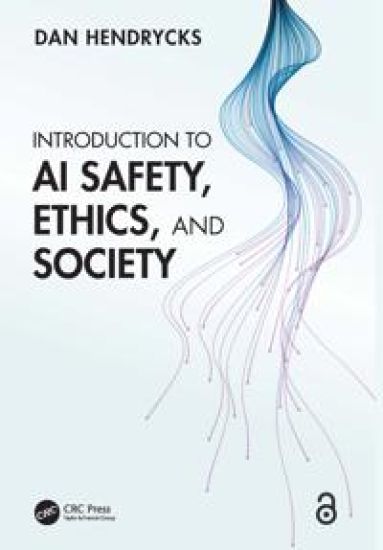
Introduction to AI Safety, Ethics, and Society

Introduction to AI Safety, Ethics, and Society

Dan Hendrycks

TAYLOR FRANCIS LTD
2026
nidottu
As AI technology is rapidly progressing in capability and being adopted more widely across society, it is more important than ever to understand the potential risks AI may pose and how AI can be developed and deployed safely. Introduction to AI Safety, Ethics, and Society offers a comprehensive and accessible guide to this topic. This book explores a range of ways in which societies could fail to harness AI safely in coming years, such as malicious use, accidental failures, erosion of safety standards due to competition between AI developers or nation-states, and potential loss of control over autonomous systems. Grounded in the latest technical advances, this book offers a timely perspective on the challenges involved in making current AI systems safer. Ensuring that AI systems are safe is not just a problem for researchers in machine learning – it is a societal challenge that cuts across traditional disciplinary boundaries. Integrating insights from safety engineering, economics, and other relevant fields, this book provides readers with fundamental concepts to understand and manage AI risks more effectively. This is an invaluable resource for upper-level undergraduate and postgraduate students taking courses relating to AI Safety & Alignment, AI Ethics, AI Policy, and the Societal Impacts of AI, as well as anyone trying to better navigate the rapidly evolving landscape of AI safety.
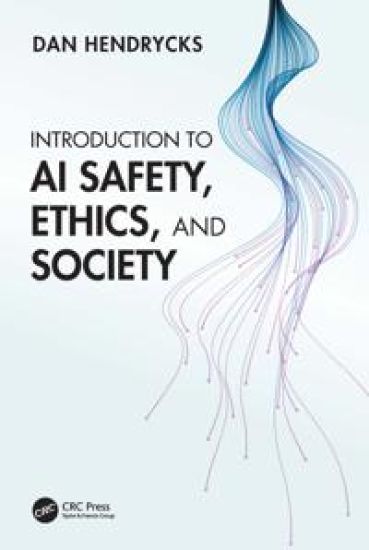
Introduction to AI Safety, Ethics, and Society

Introduction to AI Safety, Ethics, and Society

Dan Hendrycks

TAYLOR FRANCIS LTD
2024
sidottu
As AI technology is rapidly progressing in capability and being adopted more widely across society, it is more important than ever to understand the potential risks AI may pose and how AI can be developed and deployed safely. Introduction to AI Safety, Ethics, and Society offers a comprehensive and accessible guide to this topic. This book explores a range of ways in which societies could fail to harness AI safely in coming years, such as malicious use, accidental failures, erosion of safety standards due to competition between AI developers or nation-states, and potential loss of control over autonomous systems. Grounded in the latest technical advances, this book offers a timely perspective on the challenges involved in making current AI systems safer. Ensuring that AI systems are safe is not just a problem for researchers in machine learning – it is a societal challenge that cuts across traditional disciplinary boundaries. Integrating insights from safety engineering, economics, and other relevant fields, this book provides readers with fundamental concepts to understand and manage AI risks more effectively. This is an invaluable resource for upper-level undergraduate and postgraduate students taking courses relating to AI Safety & Alignment, AI Ethics, AI Policy, and the Societal Impacts of AI, as well as anyone trying to better navigate the rapidly evolving landscape of AI safety.
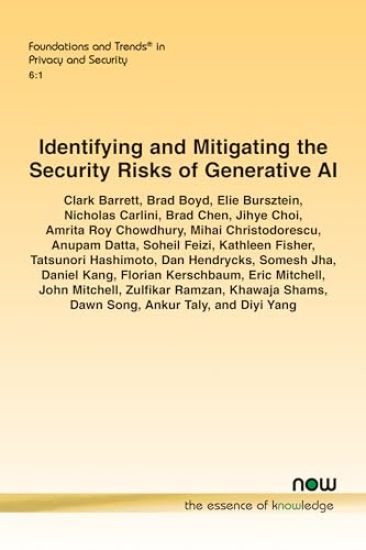
Identifying and Mitigating the Security Risks of Generative AI

Identifying and Mitigating the Security Risks of Generative AI

Clark Barrett; Brad Boyd; Elie Bursztein; Nicholas Carlini; Brad Chen; Jihye Choi; Amrita Roy Chowdhury; Mihai Christodorescu; Anupam Datta; Soheil Feizi; Kathleen Fisher; Tatsunori Hashimoto; Dan Hendrycks; Somesh Jha; Daniel Kang; Florian Kerschbaum; Eric Mitchell; John Mitchell; Zulfikar Ramzan; Khawaja Shams; Dawn Song; Ankur Taly; Diyi Yang

Now Publishers Inc
2024
nidottu
Every major technical invention resurfaces the dual-use dilemma -- the new technology has the potential to be used for good as well as for harm. Generative AI (GenAI) techniques, such as large language models (LLMs) and diffusion models, have shown remarkable capabilities (e.g., in-context learning, code-completion, and text-to-image generation and editing). However, GenAI can be used just as well by attackers to generate new attacks and increase the velocity and efficacy of existing attacks. This monograph reports the findings of a workshop held at Google (co-organized by Stanford University and the University of Wisconsin-Madison) on the dual-use dilemma posed by GenAI. This work is not meant to be comprehensive, but is rather an attempt to synthesize some of the interesting findings from the workshop. Short-term and long-term goals for the community on this topic are discussed. This work should provide both a launching point for a discussion on this important topic, as well as interesting problems that the research community can work to address.